
The 1989 IROC-Z Camaro is the strongest-running IROC-Z with a full model year behind it. That is the short answer, and the numbers back it: the 305 TPI picked up 10 hp from a new dual-converter exhaust, the 350 TPI reached 240 hp, and Chevrolet built more than 24,000 IROC-Zs in a year when total Camaro output went up rather than down. It was also the year of the first real 1LE, the last season the IROC series raced Camaros, and the final full year before the name went away. For the whole six-year run, see the IROC-Z Camaro story. This piece stays on 1989.
Car Features
6 min read
The 1989 IROC-Z
The 1989 IROC-Z got N10 dual exhaust, a 230 hp 305 and a 240 hp 350, plus the first real 1LE: 111 cars. Production, options and how to check one.
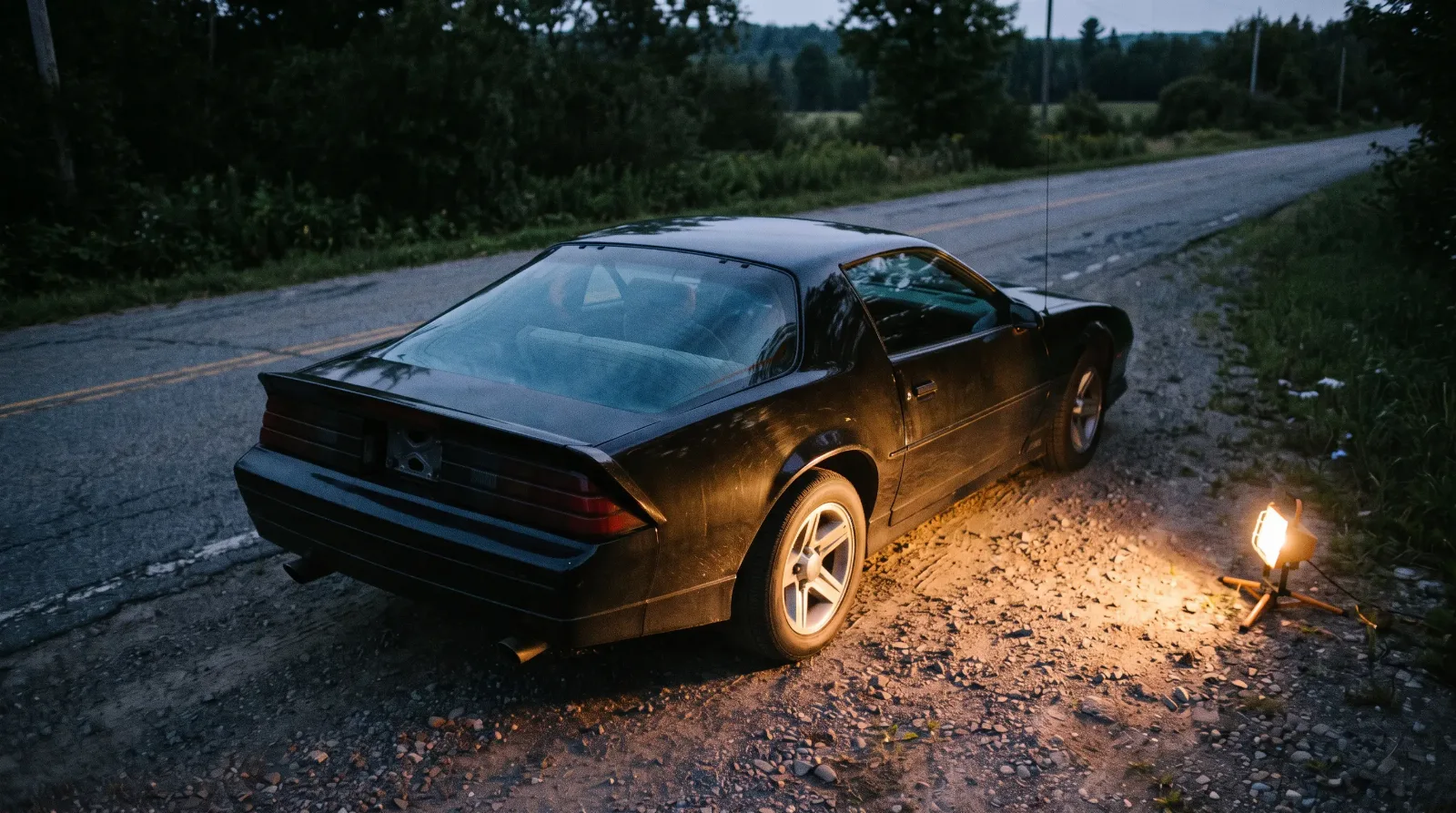
The 1989 IROC-Z Camaro by the numbers
Set against 1988, the year the IROC-Z became the top Camaro on its own, the 1989 car looks like this.
| Item | 1988 | 1989 |
|---|---|---|
| Total Camaro production | 96,275 | 110,739 |
| IROC-Z coupes | 24,050 | 20,067 |
| IROC-Z convertibles | 3,761 | 3,940 |
| 305 TPI, top rating (manual) | 220 hp | 230 hp with N10 dual exhaust |
| 350 TPI rating (automatic only) | 230 hp | 240 hp with dual exhaust |
| Entry Camaro | Sport Coupe | RS |
| 1LE cars | About 4 to 6 | 111 |
IROC-Z volume slipped a little, from about 27,800 to about 24,000, while the total Camaro line grew by more than 14,000 cars. The growth came from the bottom of the range, not the top. Roughly one 1989 Camaro in five was an IROC-Z.
N10: where the extra 10 horsepower came from
The headline mechanical change for 1989 was RPO N10, a dual-converter exhaust. On the 305 TPI with the five-speed manual, it took the rating from 220 hp with the single exhaust to 230 hp. That makes the 1989 305 the strongest version of the engine to that point, and it held at up to 230 hp through 1992.
The 350 TPI went to 240 hp with dual exhaust for 1989. Sources split on that figure: some describe the 1988 and 1989 cars together at 230 hp, while the year-by-year listing shows the rating stepping from 230 in 1988 to 240 in 1989 and 245 in 1990. The stepped version fits the hardware change, so 240 is the number to use, with that caveat. The 350 still came only with the TH700-R4 four-speed automatic, as it had since 1987. If you want a manual IROC-Z in 1989, you get the 305.
One more engine detail separates the two. On a 1989 car, the 350's tach redline sits at 5,400 rpm, 400 rpm above the 305's. Check the cluster when a seller says the engine is original: the gauge should match the engine.
"The 1989 car is the one to pick if you care about the spec sheet. Ten horsepower from an exhaust code is not a revolution, but the 230 hp 305 with the five-speed is the best manual IROC-Z Chevrolet ever sold with a full year of production behind it."
Dan Reeves
G92, the 1LE and the 111 cars that matter
The order code that separates a serious 1989 IROC-Z from a cruiser is G92, the performance axle package. On a 1989 car it bundled a performance axle ratio, the N10 dual exhaust, J65 four-wheel disc brakes, an engine oil cooler, P245/50ZR16 Goodyear Eagles and a 145 mph speedometer. The ratio was 3.27 with the 350 TPI and 3.45 with the 305 TPI manual; the standard axle was 2.77. Chevrolet built 1,426 IROC-Z coupes with G92 for 1989.
Order G92 and delete the air conditioning (C41), and the system set RPO 1LE on its own. That was the racer's package, and 1989 was its first real year: 111 cars, against a handful in 1988. The rest of the market made it rare without trying. Of 110,739 Camaros built for 1989, 104,642 had C60 air conditioning, a $745 option. Very few buyers were willing to sweat for a lap time.
The racing record came fast. John Heinricy won the 1989 IMSA Firestone Firehawk and SCCA Escort Endurance championships, in a 1LE Camaro according to Hagerty. In the market, the gap is wide: as of May 2021, a 1989 IROC-Z 1LE in number 2 condition was valued at about $37,000, a 60 percent premium over an IROC-Z without the package. Check that figure against current values before you lean on it.
The RS returns, and the IROC-Z stands at the top
For 1989, the RS name came back and replaced the Sport Coupe as the entry Camaro. The RS ran the LB8 2.8 V6 at 135 hp as standard, with the LO3 305 TBI at 170 hp optional, and it wore ground effects, a spoiler and blacked-out taillamps. Chevrolet built 83,487 RS coupes and 3,245 RS convertibles, which is where nearly all of the year's growth came from.
That left a two-car Camaro lineup with a very clear split: the RS for people who wanted the look, the IROC-Z for people who wanted the TPI engines and the chassis. The Z28 name was gone as a model from 1988 to 1990 and came back for 1991. The IROC-Z ran one more, short model year: 1990 production ran from roughly August to December 1989 and came to about 35,000 Camaros in total, with only 4,213 IROC-Z coupes. The story of that final car is in the last IROC-Z.
Checking a 1989 IROC-Z today
A few hard facts separate a genuine 1989 car from a lookalike. The tenth VIN character is K for 1989. The eighth tells you the engine: 8 for the 350 TPI, F for the 305 TPI, and E for the 305 TBI. The 1989 TPI engines were the last F-body TPI cars to use a mass airflow sensor; 1990 switched to speed-density, which matters if you are sourcing parts. The 350 could still be ordered with T-tops through 1989.
The 1989 IROC-Z is the best-documented, best-equipped IROC-Z with a full production year. It is not the rarest, and it is not the last. If the numbers above are what you want, browse 1989 Camaros for sale and bring the VIN chart with you.
Sources and notes
- Wikipedia: Chevrolet Camaro (third generation)
- Camarotech: third-generation Camaro production by model and year
- Camarotech: 1989 Camaro VIN codes
- Hagerty: the IROC-Z 1LE, production and values
- MCE Cars: 1989 Camaro IROC-Z option and production notes (dealer text)
- Road Racing Drivers Club: John Heinricy
Related Reading
Have a
Chevrolet Camaro
for Sale?
Reach thousands of serious classic car collectors across the US.
Sell It Here →
Selling a classic? Here's how: the best sites to sell a classic car
Are You a Classic Car Dealer?
List your full inventory and connect with targeted classic car buyers.
Join as a Dealer →

About the author
Dan Reeves
Performance engine builder from North Carolina's motorsports corridor, focused on swaps, forced induction and making real, repeatable power.
Related Listings - Chevrolet Camaro




Comments
Be the first to comment on this article.