
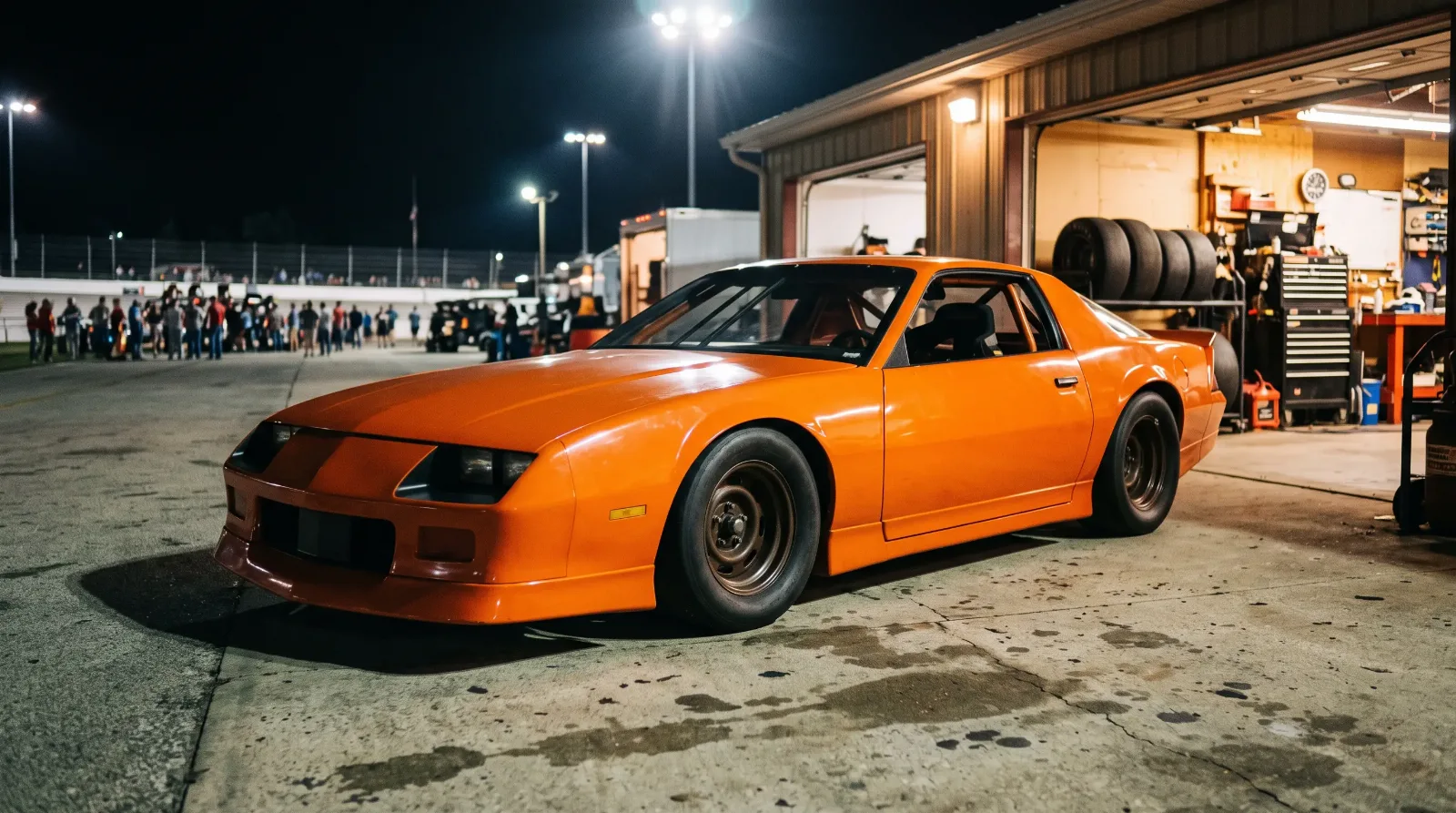
Every Camaro club has the same scene at least once a season. A third-generation car rolls onto the grass wearing the door decals, the fog lamps in the grille and the five-spoke wheels, and the owner calls it an IROC-Z before the engine has stopped ticking. One of the older members walks over, says nothing about the paint and asks to see the paperwork. Half the time the conversation ends right there. For most of its life the IROC-Z was an option package, not a model, and anything a parts catalog can sell you can be bolted on in a weekend. What cannot be bolted on is a code on a build sheet. That gap between what a car wears and what it can prove is the IROC-Z story in miniature, one of the most argued-over chapters of the classic Camaro story, and it runs from the 1985 model year to the 1990 model year, with no 1991 car to argue about.
The IROC-Z Camaro Story (1985 to 1990)
How the IROC-Z went from a Z28 option package in 1985 to the top Camaro, why it ended in 1990, and why the build sheet decides what a car is today.
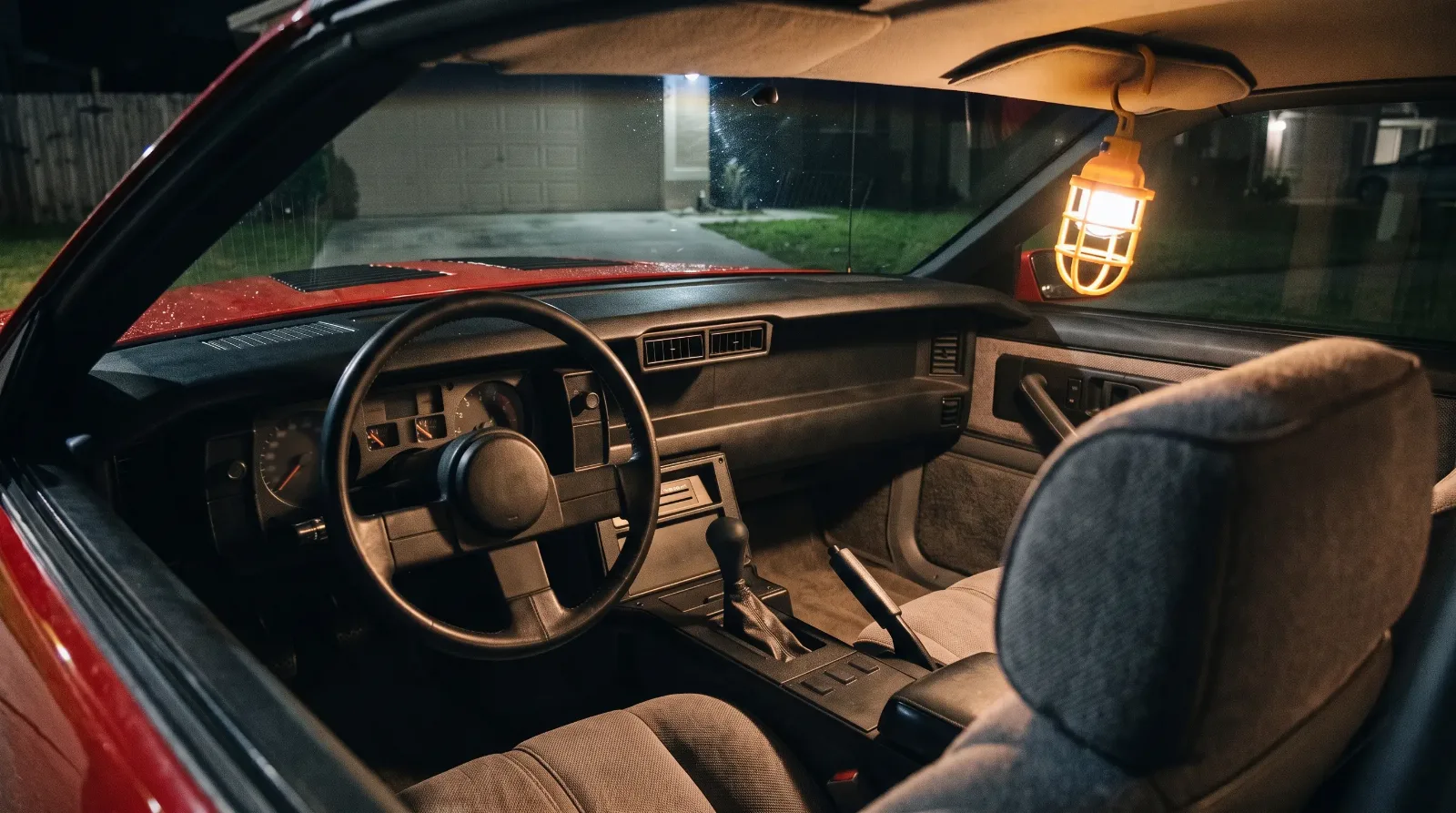
Where the IROC name came from
IROC stands for the International Race of Champions, an invitational series put together in 1972 and 1973 by Roger Penske, Les Richter and Mike Phelps, with the idea credited to David Lockton. The premise was simple: take the best drivers from different kinds of racing and put them in identical cars. The first season ran Porsche 911 Carrera RSRs, with Mark Donohue winning the opening race at Riverside on October 27, 1973.
Chevrolet replaced Porsche as the car supplier for the 1974 to 1975 season, and the Camaro held that job for twelve seasons in two stretches: 1975 through 1980, then 1984 through 1989, with no series run in 1981, 1982 or 1983. The Camaro-era champions read like a hall of fame roster. Bobby Unser, A.J. Foyt, Mario Andretti, Cale Yarborough, Harry Gant, Al Unser Jr. twice, Geoff Bodine and Terry Labonte all won titles in Camaros. The 1984 to 1989 race cars had little to do with anything a dealer sold: Banjo Matthews tube frames and Katech-built forged-aluminum 350s rated around 470 hp.
When the series came back in 1984, Chevrolet had a reason to put the name on a street car, and for 1985 it did.
1985: the IROC-Z package arrives
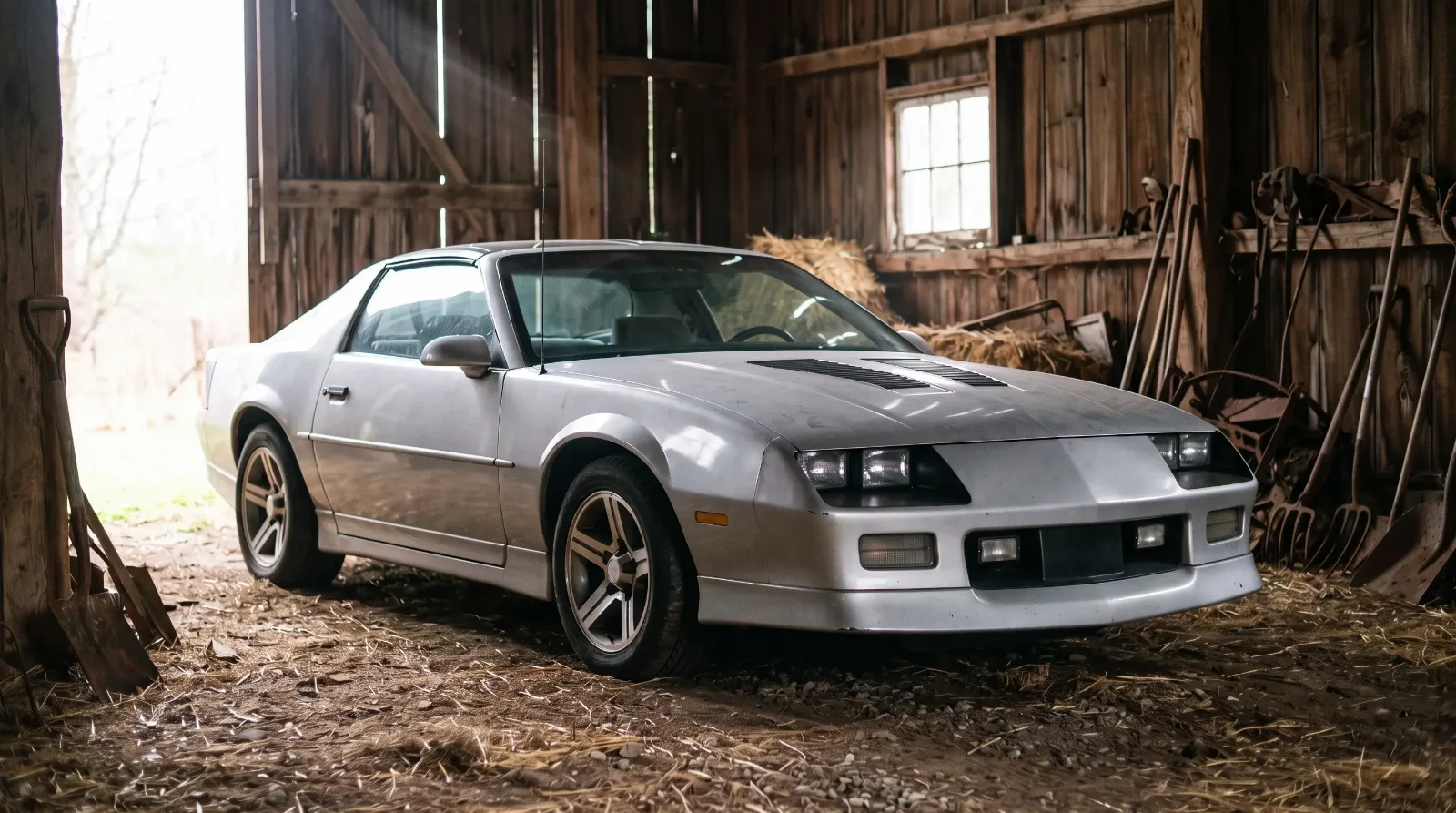
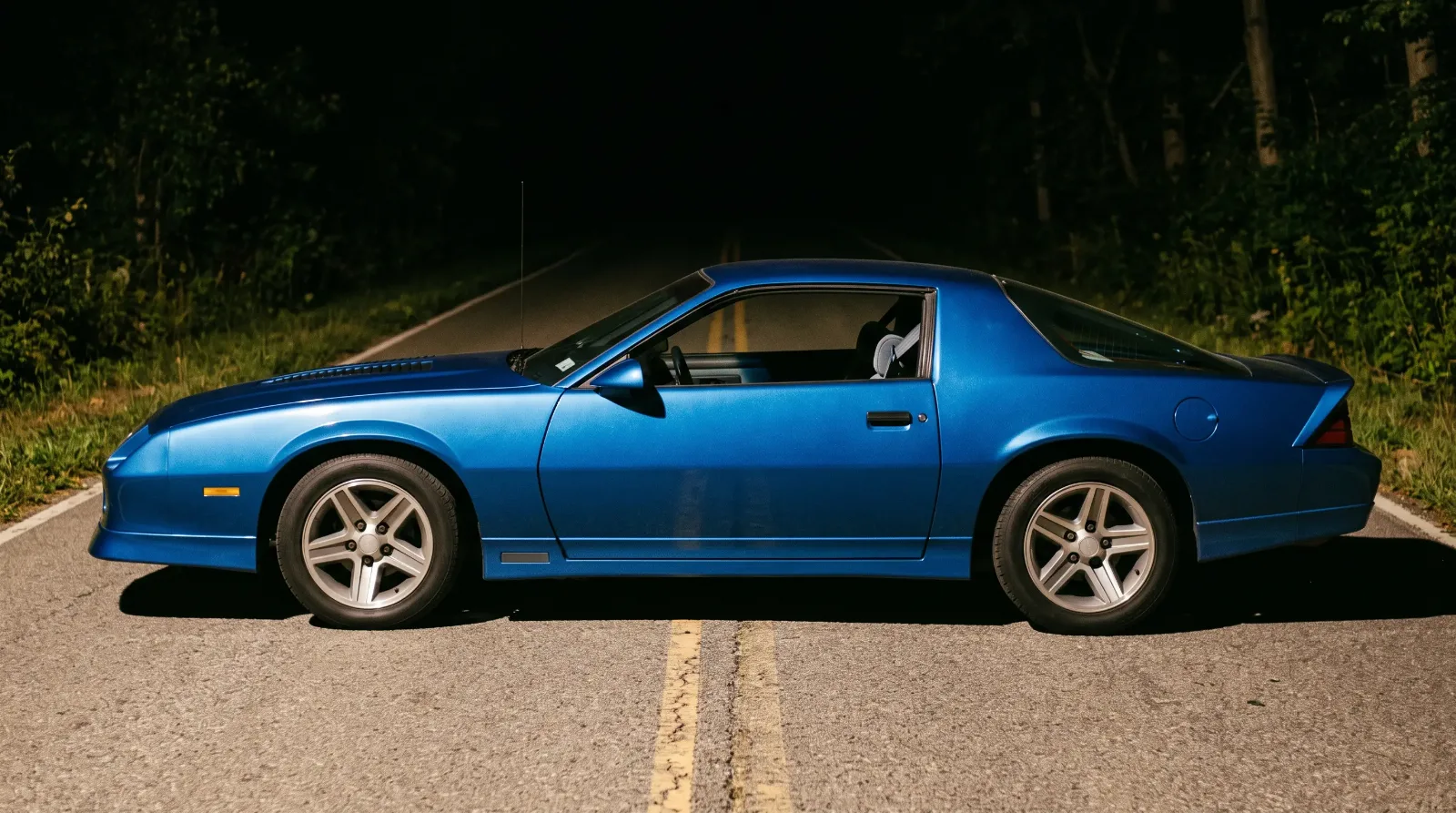
The IROC-Z was introduced as RPO B4Z, a package on the Z28. Underneath the decals it was a serious piece of work for its day. The ride height dropped about half an inch below a regular Z28, Delco-Bilstein shocks went in the rear, the anti-roll bars got larger and a steering brace nicknamed the "wonder bar" stiffened the front. The 16x8 aluminum five-spoke wheels carried Goodyear Eagle GT "Gatorback" tires in P245/50VR16, which made it the first Camaro on 16-inch wheels. Outside, the package added fog lamps in the grille, rocker extensions, a deeper front air dam, louvered hood inserts and the IROC-Z door decals.
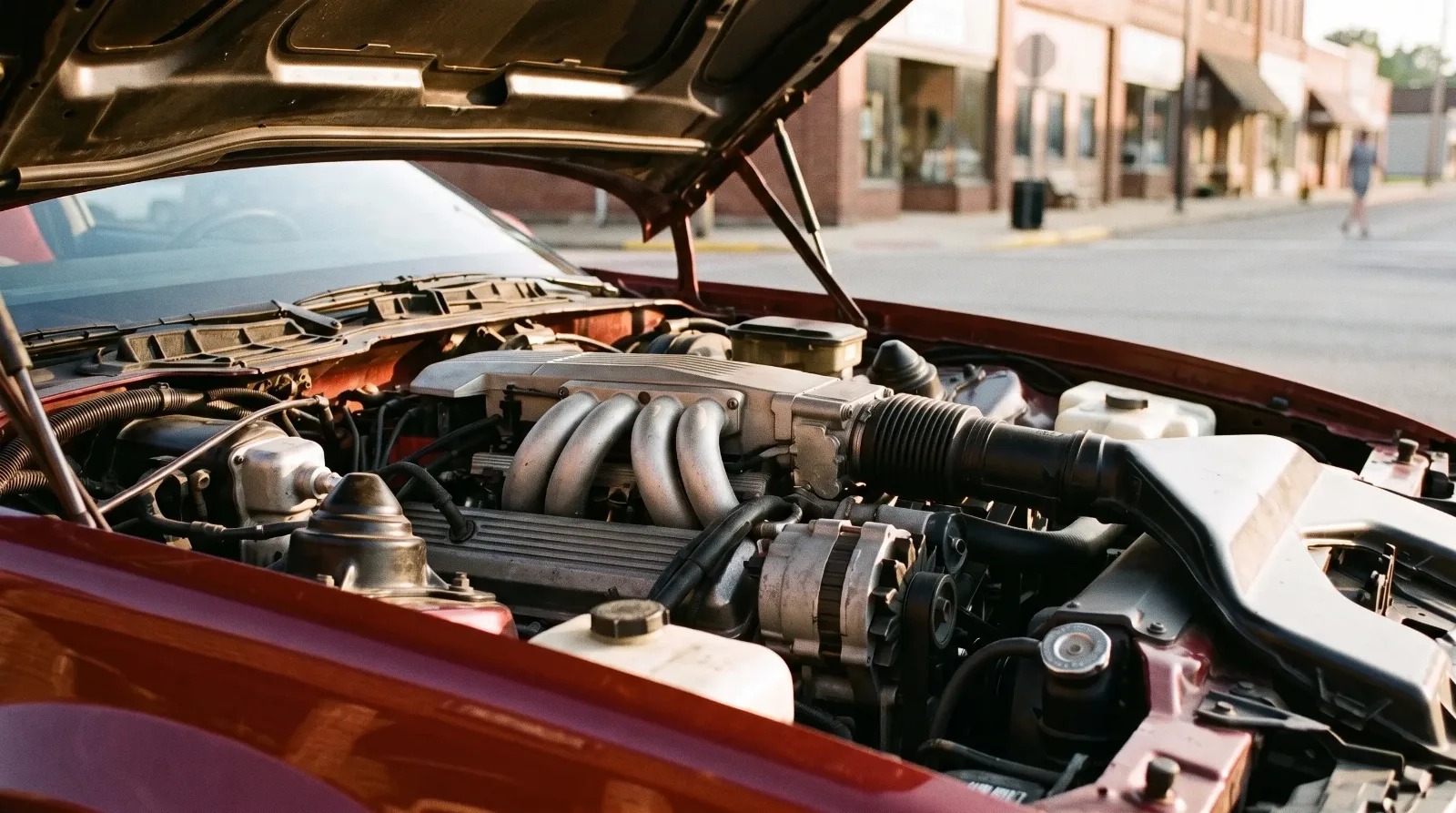
Three V8s were on the order form. The LG4 305 four-barrel made 155 hp. The L69 305 High Output, a four-barrel engine with 190 hp at 4,800 rpm, was an IROC-Z exclusive that year, paired with the five-speed, and only 2,497 cars got it. The new LB9 305 with Tuned Port Injection made 215 hp at 4,400 rpm and 275 lb-ft, and in 1985 it came with the automatic. On paper that matched up well against the Ford across town: 215 hp for the IROC-Z against 210 hp for the Mustang GT.
The magazines got their hands on cars in the fall of 1984. Car and Driver ran a TPI car to 60 mph in 7.0 seconds and through the quarter mile in 15.2 seconds at 91.0 mph, and an L69 car to 60 in 7.5 seconds with a 15.4-second quarter. A MotorWeek three-way test put the IROC-Z against the Mustang GT and the Trans Am and called the Mustang the fastest and the Chevrolet the most refined, with the IROC-Z about a second quicker than either rival around the handling course.
Chevrolet built 21,177 IROC-Zs for 1985, about 31 percent of all Z28s. For 1986 the share jumped to 56 percent, 49,585 cars, which tells you how quickly the package went from special order to the Camaro everybody wanted. Hagerty later summed up the second half of the decade by calling the IROC-Z "the Camaro to have," and it is hard to argue with that.
Tuned port injection and the 350 in 1987
The LB9 rating moved around more than most owners realize. It dropped from 215 hp in 1985 to 190 hp in 1986, came back to 215 hp with the manual in 1987 (190 with the automatic), reached 220 hp manual and 195 automatic in 1988, and hit 230 hp in 1989 with the N10 dual-converter exhaust and a manual gearbox. When somebody tells you their IROC-Z has "the 215 engine," the year matters.
The bigger news for 1987 was the 350. Ordered as RPO B2L at $1,045, the 5.7-liter TPI L98 was offered only in the IROC-Z coupe and only with the automatic, rated 225 hp and 330 lb-ft. It never got a factory manual gearbox: from 1987 through 1990 the 350 came only with the TH700-R4 four-speed automatic. It also never matched the Corvette version of the same engine, because the Camaro got iron heads and 9.5:1 compression where the Corvette got aluminum heads. That is why the IROC 350 always looked a little light next to the fiberglass car's number.
Tested cars from those years show how close the 305 and 350 really were. Road & Track ran a 1987 IROC-Z with the 215 hp 305 to 60 in 6.6 seconds and through the quarter in 14.9 seconds at 95.0 mph. Motor Trend's 350 cars from the following years ran 0 to 60 in 7.2 and 6.6 seconds. Chevrolet built 38,889 IROC-Zs for 1987.
The convertible came back for 1987 too. American Sunroof Corporation converted T-top cars for a $4,400 premium, and the first year produced 1,007 convertibles: 263 Sport Coupes and 744 Z28 and IROC-Z cars. Before that, late in the 1986 model year, ASC had built 82 IROC-Z convertibles for a dealer consortium outside the factory program. Motor Trend tested an IROC-Z convertible in November 1986 and predicted it would end up among the most desirable cars of the decade.
1988 and 1989: the IROC-Z stands alone
For 1988 Chevrolet dropped the Z28 as a separate model. The lineup was a Sport Coupe, the IROC-Z coupe and convertible, and a base convertible. In effect, the IROC-Z replaced the Z28 for 1988 through 1990, and its content became the performance Camaro's content. Production that year came to 24,050 IROC-Z coupes and 3,761 IROC-Z convertibles out of 96,275 Camaros.
The engine list changed under it. The LO3 5.0 throttle-body engine with 170 hp replaced the old four-barrel LG4, the LB9 stayed, and the B2L 350 moved to 230 hp at 4,400 rpm. Roughly half of the 1988 IROC-Zs had the 350. One change catches restorers out: 15-inch wheels became standard on the 1988 IROC-Z, and the 16x8 wheels became option N96 at $468. The door decals also moved to the rear of the door that year.
The quiet star of this period was the 1LE. It never appeared in dealer literature. You got it by ordering the G92 performance axle and the G80 limited slip and deleting air conditioning (C41), and buyers were expected to show they would race in SCCA or IMSA events. The package added bigger front brakes with PBR calipers, an aluminum driveshaft, a baffled fuel tank and specific shocks and bushings, and it deleted the fog lamps and power windows. Ray Canale and John Heinricy were behind it, and Heinricy won SCCA Escort and Firestone Firehawk titles in a 1LE in 1989. Production was tiny: a handful in 1988, 111 in 1989 and 62 in 1990.
1990: the short last year of the IROC-Z
The 1990 model year was short, and the IROC-Z went out with it. Chevrolet did not renew its contract with the International Race of Champions after the 1989 season, the series switched to Dodge Daytonas for 1990 (Dale Earnhardt won that year's title), and the name went with the contract. Chevrolet built the 1990 Camaros in roughly August to December 1989: 34,986 cars for the whole line by the most-cited count.
Those last IROC-Zs got the best third-generation engine. The 350 was now rated 245 hp and 345 lb-ft at 3,200 rpm, the cars got a driver's airbag, and the 1LE cars got the 350 as standard. Chevrolet built 4,213 IROC-Z coupes for 1990, and 2,415 of them had the 5.7. For 1991 the Z28 came back as the top Camaro and the IROC name was gone.
The third-generation body carried on through 1992, and then the fourth-generation car that replaced it arrived for 1993 with a new shape and a 275 hp V8. The IROC-Z, by then, was already a used car with a story.
The IROC-Z by the numbers, year by year
Production counts for the IROC-Z come from enthusiast registries and secondary sources rather than one clean GM document, so treat them as the best available figures rather than gospel. No 1989 total could be confirmed from an open source, so that cell stays blank.
| Model year | IROC-Z built | Top engine rating | What changed |
|---|---|---|---|
| 1985 | 21,177 | LB9 305 TPI, 215 hp | B4Z package on the Z28; 16-inch Gatorbacks; L69 H.O. exclusive |
| 1986 | 49,585 | LB9 305 TPI, 190 hp | 56 percent of Z28s; 82 ASC convertibles late in the year |
| 1987 | 38,889 | L98 350 TPI, 225 hp (automatic only) | 350 arrives; factory convertible returns; Norwood closes |
| 1988 | 24,050 coupes, 3,761 convertibles | B2L 350 TPI, 230 hp | Z28 dropped; IROC-Z is the top model; 15-inch wheels standard |
| 1989 | Not confirmed | L98 350 TPI, 240 hp with dual exhaust | N10 exhaust lifts the manual 305 to 230 hp; 111 1LE cars built |
| 1990 | 4,213 coupes | L98 350 TPI, 245 hp | Driver airbag; short model year; last IROC-Z |
Proving an IROC-Z today: the paperwork is the car
Here is the punchline that ends a lot of club-meet conversations. The VIN will not tell you a car is an IROC-Z. From 1987 the series letter is the same for every Camaro, and both Z28 and IROC-Z were option codes, Z28 and B4Z. The engine digit in the VIN tells you something useful about what the car left the factory with, but the IROC part has to come from the build sheet, the window sticker or the RPO list. If none of those survive, you are looking at a Camaro with IROC parts, and the price should say so.
"Decals come from a catalog. B4Z comes from the factory. I have watched a lot of handshakes stall on that one line, and I have never once seen a seller produce a build sheet after the deal fell through."
Wayne Coburn
The paperwork matters more now than it did when these were cheap. A loaded IROC-Z could reach about $20,000 new at a time when a 1985 Corvette started near $24,000, and for years afterward they were simply used cars. Values started to climb around 2014. By late 2022 Hagerty reported that a 1988 IROC-Z in #2 condition had gained 225 percent over ten years, against 35 percent for a 1985 Corvette, and it listed a #1 condition 1987 IROC-Z at $44,300. That same year a 729-mile 1987 IROC-Z sold for $64,575 with fees, a third-generation record at the time. The buyers are mostly people who wanted one in high school: Gen X makes up about 32 percent of the market but owns about half of the IROC-Zs Hagerty insures.
A 1989 IROC-Z 1LE in #2 condition was worth about $37,000 in 2021, roughly 60 percent more than a regular IROC-Z, which is reason enough to check the codes on any car sold as one. Clean examples are scarce because these were the expensive Camaros that got driven hard and left outside. If you are shopping, the IROC-Z Camaros for sale listings are a place to start, and the first question to every seller should be the same one asked on the grass at the club meet.
Sources and notes
- International Race of Champions: seasons, cars and champions (Wikipedia)
- Chevrolet Camaro, third generation: engines and production (Wikipedia)
- 1985 Chevrolet Camaro IROC-Z: package content and period tests (Eighties Cars)
- IROC-Z: when Camaro got its mojo back (Hagerty)
- The IROC-Z 1LE and its option codes (Hagerty)
- Why an IROC Camaro is worth more than a C4 Corvette (Hagerty, 2022)
Related Reading


Longtime Corvette owner, judge and club figure who knows the cars, the records and the people behind them.
Related Listings - Chevrolet Camaro
Comments
Be the first to comment on this article.