
Every Camaro club has a member who parks a 1990 IROC-Z at the end of the row and leaves the hood shut. People wander over and ask what's special about it, since it looks like the 1989 parked beside it. He doesn't answer. He hands them a folder. Inside is the window sticker, and the punchline is the last line of the story: there is no 1991 IROC-Z, so the IROC-Z Camaro 1990 model is the end of the name, built in a model year that lasted about five months.
Car Features
6 min read
1990: The Last IROC-Z
The 1990 IROC-Z was the last of the name: a short model year, 4,213 coupes, a driver airbag, a 245 hp 350 and the paperwork to check on one.
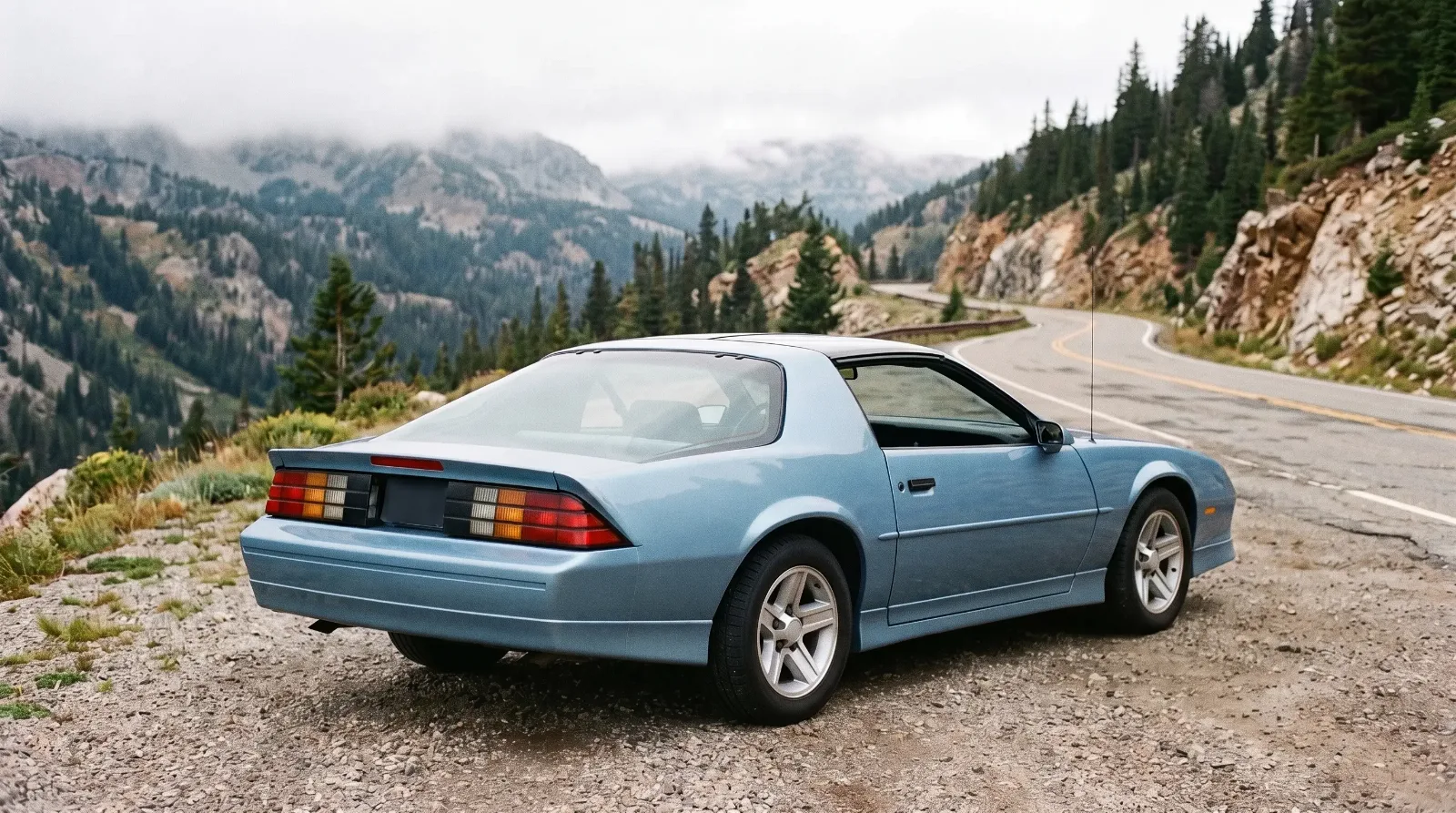
That's the short version. The long version, from the 1985 handling package to the 350 automatic cars, is in our story of the IROC-Z era. This article stays with the final year: why it ended, how few were built, what changed, and how to read the paperwork on one.
Why the 1990 IROC-Z Camaro was the last one
The IROC-Z took its name from the International Race of Champions. Chevrolet supplied the Camaros the series raced, and the road car borrowed the name. That arrangement had a contract behind it, and contracts end. Chevrolet did not renew after the 1989 race season, and the series moved on.
Sources disagree on exactly when Chevrolet lost the right to use the name. Some put the cutoff at the start of calendar 1990, and one Hagerty piece says the sponsorship was dropped in 1991. The model-year record is the part everyone agrees on. The 1990 IROC-Z was the last one. For 1991 the Z28 came back as the top Camaro, a role the IROC-Z had held alone since 1988, and the IROC name was gone from the order sheet.
A short model year and a small production run
The 1990 model year was short. Production ran from roughly August to December 1989, and the 1991 cars started coming off the line early in calendar 1990. Chevrolet built 34,986 Camaros of all kinds for 1990, about 32 percent of the 1989 total. You'll see 83,089 printed in a Wikipedia production table. It doesn't match the short year, and it doesn't match the other sources. The 34,986 figure is the one to trust.
Inside that small year, the IROC-Z numbers get smaller still.
| 1990 IROC-Z item | Figure |
|---|---|
| All 1990 Camaros built | 34,986 |
| IROC-Z coupes | 4,213 |
| IROC-Z coupes with the 5.7 L98 | 2,415 |
| IROC-Z convertibles | 1,294 |
| 1LE cars (third gen, 1990) | 62 |
| L98 350 rating | 245 hp, 345 lb-ft at 3,200 rpm |
Do the subtraction and about 1,800 of the 1990 IROC-Z coupes had the 305. The convertible count is the softest number on that list, because it comes from enthusiast production tables rather than a GM document. The third-gen table at Camarotech prints 1,294, and the figure fits: 4,213 IROC-Z coupes, 1,294 IROC-Z convertibles, 28,750 RS coupes and 729 RS convertibles add up to exactly 34,986.
For context, IROC-Z coupe production had been 49,585 in 1986. By 1990 it was 4,213. The name went out quietly, in a year most buyers never noticed was cut short. If you want the bigger picture of how production rose and fell, it starts with where the Camaro came from in 1967.
What changed for 1990
The biggest change sits in the steering wheel. The 1990 Camaro got a driver airbag, and the VIN records it: the restraint digit reads 3, for manual belts with a driver airbag, where 1987 to 1989 cars read 1. A 1990 coupe VIN starts 1G1FP23. If a seller calls his car a 1990 and the VIN says otherwise, that ends the conversation.
The L98 350 was rated 245 hp and 345 lb-ft, up from 240 hp in 1989 and 230 hp in 1988. One enthusiast reference still prints 230 hp for 1990, which looks like 1988 text carried forward. The 350 stayed automatic only, paired with the four-speed overdrive automatic, as it had been since 1987. If you wanted a manual in a 1990 IROC-Z, you got the 305.
Under the car, the 10-bolt rear axle kept its 7.625 in ring gear but went from 26 to 28 splines for 1990, which carried through 1992. It's a detail most owners never see. Restorers chasing a correct axle see it right away.
The 1LE is the other footnote. Only 62 were built for 1990, and Hagerty notes the 350 was by then standard in them. These are the rarest of the final cars, and the hardest to prove.
"I've heard a dozen stories about 1990 IROC-Zs that were the last one off the line. I've never seen one with paper to back it up. The window sticker is worth more than the story, every time."
Wayne Coburn
Reading the paperwork on a 1990 IROC-Z
The last-year cars attract claims, and the claims attract money. The car, the VIN and the option codes settle most of them. Here's what to check before anyone tells you what the car means.
The 1990 cars also carry a social history that older owners like to tease about, and younger buyers have stopped apologizing for. If you're curious how that happened, read about the IROC-Z's 80s image. A good 1990 car with a stack of receipts is the best answer anyone has to the jokes.
What a 1990 IROC-Z is worth now
The market has caught up with the IROC-Z. Hagerty data from 2022 showed Gen X buyers owning about half of the IROC-Zs it insured, and values took off around 2014. In September 2026 a 1990 IROC-Z 350 with 13,166 miles was listed at $58,995. Hemmings puts the high end near $55,000, with the 350 adding 10 to 20 percent. A 14,000-mile example sold for $28,500 at auction in 2025, which tells you condition, color, options and paperwork split this market wide open.
So the folder matters as much as the car. A 1990 with its sticker, its build documents and a clean VIN story will always find a buyer faster than a better-looking car with a story and nothing to show for it. If you're shopping, start with the 1990 Camaros for sale and ask every seller the same first question: what paper comes with it?
The Camaro name carried on, and the Z28 badge came back for 1991. But the IROC-Z stopped here, in a model year that ended before most people knew it had started.
Sources and notes
Related Reading
Have a
Chevrolet Camaro
for Sale?
Reach thousands of serious classic car collectors across the US.
Sell It Here →
Selling a classic? Here's how: compare the places to sell classic cars
Are You a Classic Car Dealer?
List your full inventory and connect with targeted classic car buyers.
Join as a Dealer →

About the author
Wayne Coburn
Longtime Corvette owner, judge and club figure who knows the cars, the records and the people behind them.
Related Listings - Chevrolet Camaro




Comments
Be the first to comment on this article.