
Take the roof off any truck and color starts doing a different job. Without a top breaking up the silhouette, the body paint carries the whole visual weight of the vehicle, and that is exactly what happened to the K5 Blazer once its removable steel top came off for the season. The k5 blazer convertible top color story is really a story about how paint choices from the early 1970s still shape which surviving trucks catch a stranger's eye fifty years later.
Car Features
7 min read
Paint and the Look of the Open-Top K5
With the roof off, paint carries the whole visual statement of a K5 Blazer. A look at how period colors shaped the truck's open air image.
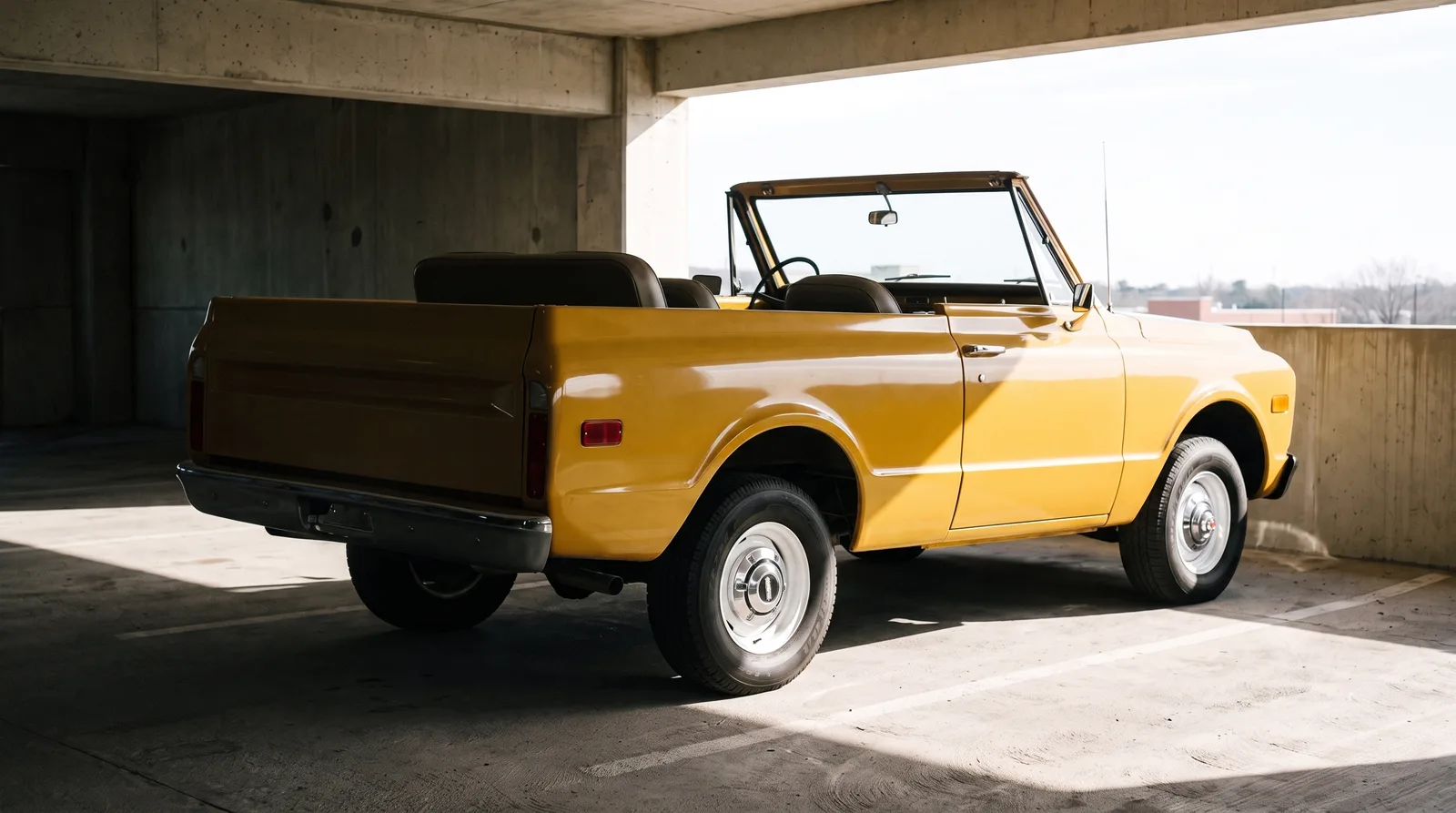
Color as the whole statement
A closed truck lets its greenhouse, its trim, and its proportions share the visual load with the paint. An open K5 has none of that. With the top off, the eye reads the body as one continuous shape from grille to tailgate, and whatever color Chevrolet or a later repaint chose becomes the single loudest thing about the truck. That is part of why owners who plan to run their K5s topless during warm months tend to think harder about color than owners of closed, everyday trucks ever need to.
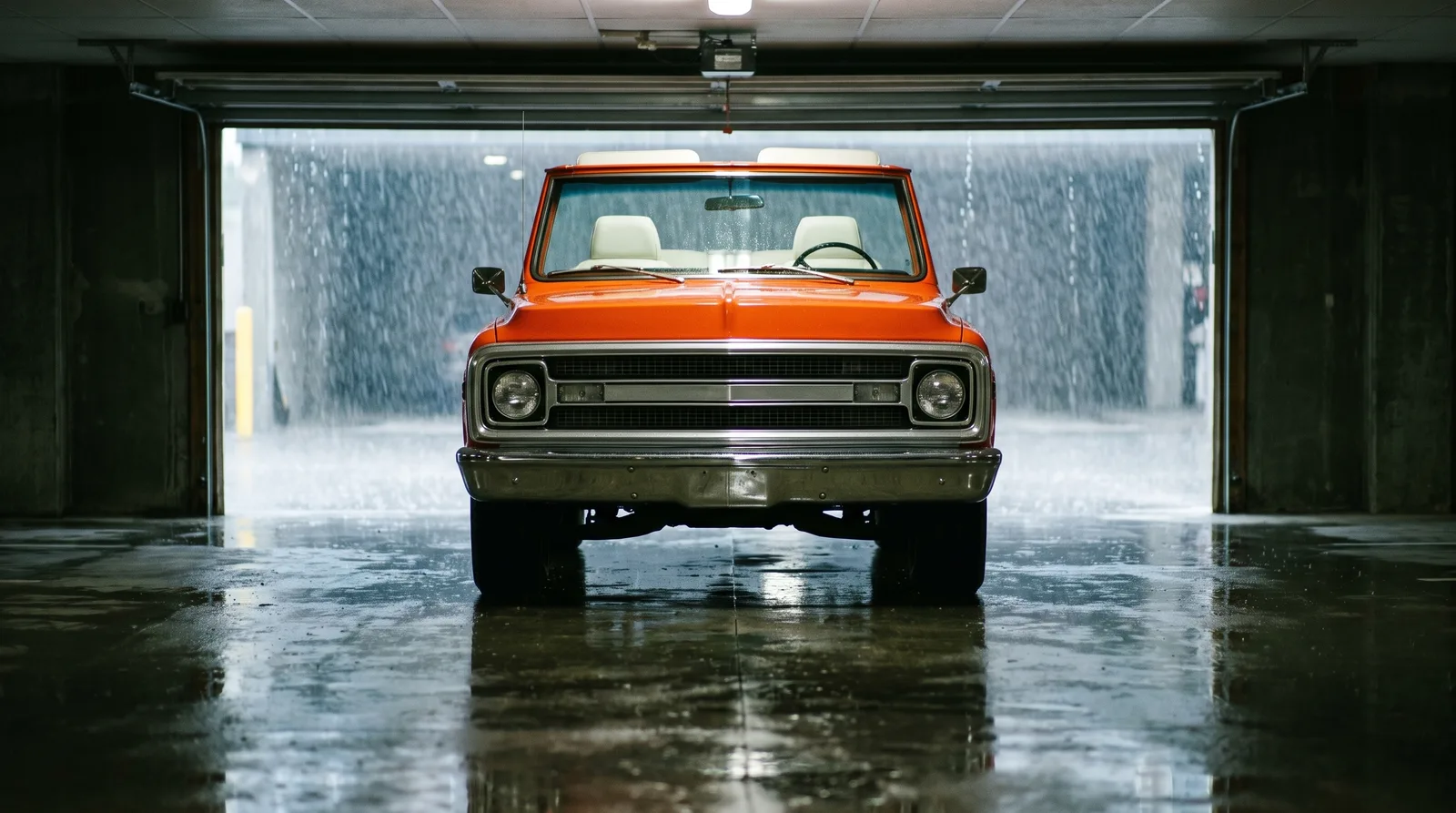
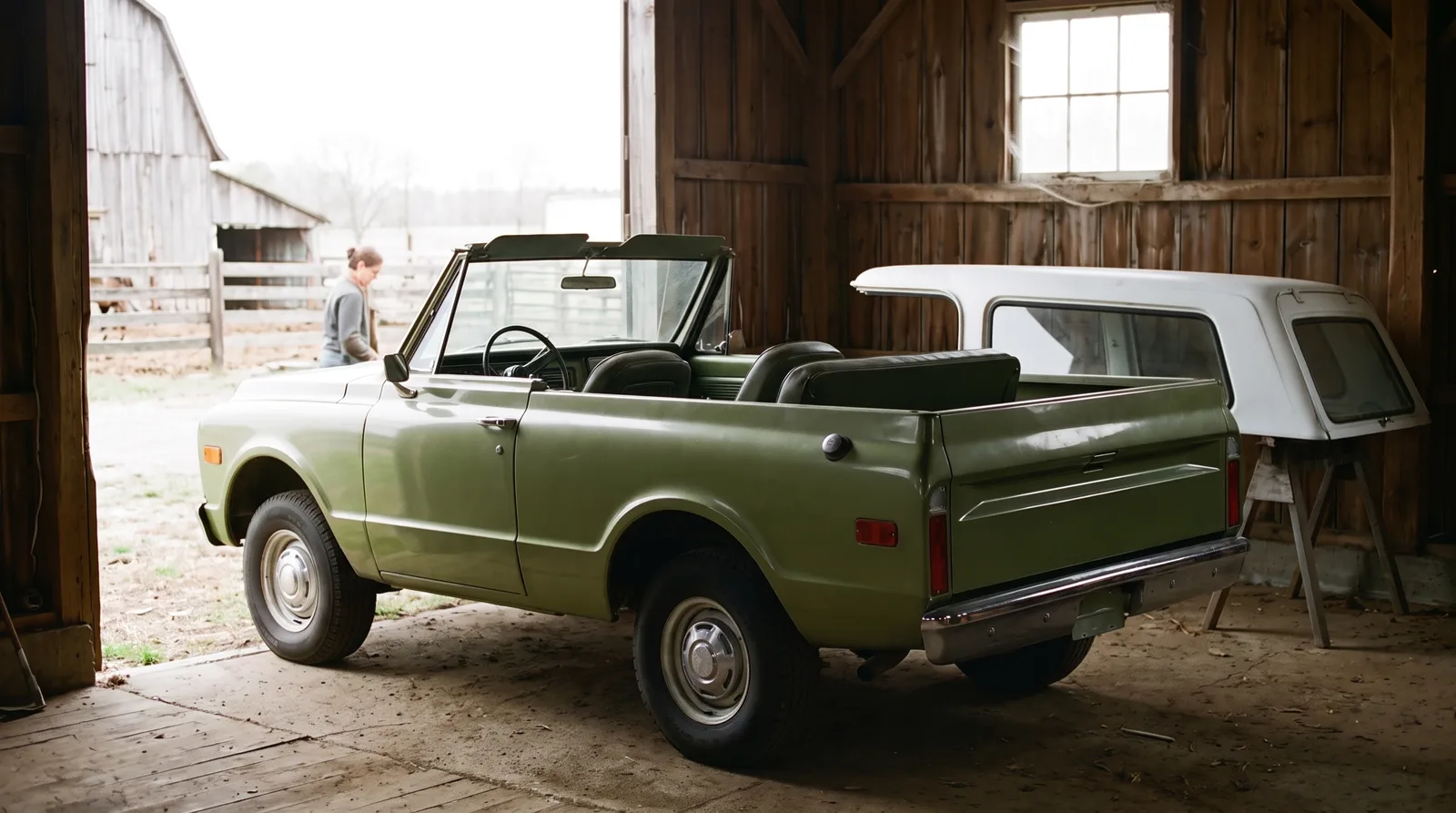
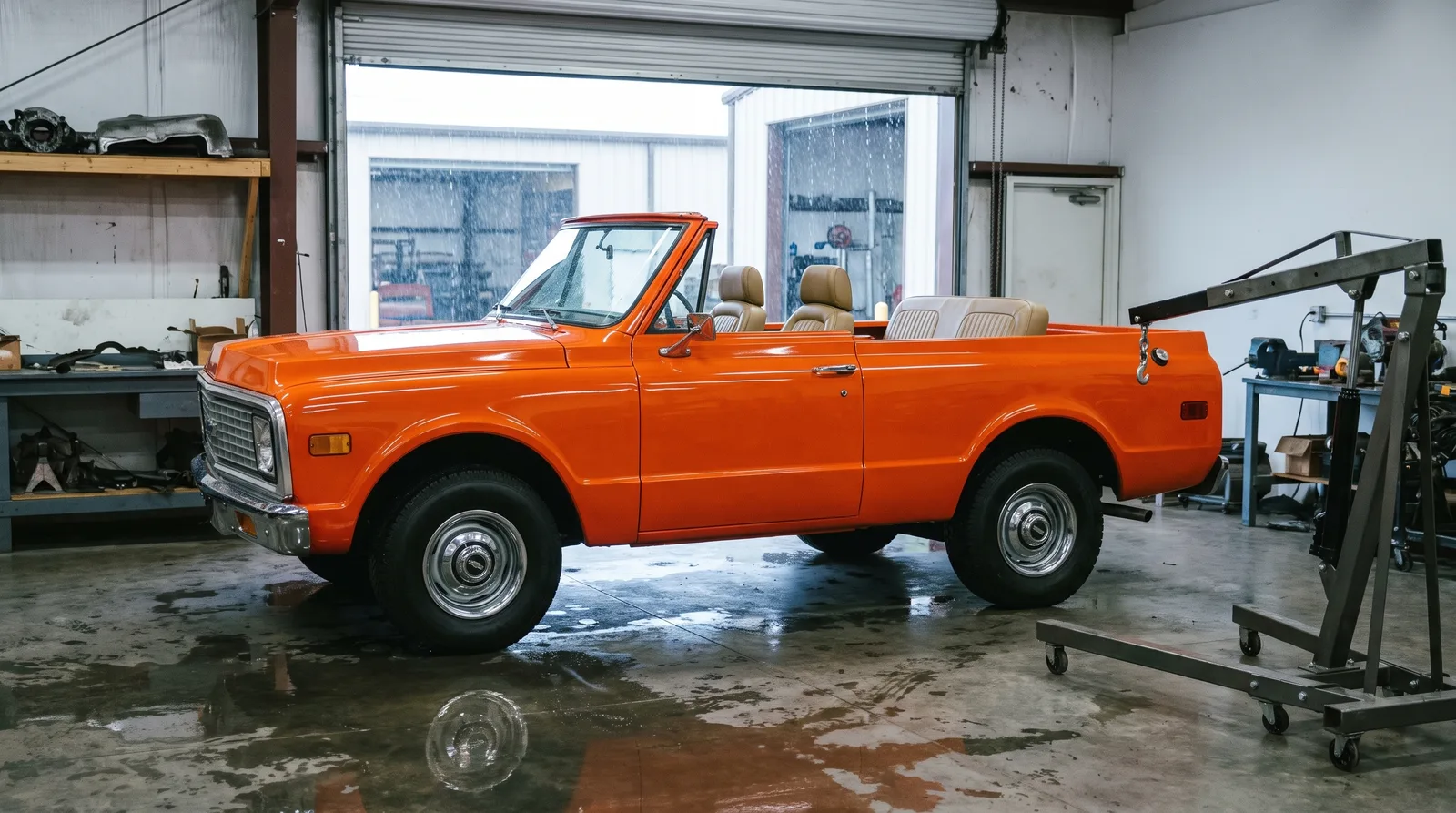
Early 1970s Chevrolet offered a range of exterior colors that leaned into the era's taste for bold, saturated tones alongside more traditional options. Oranges, warm golds, and deep greens sat on the order sheet next to classic whites and blues, giving buyers real range depending on whether they wanted the truck to blend into a work site or stand out at a trailhead. On a topless K5, those bold period colors read entirely differently than they do on a closed truck, because there is no roofline to interrupt the color and soften its impact.
Why certain colors became associated with the open top
Ask around at a K5 gathering and certain color and top combinations come up again and again as the ones people remember from period photographs. Warm earth tones and bright, almost playful colors tend to dominate the images that circulate from the truck's early 1970s heyday, likely because those shades photographed well against beach sand, forest trails, and the sun bleached backdrops where topless K5s tended to get driven and photographed most often. A dark, subdued color reads differently in the same setting, more purposeful and less playful, which is its own kind of appeal for a different type of owner.
None of this means one approach is correct. A K5 finished in a quiet, factory correct color with the top off has its own honest appeal, especially to owners chasing historical accuracy over visual drama. But there is no denying that the bolder period colors have become closely associated with the open top image in a way that shapes buying decisions today, sometimes pushing restoration budgets toward a repaint even when the original color was something far more restrained.
Two-tone paint and the open cab effect
Chevrolet's period two-tone treatments, where the lower body wore one color and the upper cab and hood a contrasting shade, took on a different character once the top came off entirely. With no roof panel to carry the upper color, a two-tone K5 driven topless effectively becomes a single-tone truck from most viewing angles, with the second shade only visible along the beltline and hood. Some owners lean into this, choosing paint schemes specifically because they know how the truck will read with the top stored away for the season. Others restore strictly to the original two-tone spec regardless of how it looks topless, treating factory accuracy as the priority over how the truck photographs on a summer weekend.
Either approach has real supporters in the hobby, and neither one is wrong. What matters is that color decisions on these trucks carry more weight than they would on almost any other classic, precisely because the removable top changes how much of that color is actually visible at any given time.
"You paint a K5 and then you have to imagine it twice, once with the top on and once without. Most owners never think about that until they see their own truck topless for the first time and realize the color is doing all the talking now."
- Nora Beckett
Interior color and the open cab
Removing the top does not just expose the exterior paint to a different kind of scrutiny, it also changes how much attention the interior trim gets in daylight. With no headliner and no roof panel overhead, an open K5's dashboard, seats, and door panels are suddenly lit the way a convertible car's interior always has been, softer and more visible from outside the truck than a closed cab ever allows. Owners who spend real time thinking about color tend to consider the interior trim right alongside the exterior paint, aware that a mismatched or faded interior will stand out far more once the roof is gone for the season.
That visibility is part of why some restorations spend nearly as much attention on seat upholstery and dash trim as they do on the exterior finish. A truck that looks sharp with the top on can suddenly feel unfinished with the top off if the interior was treated as an afterthought, which is a lesson more than a few restorers have learned only after driving their finished truck topless for the first time.
What today's buyers are drawn to
Current market interest tends to favor the brighter, more period correct colors on surviving convertible top K5s, partly because those shades so closely match the photographs and memories that built the truck's reputation in the first place. A buyer chasing that specific summer feeling is often chasing a specific color palette without fully realizing it, drawn to a warm orange or a deep forest green because it matches an image they have carried since childhood or picked up from an old family photograph.
Some buyers go a step further and commission a custom color specifically chosen for how it will look topless, moving away from strict period accuracy in favor of a shade that photographs well and stands out at shows once the roof comes off. That approach draws mixed reactions within the hobby, with some purists preferring strict factory correctness and others arguing that a truck built to be driven open should be finished with that reality in mind rather than treated as a static museum piece.
For anyone who wants the full context behind why the removable top mattered so much to how these trucks looked and were remembered, our complete history covers the whole story from launch through the top's disappearance after 1975. And for those ready to see the color question in person rather than in photographs, you can browse classic K5 Blazer listings and get a real sense of how much a paint choice changes the character of an open top truck.
Sources and notes
Related Reading
Have a
Chevrolet Blazer
for Sale?
Reach thousands of serious classic car collectors across the US.
Sell It Here →
Selling a classic? Here's how: sell my classic car
Are You a Classic Car Dealer?
List your full inventory and connect with targeted classic car buyers.
Join as a Dealer →

About the author
Nora Beckett
Automotive features writer and photographer who tells the human stories behind the cars, from show fields to cross-country road trips.
Related Listings - Chevrolet Blazer




Comments
Be the first to comment on this article.