
Stand at the front fender of a 1993 Camaro and look up the windshield. The glass does not stand up so much as lie down, and once you notice it you understand the rest of the car. The 4th gen Camaro design was built around that glass: a 68-degree windshield, a cowl pushed forward, an engine shoved back, a low nose, and body panels made from composite where steel would have been the easy answer. This piece takes the body apart from the inside, the way a builder sees it. For the model years, engines and production, go to our fourth-gen Camaro guide.
Car Features
7 min read
Designing the 1993 Camaro: Composite Panels and a Long Windshield
How a 68-degree windshield shaped the 1993 Camaro: the cowl moved forward, the LT1 pushed back, and composite roof, doors, hatch and spoiler.
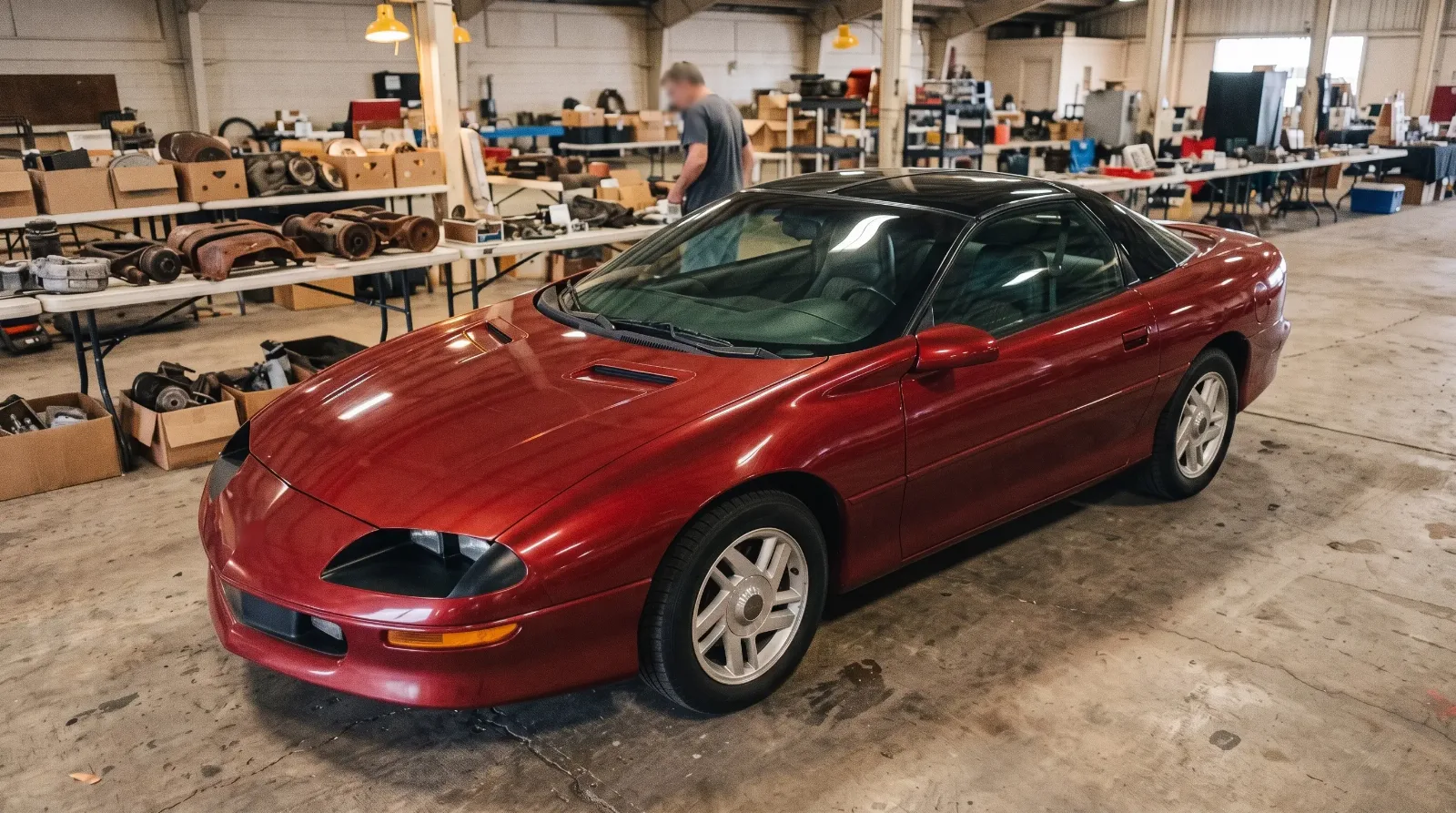
The 4th gen Camaro design started at the windshield
The number is 68 degrees. A 2015 GM design retrospective called it one of the most radical windshields of its day, and that is not marketing language stretched thin. The third-generation car had already run a 62-degree windshield, which was past GM's own internal 60-degree limit. The 1993 car went six degrees further.
Rake like that is not a styling decision you can make in isolation. Lay the glass down that far and the base of it has to move forward, which means the cowl and firewall line move forward too. The design team paired that with what they called a "bottom-breathing" cooling layout, with the engine's cooling air drawn in low, beneath the nose. Put those two moves together and you get the wedge: low at the front, rising in one line to the roof. The shape came out of the packaging. The packaging came out of the windshield.
Moving the engine back under the cowl
Here is the part that matters every time you open the hood. With the cowl moved forward, the LT1 V8 sits far back, tucked under it. John Heinricy described it as "almost a mid-front-engine car." For weight distribution that is exactly what you want. For a mechanic it means almost everything under the hood except the alternator is buried under the cowl and the intake.
That is the trade the designers made, and I think it was the right one. A tall, upright engine bay would have meant a tall, upright car, and that would have looked like 1982 again. The owners who curse the spark plug job on an LT1 are paying for the profile they bought the car for.
The finance side shaped the car too. Heinricy's account is that the budget allowed a new front end but not an independent rear. So the car kept the third-generation floor pan and live rear axle under a body that was mostly new. The design you see is the part the money was spent on.
Composite panels: what was plastic and what was steel
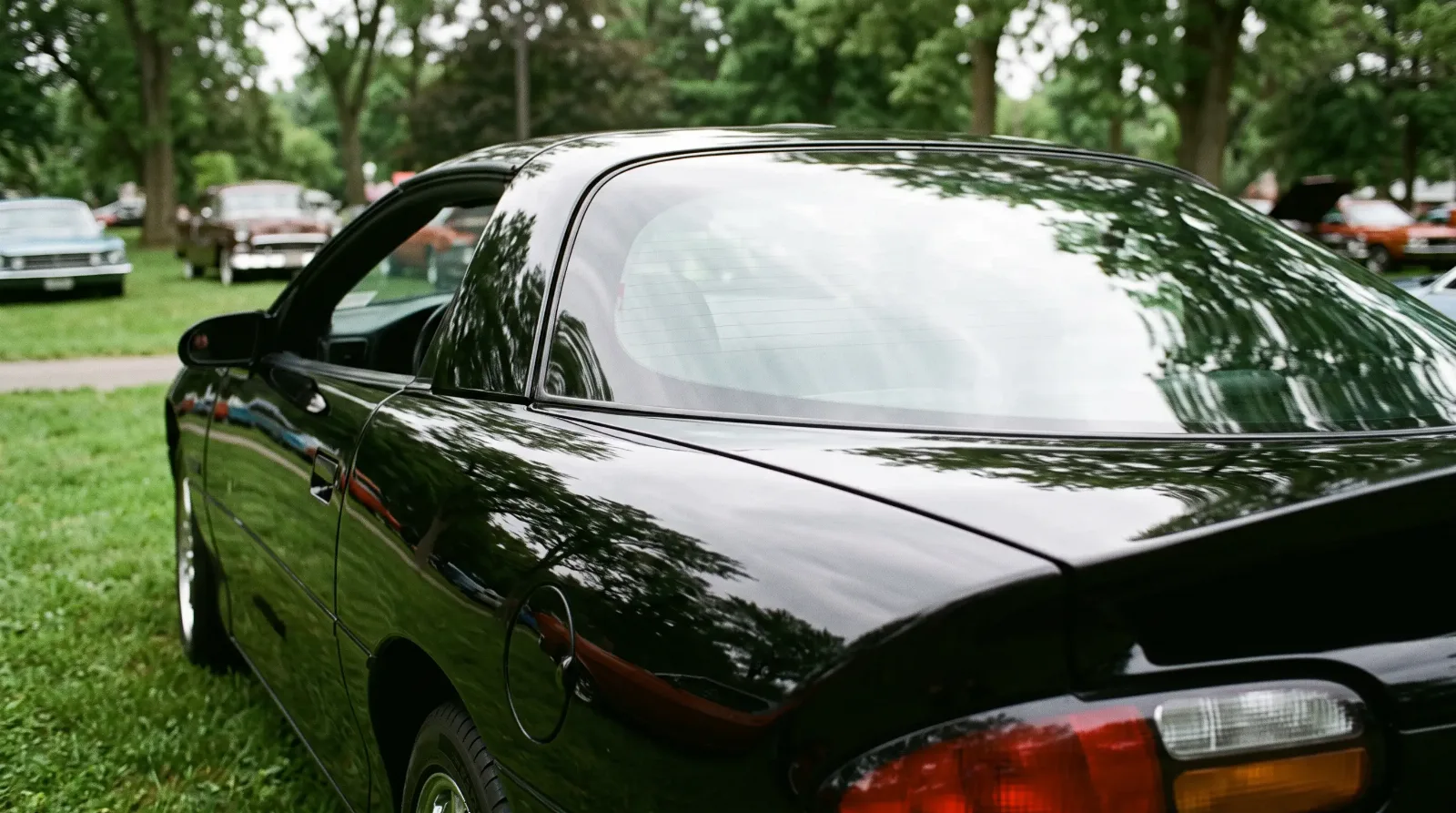
This is where people get it wrong at swap meets. The fourth-generation coupe used sheet molding compound, which is chopped fiberglass bound in polyester resin, for four parts: the roof, the rear hatch, the doors and the spoiler. The hood and the rear quarter panels were steel. One valuation guide also lists the front fenders as composite; two other sources leave the fenders off the list, and nobody has produced a GM document to settle it. Until somebody does, treat the confirmed list as roof, doors, hatch and spoiler.
| Panel | Material | Builder's note |
|---|---|---|
| Roof | Composite (SMC) | Every 1993 Z28 roof was painted black |
| Doors | Composite (SMC) | Confirmed in all sources |
| Rear hatch | Composite (SMC) | Confirmed in all sources |
| Spoiler | Composite (SMC) | Wraparound wing shape set in the wind tunnel |
| Hood | Steel | Redesigned for 1998 |
| Rear quarters | Steel | Carry the Camaro's built-in spoiler shape |
| Front fenders | Disputed | One source says composite; redesigned for 1998 |
Composite panels were not new thinking at GM. The front-drive program that nearly replaced the Camaro planned to hang molded plastic panels on a steel space frame, and its styling was described as remarkably similar to the car that reached production. That program died in 1986, and you can read about it here. What survived into the 1993 car was the look and a selective use of composites on a conventional steel body.
"Everything people love or hate about this body starts at the glass. Sixty-eight degrees pushed the cowl forward, the engine back and the nose down, and the stylists got a wedge out of an engineering problem. Bolt a tall cowl-induction hood on one and you have undone the whole idea."
Jim Vasquez
The details that set the shape
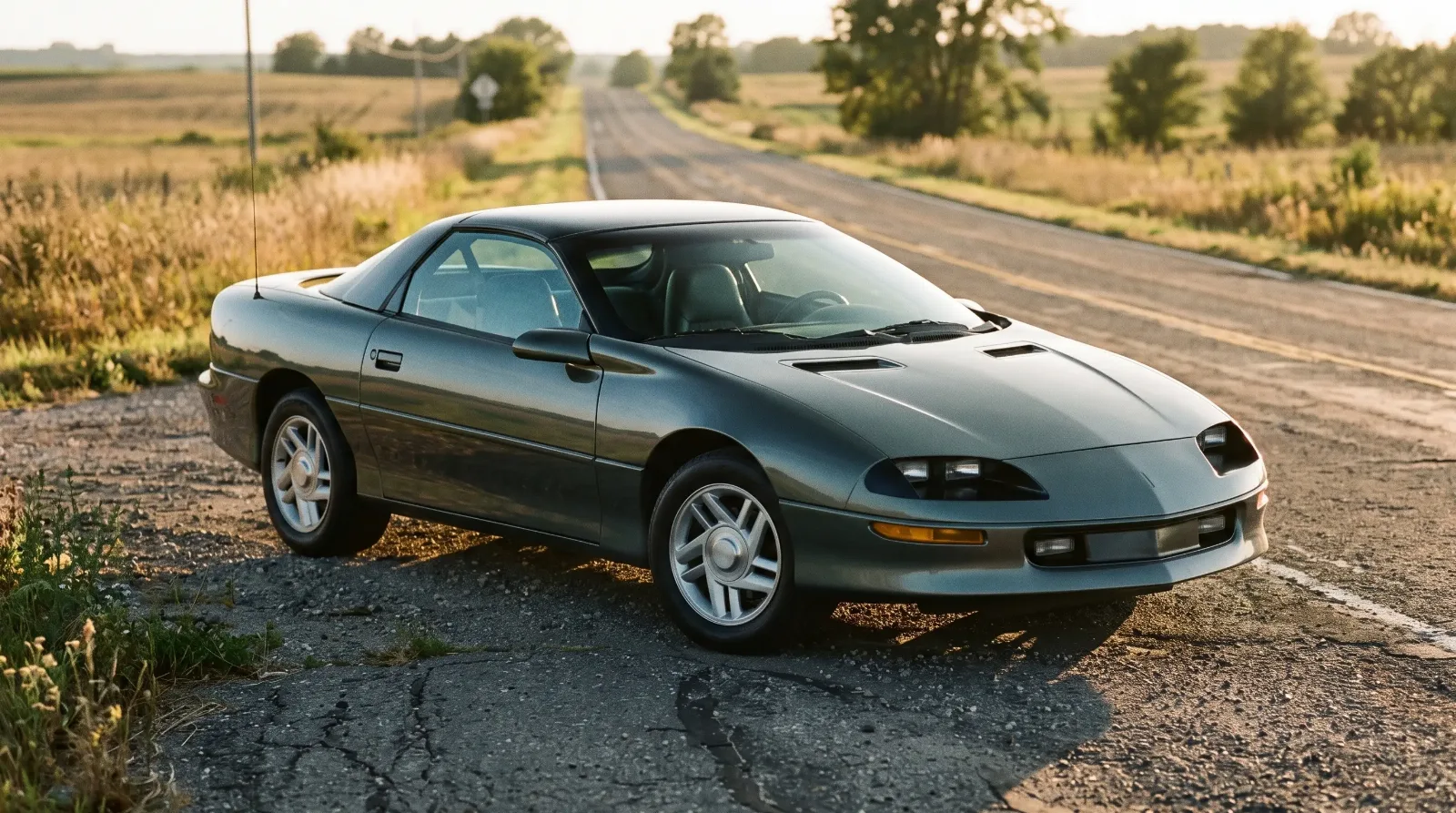
Three details made the 1993 Camaro look like nothing before it. The first was an integrated rear wing that wraps around the tail, with its shape set by wind-tunnel testing. The second was the side of the car: smooth body sides with the wheel flares worked into the surface instead of added on. The third was the nose. To keep it as low as the windshield demanded, the car used four mini-halogen headlamps recessed in square pockets.
Those headlamps are also how you tell the twins apart at fifty yards. The Camaro had four recessed square lamps and a spoiler built into the rear fenders. The Firebird had retractable headlamps and a trunk-mounted spoiler. Same structure, same windshield, very different faces. If you are building one and somebody offers you a "Camaro" spoiler that bolts to the decklid, you are looking at the wrong car's part.
The production car went into the record books quickly. A Z28 paced the Indianapolis 500 in May 1993, and the shape was never more exposed than on the 1993 pace car, with its black over Arctic White paint, graphics and white wheels laid over those smooth sides.
Who drew it, and what the shape cost later
John Cafaro led the studios that designed the Camaro, and the Corvette as well. Chuck Jordan was GM's design chief from 1986 to 1992. The shape itself was largely the work of GM's Advanced Studio in Warren, Michigan, with influence from young designers in California. The record does not hand the car to one name, and I would distrust anyone who tells you it was a single person's sketch.
The design aged in two stages. For 1998 Chevrolet replaced the four recessed headlamps with streamlined composite units and redesigned the hood, front fenders and front fascia, the face owners later nicknamed the catfish. The windshield, roof, doors and hatch stayed.
Then the glass came back to bite. A new head-impact standard took effect on September 1, 2002. Scott Settlemire, the product manager, said meeting it would have meant heavily padding the windshield opening. The 68-degree glass that defined the car in 1993 was one of the reasons it could not continue past 2002.
That is the full arc of the design. Start with an extreme windshield, build the car backward from it, use composites where they helped, and live with the consequences under the hood and, eventually, in the safety rules. If you are restoring one, keep the original panels and the factory nose. The shape only works when nothing has been added to it.
Sources and notes
- FormTrends: Five GM designers reflect on five generations of the Camaro
- conceptcarz: GM design retrospective on the Camaro generations (2015)
- Hagerty: Fourth-gen Camaro, 1993 to 2002, the one that died first
- Hagerty: Fourth-gen F-body values (body materials and packaging)
- Wikipedia: Chevrolet Camaro (fourth generation)
- Wikipedia: Chevrolet Camaro (third generation), for the 62-degree windshield
Related Reading
Have a
Chevrolet Camaro
for Sale?
Reach thousands of serious classic car collectors across the US.
Sell It Here →
Are You a Classic Car Dealer?
List your full inventory and connect with targeted classic car buyers.
Join as a Dealer →
#chevrolet camaro
#car design history
#fourth-generation Camaro
#1993 Camaro
#Camaro design
#composite body panels
#John Cafaro

About the author
Jim Vasquez
Southern California hot rod and custom car builder with roots in the traditional kustom kulture scene.
Related Listings - Chevrolet Camaro


Comments
Be the first to comment on this article.