
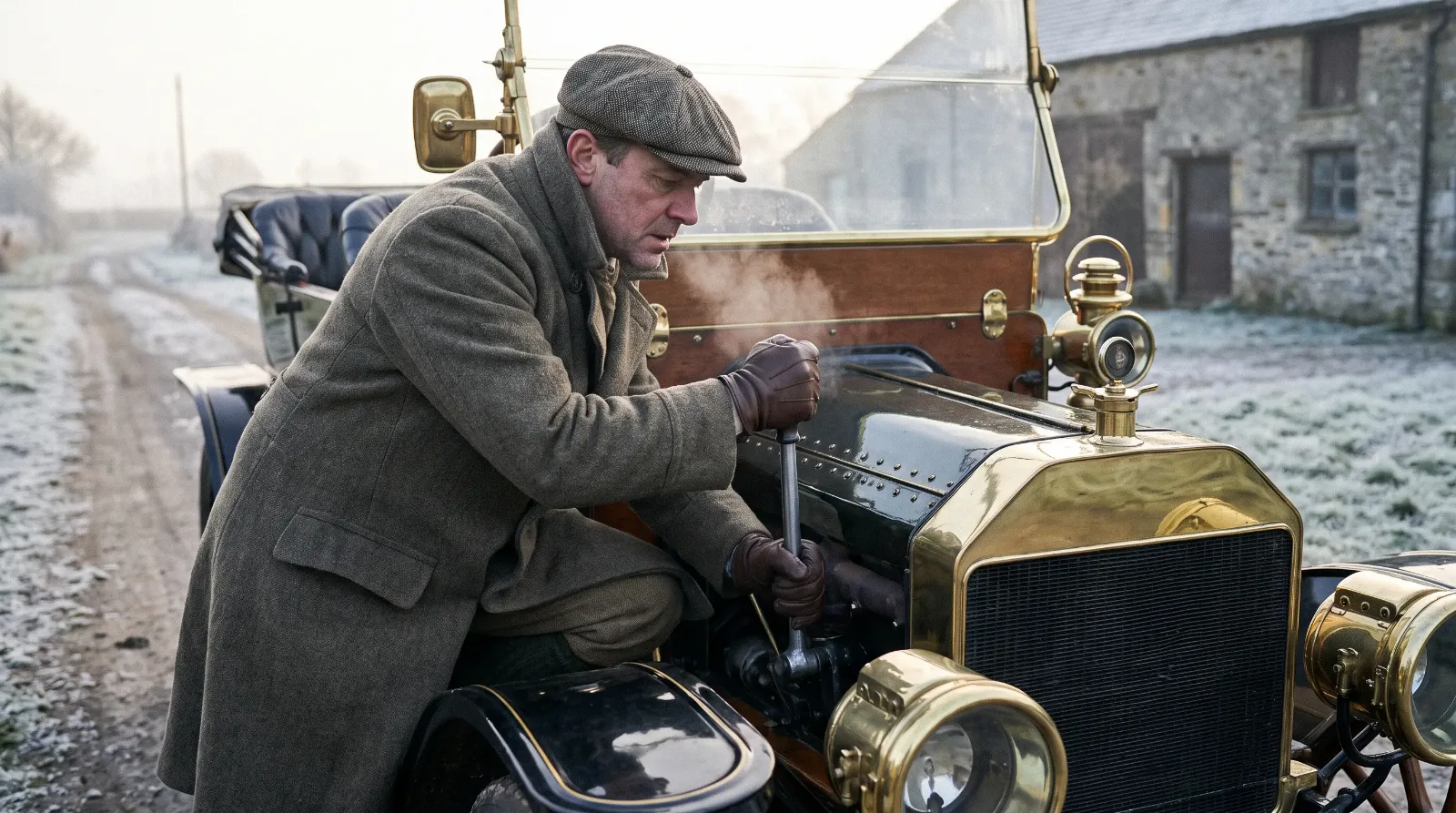
Every brass era touring car photographed at dusk shows the same detail catching the light: a pair of round lamps up front, polished brass housings with a bullseye lens, looking almost decorative from a distance. They were not decorative. They were the only thing standing between a driver and total darkness on a country road, and the way they worked is genuinely clever engineering for something that looks, at first glance, like little more than a fancy candle holder.
Car Features
6 min read
Acetylene Headlights: Lighting the Antique Road
Before electric headlights, brass era cars burned acetylene gas to see the road at night. How the chemistry worked, and why brass was the right material.
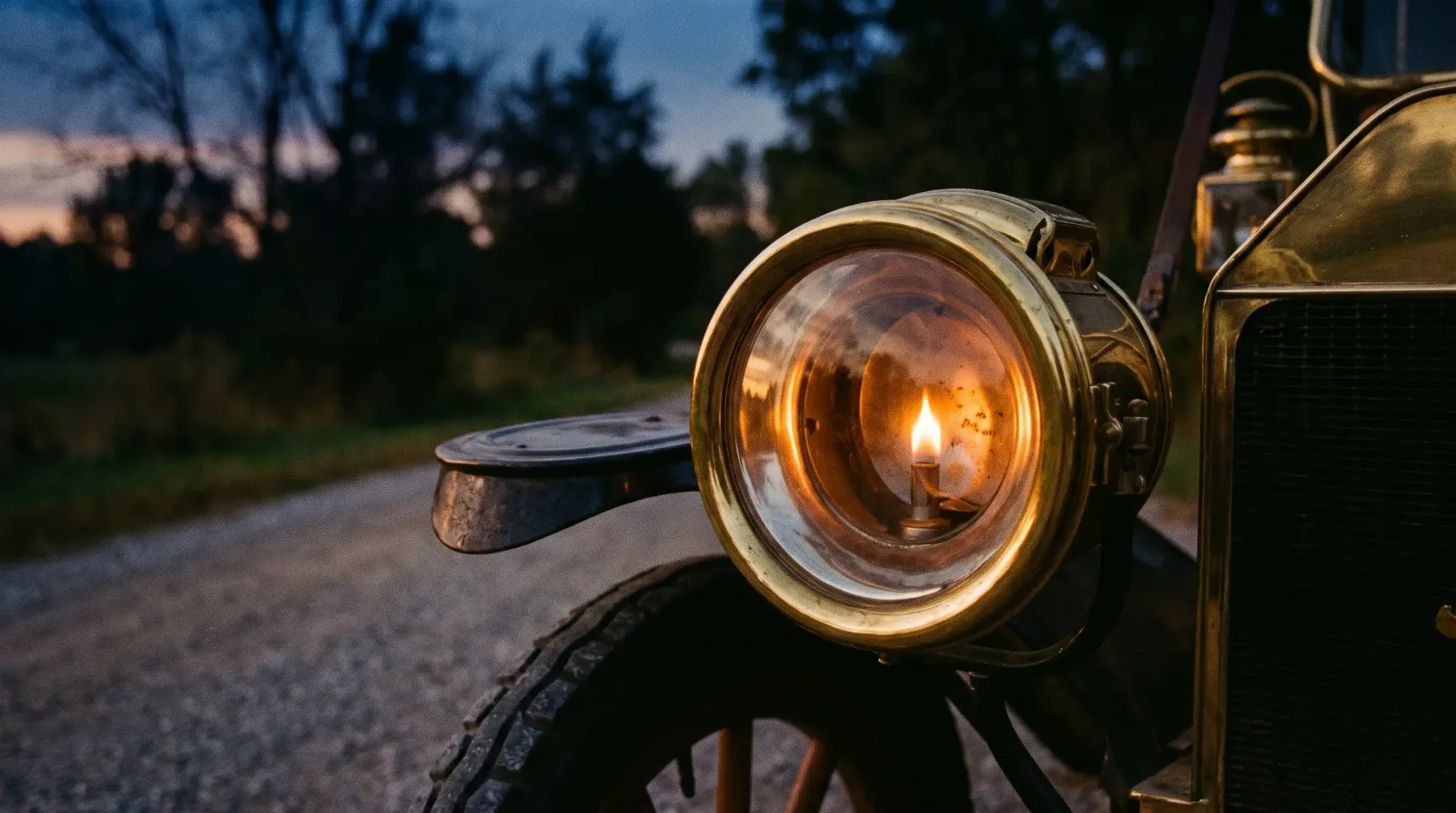
The chemistry behind the glow
Acetylene headlamps worked on a simple, elegant reaction. A small tank or generator held calcium carbide, a solid chemical compound, and a separate reservoir held water. A regulated drip of water onto the carbide produced acetylene gas, and the gas was piped up to the lamp head, where it burned as an open flame behind a polished reflector and a lens. The result was a bright, steady white light, considerably better than the oil-burning lamps that came before it, and bright enough to actually see the road at speed after dark.
The generator itself was usually mounted low on the running board or the front of the car, separate from the lamp housing, connected by a thin brass or copper tube. That separation mattered for safety, keeping the open flame at the lamp head away from the reactive carbide and water below.
Living with an acetylene system
Running these lamps was a genuine chore compared to flipping a modern switch, and it is worth understanding that as more than a quaint detail. Before a night drive, an owner had to load fresh carbide into the generator, fill the water reservoir, open the valve to start the gas flowing, and then physically light each lamp with a match, reaching up under the lens to ignite the burner. Do it wrong and you got a weak flame, a wasted trip out to the garage, or in bad cases a small flare-up from trapped gas.
The lamps also needed regular cleaning. Soot built up on the reflector and lens from the open flame, and a dirty reflector meant a noticeably dimmer light exactly when a driver needed it most. Careful owners kept a cloth and a spare box of matches in the car specifically for headlamp maintenance, treating it as routine as checking tire pressure is today.
Wind was another daily annoyance. An open flame behind a lens is more sheltered than a candle in a lantern, but a strong gust could still snuff a poorly sealed burner, leaving a driver to pull over, relight it by hand, and hope the wind settled before it happened again a mile down the road. Some owners carried a small windproof match tin specifically for this, a detail that shows up in period advice columns aimed at new car buyers more often than you would expect.
Curious about the fuller context these lamps sat inside? The antique car brass headlights guide covers the whole brass era picture, from lighting to starting to the wheels underneath.
Why brass, specifically
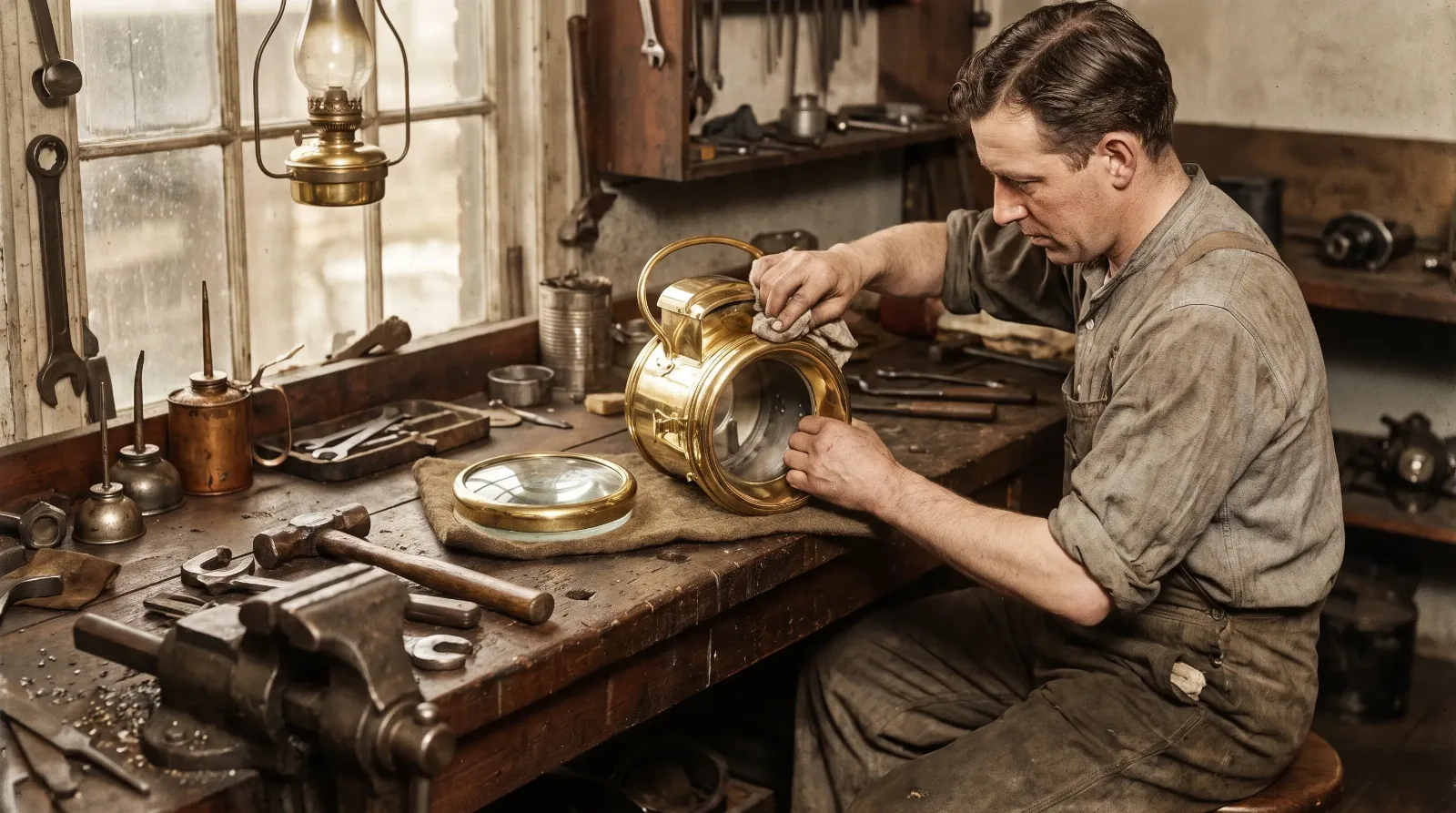
Brass was the practical material for these lamp housings for the same reasons it showed up everywhere else on cars of this period. It cast cleanly into the curved reflector shapes needed to throw light forward, it held a polish that looked sharp on a showroom car, and metalworking shops of the era already had the skills and tooling to work it well from other lighting and lantern trades. A lamp maker building carriage lanterns one year could pivot to automobile headlamps the next without learning an entirely new material.
The downside was upkeep. Brass tarnishes fast when exposed to weather and road grime, and an owner who wanted that showroom shine had to polish the lamps regularly, which is part of why the brass era gets remembered as a hands-on hobby even when the cars were new, not just now that they are a century old.
Lens quality mattered too, and it varied a great deal between manufacturers. The better brass era lamp makers used precision-ground glass lenses that focused the flame into a genuinely usable beam, while cheaper suppliers sold flatter, less refined glass that scattered the light and left a dim, uneven spread on the road. A collector today can often tell a premium original lamp from a bargain one just by how crisp the beam pattern looks when it is lit and aimed at a wall.
What replaced them, and when
Electric headlights started appearing as an option in the early 1910s and became standard as the electric starter and a car's onboard electrical system matured together, since a battery and generator built to crank the engine could also power a set of electric bulbs. By the time you reach the late 1910s, acetylene lamps had mostly disappeared from new cars, though some owners kept using them a while longer simply because the equipment they already had worked fine.
"There is a quiet elegance to an acetylene lamp that electric light never had to earn. Nothing about it hides how it works. You can see the flame, smell the gas, watch the whole little chemical reaction happen right there on the running board. Restoring a set to working order and lighting them at dusk is one of the few times a hobby car actually recreates the exact experience the original owner had, not just the look of it."
Sarah Whitfield
Restoring and running them today
Original acetylene generators and lamp assemblies are collectible in their own right, separate from the car they came on, and a complete matching set adds real value to a brass era car because so many were lost, damaged, or swapped out for electric conversions over the decades. If you own a car with its original lamps, keep the generator and the lamp heads together as a set and resist the urge to convert to electric bulbs just for convenience, since originality is exactly what serious brass era buyers are paying for.
Carbide is still manufactured and available through specialty suppliers, and a properly restored acetylene system can run safely today with the same care an original owner would have used. It takes patience and a respect for the process, which is more or less the whole appeal of the brass hobby in one sentence.
The lighting is only one piece of what made these cars a workout to operate. Keep reading for what starting one actually involved, and why the electric starter changed the whole industry when it finally arrived.
Sources and notes
Related Reading
Have a
Classic Car
for Sale?
Reach thousands of serious classic car collectors across the US.
Sell It Here →
Are You a Classic Car Dealer?
List your full inventory and connect with targeted classic car buyers.
Join as a Dealer →

About the author
Sarah Whitfield
Third-generation classic car collector specializing in pre-war American and European coachbuilt automobiles. Researcher and concours enthusiast.




Comments
Be the first to comment on this article.