
Pull into any Saturday night cruise-in across the American Midwest and you will still find one: a channeled coupe sitting low on a rusty frame, a rattle-can flat-black hood, a small-block idling rough, and a builder leaning on the fender who spent more on beer than on paint. Rat rods have not disappeared. But the scene that produced that car looks different than it did fifteen years ago, and pretending otherwise does the culture no favors.
Car Features
7 min read
Are Rat Rods Still Popular
The mid-2000s wave crested, the fake-patina crowd left, and a younger DIY crowd is keeping rat rods alive. Where the scene really stands in 2026.
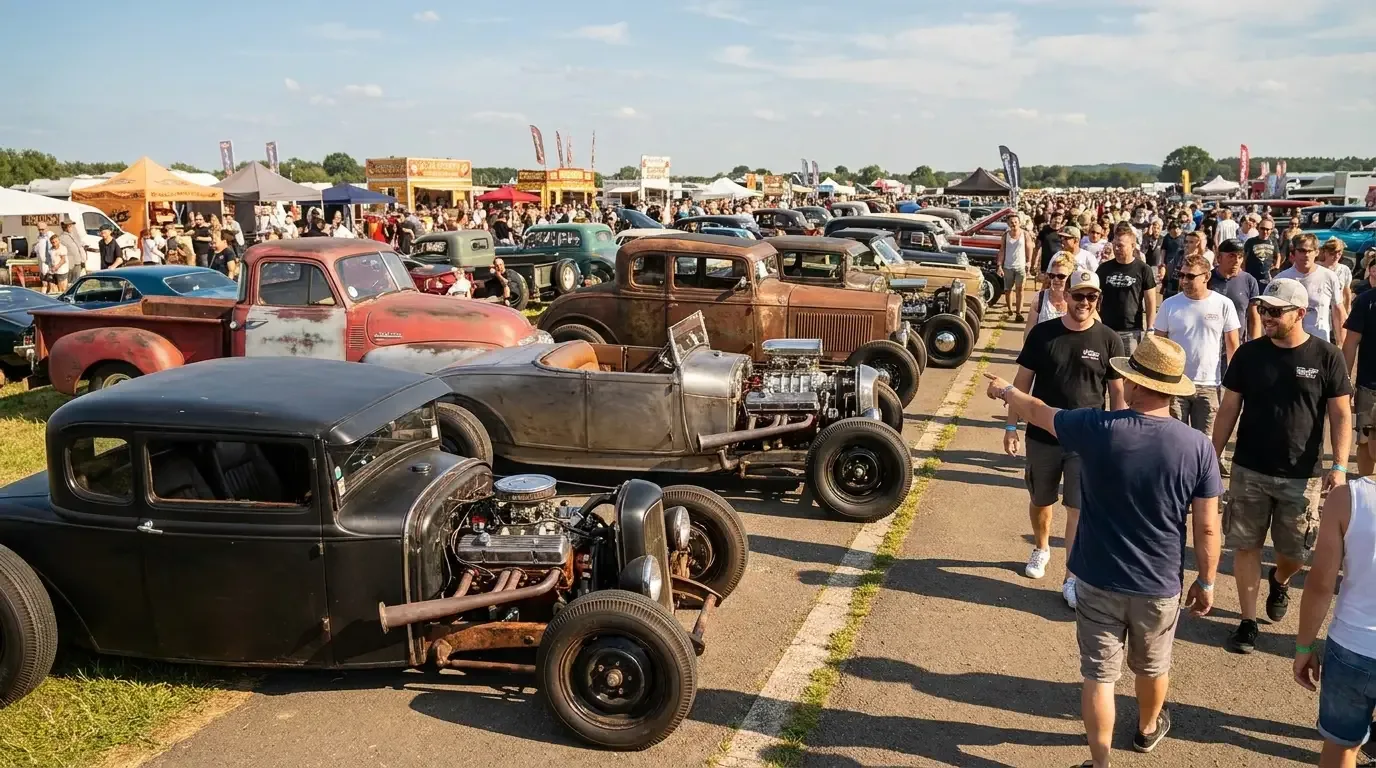
The question people keep asking, at shows and in forum threads and in the comments under build videos, is whether rat rods are fading out or just changing shape. The honest answer is both. The novelty peak is behind us. The core is still here. And a younger crowd is quietly keeping the DIY part alive, which was always the point. Before we get into where the scene stands, it helps to be clear on what is a rat rod and what separates it from the polished builds it was reacting against.
The mid-2000s wave and why it crested
Rat rods went mainstream in a specific window. Through the late 1990s the style was a fringe reaction against six-figure show cars. Then, roughly across the mid-2000s, it broke wide. Magazines that had ignored primer and patina started running rat rod features. Television build shows put junkyard hot rods on cable. Aftermarket companies noticed and began selling parts designed to look old on purpose.
That last part is where the trouble started. The whole idea was low-buck and hand-built. Once you could order a "distressed" fuel tank or a bolt-on fake-patina kit, the scene had a credibility problem. Builds that cost tens of thousands of dollars started showing up wearing manufactured rust, and the people who had welded their cars together in a driveway noticed. The backlash against poser "rat-look" cars was real, and it took some of the air out of the movement. By the time the reality shows moved on to the next trend, the easy money and the easy attention had moved with them.
Where the scene actually stands in 2026
The peak is over, and that is fine. What is left is arguably healthier than the boom. The people building rat rods now are, for the most part, doing it because they want to, not because it is trending. That filters out a lot of the manufactured-rust crowd and leaves the DIY core.
A few things are true about the current state of the scene, based on what shows up at events and in builder communities:
- Turnout at rat-rod-friendly shows is steadier and more regional now, less driven by big national coverage.
- The line between a "real" rat rod and an expensive build wearing fake age is watched more closely by the community than it was during the boom.
- Parts supply is easier than ever, which cuts both ways: it lowers the barrier to entry but tempts builders toward the bolt-on look.
- The style has absorbed into the wider traditional hot rod world rather than staying a separate fad.
That last point matters. A lot of the energy that used to be labeled "rat rod" now just sits under the broader old-school hot rod umbrella. If you want the clean version of that distinction, the Rat Rod vs Hot Rod: The Real Difference breakdown lays out where one ends and the other begins.
"People ask me if rat rods are dead like they want me to say yes. They are not dead. They just stopped being famous, and honestly the cars got better for it. The guys still doing it are doing it for the right reasons."
Patrick Walsh
Shows, clubs, and where the culture lives now
The rat rod scene never lived on the internet, even during the boom. It lived at shows and in clubs, and it still does. Events with a traditional or "greaser" bent tend to draw the cars: swap meets, jalopy showdowns, drive-in gatherings, and the rougher end of the traditional hot rod calendar. These are not white-glove concours fields. They reward a car that looks driven, not trailered.
Local clubs are the connective tissue. A regional club with a garage night and a shared parts stash does more to keep a rat rod on the road than any magazine ever did. The scene has always been word-of-mouth and driveway-to-driveway, and that structure held up better through the post-boom years than the media coverage did.
| Era | What defined it | Scene health |
|---|---|---|
| Late 1990s | Fringe reaction to show cars, pure DIY | Small, underground |
| Mid-2000s | Mainstream coverage, TV, aftermarket "patina" parts | Peak visibility |
| 2010s | Backlash against fake-rust poser builds | Cooling from the top |
| 2020s | Absorbed into wider traditional hot rod world | Smaller, steadier, DIY core intact |
The younger DIY crowd keeping it alive
Here is the part that gets missed when people declare the style dead. A rat rod is one of the cheapest ways into the hobby, and that has quietly pulled in a younger generation of builders. A kid who cannot afford a finished street rod can afford a rough body, a junkyard drivetrain, and a welder borrowed from an uncle. That was the original appeal in the 1990s, and it still works.
This crowd is DIY out of necessity, which is exactly the spirit the scene was founded on. They are not buying fake-patina kits. They are running what they find, fixing it in the driveway, and driving it hard. The style is less a trend for them and more a practical on-ramp into hot rodding when money is tight. Whether that keeps the numbers up long term is an open question, but the entry point is real and it is affordable.
There is a hard truth that comes with all this, and it is worth saying plainly. The rat rod reputation for cut-corner brakes, sketchy steering, and skip-the-inspection wiring is not a myth. The cheap-and-raw ethos can drift into unsafe, and a young builder learning on scavenged parts is exactly who is most exposed to it. A rat rod can be built raw and still stop and steer properly. That is not a contradiction, and it is the difference between a car that lasts and one that becomes a cautionary story.
So, are they still popular?
Popular is the wrong word to measure it by now. Rat rods are past the peak of their fame and past the era when the trend attracted people who did not care about the craft. What remains is a smaller, more committed scene that has folded back into the traditional hot rod world it came from, plus a steady trickle of young builders using the style as their affordable way in. The cars still show up. The clubs still meet. The welders still spark in driveways on the weekend. That is not a dying scene. It is a scene that grew up.
Sources and notes
- Period and current traditional hot-rod and rat-rod press coverage of the style's rise and cooldown.
- Builder interviews and driveway-build accounts on DIY methods, cost, and the fake-patina backlash.
- Show and car-club records reflecting regional turnout and event character.
- General corrosion and clear-coat guidance for patina stabilization.
- Trend and popularity claims reflect period and current press coverage and builder-community accounts; they are stated as directional observations, not precise attendance figures.
Related Reading
Have a
Classic Car
for Sale?
Reach thousands of serious classic car collectors across the US.
Sell It Here →
Are You a Classic Car Dealer?
List your full inventory and connect with targeted classic car buyers.
Join as a Dealer →

About the author
Patrick Walsh
Automotive journalist covering classic car shows, events, and the enthusiast community across North America.
Comments
Be the first to comment on this article.