
Park a clean, period-correct '32 highboy next to a bare-metal, rust-streaked Model A at any show and watch the crowd split. One camp reads the tidy roadster as the real deal, built the way the old timers did it. The other camp walks straight past it to the rusty one because that car looks like it got welded up in somebody's garage on a Saturday night with whatever was lying around. I've stood in both camps at different points in my life, and here's the thing: both cars trace back to the same postwar root, but they answer a different question about what a hot rod is supposed to be. If you are still sorting out the family tree, start with what is a rat rod and then come on back here, because the fight between these two builds is really a fight about authenticity.
Rat Rod vs Traditional Hot Rod
Same roots, opposite finish lines. How rat rods and traditional hot rods differ, and where the authenticity fight really lands.
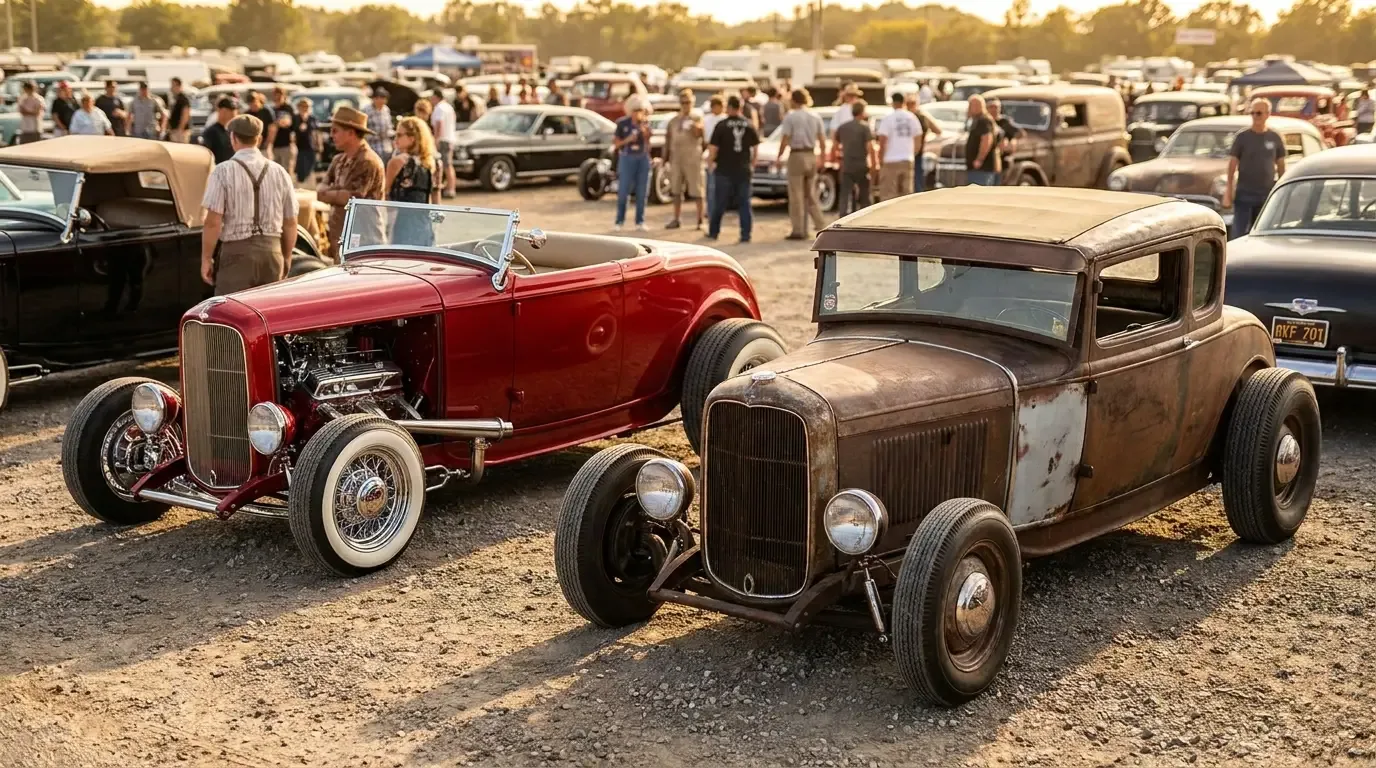
Same roots, opposite finish lines
A traditional hot rod is a prewar or early-postwar car, usually a Ford, stripped and hopped up the way guys actually did it in the late 1940s and 1950s. Fenders come off, the body might get a chop, the flathead gets more carbs, and the whole thing gets painted a solid color and detailed clean. Period-correct is the north star. If a part or a technique did not exist by roughly 1960, a purist does not want it on the car.
The rat rod grew up in the late 1980s and 1990s as a shot at the other end of that world, the expensive street rods that never left the trailer. Instead of chasing period-correct polish, the rat rod chases the raw look. Clear-coated rust or bare patina, junkyard drivetrains, found-object parts bolted or welded on, and a build cost measured in beer money instead of paint bills. The traditional camp keeps the car tidy. The rat rod camp keeps it unfinished on purpose. Same starting body, two very different ideas about when a car is done.
Where the two builds actually differ
Strip away the arguing and the split comes down to a handful of concrete choices. Here is how a traditional build and a rat rod tend to line up on the things that matter.
| Build element | Traditional hot rod | Rat rod |
|---|---|---|
| Finish | Solid paint, detailed and clean | Bare metal, patina, or clear-coated rust |
| Parts sourcing | Period-correct, often reproduction speed parts | Junkyard, found objects, whatever fits |
| Drivetrain | Flathead or era-appropriate small-block | Any cheap running engine, often a later V8 or straight-six |
| Fabrication | Tidy, hidden welds, smoothed panels | Visible welds, DIY brackets, left rough |
| Goal | Get it right for the era | Get it running cheap and drive it |
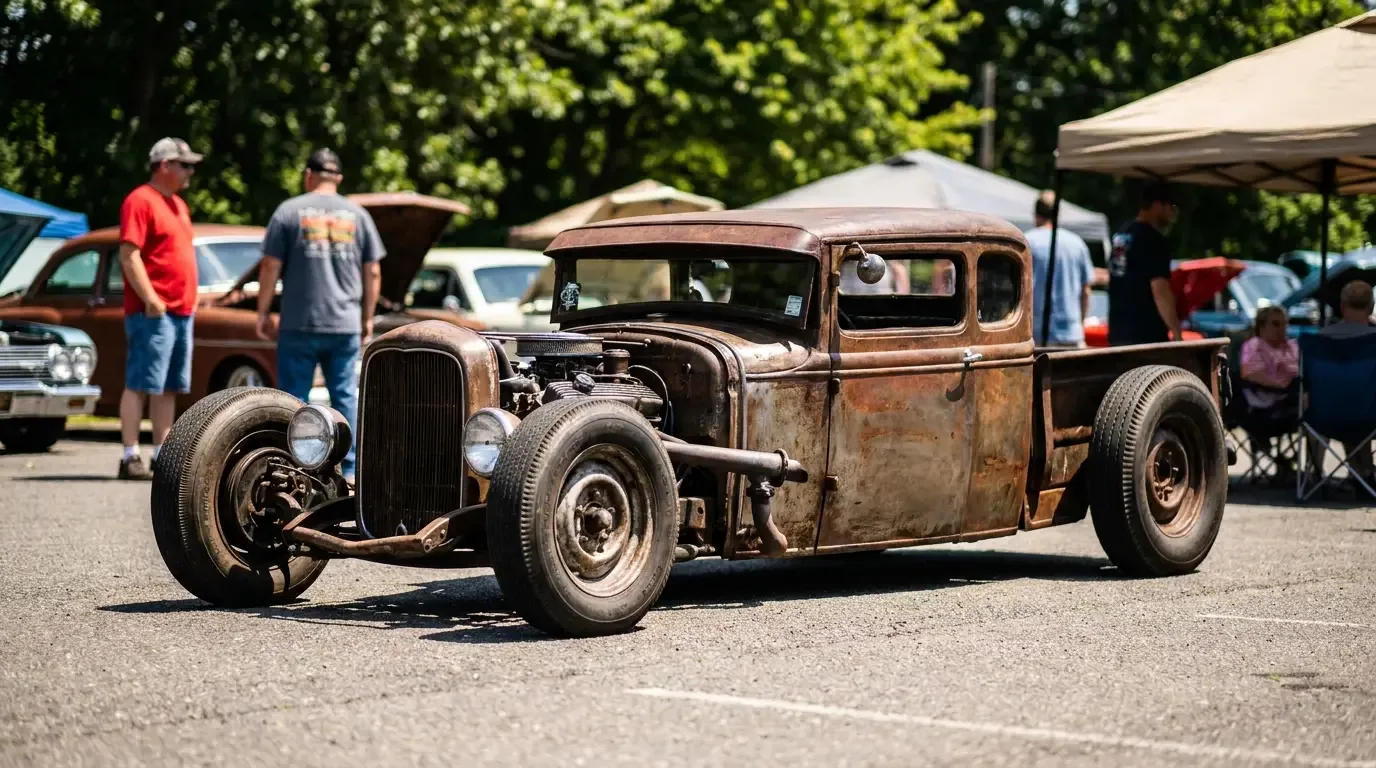
The stance is often the giveaway before you read a single part. A traditional highboy sits with a purposeful rake and clean proportions. A rat rod usually goes lower and meaner, sometimes channeled hard over the frame with a suicide front end hanging out front, because the look is the whole point. Neither approach is wrong. They are just aiming at different targets.
The authenticity fight, and where it gets ugly
This is where enthusiasts stop being polite. The traditional crowd argues that a rat rod is not authentic to anything, that the old hot rodders wanted their cars to look sharp and would have painted them the second they had the cash. By that logic the rusty look is a costume, not history. The rat rod crowd fires back that the traditional scene has turned into a checklist of expensive correct parts, which is exactly the show-car mentality the hot rod was supposed to rebel against.
Here's my honest read, after years of hearing this argument go around both camps at swap meets and shows. The strongest rat rods are the real thing, built cheap by somebody who fabricated most of it themselves and drives it hard. The weakest ones are the poseurs, a "rat-look" build with fake bolt-on rust and a five-figure invoice, dressed up to look broke. That is the version the purists are right to mock, and plenty of us in the rat rod world mock it too. The authenticity that matters is not the rust. It is whether you built it and drive it.
"I don't care if your car's shiny or rusty. I care whether you turned the wrenches yourself. Back home we'd say a driveway build with honest welds beats a checkbook build every single time, and everybody standing around the show field can tell the difference."
Gary Nowak
What each camp gets right
The traditional side keeps real craft alive. Chopping a top so the proportions still look correct, laying down straight paint, getting the era details right, that is hard, learned work and it deserves respect. Those cars are also generally safer and better sorted, because doing it right the period way still means brakes that stop and steering that tracks.
The rat rod side keeps the door open. It says you do not need a big budget or a booth to build a car and drive it, which is the whole reason hot rodding started. If you want the longer version of how that DIY streak took hold, the rat rod story walks through the culture that grew around it. The trade is honesty about the risks. A lot of rat rods have earned a real reputation for cut-corner brakes, sketchy steering, and welds nobody should trust at speed. Build one, but do not treat safety as part of the "raw" aesthetic.
So which one is authentic?
Both, and neither, depending on how it was built. A period-correct traditional rod is authentic to a specific slice of history. A real rat rod is authentic to the broke, resourceful spirit that started the whole thing. The fakes on both ends, the over-restored trailer queen and the fake-rust poseur, are the only builds that miss the point. If you want to see how this argument plays out in the current scene, Are Rat Rods Still Popular tracks where the style stands today. Pick the camp that fits how you like to build and drive, then go build something and put miles on it.
Sources and notes
- Period and modern hot-rod and rat-rod press coverage on build styles and terminology.
- Builder and shop interviews on fabrication, stance, and finish choices.
- General chassis, brake, and drivetrain references for safety guidance.
- Car-club and show records documenting the traditional versus rat rod divide.
Related Reading

Lifelong Midwest rodder who has been building and driving traditional pre-war hot rods since the 1970s.
Comments (1)
bought a 51 chevy rat rod, title said 216 six, had a 350 fr. 2 months at the tag office
Steve, the engine mismatch is a real problem, but in many states the title doesn't describe the engine at all. On a rat rod the harder question is usually what the VIN belongs to. If a 1951 cab sits on a later chassis, does the paperwork say so? That tends to stall a sale or a claim more than what's under the hood. A deliberate patina build also doesn't fit the usual 1 to 4 condition grades well, so I would be cautious about anyone quoting a firm number without seeing the welds and the brakes.