
People use "rat rod" and "hot rod" like they mean the same thing. They do not. Both are old American cars modified for looks and speed, and both come out of the same backyard-hop-up tradition, but the whole point of a rat rod is that it rejects what a finished hot rod stands for. One is built to be shown. The other is built to be driven, cheap, and left looking rough on purpose. Get the distinction wrong and you will pay for a paint job the car was never supposed to have.
Car Features
7 min read
Rat Rod vs Hot Rod: The Real Difference
Finish, cost, attitude and period-correctness: a SoCal builder lays out the real difference between a rat rod and a hot rod, and how to tell them apart.
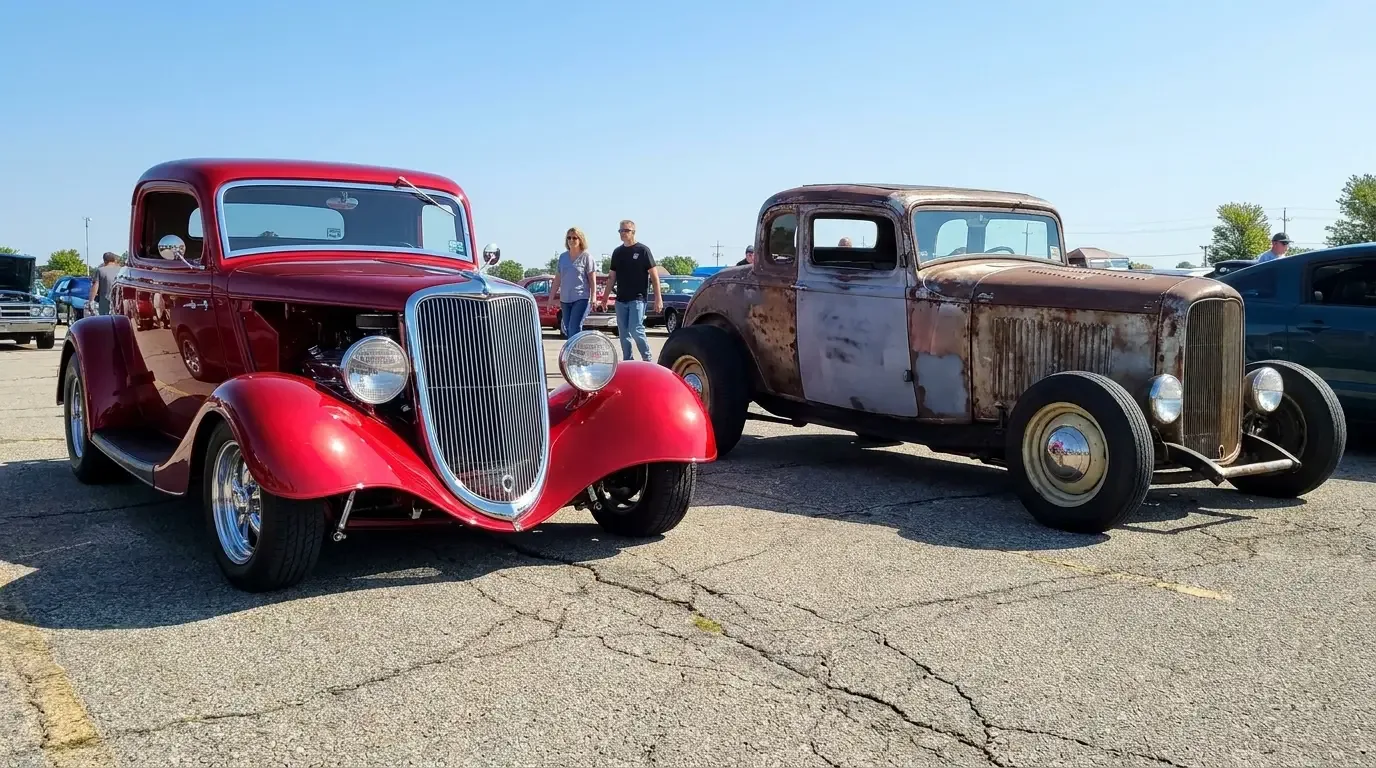
I have been chopping tops and welding front ends in a SoCal driveway for a long time, and the question I get most is whether some rust-colored ride at a show is a "real" rat rod or a poser build with bolt-on fake rust. So before we compare price tags, let me set the boundary. If you want the longer version of the ethos, we cover what is a rat rod in its own piece.
Finish: the line you can see from across the lot
Finish is the fastest tell. A hot rod is finished. Bodywork is straight, the paint is smooth, chrome is polished, the engine bay is dressed. Whether it is a period-style build or a modern street rod, the intent is a clean, deliberate presentation. Somebody spent real hours block-sanding that body.
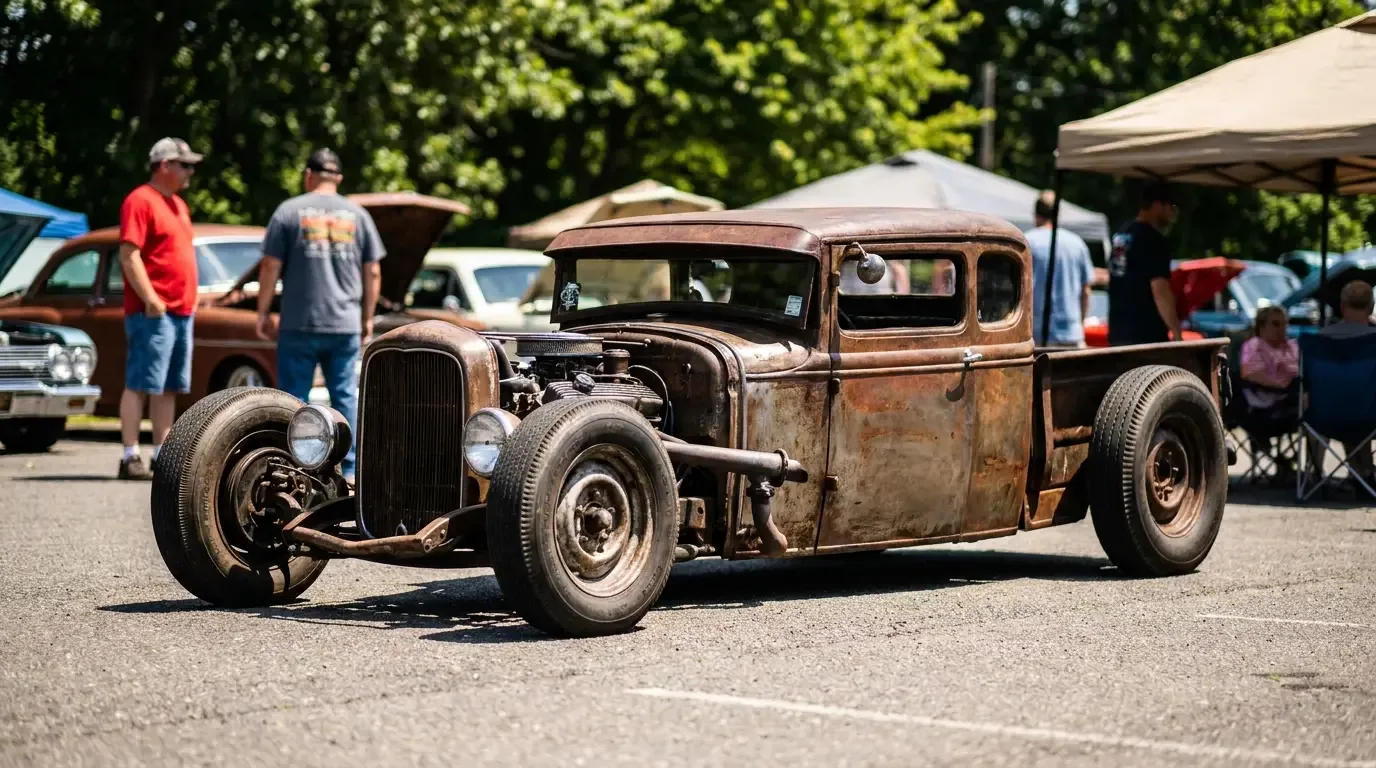
A rat rod is deliberately unfinished. Bare steel, surface rust, primer, or original patina left as-is and sometimes clear-coated to stop it spreading. Panels do not match. There may be a welded-up cowl, a suicide front end, and no filler smoothing anything over. That raw look is not laziness. It is the statement. The rat rod grew in the late 1980s and 1990s as a reaction against expensive, over-restored show cars that people started calling trailer queens, cars too precious to actually drive. If you understand nothing else, understand that: the unfinished look is the point, not a step the builder skipped on the way to paint.
Cost: what the two builds actually run
Money is where the two diverge hardest. A show-quality hot rod or street rod can run tens of thousands of dollars and often much more once you count paint, chrome, a crate engine, and a polished interior. A high-end build passing six figures is not unusual. The finish is a big part of that bill, because paint and bodywork done right are expensive and slow.
A rat rod is built to dodge exactly those costs. Junkyard drivetrain, found-object parts, a body you dragged out of a field, and fabrication you do yourself in the driveway. That is the honest version. Skipping the paint booth and the crate motor is where the savings live.
Here is my gripe, and I will say it plainly. A lot of "rat rods" for sale now are expensive builds pretending to be cheap. Someone spends real money making a car look like it cost nothing, then charges a premium for the look. If you are shopping, look past the patina at what is underneath.
| Aspect | Rat Rod | Hot Rod |
|---|---|---|
| Finish | Bare steel, rust, patina, primer; often clear-coated | Straight bodywork, smooth paint, polished trim |
| Typical cost | Low; junkyard and found parts, DIY labor | High; paint, chrome, crate engine, finished interior |
| Attitude | Anti-show, DIY, drive-it-hard | Presentation, craftsmanship, show-ready |
| Fabrication | Welded-up, mismatched, improvised on purpose | Refined, matched, engineered fit and finish |
| Period-correctness | Loose; anachronisms embraced | Traditional builds stay period-correct and tidy |
Attitude: show car versus driver
The difference you cannot photograph is the attitude. A hot rod, especially a traditional one, is about doing it right. Period-correct parts, careful proportions, a clean stance. It rewards craftsmanship and it usually gets trailered to the show so it arrives spotless.
A rat rod is anti-show by design. It gets driven in the rain. It gets parked next to the trailer queens with mud still on it. The owner wants you to know a person built this with their own hands and a welder, not a checkbook. That DIY, anti-establishment streak is the soul of the thing. There is real ingenuity in a good one: a genuinely clever solution to a problem, done with junkyard parts and no budget, earns more respect in this crowd than a flawless paint job ever will.
"A real rat rod is a car somebody built because they had more time than money and did not care what the show judges thought. The second you spend big to fake that, you have built a costume, not a rat rod. I can tell the difference across a parking lot, and so can anyone who actually swings a hammer."
Jim Vasquez
Period-correctness: where hot rods are strict and rat rods shrug
This one trips people up. A traditional hot rod cares deeply about period-correctness. The idea is to build the car the way a hot-rodder in the 1940s or 1950s would have, with correct-era wheels, engine, and details, nothing anachronistic. Purists will spot a wrong part instantly and it matters to them. For a full breakdown of that stricter school, see The Origins of the Rat Rod.
A rat rod does not play that game. Mixing a 1930s body with a 1970s truck axle and a diesel out of something newer is fine, even celebrated, if it works and looks tough. The rat rod borrows the early hot-rod silhouette but treats period-correctness as optional. That freedom is part of why they are cheaper: you use whatever fits and runs. If you want the full family tree of how these builds split off from one another, the story of the rat rod lays it out, and it helps to see hot rod, street rod and rat rod compared side by side so you keep the three categories straight.
So which one are you actually looking at?
Run the quick test. Smooth paint, matched panels, period-correct or fully modernized, built to be shown: that is a hot rod. Bare or patina finish, mismatched junkyard parts, welded-up in somebody's driveway, built cheap to be driven hard: that is a rat rod. The overlap is real because they share the same roots, but the intent points in opposite directions. One chases a finished, respectable presentation. The other rejects it on purpose. Keep finish, cost, attitude, and period-correctness in mind and you will almost never confuse the two again.
Sources and notes
- Period and modern hot-rod and rat-rod press covering the trailer-queen backlash and the rise of the deliberately unfinished build.
- Builder interviews and shop-floor experience on fabrication quality, patina, and fake-rust "rat-look" builds.
- General build-cost references comparing show-finished street rods with low-buck DIY builds.
- Traditional hot-rod references on period-correctness and era-correct parts.
Related Reading
Have a
Classic Car
for Sale?
Reach thousands of serious classic car collectors across the US.
Sell It Here →
Are You a Classic Car Dealer?
List your full inventory and connect with targeted classic car buyers.
Join as a Dealer →

About the author
Jim Vasquez
Southern California hot rod and custom car builder with roots in the traditional kustom kulture scene.




Comments
Be the first to comment on this article.