
Ask ten guys at a swap meet what a rat rod is and you get twelve answers. Some of them are wrong, and a couple are insulting to the whole idea. So let me set the record straight from the driveway where I build them. A rat rod is a deliberately unfinished, low-buck, anti-show hot rod. Bare metal or clear-coated rust, junkyard running gear, parts fabricated out of whatever was cheap or free, and zero interest in trophies. That is the whole thing. Everything else is decoration around that one idea.
Car Features
9 min read
What Is a Rat Rod: The Ethos Explained
A rat rod is a cheap, raw, anti-show hot rod built by hand on purpose. Here is the ethos, the hot rod line, and how to spot a poseur.
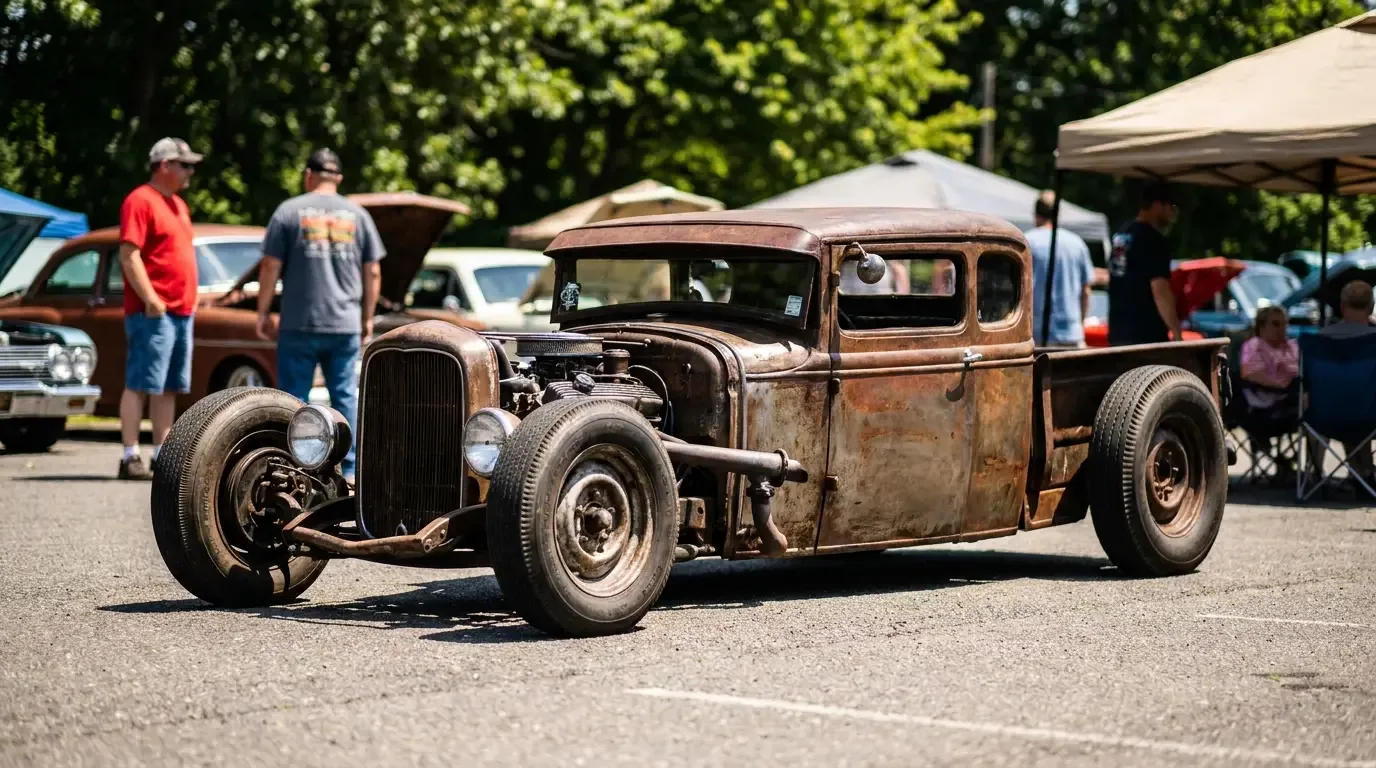
The word gets thrown at anything with surface rust now, which is exactly the problem. A rat rod is not a look you buy. It is a way of building. Once you understand the ethos, you can walk a show field and sort the real ones from the poseurs in about ten seconds. This is the short version of the rat rod story, focused on one question: what is a rat rod, and what is it not.
The one-sentence definition, then the fine print
A rat rod is a hot rod built cheap and left raw on purpose. Hold onto that. The two load-bearing words are "cheap" and "on purpose." A car that is rough because the owner ran out of money is a project. A car that is rough because the builder decided rough is the point, and stopped exactly where he wanted, is a rat rod. Intent is the line.
The style grew up in the late 1980s and through the 1990s as a middle finger to the direction street rodding had gone. By then a nice street rod meant a fiberglass body, billet everything, air conditioning, and a paint job that cost more than a house down payment. Those cars rode to shows on enclosed trailers and never saw rain. Guys started calling them trailer queens. The rat rod was the answer: build it in the driveway, drive it in the weather, spend as little as you can, and wear the scars.
So the fine print on the definition is attitude. A rat rod rejects polish, rejects the checkbook build, and rejects the idea that a car has to be finished to be worth driving. That rejection is not an accident of budget. It is the design brief.
What actually makes a car a rat rod
Strip away the arguments and you find a handful of traits that show up on nearly every honest rat rod. Not every car has all of them, but a real one has most.
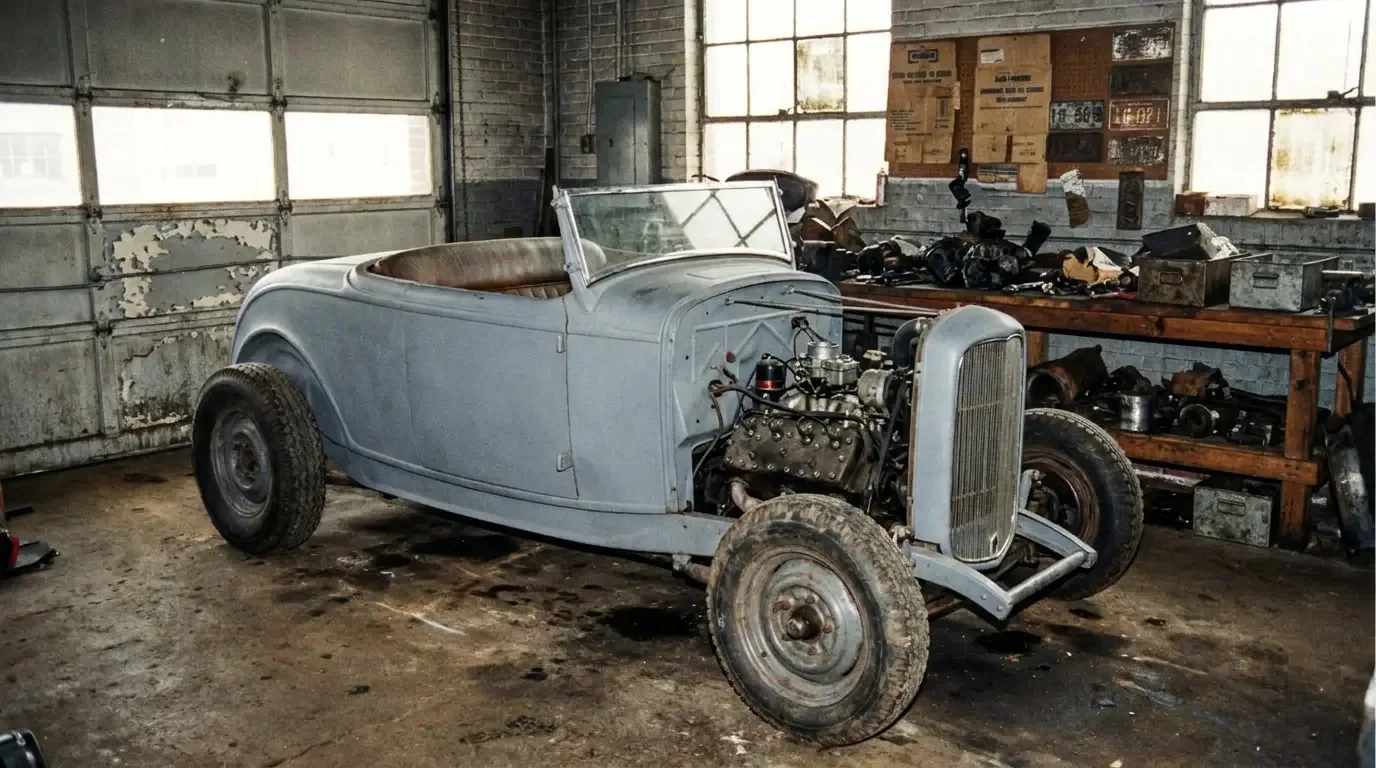
- Raw finish. Bare steel, primer, or original patina left as found. If there is clear coat, it is there to stop the rust from eating through, not to make it shine.
- Found and cheap parts. Junkyard axles, farm-equipment steel, a gear-shift knob that used to be a baseball or a skull. The parts have a story and most of them were nearly free.
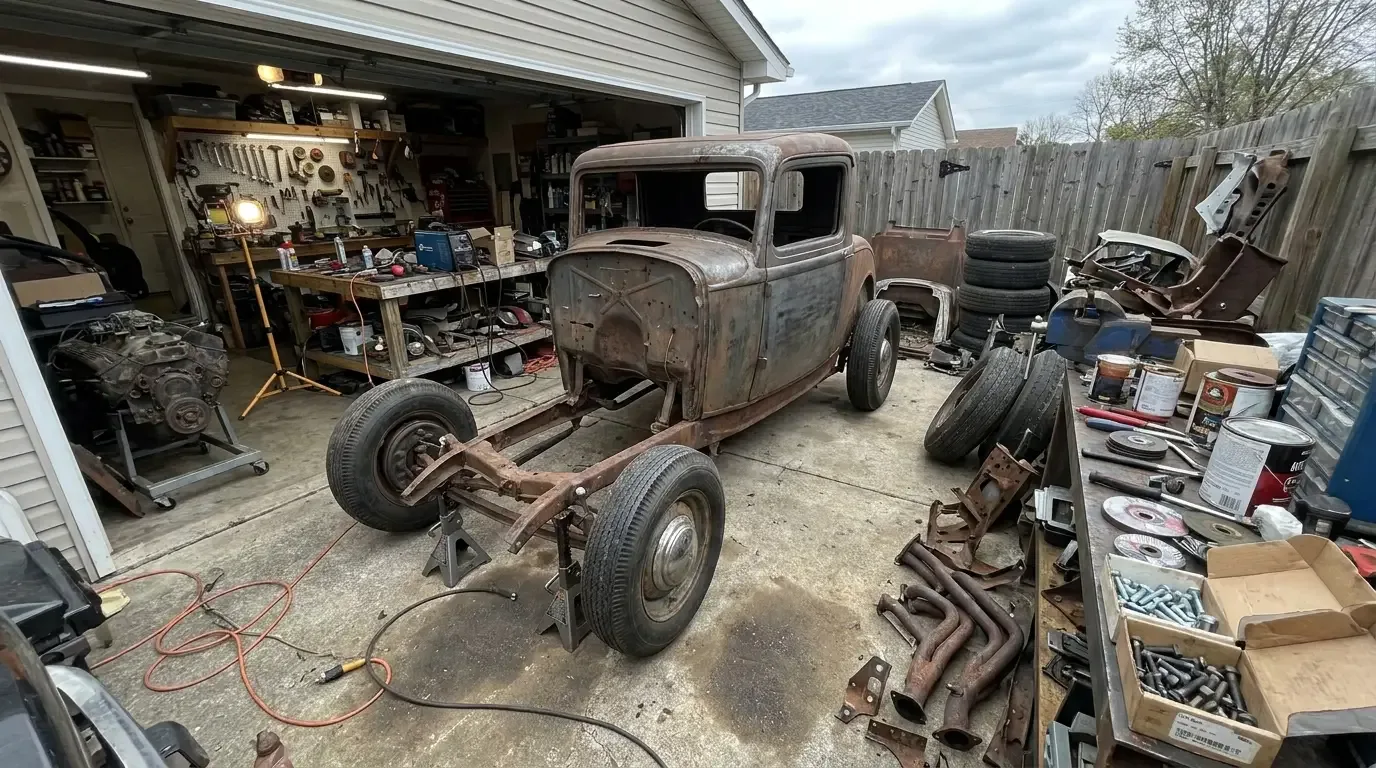
- Home fabrication. Welded up in the driveway or a two-car garage, not sent out to a pro shop. The welds show. That is fine.
- Old iron underneath. Usually a pre-1948 body or cab, chopped, channeled, sometimes with a suicide front end hung out where everybody can see it.
- Driven, not trailered. A rat rod earns its patina on the road. It is a driver first.
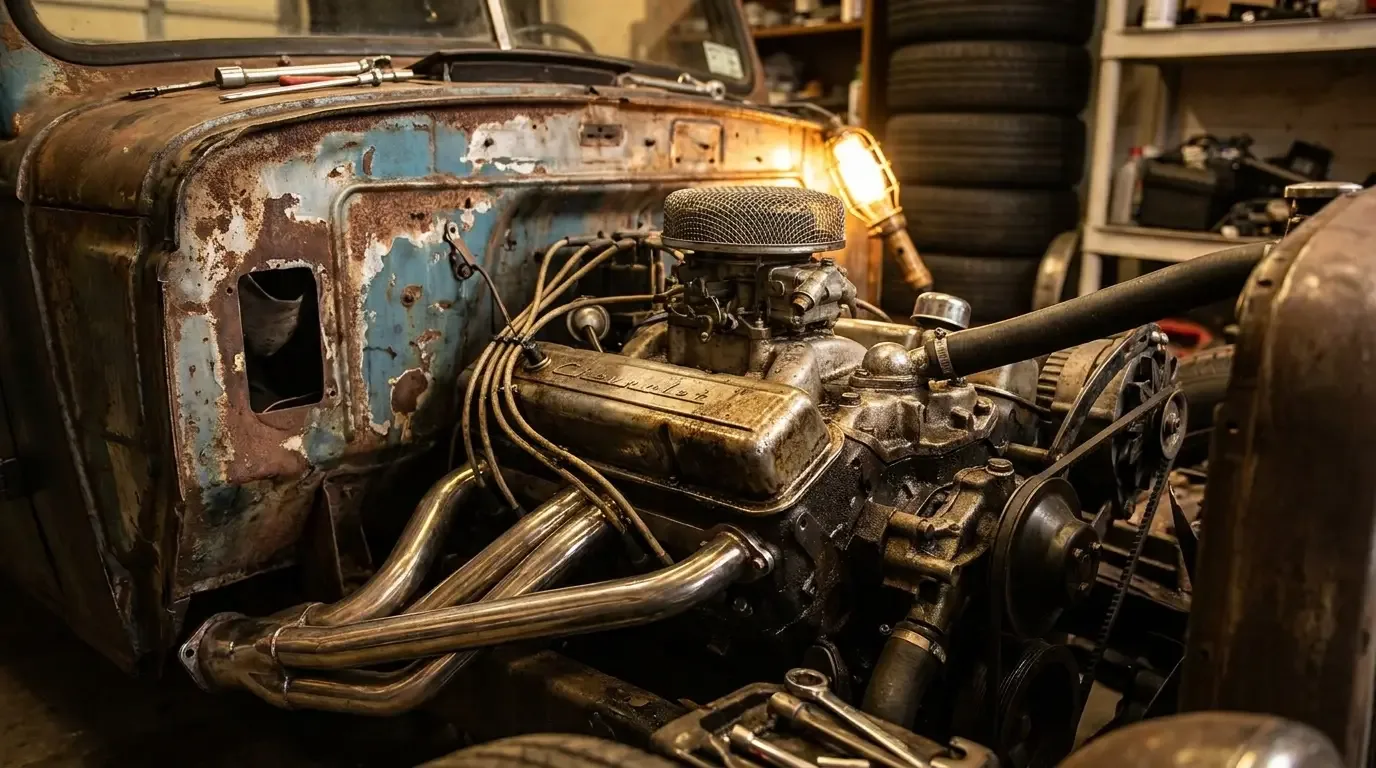
Notice what is missing from that list. Nothing about horsepower targets. Nothing about a specific engine. A rat rod can run a tired flathead, a junkyard small-block, or a diesel out of a wrecked truck. The drivetrain follows the budget, not the other way around. If you want the long version of putting one together, here is how to build a rat rod without going broke.
The ethos: cheap, raw, and anti-show on purpose
The heart of a rat rod is a set of values, not a parts list. It is the DIY streak in American car culture put on wheels. You build with your own hands, you use what you can find, and you do not apologize for how it looks. There is a real anti-establishment feeling in it, a shrug at the guys spending six figures to win a plastic trophy.
That is why the anti-show attitude matters so much. A rat rod builder is not trying to impress a judge with panel gaps and paint depth. He is trying to build something he can afford, drive hard, and be proud of because he made it. The rust is not hiding a lack of skill. Plenty of rat rod guys can lay down show paint. They choose not to. The raw finish is a statement: this car is honest about what it is.
Being anti-show does not mean anti-craft. The best rat rods have beautiful fabrication under the grime, a chassis that tracks straight, a stance that took real work to nail. The skill is there. It is just aimed at driving and building instead of shining and displaying.
"I can spot a real rat rod before I see the whole car. It's in the honest ugly of it, the welds you can see, the axle somebody dragged out of a field. A build with a catalog of bolt-on fake rust and a five-figure invoice isn't a rat rod. It's a costume."
Jim Vasquez
Rat rod vs hot rod: where the line sits
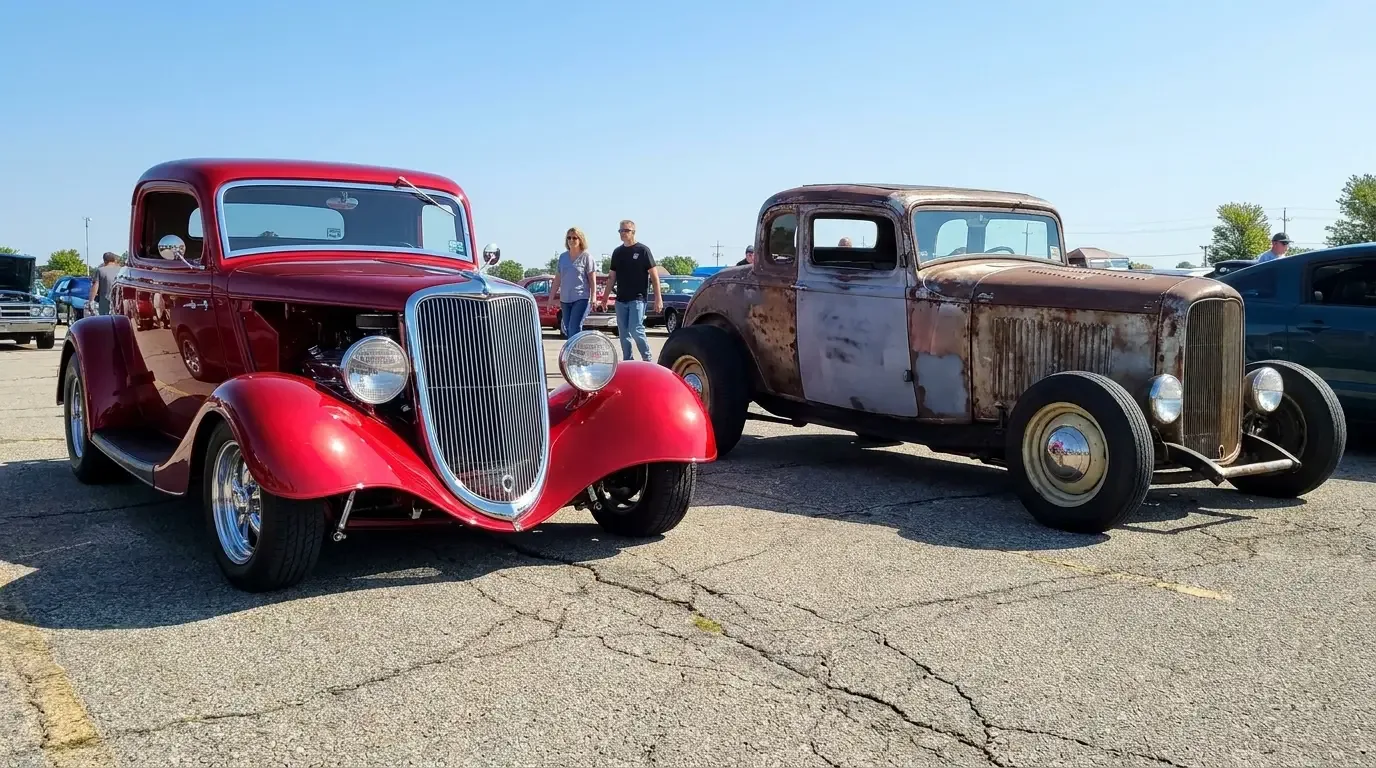
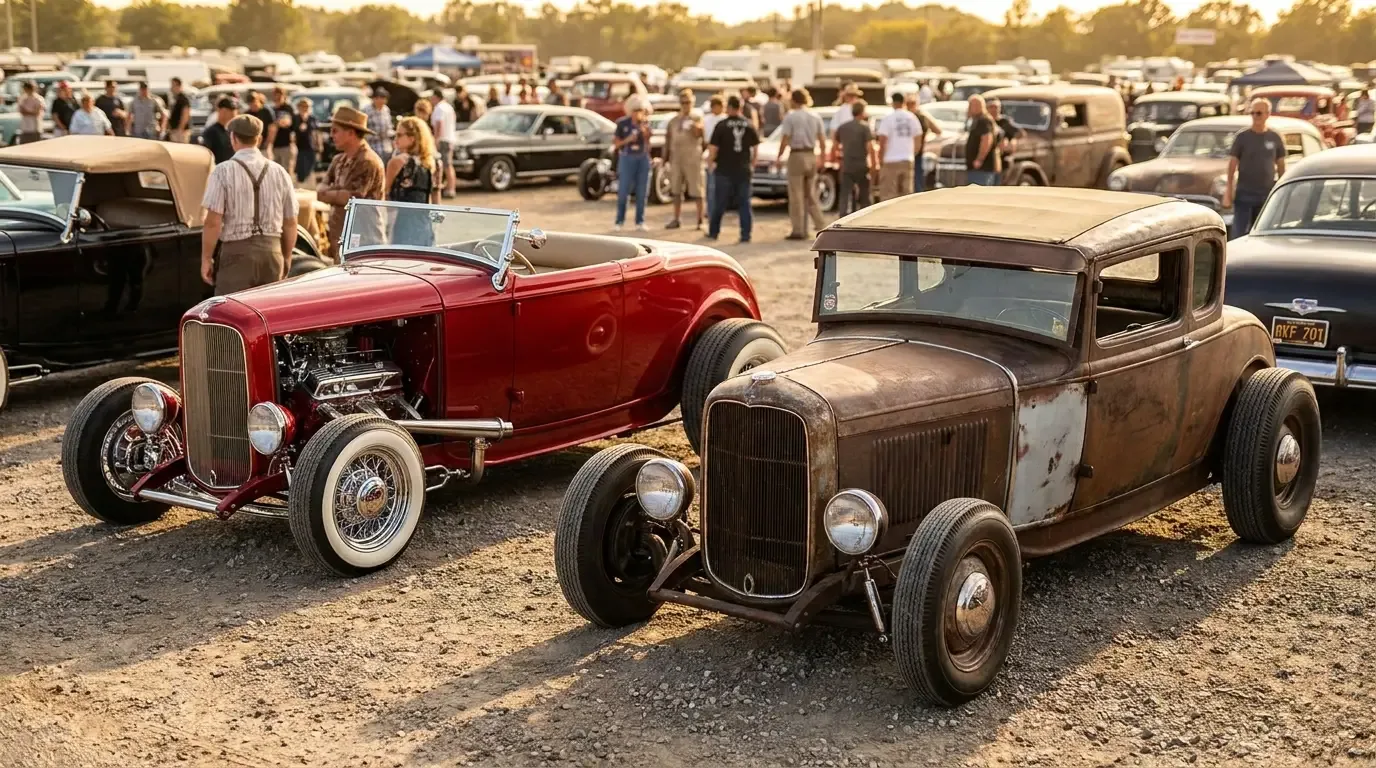
This is where most of the confusion lives, so let me draw it clean. A rat rod is a kind of hot rod. Every rat rod is a hot rod, but not every hot rod is a rat rod. The difference is finish and intent, not mechanicals.
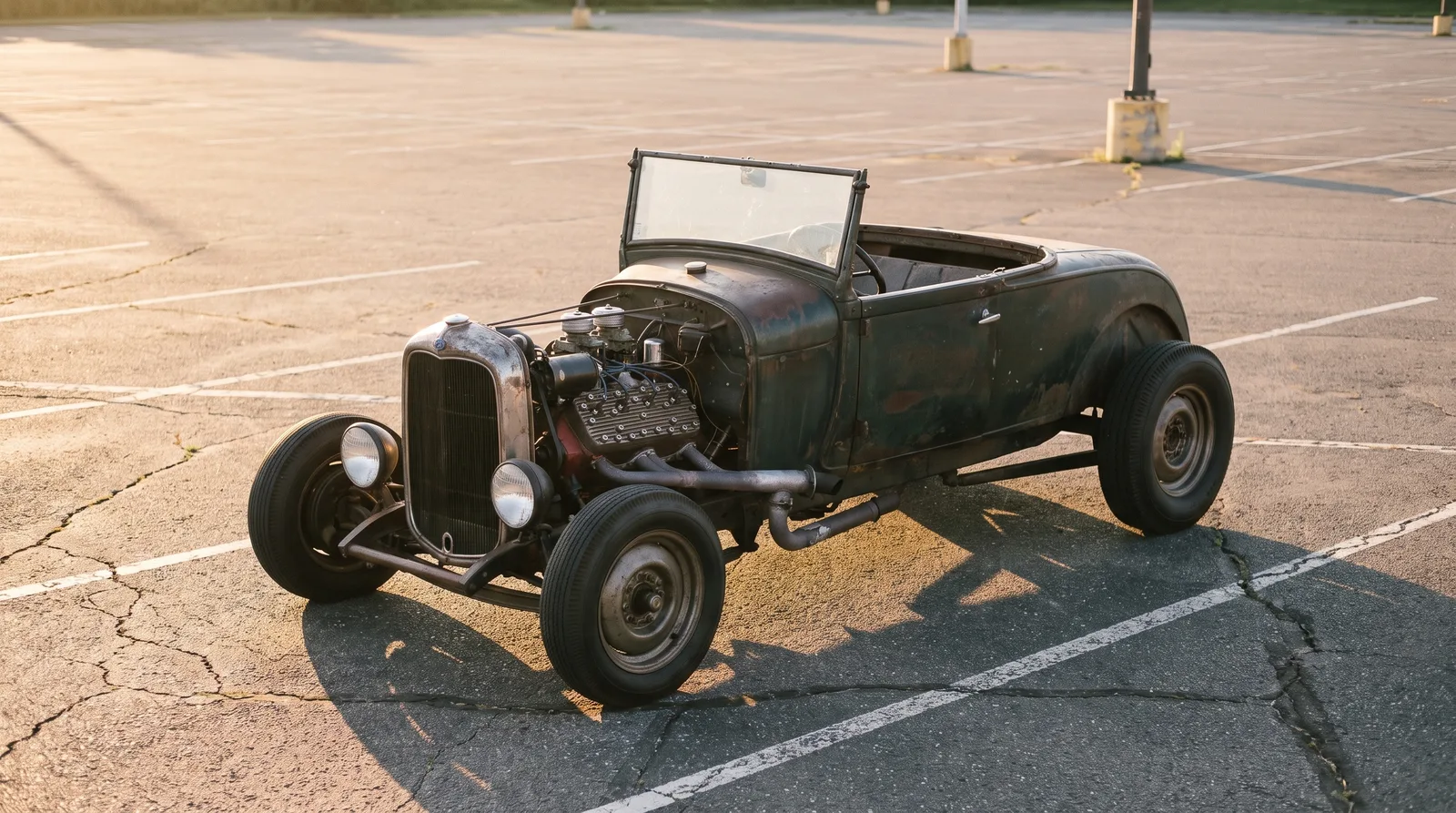
A traditional hot rod is period-correct and tidy. Think of a pre-1948 Ford stripped down, hopped up, and built the way a kid would have built it in 1955 with the speed parts of the day. It might have paint, it might run bare steel, but it is put together with care to a specific era and it looks resolved. A street rod is the modern comfort version: post-1948 is fair game, and the car gets disc brakes, air conditioning, a smooth interior, and creature comforts the old cars never had.
A rat rod says no to the polish of both. It borrows the traditional hot rod's pre-war bones and chopped-and-channeled attitude, then strips out the money and the shine. Same recipe, opposite finish.
| Trait | Traditional hot rod | Street rod | Rat rod |
|---|---|---|---|
| Typical body era | Pre-1948 | Post-1948 fair game | Usually pre-1948 |
| Finish | Period-correct, tidy | Smooth, modern paint | Bare metal, primer, patina |
| Comfort features | Minimal, era-appropriate | A/C, disc brakes, plush interior | Bare-bones on purpose |
| Build cost target | Moderate to high | High | As low as possible |
| Where it's built | Home or shop | Often pro shop | Driveway or home garage |
| Attitude | Respect the era | Comfort and shine | Anti-show, DIY, raw |
Get this straight and you never mislabel a car again. Rust alone does not make a rat rod. A patina-wrapped traditional build with correct speed parts is still a traditional hot rod. What tips a car into rat rod territory is the whole low-buck, found-object, anti-show approach carried all the way through.
The poseur problem: fake rust and the checkbook rat rod
Here is the part that gets me heated. There is a whole cottage industry now selling the rat rod look to people who want the aesthetic without the ethos. Bolt-on fake patina. Aerosol rust in a can. Shops that will build you a "rat rod" for forty grand with engineered rust and a crate motor and a trailer to haul it to shows on.
That is not a rat rod. That is a costume. The entire point of the thing is that it was built cheap and honest by the person who owns it. The moment you write a big check for manufactured decay and haul it on a trailer, you have violated the one rule that matters. You have made a trailer queen wearing rat rod clothes, which is the exact thing the movement was created to rebel against.
I am not the fun police. If somebody loves the look and pays for a fake-rust build, that is their money. Just do not call it a rat rod at the show and expect the guys who built theirs in a driveway to nod along. The word means something. Protecting it is how the ethos survives.
So, is your project a rat rod?
Run it through the test. Was it built cheap? Was it built by hand, mostly by you, mostly from found and junkyard parts? Is it left raw on purpose, not because the money ran out? Is it a driver, not a trailer princess? Do you genuinely not care whether a judge likes it?
If you can answer yes down the line, you have a rat rod, and you built it the right way. If you are buying the look instead of building it, you have something else, and that is fine as long as you are honest about what it is. The category has room for a lot of styles, but it does not have room for pretending a checkbook build is a driveway build.
That honesty is the whole reason the style has stuck around. It gave regular people a way into hot rodding that did not require a fortune. If you want to see where that lands in the current market, browse the classic rat rods for sale and look for the ones with an honest story behind the rust. Those are the keepers.
Sources and notes
- Period and contemporary hot-rod and rat-rod press covering the rise of the style through the late 1980s and 1990s.
- Builder interviews and shop conversations on fabrication methods, cost, and the distinction between honest patina and applied fake rust.
- General hot-rod, street-rod, and traditional-build references used to draw the category boundaries described above.
- Car-show and club observations on labeling disputes and the ongoing debate over what qualifies as a rat rod.
Related Reading

Have a
Classic Car
for Sale?
Reach thousands of serious classic car collectors across the US.
Sell It Here →
Are You a Classic Car Dealer?
List your full inventory and connect with targeted classic car buyers.
Join as a Dealer →

About the author
Jim Vasquez
Southern California hot rod and custom car builder with roots in the traditional kustom kulture scene.




Comments
Be the first to comment on this article.