
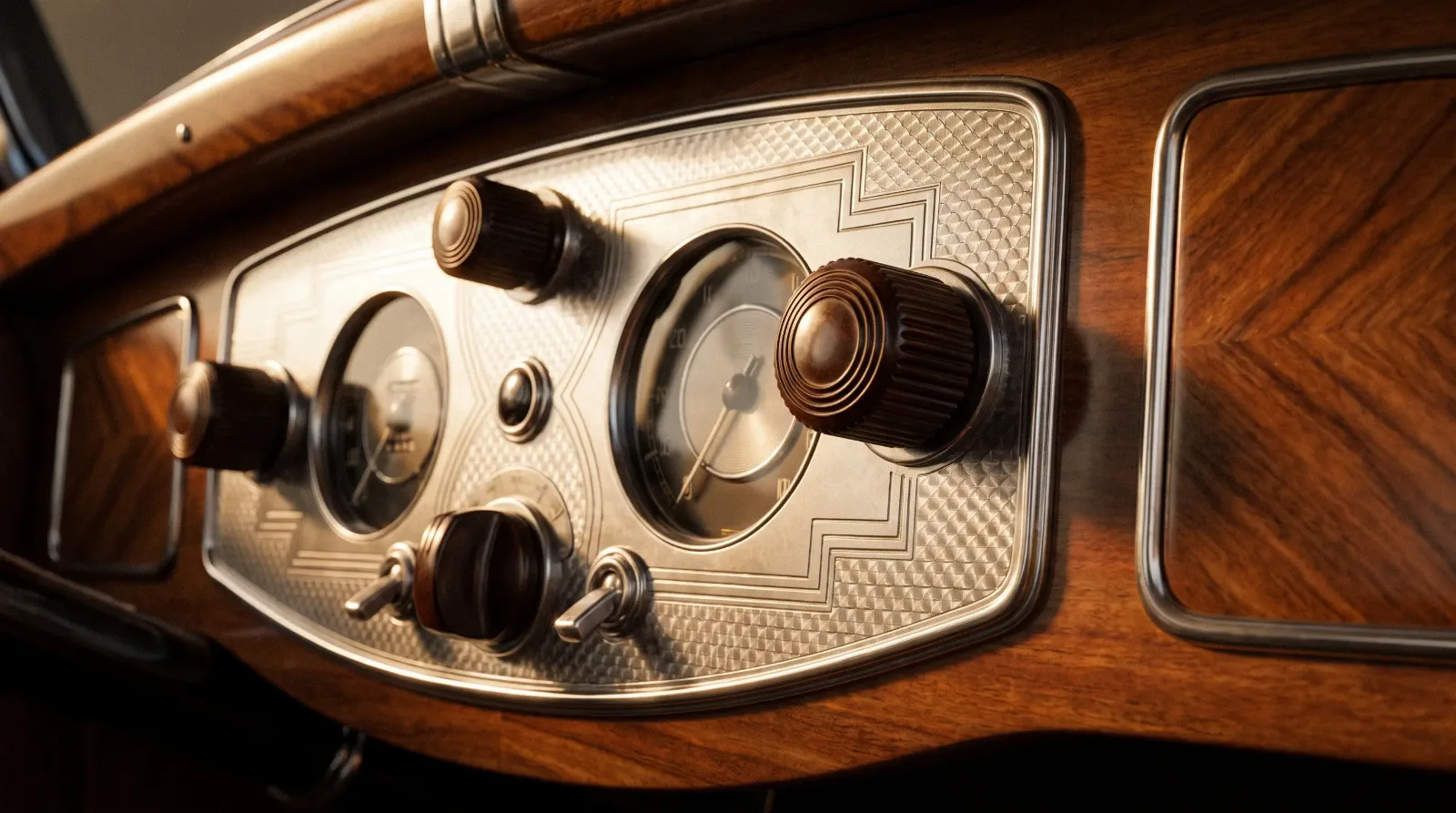
A design student at a California studio once told me she fell in love with car design because of a photograph of a Cord 810, taken decades before she was born, hidden headlamps and all, the wraparound grille catching light like a piece of jewelry. She had never seen the car in person. She did not need to. Something about the shape reached across sixty years and told her exactly what a car could be if someone cared enough to make it beautiful rather than merely functional. That is the strange power of Art Deco automotive design. It keeps finding new people to convince.
Car Features
6 min read
Art Deco Influence in Modern Cars
The Deco vocabulary went quiet after the war, then kept resurfacing, sometimes as homage, sometimes as something harder to name.
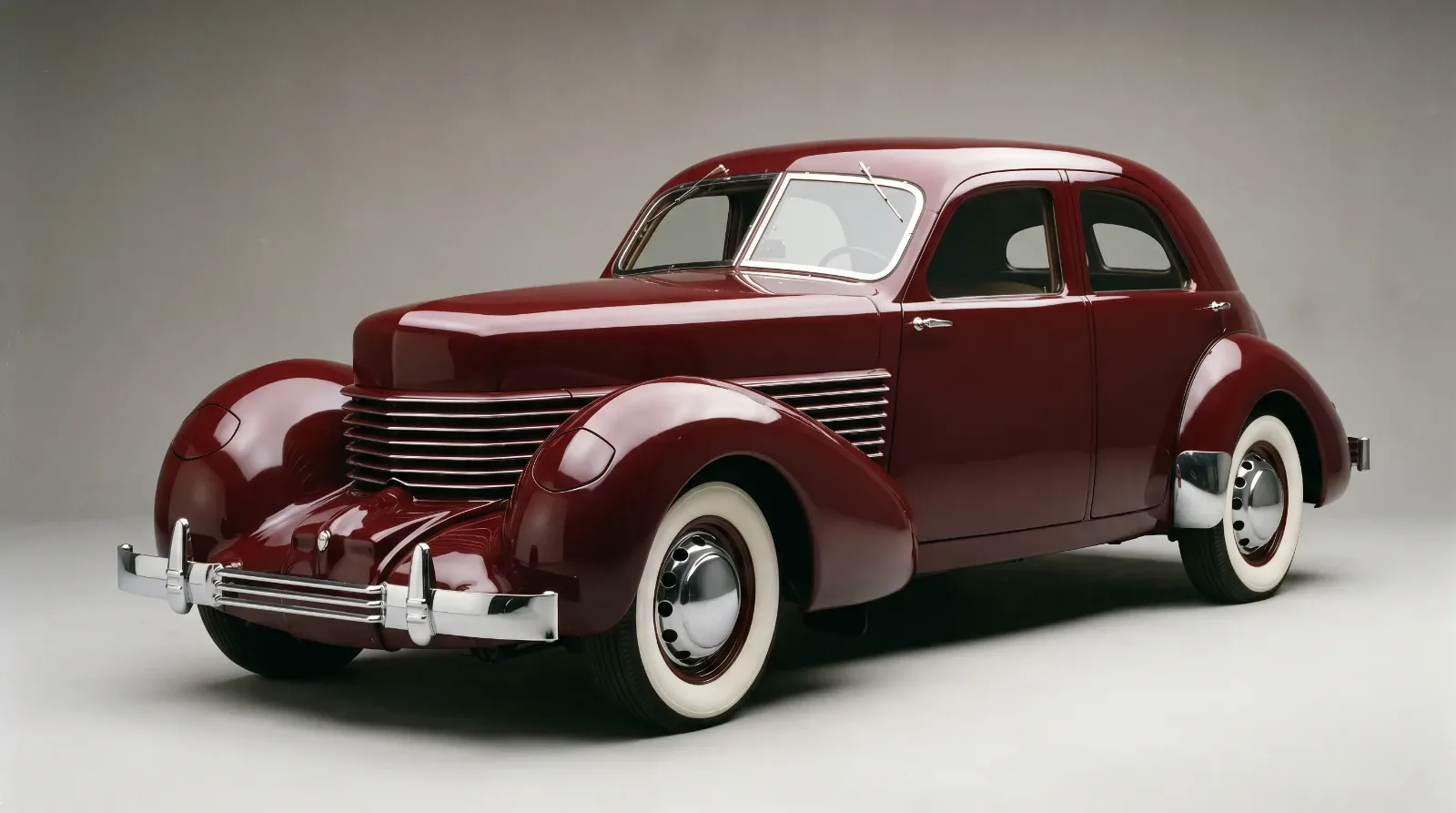
The influence never really stopped. It went quiet for a few decades, then resurfaced, sometimes as direct homage and sometimes as something harder to name, a set of instincts passed down without anyone fully explaining where they came from. For the design language at the root of all of it, see the art deco car legacy guide.
The postwar quiet
World War II ended the Deco era abruptly. Factories converted to war production, coachbuilders lost their materials and their clients, and by the time civilian car making resumed, tastes had shifted toward something plainer and more utilitarian. The speed lines and skirted fenders that defined the 1930s softened into simpler postwar forms, and for a while it looked like the style might simply be forgotten, a decade's fashion that had run its course.
But shapes like that do not disappear so much as they wait. Designers who had come of age looking at Figoni teardrops and Cord dashboards carried those memories into their own careers, even when the immediate postwar market demanded something more restrained. The instincts stayed dormant rather than gone.
Some of that memory survived in unlikely places. Automotive design schools kept teaching the fundamentals of surface and proportion using pre-war examples long after the cars themselves had gone out of fashion, and a generation of students learned to see form the way Figoni or the American streamline stylists had, even while sketching plain postwar sedans for their assignments. The vocabulary got passed forward in classrooms and design studios well before it reappeared on an actual showroom floor.
Retro revival moments
By the late twentieth century, those instincts started resurfacing openly. The Chrysler PT Cruiser and the retro-styled concept cars of the 1990s and early 2000s borrowed directly from pre-war proportions, tall greenhouses, rounded fenders, a deliberate echo of a shape that had not been in production for sixty years. Volkswagen's New Beetle worked a similar trick with a different source shape, but the underlying idea was the same: a generation of designers reaching back to an era they associated with confidence and craft, and asking what that confidence might look like on a modern platform.
These revivals were not always subtle, and some aged awkwardly once the novelty wore off. What they proved, though, was that the Deco vocabulary still carried emotional weight decades after the last true Deco car left a factory floor. Nobody was reviving the streamlined moderne look out of nostalgia alone. They were reviving it because it still worked as a way to make a car feel special.
What today's designers actually borrow
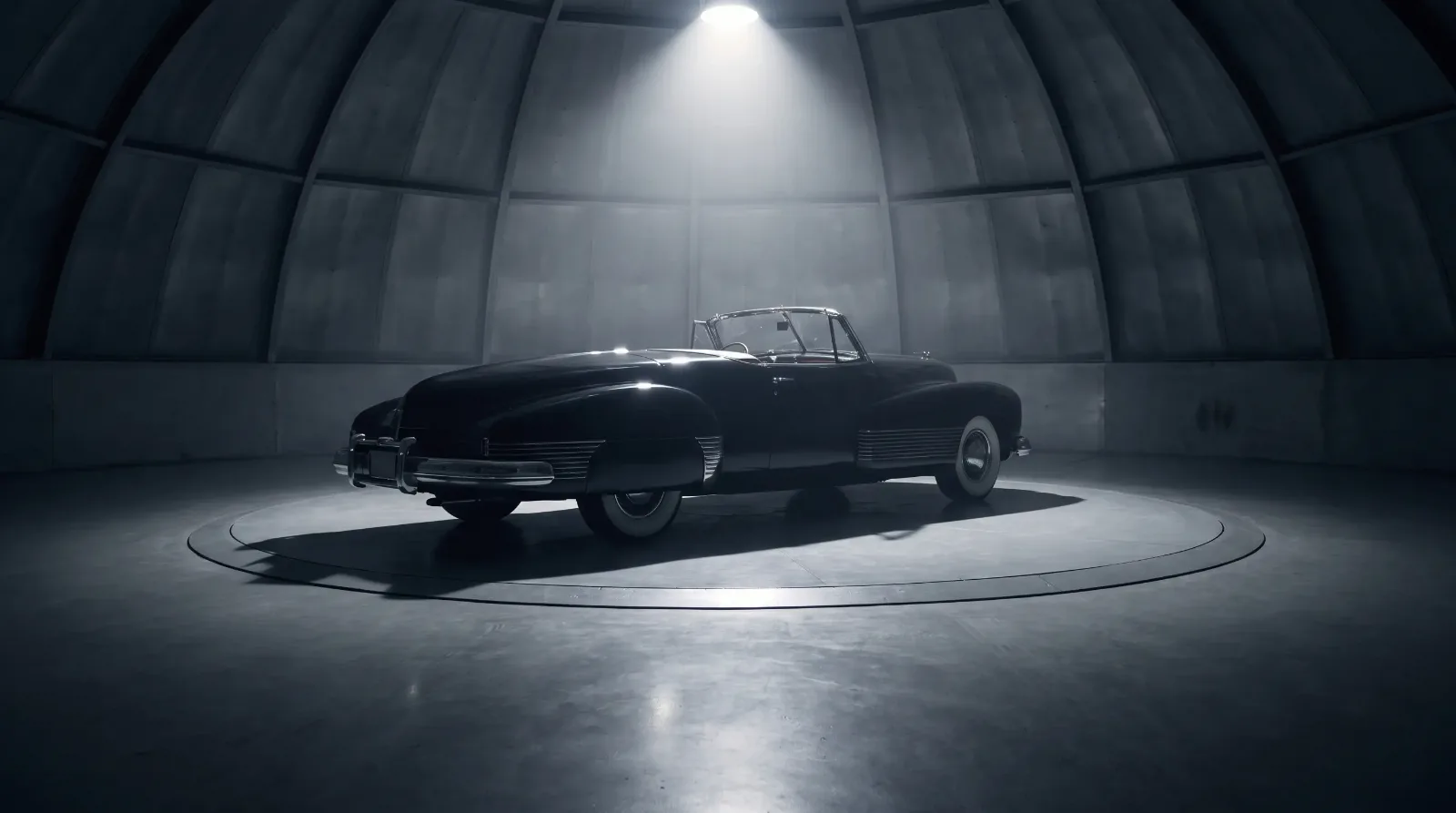
Contemporary designers rarely copy Deco shapes outright anymore, but the underlying principles show up constantly. The idea that a car's surfaces should read as one continuous, considered form rather than a stack of separate parts traces straight back to the coachbuilders of the 1930s. So does the belief that a grille or a headlamp treatment can carry as much personality as an engine specification, an idea that seemed almost extravagant when Figoni first pursued it and now sits at the center of how every major manufacturer thinks about brand identity.
Electric vehicle design in particular has leaned into some of this thinking, since a car without a traditional engine bay has more freedom to treat its front end as pure sculpture rather than a cooling requirement, not unlike the way a Deco-era coachbuilder treated a grille as design first and function second. It is not a direct lineage, but the resemblance in spirit is hard to miss once you know what you are looking at.
Concept car design still borrows the same trick the fair cars used decades ago, unveiling a dramatic shape well ahead of anything a production line can actually build, then letting a softened version of that shape filter into showrooms a few years later. The method has not changed even though the technology behind it has. What a manufacturer shows on a stage is still meant to shift what a buyer expects a car to look like, and that expectation-setting is a direct descendant of what Harley Earl was doing with the Y-Job.
"I do not think a designer today needs to have studied a single pre-war car to feel the pull of that language. It is already inside the culture, quietly, the way a song you have never consciously learned still sounds familiar the first time you hear it."
Nora Beckett
Why the shape still feels like memory
Maybe that is the real answer to why this influence never fully faded. A great Deco design was never just a solution to an engineering problem. It was an argument that a machine could hold beauty the same way a painting or a building could, and once that argument gets made convincingly enough, it does not need repeating exactly to keep being felt.
The student with her Cord 810 photograph understood that instinctively, long before she had the vocabulary to explain it. Somewhere behind every smooth-surfaced modern car sits a lineage that runs back to a wooden buck in a Paris workshop, hammered by hand until the metal finally agreed to look like it was already moving. If you want to see where that craft actually lived, down to the materials and the details a passenger would have touched every day, the next story is the place to go.
Sources and notes
- Wikipedia: Buick Y-Job, the industry's first concept car
- Wikipedia: Cord 810/812 design and hidden headlamps
- Mac's Motor City Garage - Behind the hidden headlamps of the Cord 810/812
- GM Heritage Center - 1938 Buick Y-Job Concept
- Wikipedia: Chrysler PT Cruiser retro design
- Classic and Sports Car - Cord 810, ahead of its time
Related Reading
Have a
Classic Car
for Sale?
Reach thousands of serious classic car collectors across the US.
Sell It Here →
Selling a classic? Here's how: where to sell your classic car online
Are You a Classic Car Dealer?
List your full inventory and connect with targeted classic car buyers.
Join as a Dealer →

About the author
Nora Beckett
Automotive features writer and photographer who tells the human stories behind the cars, from show fields to cross-country road trips.

Comments
Be the first to comment on this article.