
Between the two world wars, the automobile stopped being a machine that happened to have a shape and became an object designed to be looked at. The change did not arrive all at once. It came grille by grille, fender by fender, as coachbuilders and factory stylists absorbed the same visual language that was reshaping buildings, furniture, and posters. That language was Art Deco, and by the mid-1930s it had turned the finest cars into something closer to sculpture than transport.
Car Features
9 min read
Art Deco Automobiles: When Cars Became Rolling Sculpture
Between the wars, coachbuilders and stylists turned the finest cars into sculpture. A look at the teardrops, speed lines, and streamline forms that defined Art Deco design.
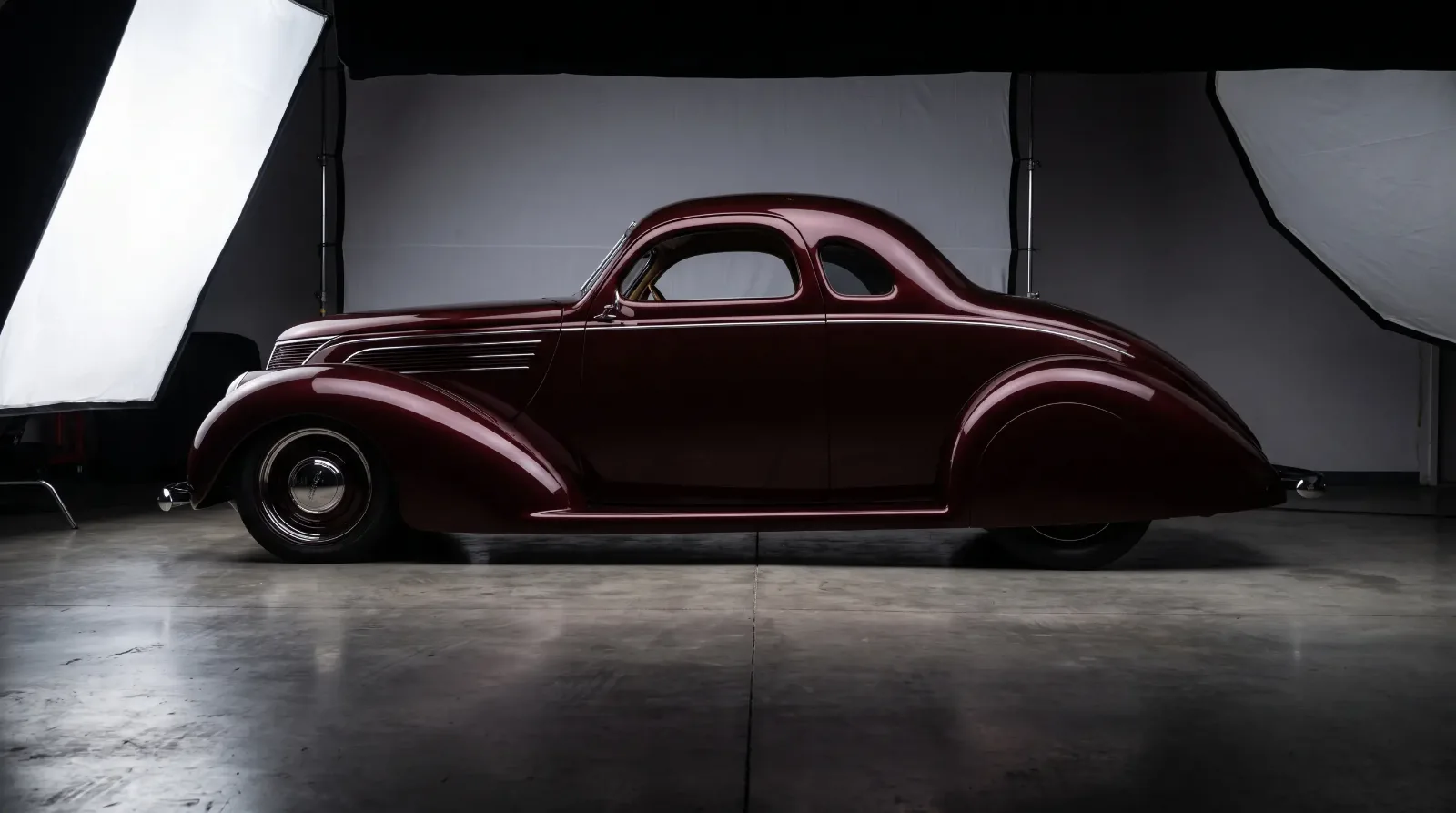
Art Deco cars are best understood as artifacts of a specific moment. They record a period when speed was a new cultural obsession, when chrome was still a novelty, and when a wealthy client could commission a body the way a collector might commission a portrait. Understanding what makes them distinct means looking past the badge and studying the surfaces themselves.
What Art Deco meant on four wheels
The Art Deco style took its name from a 1925 Paris exposition, and its core ideas translated to the automobile with unusual ease. Deco favored bold geometry, tapering forms, repeated parallel lines, and rich materials used with restraint. A car offered a moving canvas for all of it.
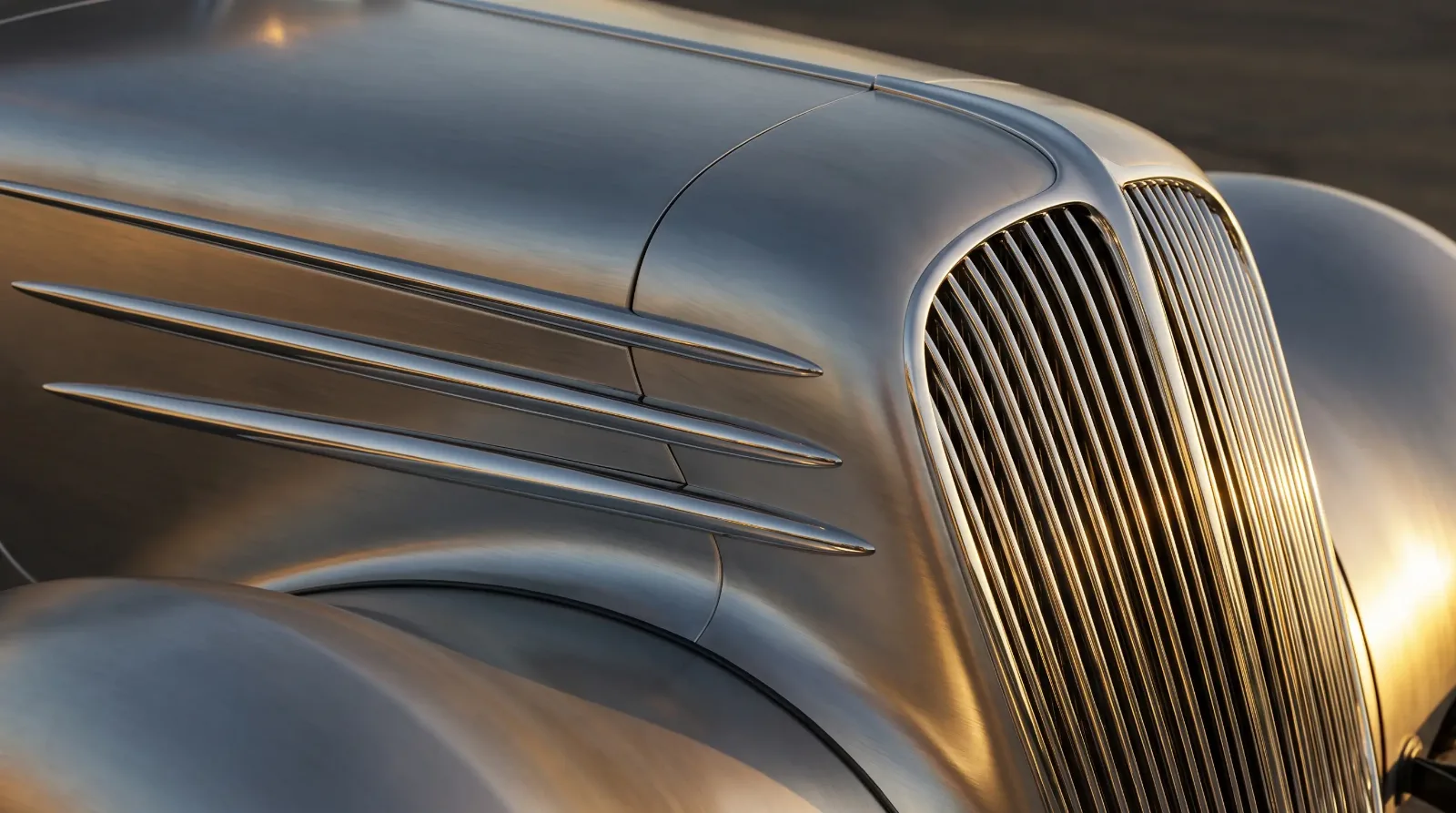
The most recognizable motif is the speed line, a set of horizontal grooves or ribs applied to fenders, hoods, and hubcaps to suggest motion even when the car sat still. Designers paired those lines with teardrop profiles, a shape borrowed from early aerodynamic thinking and then exaggerated for effect. The result was a car that read as fast at a glance, whether or not the engineering underneath supported the impression.
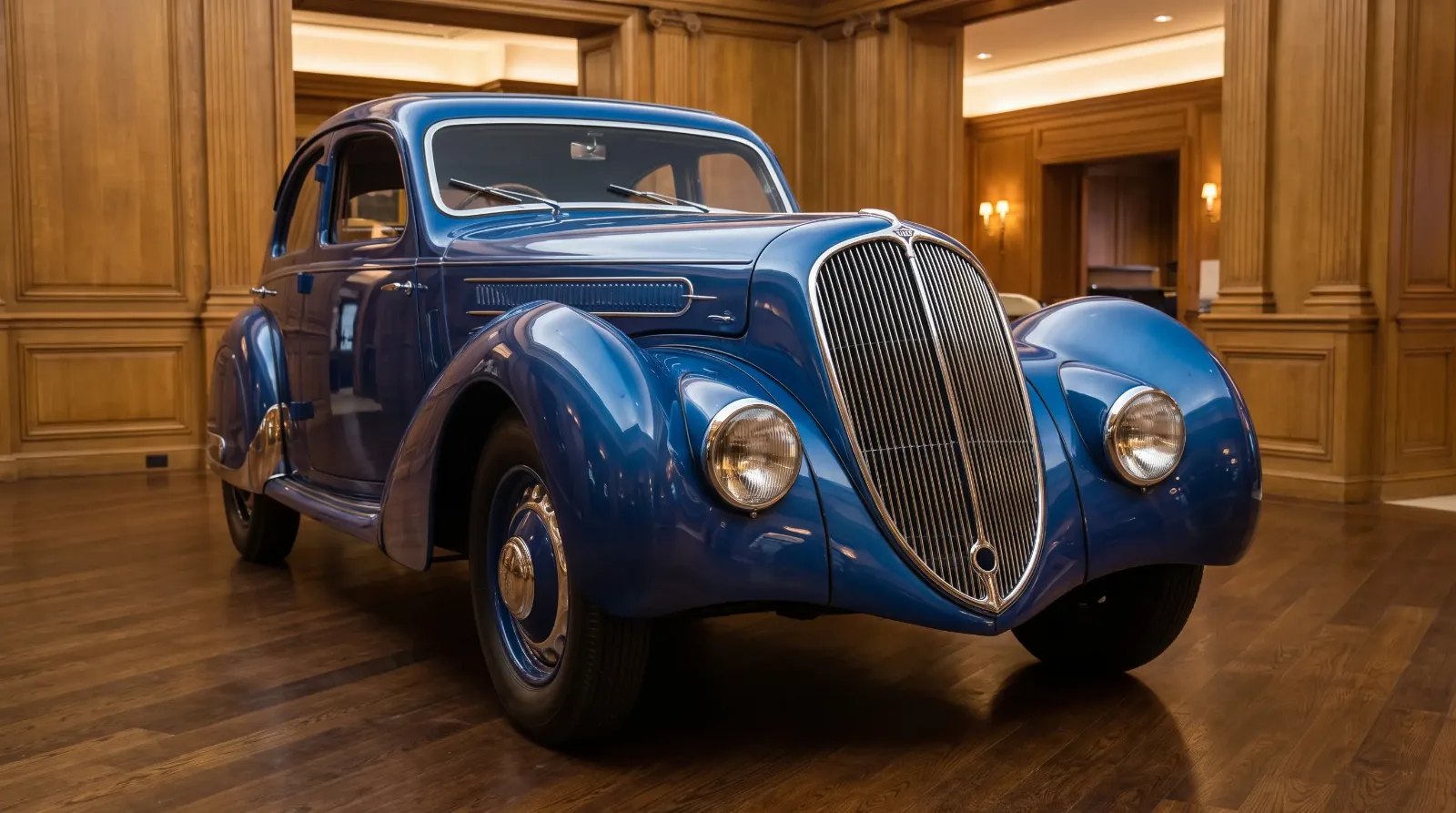
Deco also changed the way brightwork was used. Chrome moved from a functional finish to a compositional tool. A single spear of trim might run the length of a body to draw the eye, while a waterfall grille of vertical bars gave the front a vertical rhythm that balanced the horizontal fenders. This is the period context that America's antique automobiles came from, and Deco was the visual thread tying the luxury end of it together.
The French coachbuilders who set the standard
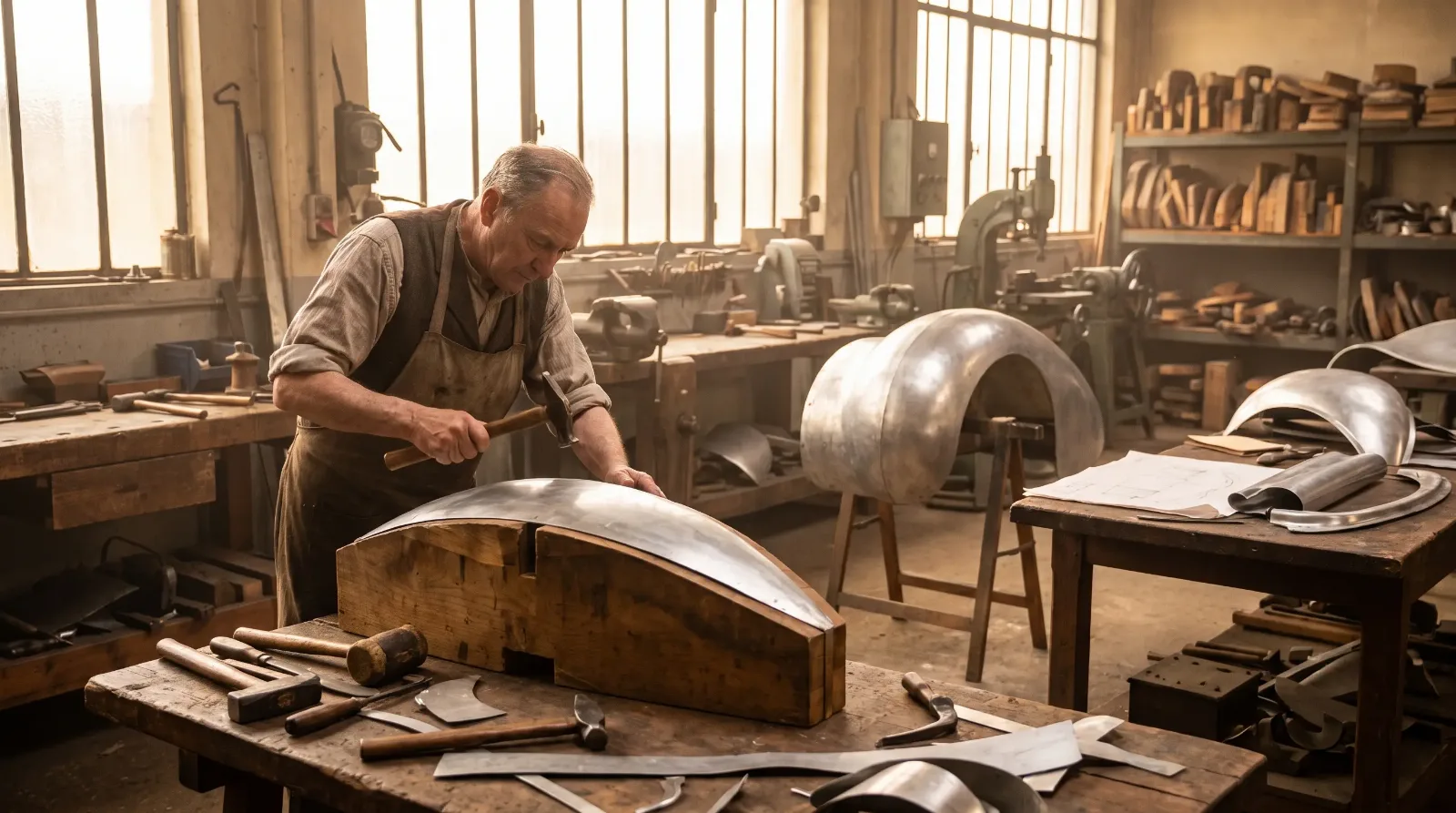
If Art Deco reached its highest expression anywhere, it was in the French carrosseries of the 1930s. These were small shops that built bodies to order on bare chassis supplied by makers such as Delahaye, Delage, Talbot-Lago, and Bugatti. The client bought the mechanical package from one firm and the body from another, and the coachbuilder's name often mattered more to collectors than the chassis maker's.
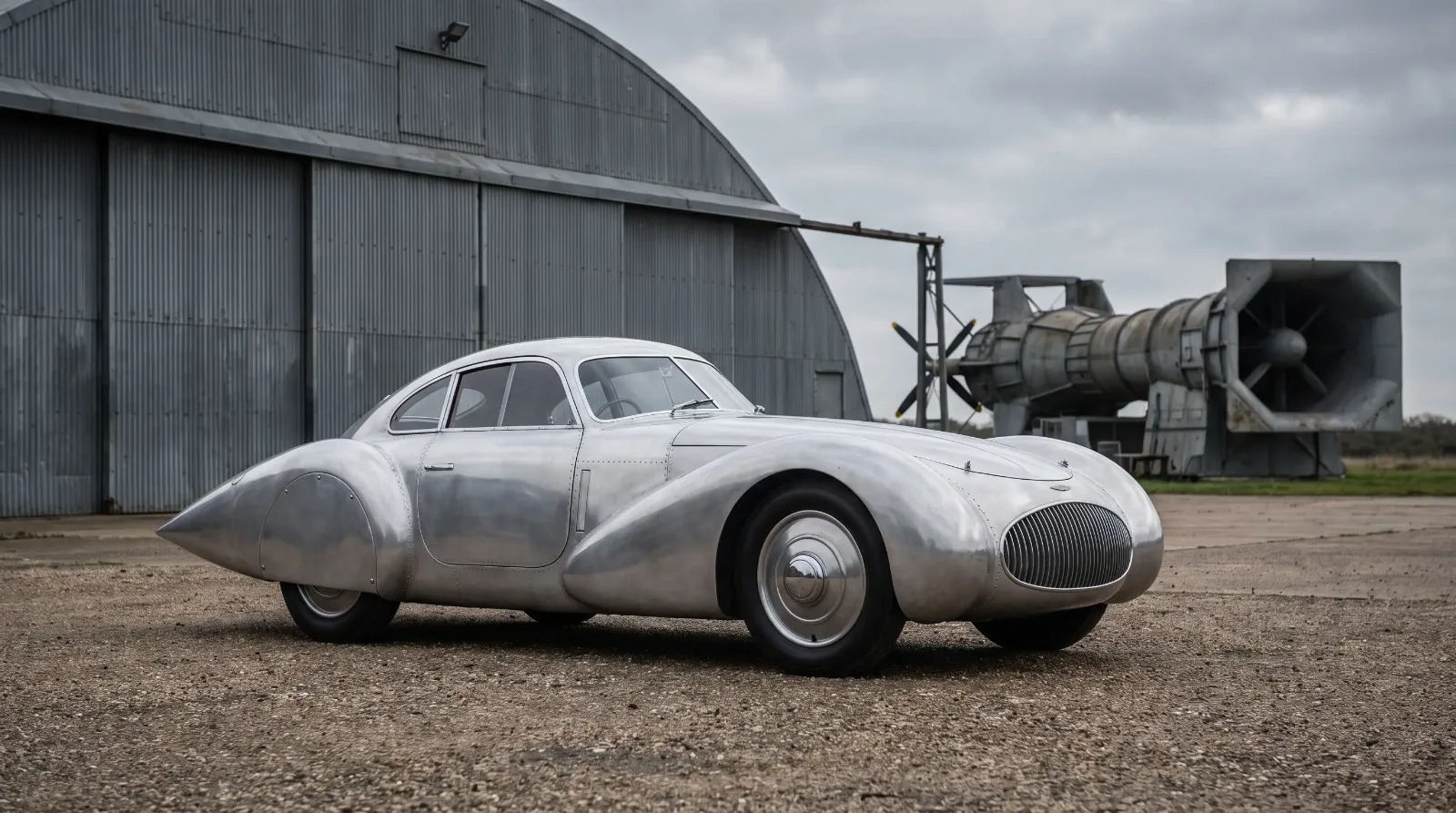
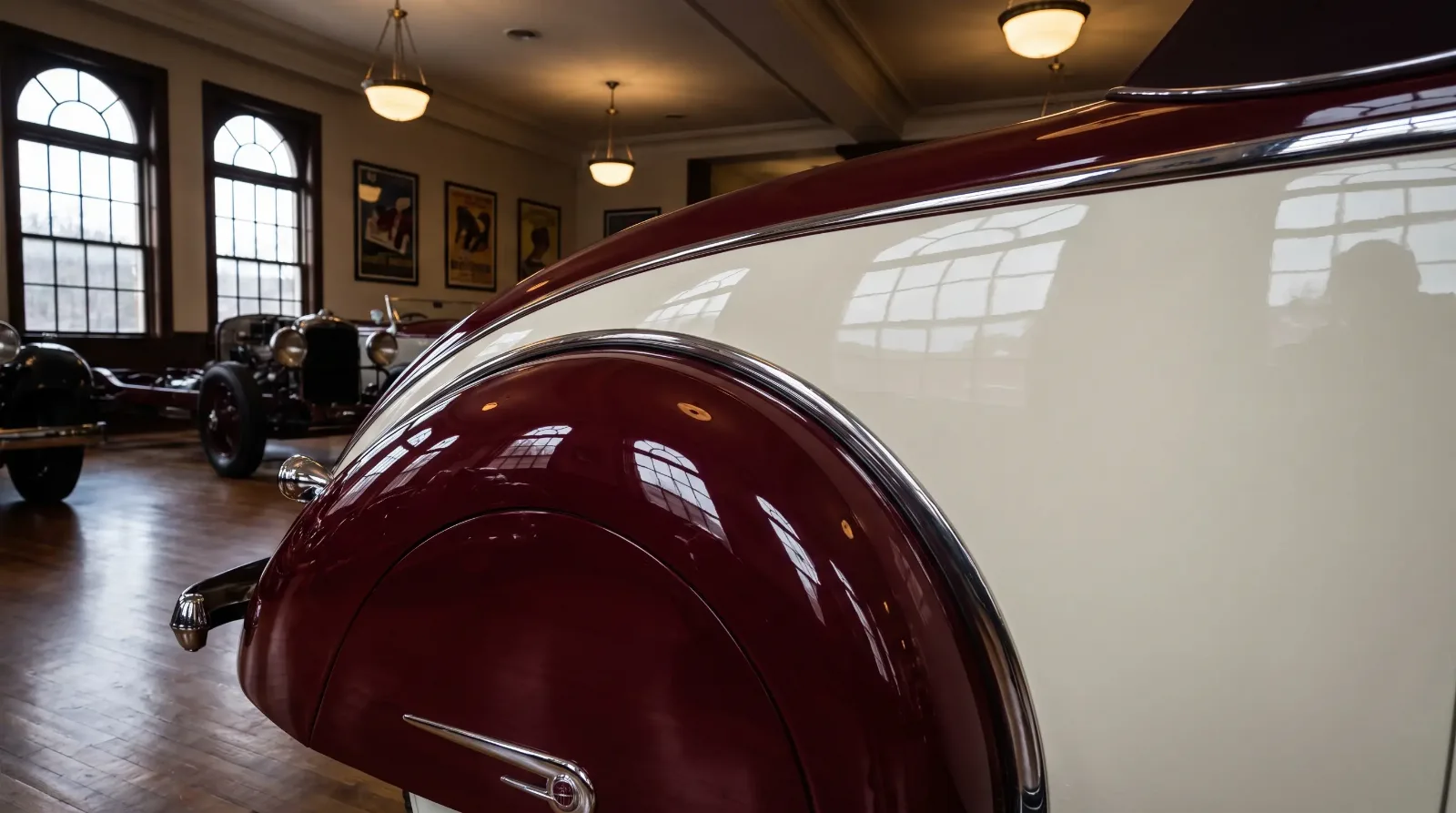
Figoni et Falaschi became the most famous of them, largely on the strength of their teardrop designs. Their bodies flowed from nose to tail in one continuous line, with fully skirted rear wheels and headlamps faired into the fenders. Joseph Figoni reportedly disliked hard edges, and his cars show it. Saoutchik took a different path, favoring dramatic chrome sweeps and two-tone paint that emphasized the length of a body rather than its smoothness.
These cars were extraordinarily expensive when new and built in tiny numbers, which is why originality matters so much today. A surviving example with its factory coachwork intact is a different object from one rebodied or heavily restored, and the market treats the two very differently.
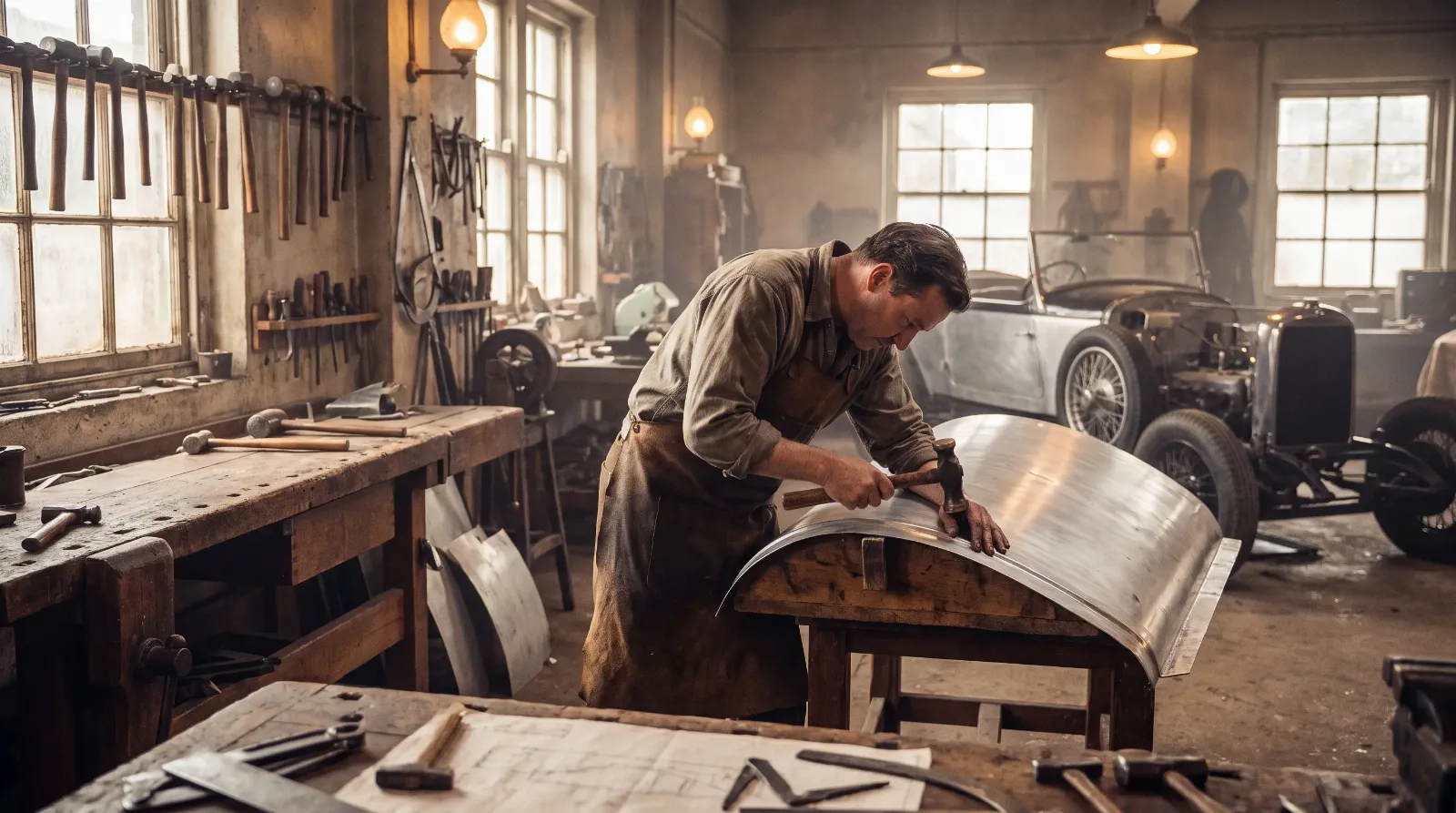
Part of what makes the French cars so instructive is the division of labor behind them. The chassis maker supplied engineering, a competent engine, a frame, and running gear. The coachbuilder supplied everything the eye responds to. That separation let a stylist chase pure form without worrying about the mechanical package, and it produced bodies that no factory design studio, working to a budget and a production schedule, would ever have signed off on. A Figoni teardrop was hammered by hand over a wooden buck, its curves adjusted by feel rather than drawn on paper. The labor hours in a single body ran into the hundreds, and it shows in the way light travels across the panels without interruption.
Delahaye and Delage chassis carried many of the finest examples, and the same names recur in concours results decade after decade. When you study these cars, you are really studying the relationship between two firms, one supplying the bones and one the skin, and learning to tell which hand shaped what.
American streamline and the factory answer
The United States approached Art Deco from a different direction. Where the French built one-off bodies for the very rich, American manufacturers tried to bring streamline styling to cars produced in the thousands. The results were uneven, but a few are landmarks.
The Chrysler Airflow of 1934 is usually cited first. It applied aerodynamic thinking to a mainstream car, with a rounded nose, faired-in headlamps, and a smooth tail. Buyers found it too radical, and it sold poorly, but its ideas spread. The Cord 810 and 812 of 1936 and 1937 fared better as design objects. Their hidden headlamps, wraparound louvered grille, and absence of running boards made them look like nothing else on an American road.
Pierce-Arrow's Silver Arrow show car and the Auburn Speedster carried the same streamline vocabulary into the luxury segment. These American cars tend to be more attainable than the French coachbuilt machines, and they are a logical entry point for a collector drawn to Deco form. If you are weighing options, it is worth studying period listings closely before committing, and you can browse the vintage listings to see how condition and originality track with price.
Reading the surfaces: how to spot a genuine Deco car
Because Art Deco was as much a set of details as an overall shape, learning to read those details is the key to understanding these cars. A few features recur across the best examples.
- Skirted fenders. Rear wheels partly or fully enclosed by bodywork, smoothing the profile and reinforcing the teardrop idea.
- Faired headlamps. Lights blended into the fenders or hood rather than standing on separate stalks, a break from brass-era practice.
- Speed lines. Parallel grooves or chrome strips on fenders, hoods, and hubcaps.
- Waterfall or vertical-bar grilles. Front treatments that used repetition for rhythm.
- Two-tone paint and long trim spears. Devices to emphasize length and flow.
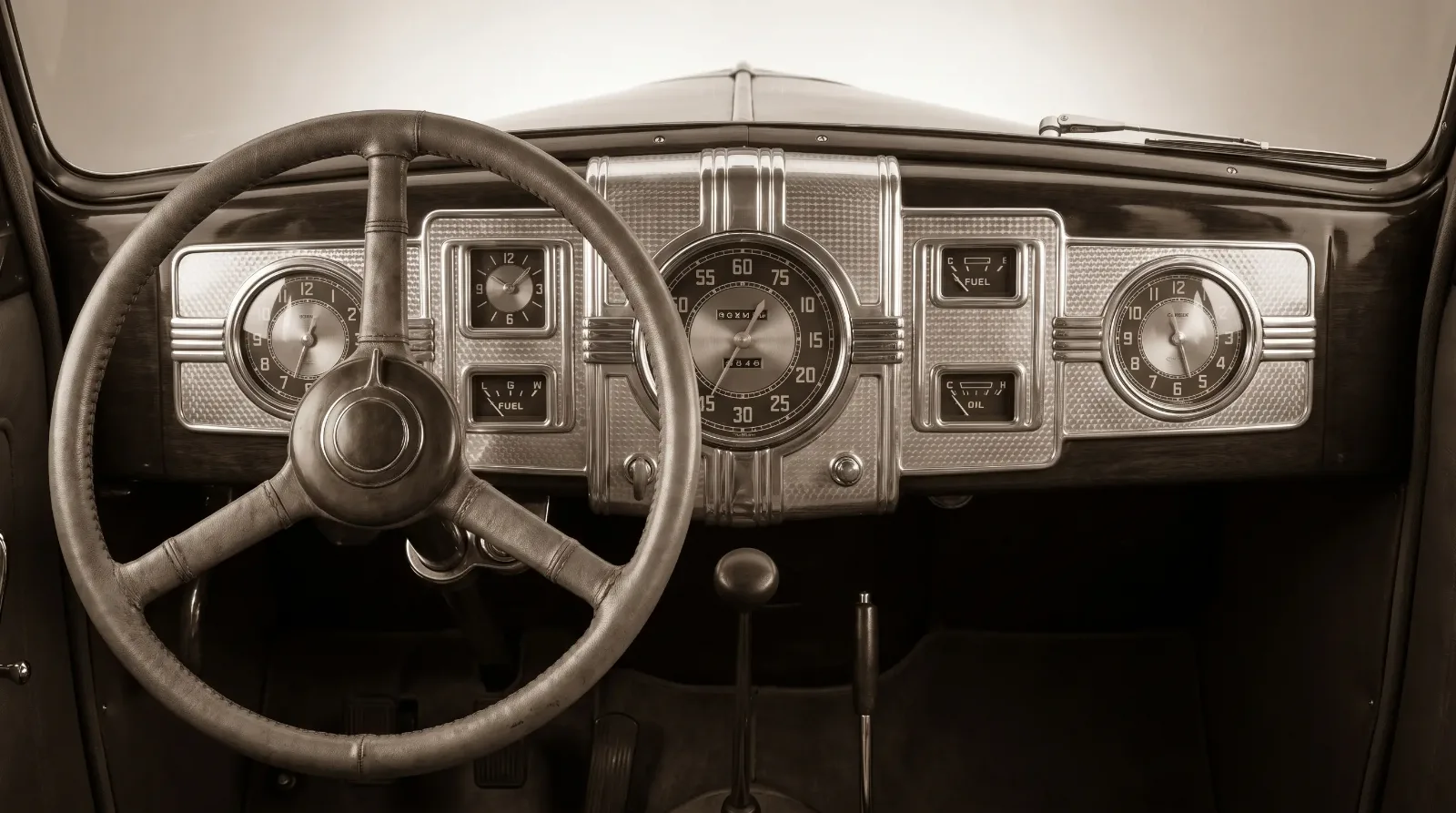
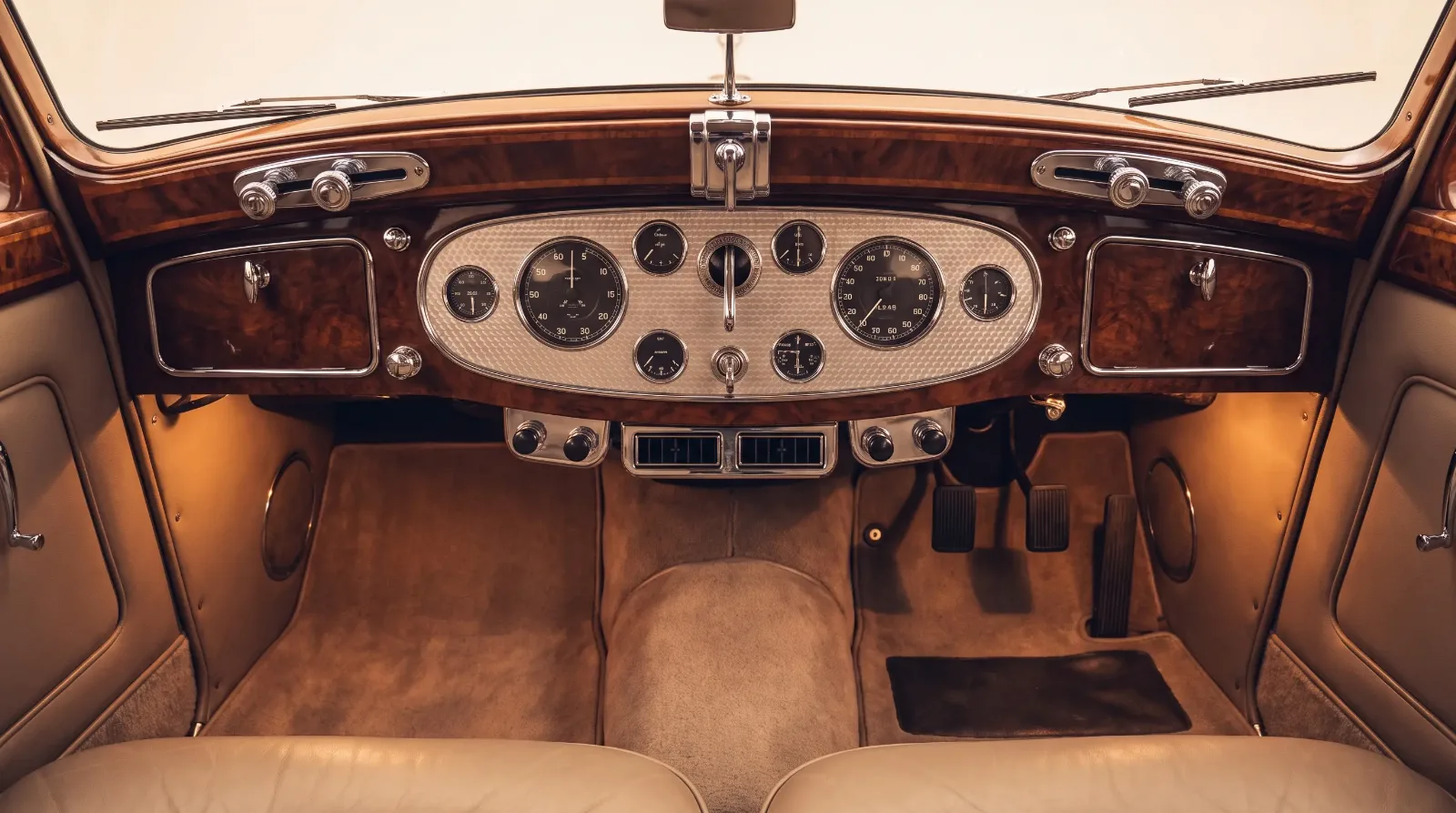
None of these features alone confirms a car as Art Deco, but together they signal a designer working in the idiom. The interiors matter too. Deco dashboards often used engine-turned metal, stepped instrument bezels, and geometric detailing that echoed the exterior. A dashboard from this period can be as revealing as the coachwork, since the same designer often controlled both, and a plain interior behind an elaborate body is a clue that something has been changed.
Proportion is the harder thing to see, and it separates the great Deco cars from the merely decorated. The finest examples set a very long hood against a short, tapering tail, so the visual weight sits forward and the eye is pulled along the length of the car. Cheaper imitations applied the surface details, the speed lines and the chrome spears, without getting the proportions right, and they look busy where a real Deco car looks resolved. Training your eye on proportion first and details second is the fastest way to tell a considered design from a dressed-up one.
Comparing the era's signature designs
The spread between a French coachbuilt teardrop and an American streamline production car is large in almost every measure, from how many were built to what they cost now. The table below sketches the range rather than pinning down exact figures, since production counts and values for the rarest cars vary by source.
| Car | Origin | Body type | Roughly how many built |
|---|---|---|---|
| Talbot-Lago T150-C SS teardrop | France (Figoni et Falaschi) | Coachbuilt coupe | Roughly a dozen |
| Bugatti Type 57SC Atlantic | France | Coachbuilt coupe | Four |
| Cord 810/812 | United States | Production sedan/cabriolet | Around 2,970 |
| Chrysler Airflow | United States | Production sedan | Roughly 29,800 over its run |
| Auburn Speedster | United States | Production roadster | Around 150 supercharged 851/852 examples |
The lesson in the table is not the exact numbers but the gulf between them. Deco was applied at both ends of the market, and the survivors reflect that split today.
Why these cars still matter to collectors
Art Deco automobiles occupy a particular place in collecting because they are judged first as design. A mechanically ordinary chassis wearing a great body can outvalue a faster car in a plain one. That makes originality of the coachwork, correctness of the paint scheme, and quality of restoration the questions that decide value.
For anyone studying the era, the French teardrops set the ceiling and the American streamline cars offer a way in. Both reward close looking. The style rewarded designers who understood that a car could carry the same visual ideas as a building or a poster, and the best examples still make the argument every time they roll onto a show field.
"A Deco car asks to be read slowly. Once you learn the vocabulary of skirts and speed lines and faired lamps, you stop seeing a shape and start seeing intent, and that is when these cars become fascinating rather than merely beautiful."
Sarah Whitfield
The idiom did not vanish overnight. Its softened, more restrained descendants carried into the years that followed, and you can trace the transition into the following era, when war and recovery reshaped what a car was allowed to be.
Sources and notes
Related Reading
Article
Pre-War Classic Cars: The Golden Age of the American Automobile (1900-1942)
Article
Brass Era Cars: The Dawn of the Automobile (1896-1915)
Article
Cars of the 1940s: The Pre-War Tail and the Wartime Pause
Article
What Is Art Deco Automotive Design?
Article
The Most Beautiful Streamline Moderne Cars
Article
Coachbuilders Who Defined Art Deco Style
Article
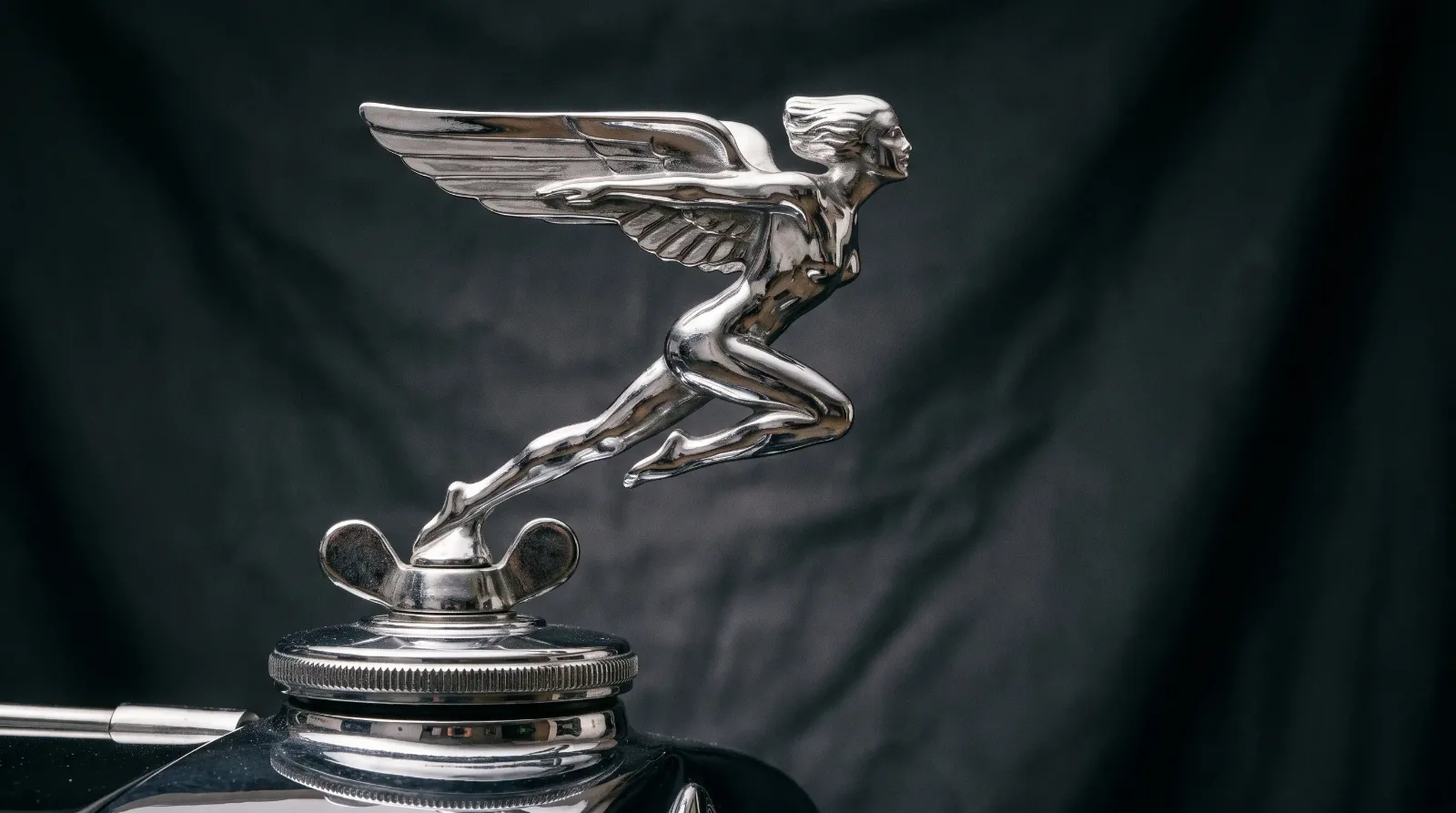
Hood Ornaments as Art Deco Sculpture
Article
Teardrop Cars: Aerodynamic Art of the 1930s
Article
Two-Tone Paint & Art Deco Color Theory
Article
Art Deco Dashboards & Instrument Design
Article
Chrome, Speedlines & the Machine Age Look
Article
The Most Elegant Grilles of the Art Deco Era
Article
Art Deco World's Fair Concept Cars
Article
How French Coachbuilders Led Art Deco Motoring
Article
Streamlined Trains & Cars: A Shared Aesthetic
Article
The Most Valuable Art Deco Cars Today
Article
Art Deco Influence in Modern Cars
Article
Interior Craftsmanship: Bakelite, Wood & Chrome
Have a
Classic Car
for Sale?
Reach thousands of serious classic car collectors across the US.
Sell It Here →
Are You a Classic Car Dealer?
List your full inventory and connect with targeted classic car buyers.
Join as a Dealer →
#pre-war classics
#coachbuilders
#automotive styling
#art deco cars
#streamline design
#teardrop coachwork

About the author
Sarah Whitfield
Third-generation classic car collector specializing in pre-war American and European coachbuilt automobiles. Researcher and concours enthusiast.
Comments (1)
C
Chuck Perkins
2 months ago
Had one of these about fifteen years ago. Sold it when life got complicated. Regret it most years come auction season.