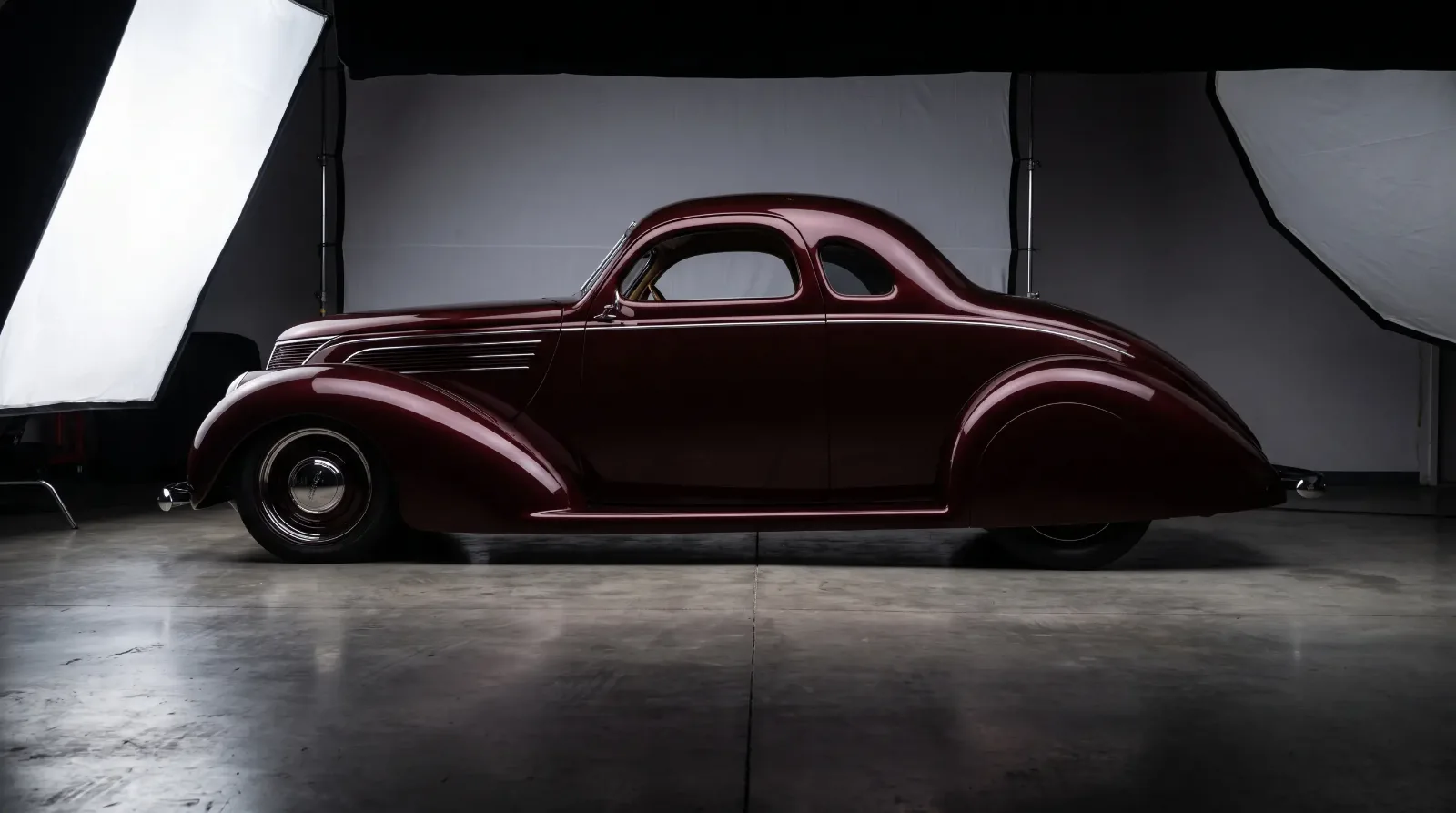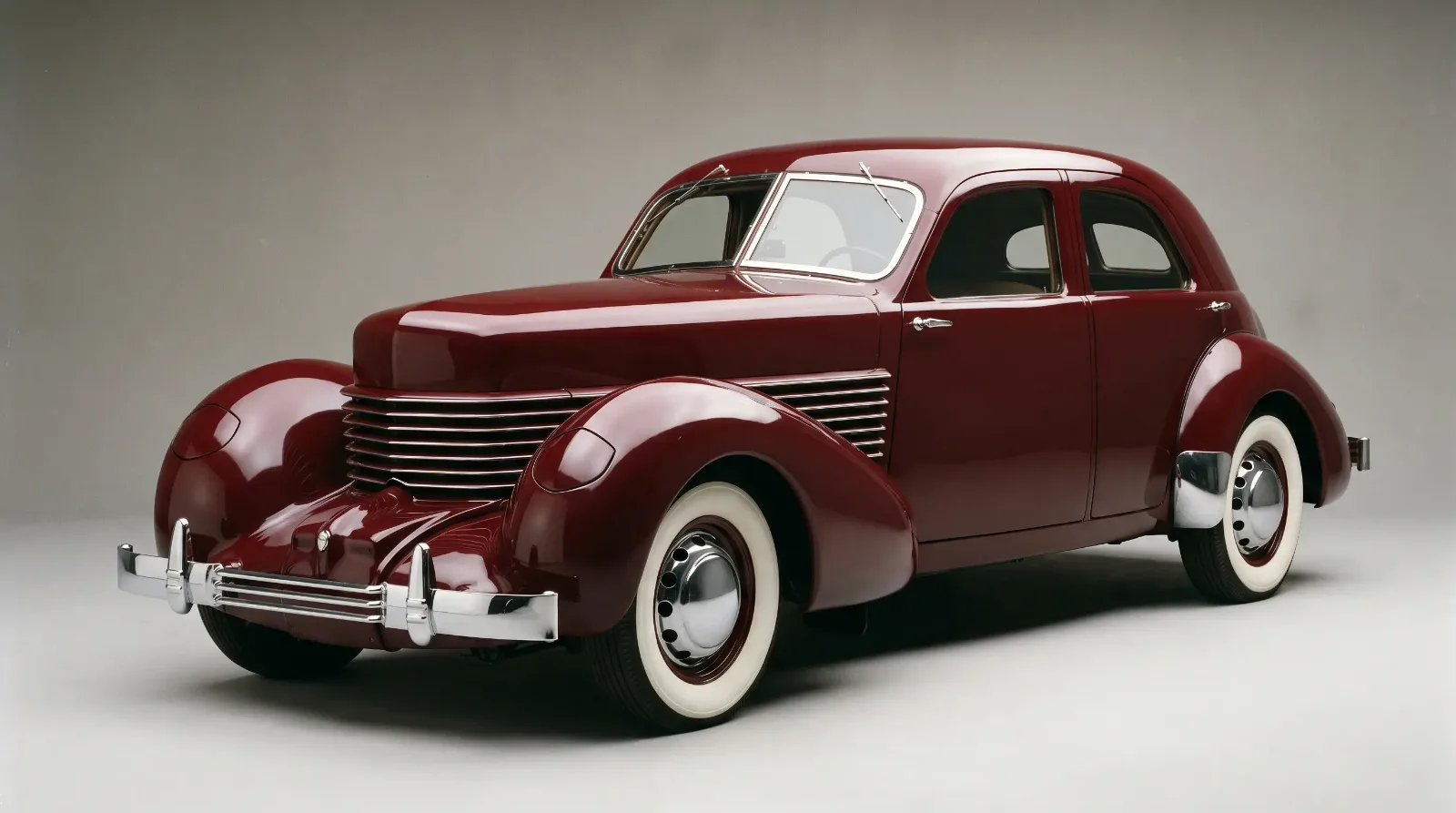
Step inside a well-preserved Art Deco automobile and the exterior's confidence carries straight through to the cabin. Nothing about the interior feels like an afterthought. The dashboard, the door trim, the instrument bezels, all of it was designed with the same seriousness that shaped the fenders and grille, and studying an interior closely often tells you more about a car's originality than the bodywork does, since interiors are harder to fake convincingly.
The materials themselves carry a period signature that is worth learning to read: specific plastics, specific veneers, specific finishing techniques that fell out of use once the war reshaped manufacturing. For the broader design movement these details belonged to, see the 1930s car interior craftsmanship story.
The dashboard as a design statement
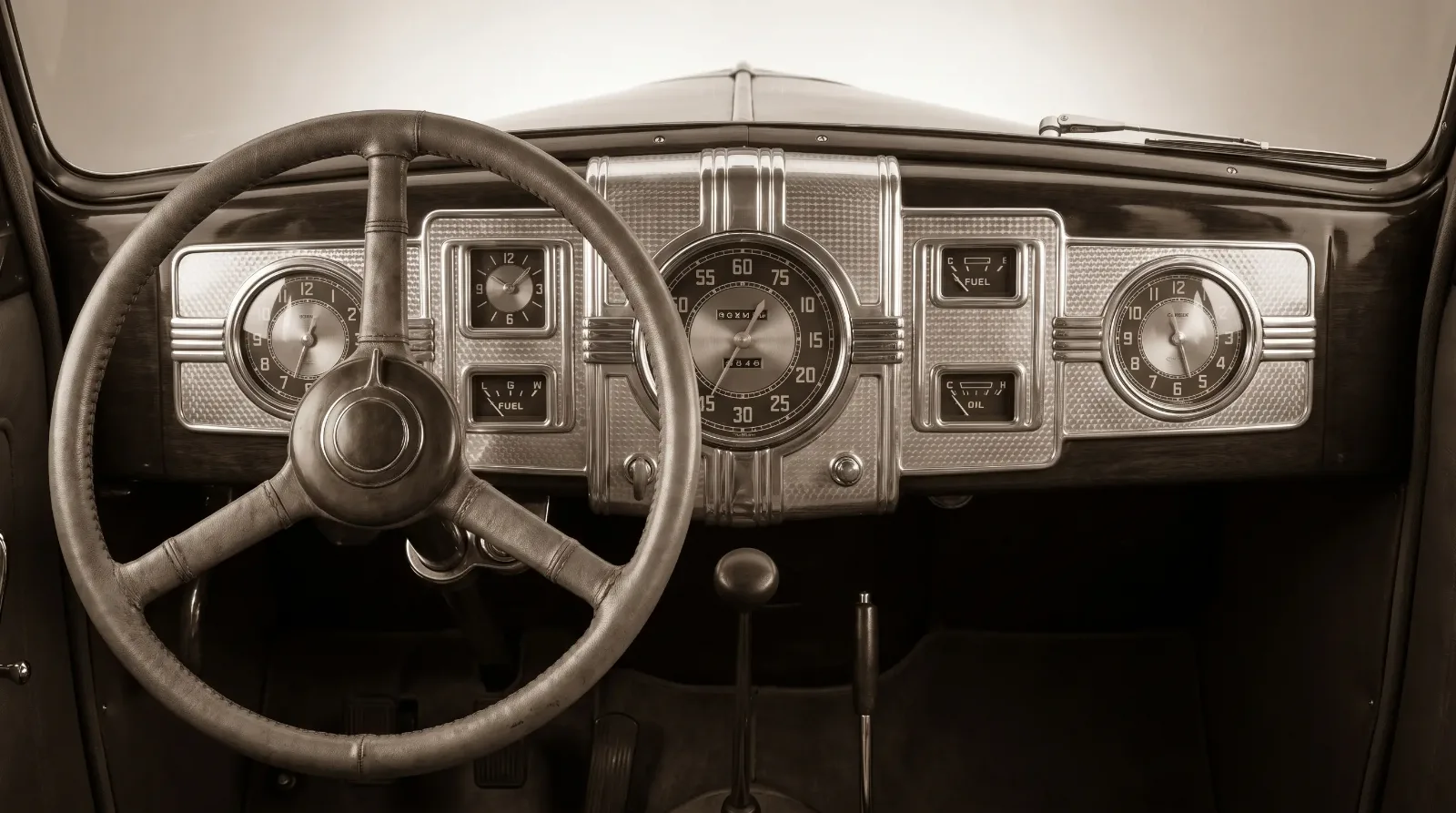
Before Deco, dashboards were largely utilitarian, a flat panel holding whatever gauges the car needed and not much else. Deco stylists treated the dashboard as an opportunity instead, using stepped, symmetrical layouts that mirrored the geometric ideas showing up on the exterior. A dashboard from this era often reads as its own small composition, with the instrument cluster positioned as a focal point the way a grille anchored the front of the car.
This mattered because the dashboard was the one part of the car every occupant looked at constantly, far more than the exterior body they were sitting inside of. Manufacturers and coachbuilders both understood that a cheap-feeling dashboard undercut an otherwise beautiful car, so the best examples put real material and design investment into a space most competitors treated as pure function.
Bakelite and the rise of molded plastic detail
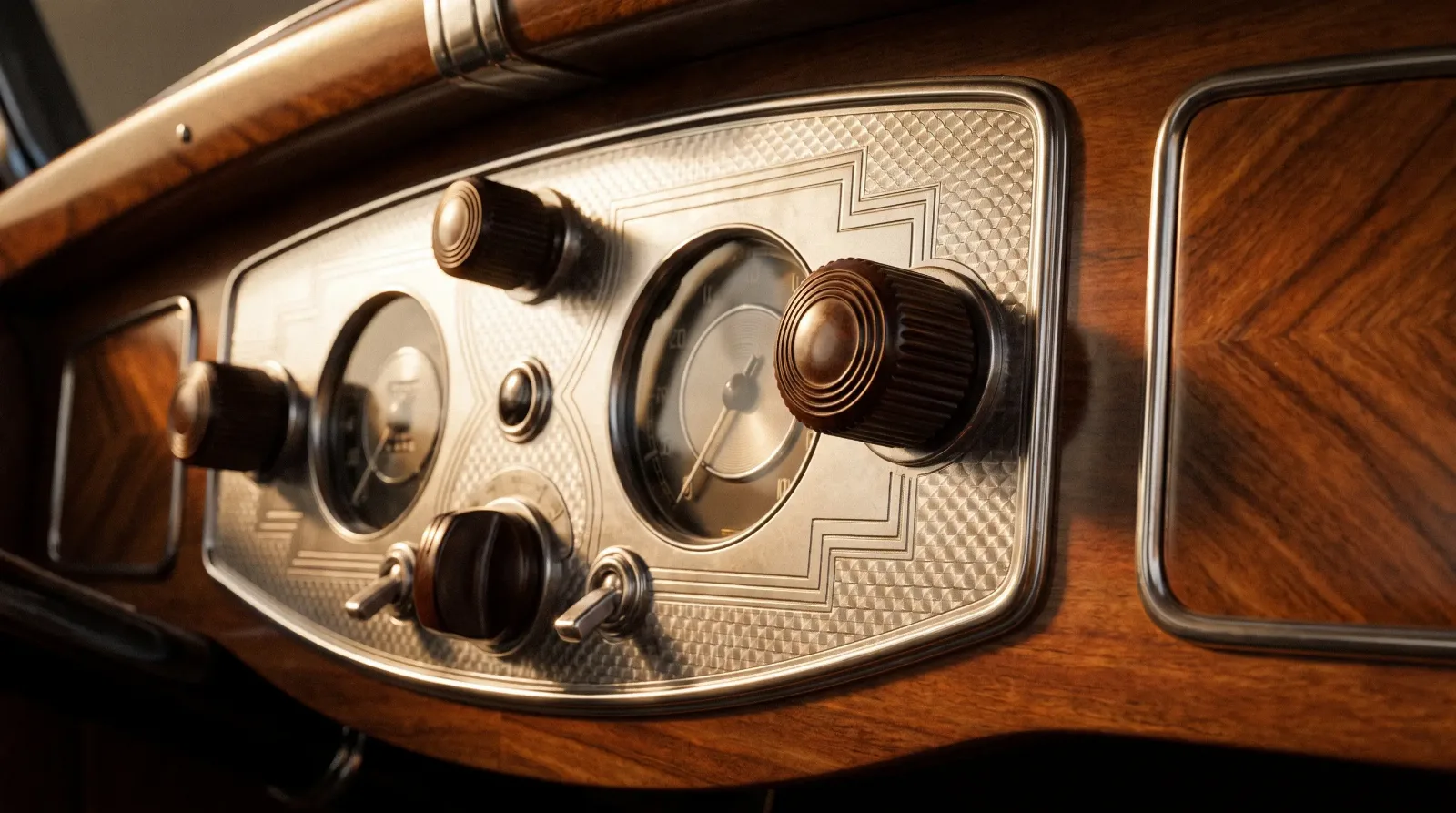
Bakelite, one of the first fully synthetic plastics, became a favorite material for knobs, steering wheel centers, and trim details through the 1930s. It could be molded into precise geometric shapes and finished in deep, glossy colors that held up well over time, which made it a natural fit for the era's design language. A steering wheel with a faceted Bakelite center, or window cranks finished in the same material, gave a cabin a consistent, considered look without the expense of hand-finished metal everywhere.
The material also aged in a recognizable way. Original Bakelite often develops a subtle patina and can show fine crazing over the decades, details that a knowledgeable restorer or buyer learns to distinguish from a modern reproduction part. Replacement Bakelite-style trim exists, and while it can be very well made, matching the exact color depth and finish of an original piece is difficult, which is one more reason interior originality is worth close attention during a purchase.
Wood veneers and engine-turned metal
Wood remained a marker of luxury throughout the period, particularly on European coachbuilt cars and the finer American makes. Dashboards and door cappings were often finished in bookmatched veneer, walnut and burled woods being especially common, applied in thin layers over a wooden or metal substrate and finished with multiple coats of varnish rubbed to a deep shine.
Engine-turned, or damascened, metal was the other signature finish of the period, most often seen on instrument panels and trim strips. The technique used a rotating abrasive tool to create a pattern of overlapping circles across a metal surface, producing a shimmering, almost woven look that caught light differently depending on the viewing angle. It was labor-intensive to apply correctly, and a well-executed engine-turned panel remains one of the clearest signals of a high-quality period interior.
Chrome, glass, and instrumentation as jewelry
Instrument clusters from this period were often designed with the same visual ambition as fine watches, using stepped bezels, jeweled-looking crystal faces, and typography chosen as carefully as the numerals on a dress watch. Chrome trim rings around gauges, ashtrays finished to match the dashboard's metal accents, and door handles sculpted rather than simply functional, all of it reinforced the sense that the cabin deserved the same attention as the coachwork outside.
Glovebox doors and glass-fronted clocks added another layer of detail on the finest cars, and the overall effect was meant to feel closer to a piece of furniture or jewelry than to industrial equipment. That ambition is part of why these interiors still impress people who otherwise know little about pre-war cars. The craftsmanship reads clearly even to an untrained eye.
"People walk up to admire the fenders and end up staying to study the dashboard. The exterior gets the photographs, but the interior is where you really feel how seriously these cars were made."
— Sarah Whitfield
Reading originality in a surviving interior
An interior is one of the hardest parts of a pre-war car to restore convincingly, which makes it one of the most reliable places to assess authenticity. Reupholstery is common and, done well, is not necessarily a mark against a car, but replaced dashboards, non-original instrument faces, or modern-feeling switchgear are worth noting carefully during an inspection.
Original finishes tend to show consistent, gentle wear in the places a driver's hand would naturally fall, the wheel rim, the door handle, the edge of the seat. A cabin that looks uniformly pristine everywhere is either exceptionally well cared for or has been more heavily redone than the seller may be letting on, and either way it is worth asking direct questions before assuming which. The same careful, detail-first approach that serves you well on an interior applies across the whole car, and if you want to see how it extends to the exterior surfaces this interior work was designed to complement, a related read covers that ground.
Sources and notes
- Wikipedia: Bakelite history and industrial uses
- American Chemical Society - Leo Baekeland and the invention of Bakelite
- Britannica - Bakelite, synthetic plastic and industrial uses
- Hagerty UK - top tips for classic car restoration
- Wikipedia: Engine turning, or damascening, metal finish technique
- Wikipedia: Art Deco design movement