
Ask a seller about the paint and you will get an enthusiastic answer. Ask about the chassis number and watch how long it takes them to find the paperwork. That pause tells you more about what a pre-war car is worth than the finish ever will. Numbers-matching is not a nice-to-have on cars this old. It is most of the valuation argument in a single line item.
Car Features
6 min read
Authenticate & Decode Chassis and Engine Numbers
Numbers-matching decides more of a pre-war car's value than the paint job. Here is where to find the numbers, how to verify them, and what a mismatch costs at resale.
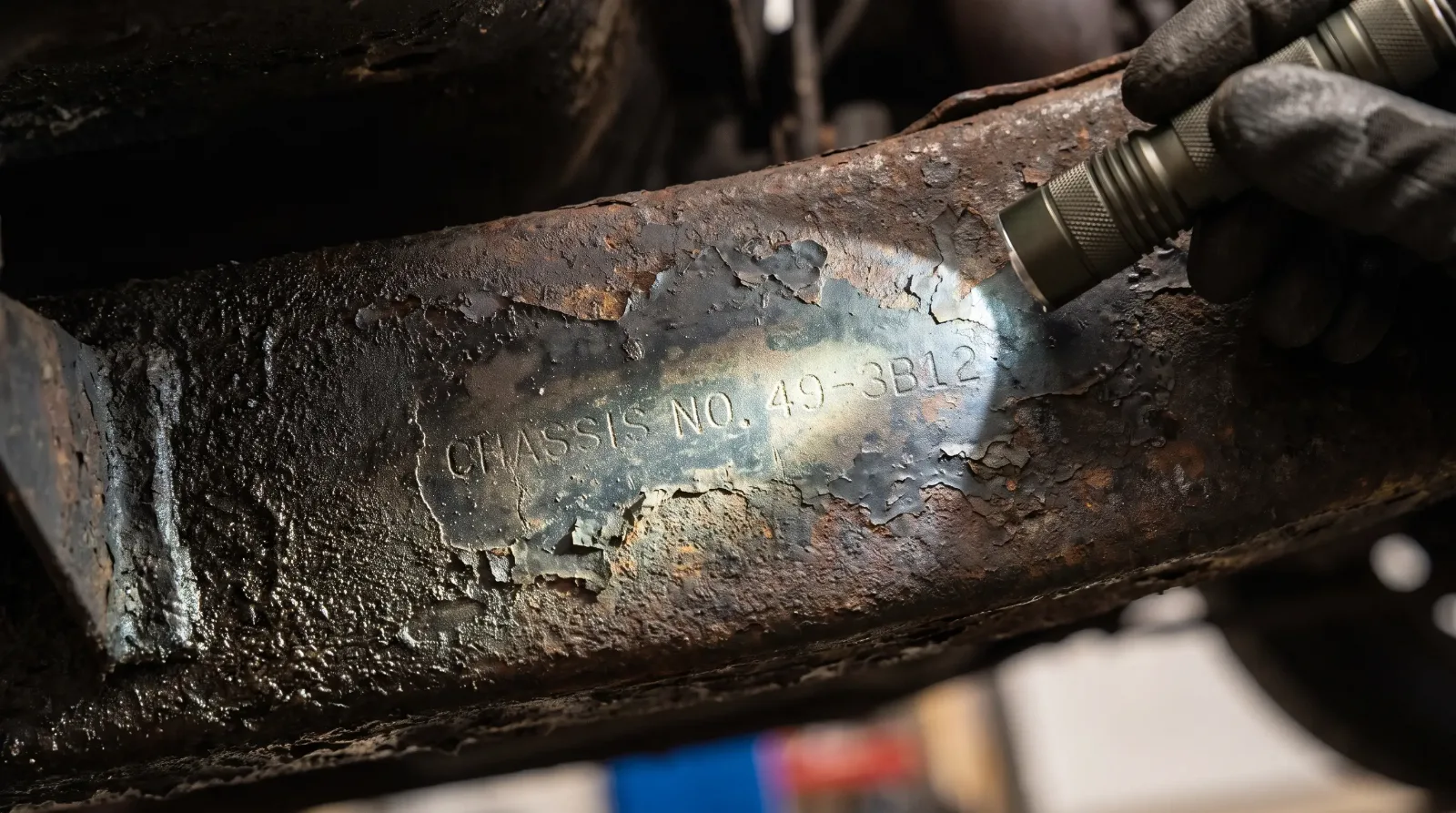
Why the numbers matter more than the paint
A car is worth what a buyer will pay for the story it can prove. On a pre-war chassis, the story starts with two stamped or engraved sequences: the chassis (or frame) number and the engine number. When both trace cleanly to the same factory build sheet, or to the same entry in a marque registry, you are looking at a documented example. When they do not, you are looking at a car that requires an explanation, and explanations reduce price. I put documented, numbers-correct cars in my #1 tier for a given model. Everything else gets priced down from there, sometimes by a little, sometimes by a lot depending on how far the story strays.
This is not sentimentality about originality. It is liquidity. A buyer three transactions from now will ask the same question you are asking today, and if the answer is murky, your resale pool shrinks to people willing to overlook it. That is a smaller, more price-sensitive pool. For more on authenticating pre war classics, the same logic runs through every valuation factor in the category, not just the numbers.
Where to find the numbers on a pre-war chassis
Placement varies by marque and by year, which is exactly why you cannot skip this step or trust a seller's word for it. Common locations include a plate riveted to the firewall or driver's side frame rail, a stamping on the frame itself near the front spring hanger, and engine numbers cast or stamped into the block, often near the water pump housing or on a boss above the starter. Some pre-war era makers used separate serial number sequences for chassis, engine, and body, which means you may be reconciling three different records instead of one.
Bring a flashlight and a mirror, not just your phone camera. Numbers on 90-plus-year-old iron are often obscured by decades of paint, grime, and prior repair work. A number that has been re-stamped, re-cut, or ground and re-scribed is visible under raking light even when it looks clean in a photo. I have walked away from cars where the chassis number plate had clearly been swapped, not because the car was a fake, but because I could not confirm it was not.
Cross-referencing against factory and club records
Once you have the numbers off the car, the work moves to paper. Marque registries and one-make clubs are, for most pre-war cars, more reliable than the factory itself, since factory archives for defunct manufacturers are incomplete or lost outright. A registry entry that matches your chassis number, lists the correct engine number range, and notes the original delivery point or first owner is close to gold-standard documentation. Some registries will also show a chain of prior owners, which does double duty as both authentication and provenance.
Where a registry does not exist or has gaps, look for period documents tied to the specific car: an original title, a factory build sheet if the marque issued them, dealer invoices, or even old insurance paperwork. None of these alone proves everything, but each one narrows the range of honest explanations for what you are looking at.
Honest mismatches versus red flags
Not every discrepancy is a problem. A replacement engine installed by the original dealer within the correct period, and noted as such in early paperwork, is a different situation than an engine of unknown origin dropped in during a later restoration with no documentation at all. The first is a footnote. The second is a valuation issue you need to price into your offer.
The tells I look for on a re-stamped or altered number: inconsistent letter spacing compared to known factory examples, stamping that sits proud of surrounding metal rather than recessed into it evenly, and file marks or grinding around the plate or boss where the number sits. None of these is proof on its own. Together, and combined with a seller who cannot produce paperwork to match the story, they push a car down a tier regardless of how good it looks in photos.
"I have seen buyers pay a full-tier premium for a car with a boring, well-documented history and a mediocre paint job over a stunning car with a story nobody could quite verify. That is the correct call every time. Paint fades. A clean number and a matching registry entry do not."
Marcus Feld
What a mismatch actually costs you at resale
Pricing tiers on a numbers question tend to run in predictable steps. A fully documented, matching-numbers car sits at #1 for the model. A car with a period-correct, documented replacement drops modestly, often into #2 territory, since the story is intact even if the specific engine changed. A car with an undocumented replacement, or a chassis number that cannot be verified against any registry, lands in #3 or #4 depending on everything else about the example, and the discount from a #1 car can run well into double-digit percentages. That is before you factor in the smaller buyer pool willing to purchase it at all.
None of this means an unmatched car is worthless. Plenty of collectors buy #3 and #4 cars deliberately, as drivers or as restoration projects where originality was never the point. The mistake is paying #1 money for a car with a #3 story. Do the number check before you do anything else, including before you fall in love with the car in the driveway. For the next story, the valuation factors that sit alongside authentication get the same treatment. If you want the broader context on why pre-war cars carry these documentation requirements in the first place, our pre-war era guide covers the ground the numbers question sits on top of.
Sources and notes
Related Reading
Have a
Classic Car
for Sale?
Reach thousands of serious classic car collectors across the US.
Sell It Here →
Are You a Classic Car Dealer?
List your full inventory and connect with targeted classic car buyers.
Join as a Dealer →

About the author
Marcus Feld
Accredited collector-car appraiser who reads the market through hammer prices, condition tiers and risk.




Comments
Be the first to comment on this article.