
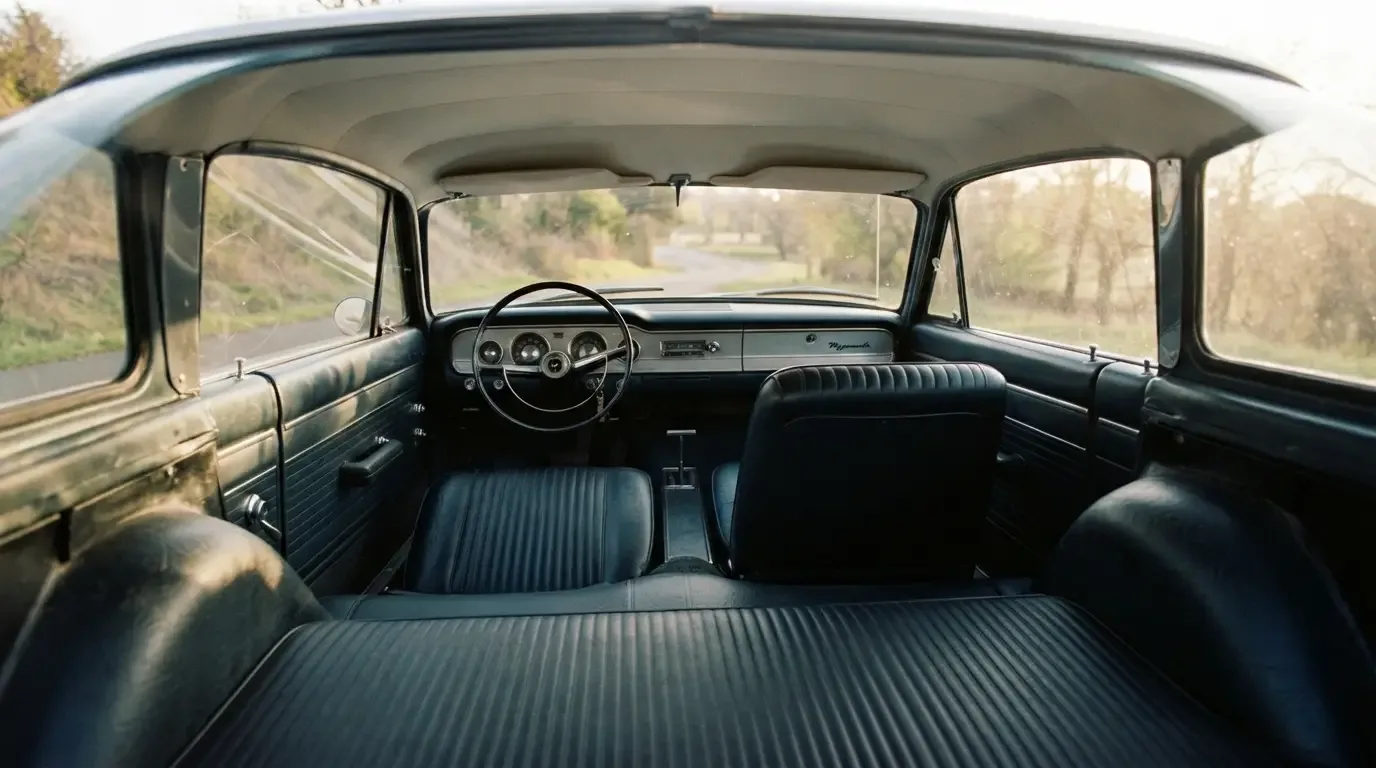
Step inside an early Barracuda and the first thing that registers is not a gauge or a switch, it is the light. The 1965 barracuda interior was built around that enormous fastback glass, and Plymouth's designers clearly understood they had something unusual to work with, because the cabin treatment leans into openness in a way most compact cars of the period did not attempt.
Car Features
7 min read
Inside the Early Barracuda
Plymouth designed the early Barracuda's cabin around its famous fastback glass, pairing sporty bucket seats with a fold-down rear seat that gave the car genuine hauling capability.
A cabin designed around the glass, not in spite of it
Most fastback designs of the 1960s treated the rear window as a styling element to be tolerated from the driver's seat, something that looked good from outside but cut into visibility and made the back seat feel like a cave. The Barracuda's interior team took the opposite approach. The dashboard sits low, the door panels are relatively slim, and the rear seat area was shaped to take advantage of the light pouring in through that curved glass rather than fight against it. Sitting in the back of one of these cars in daylight feels noticeably different from sitting in the back of a contemporary Valiant sedan, even though the two cars share a huge amount of structure underneath.
Front seat buyers who opted into the Formula S package or higher trim levels got a sportier bucket seat arrangement with a floor-mounted shifter for cars equipped with a manual transmission, a layout that pushed the whole cabin toward a driver-focused feel rather than the bench-seat practicality that defined most Valiants. The contrast between a base Barracuda's simple bench seat interior and a well-optioned bucket seat, console-equipped example is significant enough that the two feel like different cars from the driver's position, even with identical bodies.
The fold-down seat that changed what the car could carry
One of the most genuinely clever pieces of the interior was the fold-down rear seatback, which combined with the fastback's long trunk to create a cargo area that stretched from the back of the front seats all the way to the tailgate area of the trunk. This was not just a styling gimmick. It gave the Barracuda real hauling capability that a lot of sportier-looking compacts of the era simply did not offer, and Plymouth's own marketing leaned on this feature specifically to argue the car was practical enough for buyers who needed more than a pretty shape.
That combination, a sporty two-door body that could still swallow a load of luggage or gear when the rear seat folded flat, gave the car a broader appeal than a pure sports coupe would have had. It is part of why the Barracuda found buyers beyond the enthusiast crowd who cared most about the fastback styling and V8 options.
"People forget the Barracuda's interior was doing something genuinely different with light and space. It is easy to miss until you actually sit in one on a sunny afternoon."
- Tom Ramirez
Trim levels and how the cabin changed across the run
Interior trim and materials shifted modestly across 1964 through 1966 as Plymouth refined the car, with later years offering a slightly wider range of upholstery choices and detail trim differences on the dashboard and door panels. Documentation on exact interior color codes and material options from this period exists in Chrysler's original build sheets and factory literature, and matching a car's current interior against those original codes is one of the more reliable ways to confirm whether a Barracuda retains its factory-correct cabin or has been reupholstered with non-original materials at some point in its history.
Anyone researching a specific car benefits from cross-referencing 1964 plymouth barracuda history alongside the fender tag and build sheet for that individual vehicle, since general model-year trends only go so far when verifying an original interior on paper.
The small touches that made the cabin feel finished
Beyond the seats and the glass, the details that Plymouth's interior team layered in are easy to overlook today but mattered a great deal to a 1965 buyer standing in a showroom comparing one compact against another. A woodgrain-finish steering wheel was available on the sportier trims, a touch borrowed straight from full-size luxury cars and dropped into a compact that most people were shopping on price. Chrome trim rings around the gauges, a padded dash top on better-equipped cars, and simulated wood accents on the console area all pushed the cabin upmarket without pushing the price into a different bracket. None of this was groundbreaking on its own, but assembled together inside a car built on Valiant bones, it read as considerably more expensive than it actually was, and that perception did real work for Plymouth at the dealership.
The instrument cluster itself is worth a mention on its own. Cars ordered with the Formula S package or the optional rally-style gauge package got a more complete set of instruments, including oil pressure and amperage readings that a base car simply left out in favor of idiot lights. For a buyer who wanted the car to feel like a genuine driver's machine rather than a dressed-up commuter, that gauge package was often a more meaningful upgrade than any exterior trim option, and it is one of the details that specialist buyers now check closely when evaluating how original a surviving interior really is.
Why the interior matters to today's buyers
Original, unmolested interiors from this generation are genuinely scarce. Vinyl and cloth from the mid-1960s does not survive six decades of sun and use without wear, and a lot of surviving cars have been reupholstered at some point, sometimes with reasonably accurate reproduction materials and sometimes with whatever the previous owner had on hand. A documented, correct interior adds real value to a car in this generation precisely because so few have made it this far unaltered.
Restoration shops that specialize in this generation report that sourcing accurate reproduction door panels and correct dash pad material has become easier over the last decade as demand for first-generation Barracudas has grown, but getting the small details right, the exact stitch pattern on a bucket seat, the correct grain on a dash pad, the right shade of a two-tone color combination, still separates a merely nice restoration from a genuinely correct one. Judges at organized shows for this generation increasingly look past the paint and chrome to the cabin, because the exterior is comparatively easy to get right and the interior is where sloppy restoration work tends to hide.
That growing scrutiny has changed how serious sellers present these cars. A listing that includes interior close-ups alongside the fender tag and build sheet now commands more attention from serious buyers than one relying on exterior photography alone, simply because the cabin has become the detail that experienced collectors trust least until they have seen it themselves.
Those interested in a related angle on how these early cars have held their value over time should look at a related story covering the collectibility side of the first generation, since interior condition and originality feed directly into how these cars are appraised today. If the cabin story has you curious about seeing one firsthand, you can check out Barracudas for sale now and compare interior condition across the examples currently on the market.
Sources and notes
Related Reading

About the author
Tom Ramirez
Corvette researcher and historian based in Bowling Green, Kentucky. Two decades documenting Corvette production history from original factory records.
Related Listings - Plymouth Barracuda
Comments
Be the first to comment on this article.