
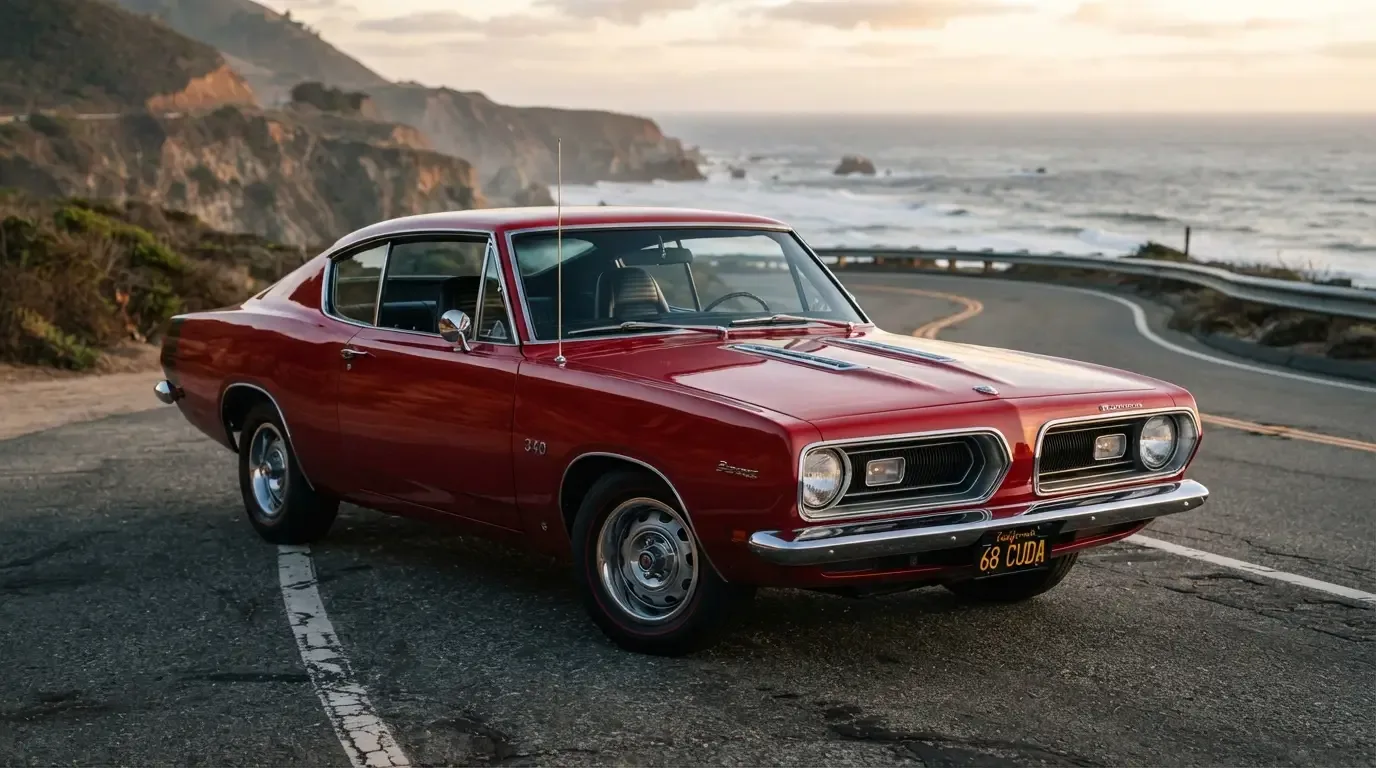
The 1968 Barracuda 340 is one of those cars that gets less credit than the math says it deserves. Plymouth had a Formula S with a 383 for buyers chasing torque and bragging rights, but the 1968 Barracuda 340 solved a different equation entirely: how do you get real performance without punishing the front suspension with an engine the chassis was never built around.
Car Features
6 min read
The 1968 Barracuda 340: The Sweet Spot
The 1968 Barracuda 340 traded raw displacement for balance the chassis was actually built to handle. Here is the engineering case for why it holds up better than the 383.
The engineering logic behind the swap
The 340 cubic inch small block was, on paper, a compromise engine. It gave up displacement to the 383 and the 440 that would eventually follow. In practice, it was the engine that actually fit the A-body platform the way the platform was designed to be used. The small block package kept weight distribution close to what Plymouth's engineers had originally targeted for the Barracuda, and that single fact explains almost everything else you need to know about how this car behaves.
Rated at 275 gross horsepower at the factory, the 340 produced a number that looked modest against the 383's spec sheet, and period racers and magazines considered that figure conservative even at the time, with the NHRA eventually factoring the engine closer to 290 to 310 horsepower for classification purposes. What the spec sheet does not capture is the power to weight relationship once you account for where that weight actually sits. A lighter nose means less front tire scrub in a corner, less understeer under trail braking, and a car that rewards a driver willing to actually use the chassis rather than just point it in a straight line.
Where the numbers actually land
Run the comparison honestly and the 340 Barracuda comes out ahead of the 383 car in every metric except raw torque and straight line bragging rights. Quarter mile times were close between the two engines despite the displacement gap, largely because the 340 car's weight advantage offset a real amount of the torque deficit. Handling comparisons were not close at all. The small block car turns in with noticeably less front end plow.
None of this means the 340 is objectively the better car for every buyer. It means the 340 is the better engineered compromise for a chassis that was never meant to swallow big block displacement gracefully in the first place. Buyers chasing a specific number on a spec sheet often overlook that the 340 was, in a real engineering sense, the option Plymouth's own platform was built to run.
There is also a durability argument that tends to get lost in horsepower debates. A small block under less structural stress typically ages better than a big block forced into a chassis that was not originally sized for it. Front end components on 383 cars see more cumulative load over decades of ownership, which shows up eventually as looser steering and more frequent suspension bushing replacement. The 340 car simply asks less of its own chassis, year after year, and that adds up over a fifty year ownership timeline in ways a one time acceleration run never will.
Failure modes worth knowing about
No engine option from this era is free of quirks, and the 340 has its own list. Valve train wear at sustained high RPM use is a documented concern with the factory rocker arm setup, and the factory cooling system was adequate rather than generous, meaning a tired radiator turns into an actual overheating problem faster on a 340 car driven hard than most owners expect. None of these issues are unique to the Barracuda application, but the tighter engine bay on this chassis makes routine inspection slightly more of a chore than on a full size B-body running the same small block.
Rust remains the dominant risk across every drivetrain option in this generation, and the 340 cars are not exempt just because they carry a lighter engine. Trunk floors, rear frame rails, and the area around the rear window on fastback bodies all deserve a careful look regardless of what sits under the hood.
Carburetor tuning is another area where the 340 rewards patience over shortcuts. The factory Carter carburetor was matched to a specific intake and exhaust configuration, and owners who have swapped in a generic aftermarket carb without addressing jetting properly often report flat spots in the midrange that have nothing to do with the engine's actual capability. A correctly tuned 340 pulls cleanly through the entire rev range. A poorly tuned one gets blamed for problems that are really just carburetor mismatches.
Transmission pairing also affects how the car actually performs on the road. A 340 backed by the factory four speed manual feels considerably livelier than the same engine paired with the automatic, and that difference shows up more in this car than it does in the heavier 383 equipped Barracudas, simply because the lighter overall package makes shift quality and gear spacing more noticeable to the driver.
| Spec | Figure |
|---|---|
| Engine | 340 cubic inch V8 |
| Factory rated output | 275 hp (gross, factory rating; widely considered conservative) |
| Handling | Better front to rear balance than 383 cars |
| Common weak point | Valve train wear under sustained high RPM use |
Buying one today
If you want more on the second generation Barracuda's overall development, more on the second generation barracuda covers the full platform story, and it is worth reading before deciding which engine option actually matches your priorities. The 340 did not appear in a vacuum either, and understanding where this started helps explain why Plymouth kept iterating on engine and chassis balance across the whole run rather than just chasing bigger displacement every model year. When you are ready to compare actual cars rather than spec sheets, there are usually several classic Barracudas on the market worth cross shopping.
"People ask me which engine is faster. Wrong question. Ask which engine the chassis was actually built to carry, and the 340 wins that argument every time."
- Emily Chen
The 1968 Barracuda 340 is not the version people usually reach for first when telling this car's story. It is, by the numbers and by the physics, the version that actually behaves the way Plymouth's engineers intended the chassis to behave. That is not a small distinction, and it is one worth understanding before writing off the small block option in favor of a bigger number on the window sticker. Run the comparison yourself against any 383 car you can find, on a real road with real corners, and the case makes itself, no marketing language required.
Sources and notes
Related Reading

About the author
Emily Chen
Bay Area engineer with a deep focus on vintage Japanese and European performance cars. Approaches classic car research and restoration with an analytical eye.
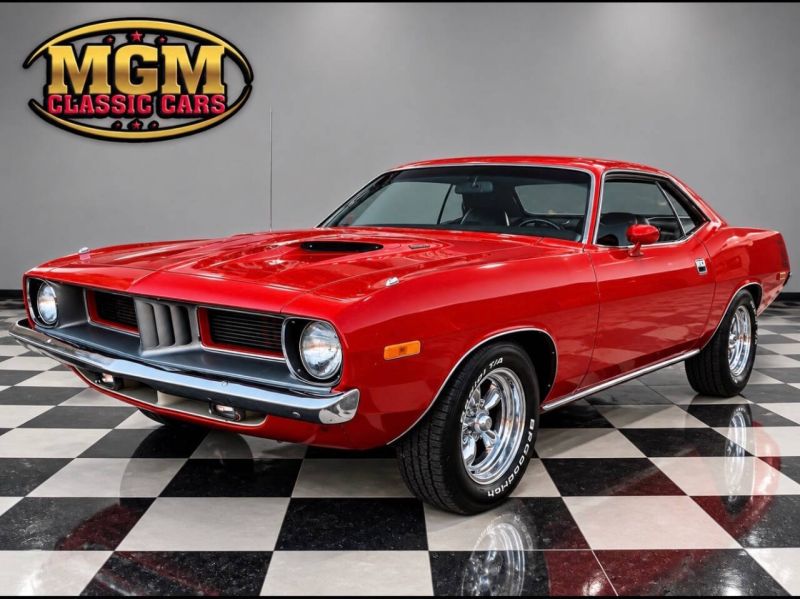
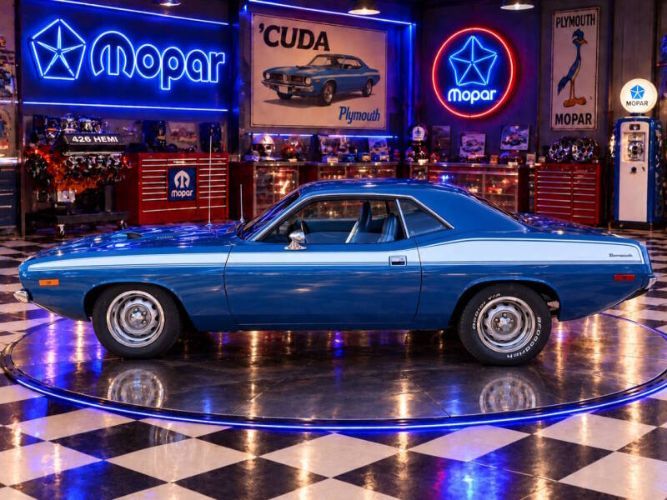
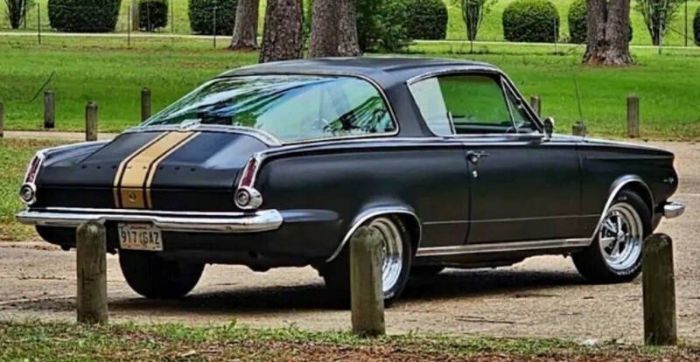
Related Listings - Plymouth Barracuda

Comments
Be the first to comment on this article.