
Nose up, front tires practically off the ground, straight axle poking through a raised stance that looks like it should not work and works anyway. That is the image most people picture when you say tri five gasser, and there is a reason the picture never gets old. The 1955 through 1957 Chevrolet was not built as a race car, but it became one of the definitive drag strip shapes of the twentieth century, and the mechanics of how that happened are worth understanding if you want to know why the platform still shows up at every vintage drag event on the calendar.
Car Features
7 min read
Tri-Five Chevys in Gasser and Drag Racing
The nose-high, straight-axle gasser stance defined drag racing's golden era, and the 1955 to 1957 Chevrolet became its default canvas.
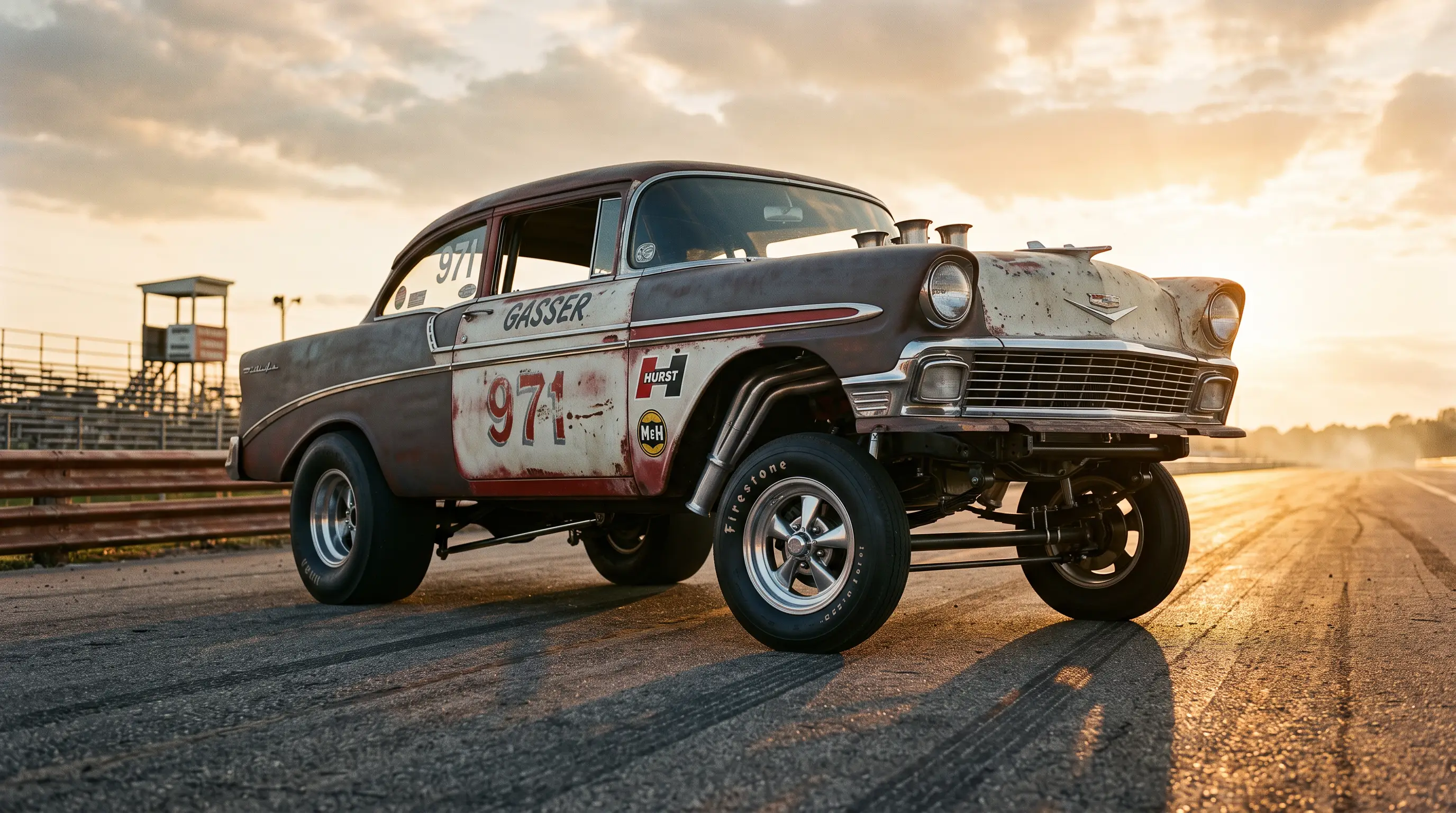
What a gasser actually is
Gasser is a category, not a specific car. It grew out of NHRA class racing rules from the late 1950s into the 1960s that separated cars by weight and engine combination while running on pump gasoline rather than exotic fuel, hence the name. Rules pushed builders to run a straight front axle for weight reduction and simplicity, and that axle, combined with aggressive rear tires and a front end raised for weight transfer off the line, produced the nose-high stance that has become the visual shorthand for the entire era. Once you have seen one, you cannot unsee the formula in every gasser photo since.
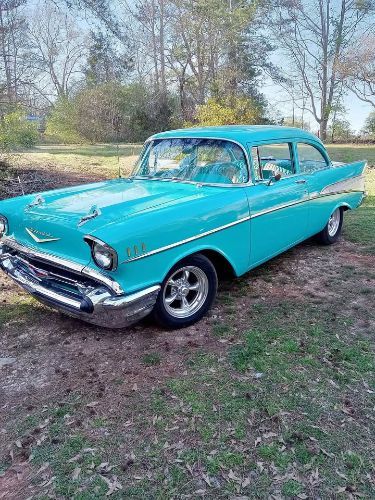
Tri five Chevrolets were common gasser builds for straightforward reasons. They were plentiful and cheap on the used market by the time gasser racing hit its stride, which mattered to racers working on real budgets rather than factory backing. They were also light for a full size American car of the period, and that combination of light weight and a chassis that took modification well made them a logical starting point for builders trying to go fast on a limited budget.
The engine swaps that defined the class
Displacement ranged widely from class to class, since gasser categories were set by dividing a car's weight by engine displacement rather than by a fixed size limit. Engine choice in gasser racing varied by class and by budget, but the constant across nearly every serious tri five gasser build was some version of a small block or big block Chevrolet V8, often built well past factory output, sometimes running multiple carburetors stacked in configurations no showroom car ever saw. Builders were not shy about mixing manufacturers either, and it was not unusual to see a tri five body running an engine combination that had nothing to do with what Chevrolet originally sold under that hood.
That willingness to mix and match is part of what makes gasser history messier and more interesting than a lot of factory-focused car history. Nobody was trying to preserve originality. They were trying to win a Saturday night, and the results tell you exactly what worked and what did not, because the fast cars kept racing and the slow ones got parked or parted out.
Why the look outlasted the racing
Organized gasser racing as a formal NHRA class faded by the early 1970s as other categories took over the drag strip, but the visual identity never went away. Builders kept recreating the stance decades after the original rules that produced it had stopped mattering competitively, because the look itself became the point. A raised front end and a straight axle on a tri five Chevrolet reads as instantly recognizable at any car show today, a shorthand for a specific era of drag racing history that most attendees were not even alive to witness firsthand.
That staying power says something about how good the original proportions of the car were to begin with. A shape has to have real bones to survive being stretched, raised, and reworked for competition and still look intentional rather than broken. The tri five body handled that treatment better than most of its contemporaries, which is part of why it became the default gasser platform rather than just one option among many. For the fuller mechanical and historical context on how this fits into the platform's broader story, the full story covers the engine and chassis development that made all of this possible in the first place.
"You put a straight axle and a raised nose on most cars from this era and it looks wrong. Put it on a tri five and it looks like that is how the factory should have built it. Not many shapes survive that kind of treatment."
- Mike Sullivan
Reading a gasser build correctly
Spend enough time around this corner of the hobby and you start reading gasser builds the way a jeweler reads a stone. Stance tells you the intent immediately, since a serious gasser recreation gets the front-to-rear rake proportional to what the period rules actually produced rather than exaggerated for show. Axle choice matters too, since a genuine straight axle conversion reads differently under a trained eye than a lifted independent front suspension trying to fake the same look. Builders who understand the category get these proportions right instinctively, and builders chasing the aesthetic without the history behind it tend to overdo the rake in ways that look closer to a monster truck than a period race car.
That distinction matters if you are evaluating a build for purchase rather than commissioning one yourself. A car built by someone who actually understands gasser class history will show it in a hundred small decisions, wheel choice, exhaust routing, interior treatment, decisions that a purely cosmetic build usually gets wrong even when the overall silhouette looks right from across a parking lot. Knowing the difference before you buy saves real money and real disappointment down the line.
Buying into the gasser tradition today
Vintage gasser recreations are a real and growing corner of the market now, separate from strictly stock restorations and separate from street-oriented hot rod builds. Buyers chasing this specific style are usually looking for a period-correct stance and engine combination rather than concours originality, and the market prices that distinction accordingly. A well executed gasser build on a genuine tri five body can carry real value, particularly if the build references period-correct racing history rather than a modern interpretation with none of the mechanical logic behind it.
If this is the corner of the hobby that appeals to you, patience matters as much as budget. Good donor cars for a serious build are not always advertised as such, and clean original examples worth converting or period builds worth preserving both move fast once word gets around. Keep tabs on where you can browse classic Air listings, since the supply of solid tri five bodies has been shrinking for years and the gasser-specific market only adds another group of buyers competing for the same shrinking pool of cars.
The straight axle and the raised nose were never about being pretty. They were about winning races that stopped happening formally fifty years ago. That the look survived the sport it came from is the best evidence you need that the tri five shape earned its reputation the hard way, on pavement, under pressure, one quarter mile at a time.
Sources and notes
Related Reading
Have a
Chevrolet Bel Air
for Sale?
Reach thousands of serious classic car collectors across the US.
Sell It Here →
Are You a Classic Car Dealer?
List your full inventory and connect with targeted classic car buyers.
Join as a Dealer →

About the author
Mike Sullivan
Detroit-area muscle car enthusiast and restoration specialist with three decades of hands-on experience working on American iron.
Related Listings - Chevrolet Bel Air




Comments
Be the first to comment on this article.