
Every generation of car has a last quiet year before everything changes, and for early Chevrolet that year was 1954. The 1954 chevy bel air is the final full expression of the body and engineering approach Chevrolet had been refining since 1949, built one model year before the company replaced nearly everything underneath the sheet metal. It rarely gets the attention that surrounds the 1955 that followed it, but it deserves a closer look on its own terms.
Car Features
6 min read
The 1954 Bel Air: The Last of the Old Chevrolet
The 1954 chevy bel air is the final, most refined expression of Chevrolet's pre-V8 platform, built one model year before everything under the sheet metal changed.
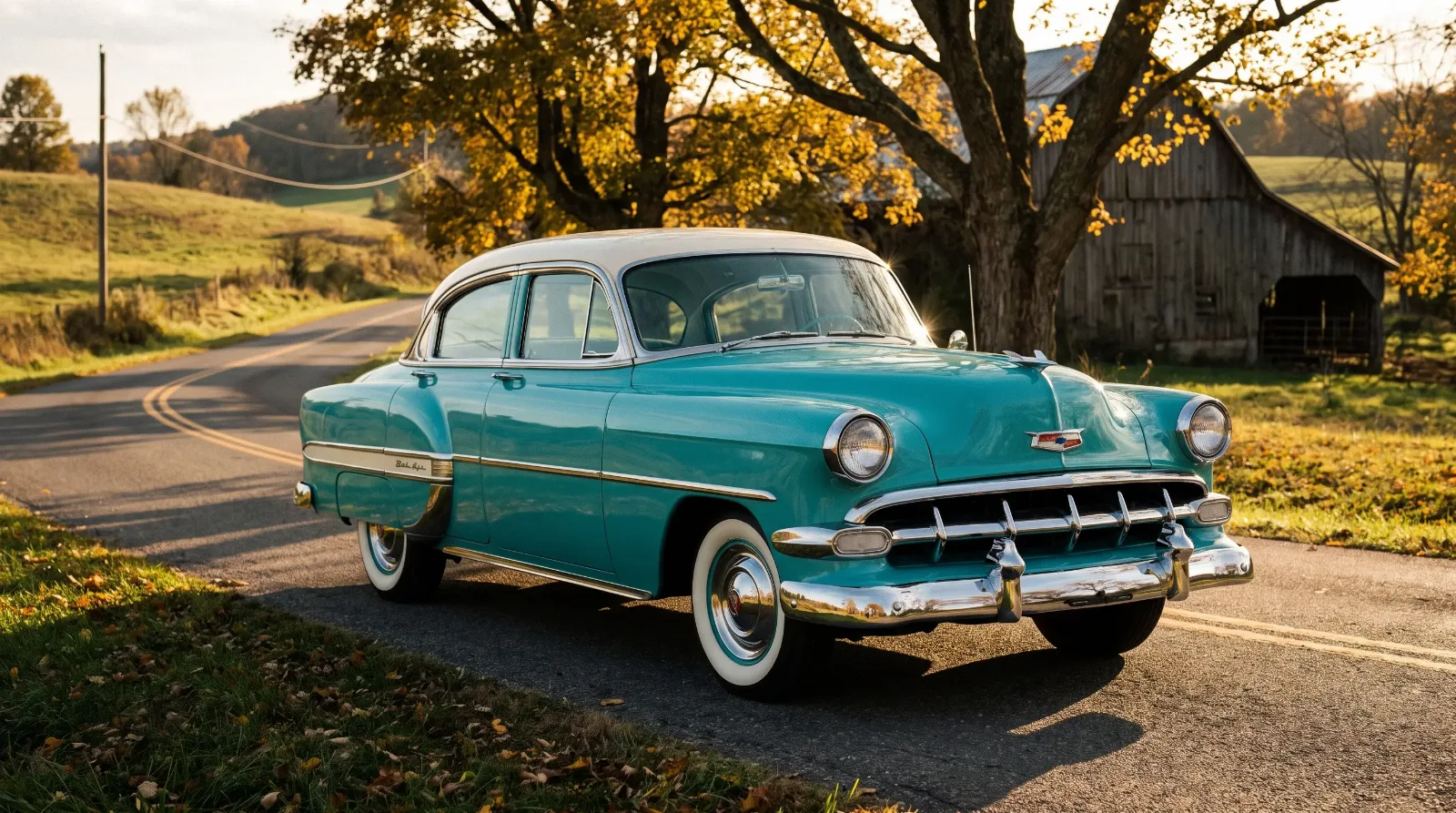
The last car of the old Chevrolet
Chevrolet's engineering team spent 1954 putting the finishing touches on a platform that had been in production, in evolving form, since the late 1940s. The 235.5 cubic inch six carried on as the standard engine. The chassis architecture, suspension geometry, and general mechanical layout traced directly back to the postwar cars that came before it. None of that changed in 1954. What Chevrolet did instead was refine the details: a new grille treatment, updated taillights, and a cleaner overall face that gave the Bel Air series a more modern look without touching what was underneath it.
That restraint was deliberate. Chevrolet's engineers already knew, by 1954, that a genuinely new car was coming for the following model year, one with a new small-block V8 and an all new 12-volt electrical system. There was little appetite for spending development money on a platform with one foot out the door. The 1954 Bel Air is, in that sense, a car built by a company already looking past it.
Styling changes worth knowing
The most visible update for 1954 was a cleaner grille design, moving away from the toothier look of 1953 toward a simpler horizontal bar treatment. Chevrolet also revised the taillight housings and made detail changes to the trim spears running along the body sides. Inside, upholstery patterns and color combinations were updated to keep the Bel Air series feeling current, even though the buyer sitting in the driver's seat was operating essentially the same mechanical package that had been in Chevrolets for several years running.
The background on how Bel Air grew into a full series that these 1954 cars belonged to is covered at length in where this started, tracing the badge back through its earlier, more limited years.
The competitive field Chevrolet faced in 1954
Ford and Plymouth were both preparing their own significant updates for the mid-1950s, and Chevrolet's relatively cautious 1954 lineup reflected an industry-wide pause before a much larger wave of change swept through the low-price field. Ford in particular was readying its own overhead-valve V8 for 1954, putting real pressure on Chevrolet to follow with something comparable, which it did the very next year. Plymouth lagged further behind on both styling and engine development, giving Chevrolet and Ford the closest head-to-head competition of the three major low-price brands during this specific window.
Buyers cross-shopping a 1954 Bel Air against a Ford Customline or a Plymouth Cambridge were, in effect, choosing between three companies all sitting on the edge of significant technological change, none of which had yet tipped their hand publicly about just how different the following year's cars would be.
Powerglide and the six-cylinder heart of the car
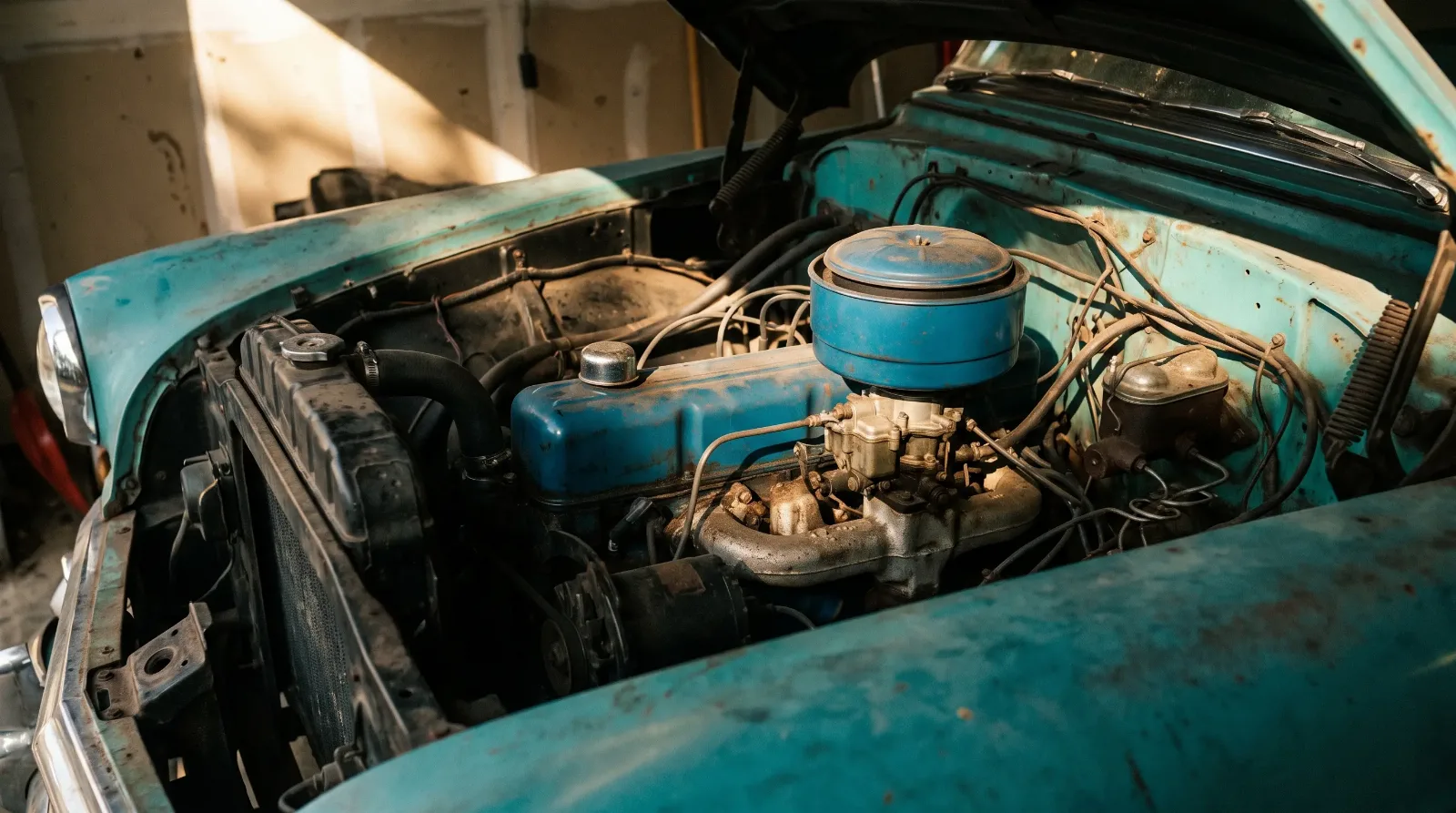
The 1954 Bel Air continued offering Chevrolet's familiar 235.5 cubic inch inline six, paired with either a three-speed manual or the Powerglide automatic. The manual-transmission engine, with solid lifters, made 115 horsepower, while the Powerglide-tuned version, with hydraulic lifters and higher compression, made 125 horsepower. This was a mature, well-sorted powertrain by 1954, built on a design Chevrolet had been improving incrementally since the war.
What buyers got was a smooth, dependable car rather than a fast one. Chevrolet was not competing on power in the low-price field during this era. It was competing on reliability, comfort, and the sense of value that the Bel Air trim's extra brightwork and upholstery conveyed against its Two-Ten and One-Fifty stablemates.
| Spec | 1954 Bel Air |
|---|---|
| Engine | 235.5 cid inline six, 115 hp manual / 125 hp Powerglide |
| Transmission | Three-speed manual standard, Powerglide automatic optional |
| Electrical system | 6-volt, final year before 1955 switch to 12-volt |
| Body styles | Sedan, Sport Coupe hardtop, convertible, wagon |
| Position in lineup | Final year of the pre-1955 platform |
A dealer's perspective at the time
Chevrolet dealers selling 1954 models faced a peculiar challenge that most of them handled without much fanfare: how to move a car that everyone in the industry already knew was about to be replaced by something dramatically different. Trade publications and dealer bulletins from the period do not dwell on this tension the way a modern retrospective might, but the pattern is visible in how conservatively Chevrolet priced and marketed the 1954 lineup. There was no attempt to position the car as revolutionary, because it was not, and Chevrolet's own sales literature focused instead on value, reliability, and the refinements that had accumulated across four model years of the same basic platform.
That honesty, whether intentional or simply a byproduct of limited marketing budget for a car on its way out, gives the 1954 Bel Air a certain integrity that later, more heavily hyped Chevrolets sometimes lack. It was sold as exactly what it was: a mature, well-sorted car nearing the end of its development cycle, not a car pretending to be something it was not.
Why 1954 deserves more respect than it gets
The 1955 Bel Air overshadows everything that came immediately before it, and understandably so given how much changed that following year. But the 1954 car represents something the 1955 does not: the endpoint of a mechanical formula Chevrolet had spent years perfecting. Everything Chevrolet's engineers knew about building a smooth, reliable, low-price six-cylinder car reached its final form in this model year, right before the company moved on to a completely different approach.
For collectors, that makes the 1954 an interesting counterpoint to the more celebrated tri-five cars. It is rarer in some body styles simply because fewer people bothered to preserve it once the flashier 1955 arrived, and it offers a genuinely different driving character, an old-school torque-forward six rather than the V8 that defined everything Chevrolet built afterward.
"Everyone wants to talk about what changed in 1955. Nobody wants to talk about what Chevrolet finally got right in 1954, right before they threw it all away for something newer."
- Tom Ramirez
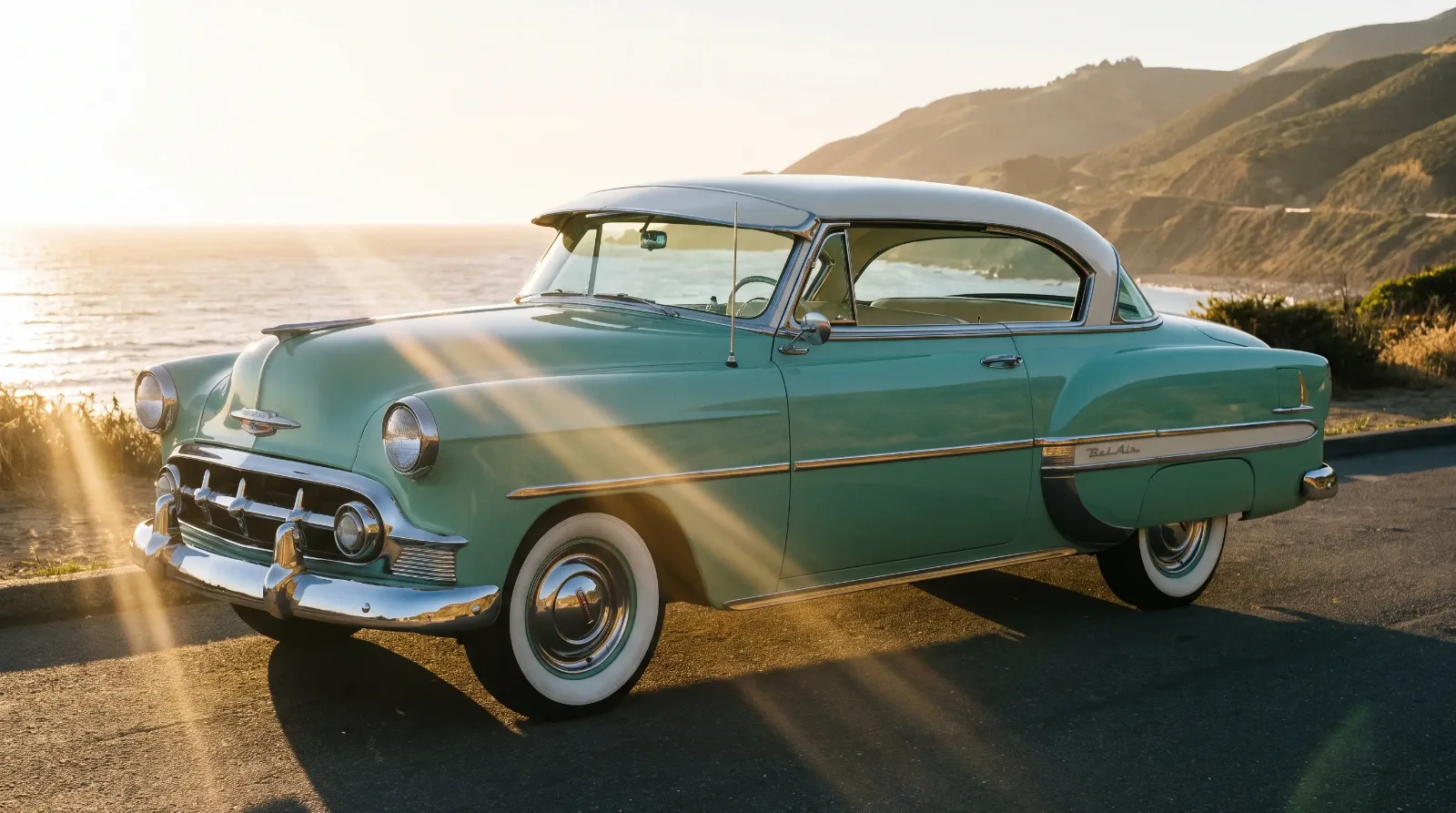
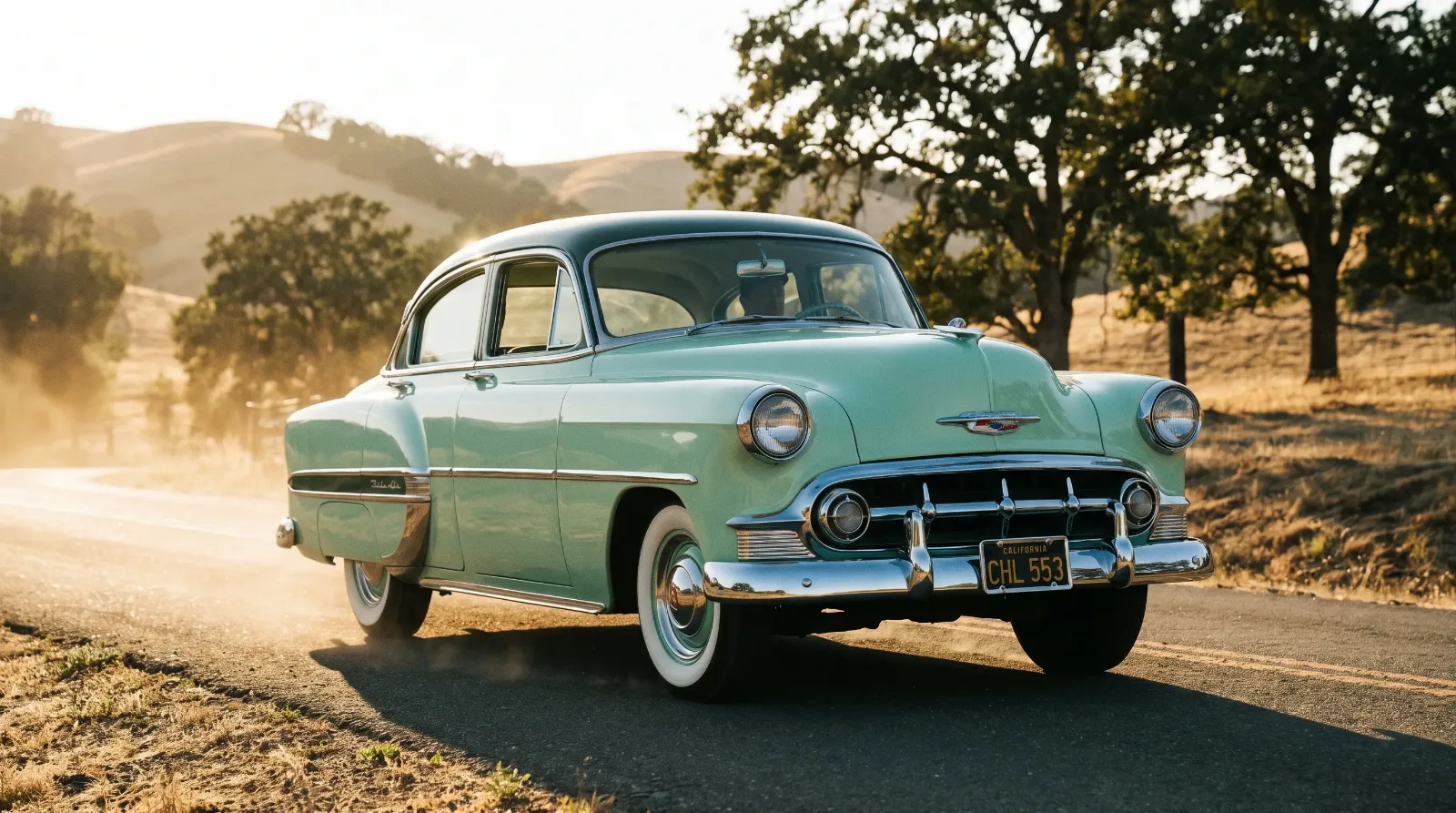
Surviving 1954 Bel Airs turn up less often than their more famous successors, but they do surface, usually with buyers who specifically want the last of the old cars rather than the first of the new ones. If that describes what you are after, there is regularly a classic Air for sale from this era or another worth comparing against it.
Sources and notes
Related Reading
Have a
Chevrolet Bel Air
for Sale?
Reach thousands of serious classic car collectors across the US.
Sell It Here →
Are You a Classic Car Dealer?
List your full inventory and connect with targeted classic car buyers.
Join as a Dealer →
#classic chevrolet
#Powerglide
#Chevrolet Bel Air
#1954 Chevrolet
#pre-V8 Chevrolet
#1955 Chevrolet comparison

About the author
Tom Ramirez
Corvette researcher and historian based in Bowling Green, Kentucky. Two decades documenting Corvette production history from original factory records.
Related Listings - Chevrolet Bel Air




Comments
Be the first to comment on this article.