
Run a search of recent auction results and the spread on a 1955 chevy bel air value tells its own story before you read a single description. Rough four-door sedans trade for a fraction of what a documented convertible brings, and a clean two-door hardtop sits comfortably in the middle. The badge is the same on every one of them. The money says the body style, the condition, and the paperwork are what actually get priced, not the nameplate alone.
Car Features
7 min read
Collecting the 1955 Bel Air
Auction data on the 1955 Bel Air shows body style and documentation moving prices far more than the badge alone, and knowing that gap can keep a buyer from overpaying.
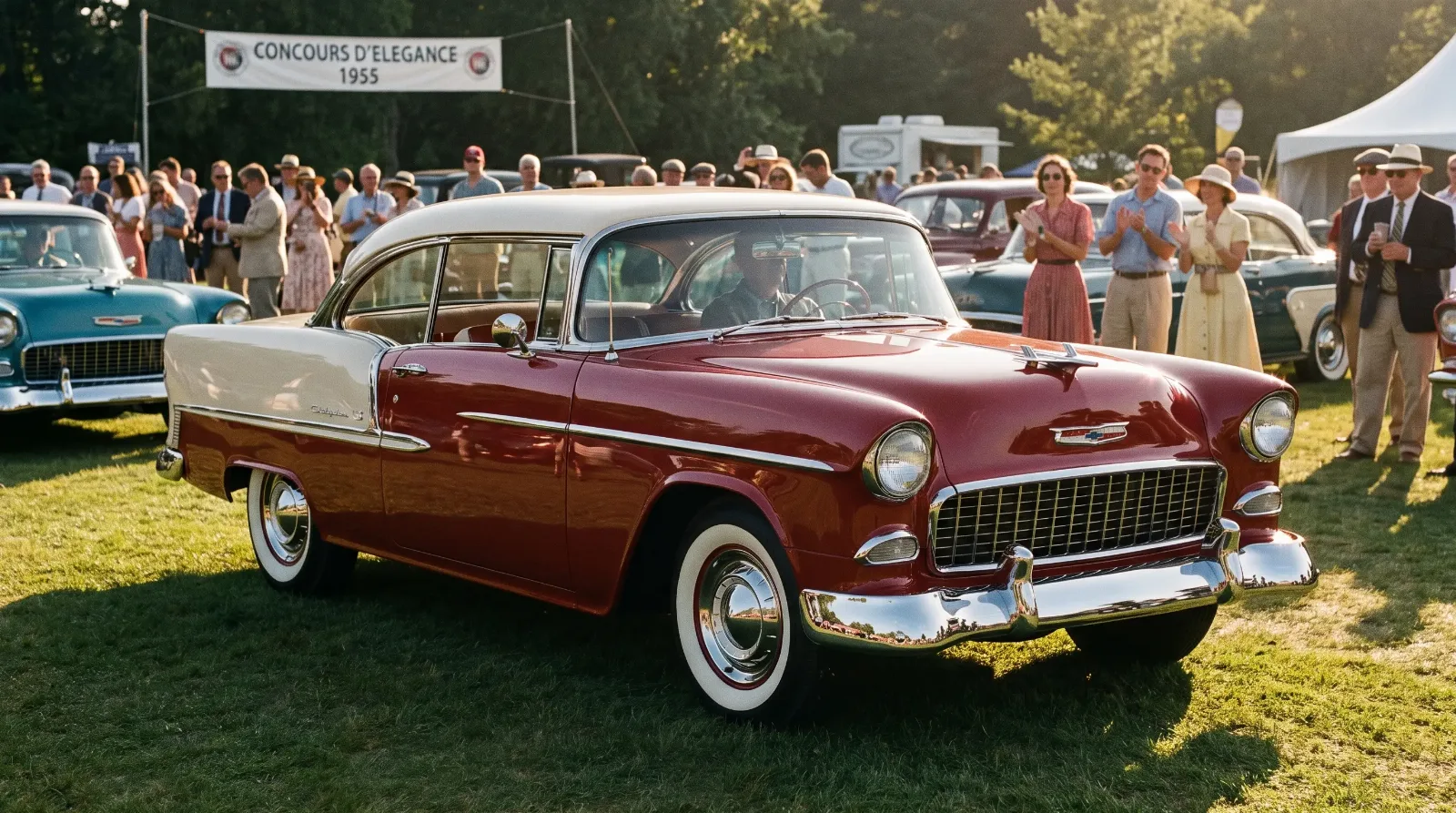
What the auction data actually shows
Pull a year of sale results across the major collector auction houses and a pattern emerges quickly. Convertibles lead every comparison, often by a wide margin over closed cars in similar condition, because open-top Tri-Five Chevrolets were built in smaller numbers and buyers know it. Two-door hardtops, the Sport Coupe, form the deep middle of the market, the body style most people picture when they hear the name and the one with the most liquidity, meaning the most active buyers and the fastest sales at fair prices. Four-door sedans and wagons other than the Nomad sit at the bottom of the range, not because they are lesser cars mechanically but because fewer collectors want them for shows or investment.
The gap between a project-grade sedan and a numbers-matching, documented convertible can run into six figures on the high end. That spread is not noise. It reflects real differences in build quantity, restoration cost, and what a buyer gets to do with the finished car, whether that is cruise it casually or trailer it to a national meet.
Condition and documentation move the number more than people expect
Two Sport Coupes with identical options can sell tens of thousands of dollars apart, and the reason is almost always condition and paper trail rather than anything visible in a photo. A car with a documented ownership history, original build sheet or trace documentation, and honest, unmolested sheet metal commands a real premium over a car that merely looks similar in a listing photo. Buyers who have been burned by a car that turned out to be a mismatched reassembly pay for that certainty, and sellers who can supply it know it.
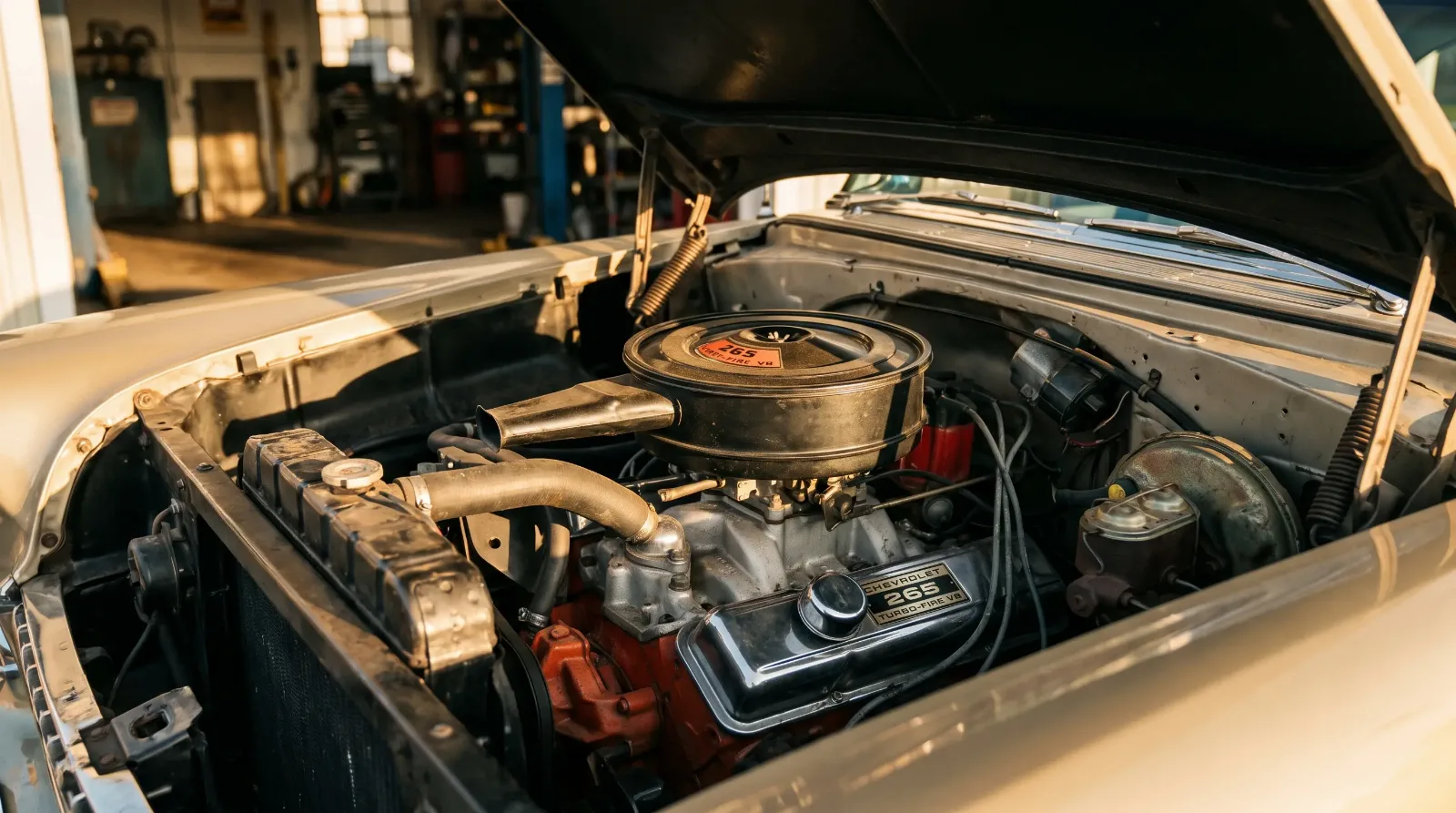
Numbers-matching status, meaning the engine and major components correspond to what the car left the factory with, matters more for the 265 V8 cars than for the six-cylinder examples, since the small-block's own significance adds weight to a documented original drivetrain. A Power Pack car with paperwork to prove it is worth meaningfully more than an identical-looking car running a later-installed four-barrel with no history behind it. Buyers serious about the mechanical side of this should read the full the whole picture before assuming any two 265-powered cars are interchangeable in value.
Where the market has been heading
The broader collector car market has cooled from its most aggressive peaks in recent cycles, and Tri-Five Chevrolets have not been immune to that softening at the bottom end. What has held up, and in some cases continued climbing, is the top of the range: documented convertibles, verified Nomads, and exceptional low-mile survivors. That divergence is typical of a maturing collector segment. The middle of the market corrects while genuinely rare, well-documented examples keep finding buyers willing to pay for scarcity.
For buyers thinking about the 1955 specifically rather than the Tri-Five years generally, it helps to know the car benefits from being the first year of the run, which gives it a purity argument some collectors pay a premium for over the 1956 and 1957 cars. That is a real factor in some transactions, though it does not override the basic hierarchy of body style and documentation that governs value across all three model years.
| 1955 Bel Air segment | Relative market position |
|---|---|
| Nomad wagon, documented | Top of the range, small production pool |
| Convertible, documented | Strong premium over closed cars |
| Sport Coupe hardtop | Deepest, most liquid segment |
| Four-door sedan | Entry point, driver-grade market |
| Undocumented or reassembled cars | Discounted regardless of body style |
"Every seller thinks their car is the exception to the data. Occasionally one is. Most of the time the auction results are telling the truth and the seller's asking price is telling a story. My job is figuring out which one I am looking at before the money changes hands."
- David Mercer
Regional and seasonal effects on price
Geography moves these numbers more than most first-time buyers expect. A sedan that spent its life in the rust belt carries a different set of risks and a different price than one that spent decades in a dry southwestern climate, even before either car changes hands. Buyers who chase the lowest advertised price without asking where a car has lived tend to discover the difference the hard way, usually in a shop invoice for floor pan and frame repair that erases whatever they saved on the purchase. Auction timing matters too. Major collector sales tied to marquee events tend to pull stronger prices for the same quality of car than a quiet regional sale later in the season, simply because the buyer pool is larger and more motivated on the day.
None of that means a bargain sedan from a dry state is automatically a good buy, or that a marquee auction price is automatically fair. It means the honest way to read a 1955 bel air value is to control for those variables rather than comparing one advertised number to another in isolation. A buyer working from a spreadsheet of asking prices without adjusting for region, venue, and documentation is working from bad data no matter how large the spreadsheet gets.
The buy or no-buy question
If the goal is a car to drive and enjoy, a well-documented Sport Coupe or clean sedan remains a reasonable entry into Tri-Five ownership without paying convertible money for a roof you may never take down. If the goal is appreciation potential, the data favors documented, unmolested examples at the higher end of the body style hierarchy over anything described as a solid driver with room to improve. That second category has been the slowest to move in recent cycles, and buyers hoping to flip a project car quickly have often found the market less forgiving than it was a decade ago.
My actual recommendation for most buyers is unglamorous. Buy the best-documented example of whatever body style fits your budget, verify everything a seller claims against paperwork rather than assurances, and do not pay a numbers-matching premium for a car that cannot prove it. That approach will not win any bragging rights at a barbecue, but it is what separates buyers who are happy five years later from buyers explaining why they overpaid. Anyone ready to shop with that discipline can start by comparing what is currently listed and find a classic Air that actually has the paperwork to back its price.
Sources and notes
- 1955 Chevrolet Bel Air configurations - Hagerty Valuation Tools
- 1955 Chevrolet Bel Air Nomad - Hagerty Valuation Tools
- Auction Results and Sales Data for 1955 Chevrolet Bel Air - conceptcarz.com
- 1955 Chevrolet Bel Air Nomad - Gooding & Company
- Curbside Classic: 1955 Chevrolet, The iCar - Curbside Classic
Related Reading
Have a
Chevrolet Bel Air
for Sale?
Reach thousands of serious classic car collectors across the US.
Sell It Here →
Are You a Classic Car Dealer?
List your full inventory and connect with targeted classic car buyers.
Join as a Dealer →

About the author
David Mercer
Classic car market analyst with two decades of experience tracking collector car valuations, auction results, and investment trends.
Related Listings - Chevrolet Bel Air




Comments
Be the first to comment on this article.