
A 1957 Bel Air convertible auction result tends to grab headlines for the wrong reason. Outlets report the hammer price and move on, without explaining why that particular car brought that particular number, and the gap between two convertibles selling on the same weekend can be enormous once you account for condition, documentation, and options. I evaluate these sales for a living, and the convertible specifically deserves a closer, more risk-aware look than the sedan or hardtop, because the stakes of getting it wrong are considerably higher.
Car Features
7 min read
The 1957 Bel Air Convertible at Auction: Reading the Real Numbers
A 1957 Bel Air convertible auction headline rarely explains itself. Here is what actually separates a strong sale from a disappointing one.
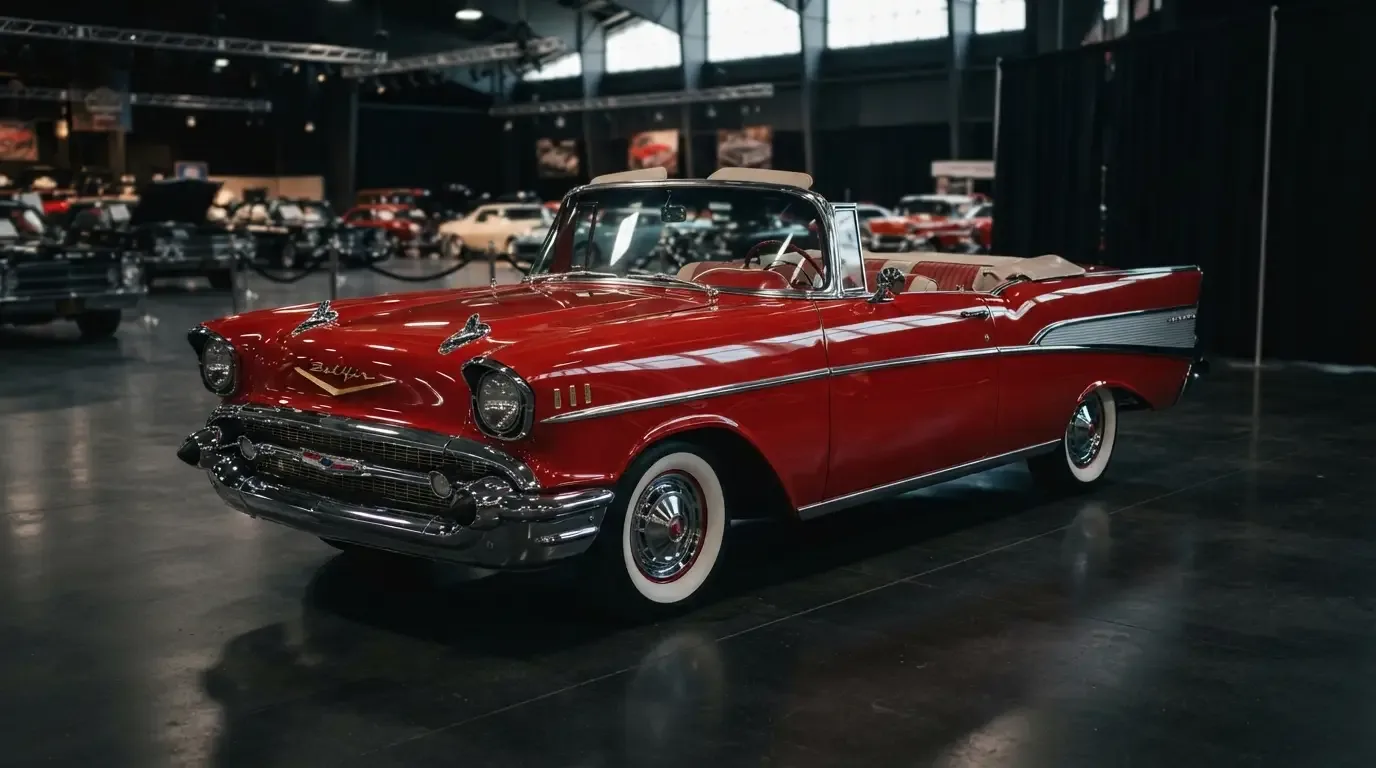
Why the convertible commands its own market tier
Chevrolet built the 1957 Bel Air convertible in far smaller numbers than the sedan or Sport Coupe hardtop, and that scarcity alone puts it in a different pricing tier before condition even enters the conversation. Convertibles also saw harder use historically; soft tops wear out, the body structure flexes more without a fixed roof reinforcing it, and a disproportionate number of surviving cars carry some history of top-related water damage or structural repair that a hardtop of the same age never had to deal with. That means the population of genuinely excellent, unmolested convertibles is smaller still than raw production numbers suggest.
At auction, this plays out as a wide price spread even among cars described similarly in a catalog listing. A convertible with a well-documented restoration, verified original body panels, and a clean structural history can bring a genuine multiple over a superficially similar car with an undisclosed floor pan repair or a replaced convertible top mechanism that was not period correct.
What actually separates a strong sale from a disappointing one
Options matter enormously on convertibles specifically. A continental kit, factory air conditioning, power windows, or the fuel-injected 283 engine all add real premiums, and buyers evaluating an auction result should always check what specific options a sold car carried before assuming a price applies broadly to "a 1957 Bel Air convertible" as a category. Two cars can look nearly identical in photographs and sell tens of thousands of dollars apart because one carried a documented rare option package and the other did not.
Provenance carries weight too, sometimes more than buyers initially expect. A convertible with a continuous, documented ownership chain, ideally supported by period photographs or club records, tends to outperform a car with gaps in its history, even when both present in similar cosmetic condition. Auction houses know this and increasingly lead their catalog descriptions with provenance detail for exactly this reason. Actual hammer prices for 1957 Bel Air convertibles swing widely by condition, options, and venue, from solid drivers well into the mid five figures up to six-figure results for documented, top-tier fuel-injected examples, so any specific number should be checked against a current auction result rather than treated as a fixed benchmark.
"I do not get excited about a hammer price by itself. I want to know what sold, with what documentation, and what condition, before that number means anything to me as a comparable for another car."
- Marcus Feld
How condition grading actually plays out at these sales
Auction houses generally sort consigned cars into rough condition tiers, and even within a single tier, a convertible's specific issues can swing the final price meaningfully. A car graded as an excellent driver but carrying a known non-original convertible top mechanism, for instance, will typically sell below a car in similar overall condition with a verified original or correctly reproduced mechanism, because the top mechanism on these cars is expensive and involved enough to repair correctly that buyers factor the cost directly into their bid.
Paint and body condition still matter, obviously, but experienced bidders at these sales increasingly look past a fresh respray to ask what is underneath it. A convertible that has had rust repair in the rear quarters or trunk floor, common trouble spots given how these bodies were engineered without a fixed roof for extra rigidity, will sell for less than a rust-free example even if the visible paint looks identical from ten feet away. Buyers who attend previews in person and get underneath the car with a flashlight consistently make better bids than buyers relying purely on catalog photography.
Reading past the hammer price
Buyers who follow 1957 Bel Air convertible auction results as a way to gauge the broader market should be careful about treating a single sale as representative. A top-tier, no-expense-spared restoration selling at a marquee auction tells you what the ceiling looks like, not what a typical, honestly presented convertible will bring at a regional sale. Both numbers are useful, but they answer different questions, and conflating them leads buyers to either overpay chasing a headline figure or undervalue a genuinely good car because it did not sell at a glamorous venue.
The same discipline applies to sellers. A convertible with real documentation, a clean structural history, and correct options deserves to be marketed toward the buyers who understand what they are looking at, rather than rushed into a general sale where that value might not be recognized or properly bid.
Putting a result in context
For readers who want the broader model year context behind why the convertible commands the attention it does, our complete history covers the full picture of the 1957 lineup. Anyone specifically interested in how convertibles and other rare body styles fit into current collector value trends should also keep exploring that side of the market. And for buyers who have moved from research into an active search, it is worth reviewing available classic Air for sale with the documentation standards from strong auction results already in mind.
What sellers should learn from strong results
Sellers preparing a convertible for auction consistently underestimate how much a complete documentation file affects the final result compared to last-minute cosmetic touch-ups. A build sheet, period photographs, prior sale records, and any club verification paperwork assembled well before consignment give the auction house's specialists something concrete to feature in the catalog description, and that catalog language shapes bidder confidence before the car ever crosses the block. Spending time on paperwork in the months before a sale is, in my experience, a better use of a seller's effort than a rushed detail job the week of the auction.
Timing the sale also matters more than most sellers expect. Marquee auctions tied to major collector events tend to draw deeper-pocketed, more knowledgeable bidders willing to pay for documented quality, while smaller regional sales can undervalue an exceptional car simply because the right buyers were not in the room that weekend. Choosing the venue deliberately, rather than defaulting to whichever auction is most convenient, is part of getting a fair result on a genuinely good convertible.
The takeaway on convertible values
A single 1957 Bel Air convertible auction result is a data point, not a verdict on the whole market. Understanding the specific factors behind that number, scarcity, options, provenance, and structural condition, lets a buyer or seller interpret it correctly rather than treating one headline sale as the going rate for every convertible with the same body style.
Sources and notes
- Classic.com: 1957 Chevrolet Bel Air Dual Quad Convertible, Mecum Kissimmee 2025
- Barrett-Jackson: 1957 Chevrolet Bel Air Custom Convertible, Scottsdale 2024
- Conceptcarz: Auction Results and Sales Data for 1957 Chevrolet Bel Air
- Classic Industries: 1955-57 Chevy Bel Air, 210, and 150 Production Numbers
- Wikipedia: Chevrolet Bel Air
Related Reading

About the author
Marcus Feld
Accredited collector-car appraiser who reads the market through hammer prices, condition tiers and risk.
Related Listings - Chevrolet Bel Air

Comments
Be the first to comment on this article.