
Every 1957 Chevy 150 210 Bel Air comparison I have researched starts from a misunderstanding that is worth clearing up first. These were not three unrelated cars sharing a body. They were one platform sold in three deliberately graduated trim levels, and understanding how Chevrolet separated them tells you a great deal about how the company read its own customer base in 1957, and why the Bel Air name in particular has outlived the other two in collector memory.
Car Features
6 min read
The 150 and 210 vs the Bel Air: Reading Chevrolet's 1957 Trim Hierarchy
The 1957 Chevy 150 210 Bel Air lineup was one platform in three graduated trims, and understanding all three explains why the Bel Air name still dominates collector memory.
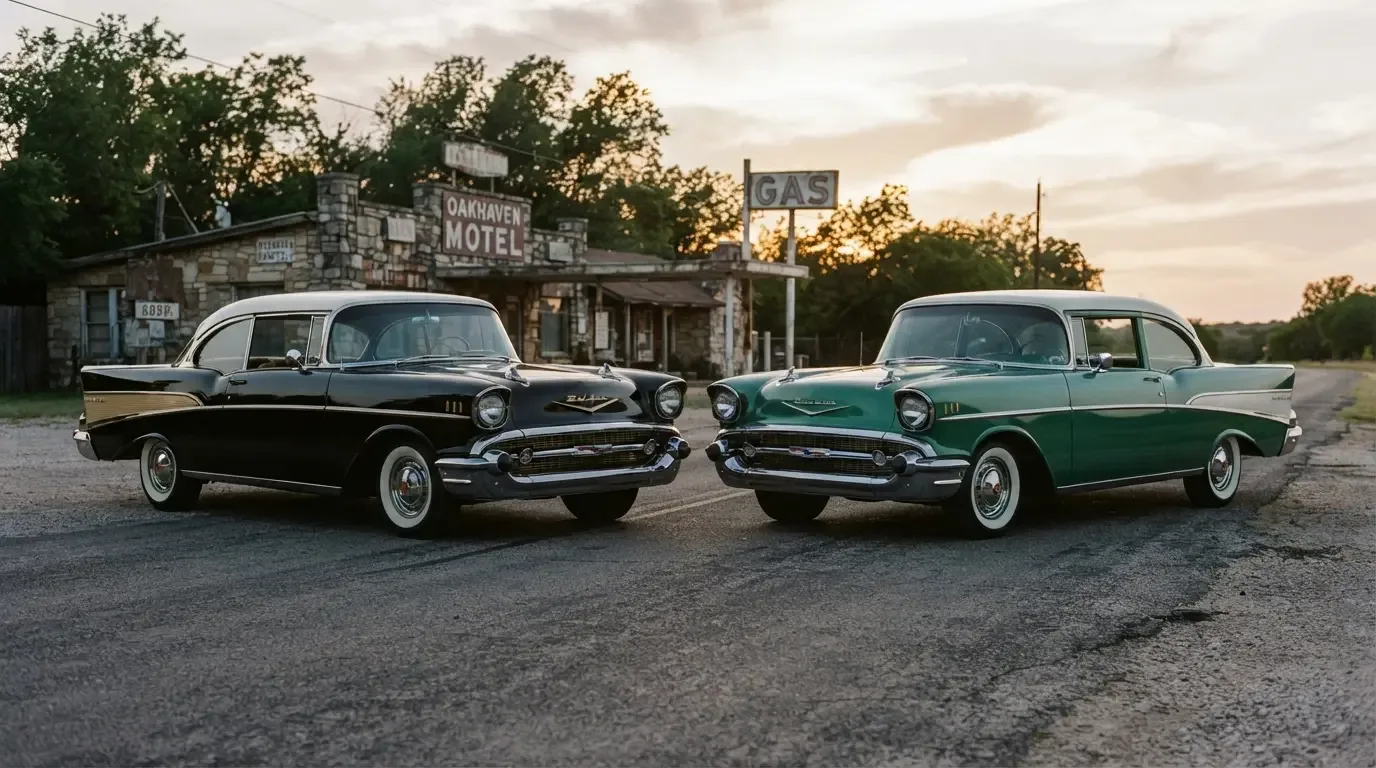
Three trims, one body, very different intentions
The 150 sat at the bottom of the lineup, built for fleet buyers, taxi companies, and budget-conscious families who wanted Chevrolet reliability without paying for trim they did not need. It shared its basic body and mechanical layout with the 210 and the Bel Air, but visually it was stripped down, running less chrome trim, simpler upholstery, and fewer available options. The 210 sat in the middle, adding chrome trim, a wider range of body styles including wagons and hardtops, and nicer interior appointments, while still positioned as a practical family choice rather than a showpiece.
The Bel Air, by contrast, was Chevrolet's top trim for 1957, carrying the most chrome, the widest color and two-tone paint selection, the nicest interior patterns, and access to the full range of body styles including the convertible and the Nomad wagon. A buyer walking onto a dealer lot in 1957 could feel the difference in trim level before ever opening a brochure, because Chevrolet designed the visual hierarchy to be obvious at a glance.
How to tell them apart today
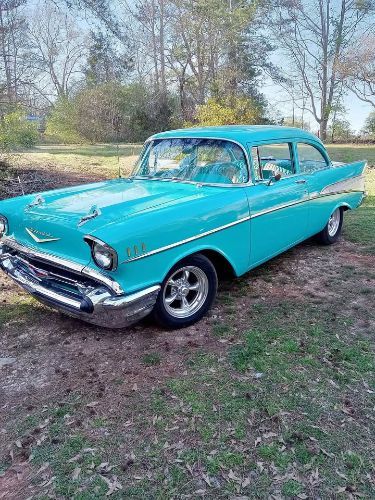
Identifying which trim level a surviving car actually is comes down to trim tag codes first, and visual cues second. The trim tag records the series designation directly, which is the only fully reliable method, since decades of ownership changes, badge swaps, and incomplete restorations have occasionally left cars wearing trim or badges that do not match their original series. Visually, chrome trim quantity along the beltline and rear quarter is one of the clearest tells; the Bel Air carries noticeably more brightwork than a 210, which itself carries more than a 150.
Interior trim patterns are another reliable indicator, since Chevrolet used distinct upholstery patterns for each series rather than simply varying color within a shared pattern. A researcher working from photographs alone, without access to the trim tag, can often narrow down the series correctly just from the seat pattern and dashboard trim level, though a full confirmation always requires the tag itself, cross-checked against a period trim reference or parts catalog rather than memory alone.
Why collectors gravitated to the Bel Air specifically
The Bel Air's dominance in collector culture today is not accidental. It was the trim level Chevrolet itself positioned as the aspirational choice, and that positioning shaped which cars buyers wanted enough to preserve, restore, and eventually collect decades later. A 210 or 150 in equally original condition can be just as mechanically interesting and, in some cases, considerably rarer given lower survival rates, but the market has consistently rewarded the Bel Air name and its associated trim level with stronger demand and higher prices.
That does not mean 150 and 210 cars lack value. Serious researchers and a growing number of collectors have started paying closer attention to these lower trims specifically because their scarcity is underappreciated relative to price, and a well-documented 210 hardtop can represent real value against an equivalent but pricier Bel Air.
"People assume the Bel Air was simply the best 1957 Chevrolet. It was not better built than a 210 or a 150. It was better trimmed, and Chevrolet's marketing made sure everyone noticed the difference at the time, which is exactly why we still notice it now."
- Sarah Whitfield
Body style availability across the three series
Not every body style Chevrolet offered on the Bel Air trickled down evenly to the 150 and 210. The convertible and the Nomad wagon were Bel Air exclusives in 1957, never offered on the lower two series, which is one more reason the Bel Air name carries the collector cachet it does today. The 210, meanwhile, did offer its own wagon variants and a Sport Coupe hardtop, giving it a broader body style range than the strictly utilitarian 150, which was largely limited to sedans and a business coupe aimed squarely at fleet and commercial buyers rather than families shopping for style.
This matters for researchers because it means body style alone can sometimes rule out a series designation before the trim tag is even consulted. A surviving 1957 convertible or Nomad, by definition, cannot be a 150 or 210, which narrows the identification process considerably. A sedan, by contrast, could plausibly be any of the three series, which is exactly the scenario where trim tag verification becomes essential rather than optional.
Reading the whole lineup, not just one trim
Understanding the 150 and 210 alongside the Bel Air gives a fuller, more accurate picture of Chevrolet's 1957 strategy than looking at the Bel Air in isolation. Readers who want that full context, including how these three trims fit into the broader story of the model year, should look at more on the 1957 chevy bel air, and the complete arc of the Bel Air name across its production run is covered in our complete history. For anyone whose research has turned into active shopping across the trim spectrum, it is worth reviewing classic Airs on the market alongside a clear sense of which trim level actually matches what you are looking for.
What this hierarchy tells us about 1957 buyers
The willingness of period buyers to pay up through three distinct trim levels on essentially the same car says something about postwar American consumer culture that is easy to miss when looking only at the top-line Bel Air. Chevrolet was not simply selling transportation. It was selling a visible marker of what a family could afford, and the 150, 210, and Bel Air structure let a buyer signal that marker precisely, down to the exact amount of chrome trim on their car. That kind of graduated status signaling through a mass-produced object was still a relatively new idea in 1957, and Chevrolet executed it about as effectively as any manufacturer of the era.
The trim hierarchy as historical evidence
The 150, 210, and Bel Air trim structure is a small but genuinely useful window into how Chevrolet segmented its market in 1957, and studying all three together, rather than treating the Bel Air as the only story worth telling, produces a more honest account of the model year. The cars at the bottom of that hierarchy rarely get the spotlight, but they were built by the same hands on the same line, and their scarcity today deserves more attention than it typically receives.
Sources and notes
Related Reading


About the author
Sarah Whitfield
Third-generation classic car collector specializing in pre-war American and European coachbuilt automobiles. Researcher and concours enthusiast.
Related Listings - Chevrolet Bel Air

Comments
Be the first to comment on this article.