
1957 Bel Air production numbers get repeated so often in casual conversation that a lot of the figures floating around swap meets and forums have drifted from what the factory records actually show. I spend most of my time chasing down build sheets, plant codes, and Fisher Body data, and the real story of how many 1957 Bel Airs Chevrolet built, and where, is more interesting than the rounded-off totals people usually quote.
Car Features
7 min read
1957 Bel Air Production Numbers: What the Trim Tags Actually Say
1957 Bel Air production numbers get rounded and repeated until the real story disappears. Here is what the plant codes and trim tags actually document.
How many plants actually built the 1957 Bel Air
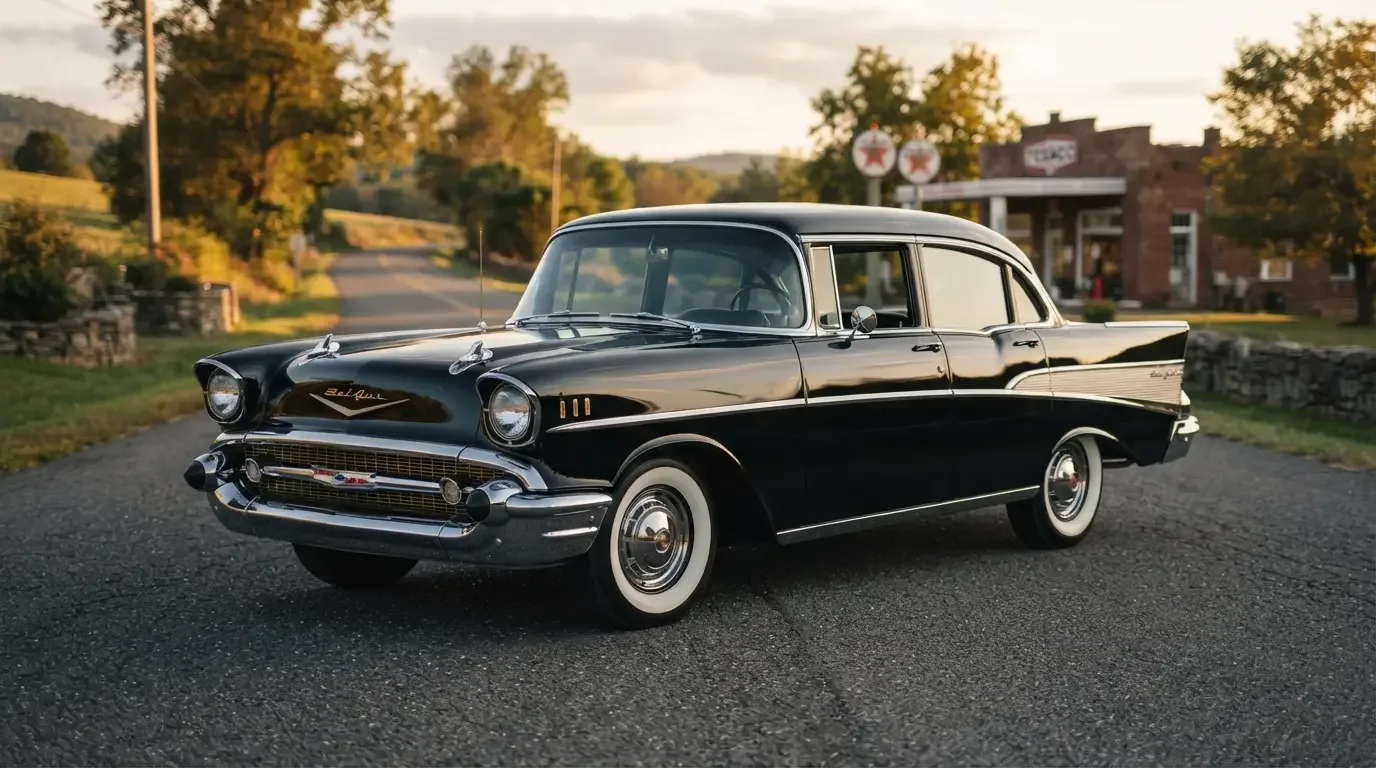
Chevrolet assembled its full-size cars, Bel Air included, across a network of plants rather than a single facility, which is part of why production numbers get muddled. Assembly happened at roughly ten primary Chevrolet passenger-car plants that year, including the Flint, Michigan facility, with additional assembly points spread across the country, each stamping cars with plant-specific codes on the trim tag. A researcher trying to verify a specific car's origin has to read that plant code correctly, because two nominally identical Bel Airs built the same month at different plants can carry small production differences depending on supplier timing and regional parts allocation.
Total 1957 Chevrolet passenger-car production ran to roughly 1.55 million units across the full lineup, and the Bel Air series alone accounted for over 700,000 of those cars, easily the largest single share since it sat as the top trim level most buyers actually chose. Within the Bel Air series itself, the four-door sedan was consistently the highest-volume body style at roughly 264,000 units, followed by the two-door Sport Coupe hardtop at just under 170,000, the four-door hardtop Sport Sedan at around 142,000, the convertible at about 48,000, and the two-door Nomad wagon at just over 6,000, simply because most buyers in 1957 were still shopping practically, not swept up in the two-door hardtop's styling appeal the way collectors are today.
Body styles and where the real scarcity lives
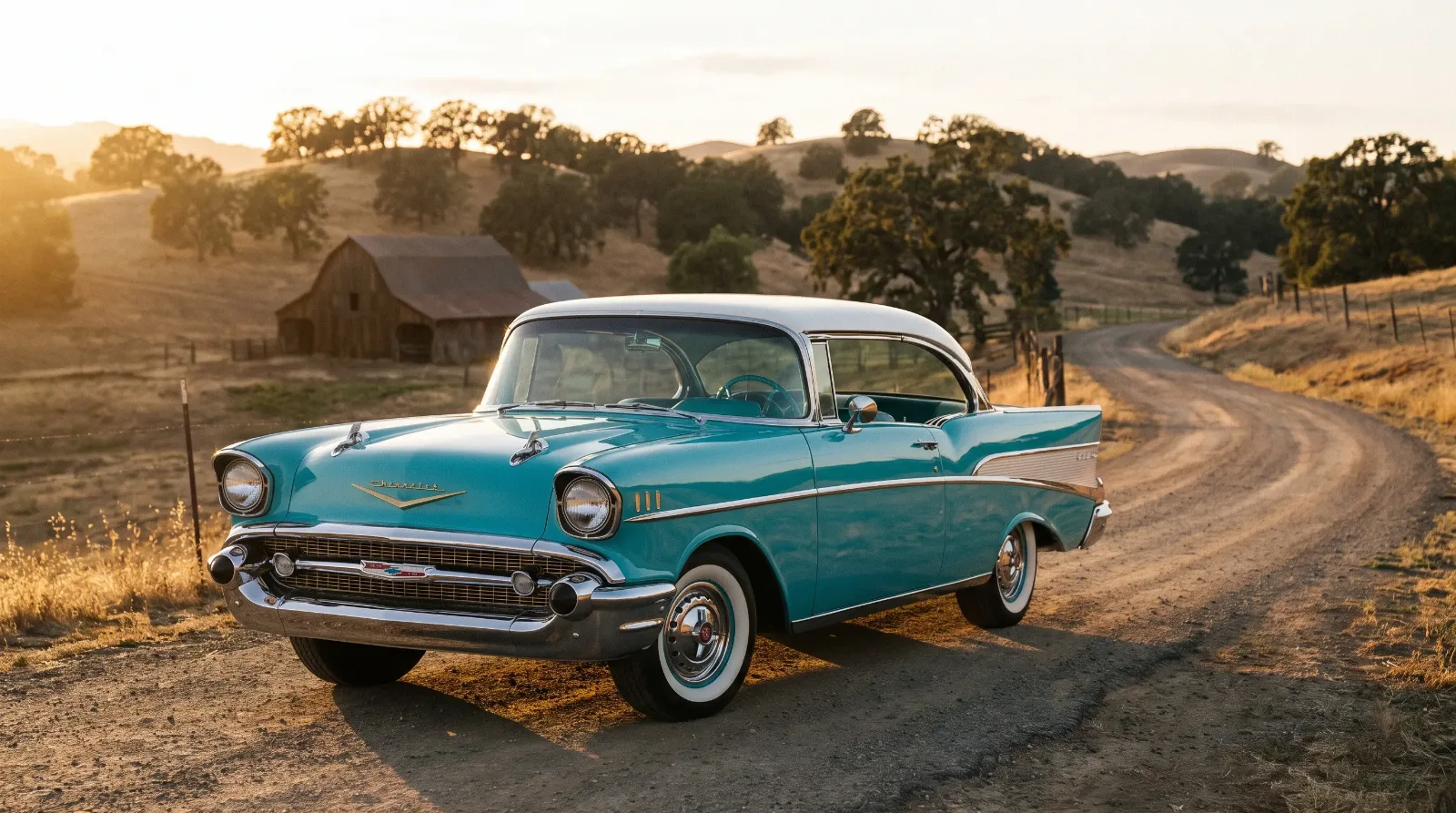
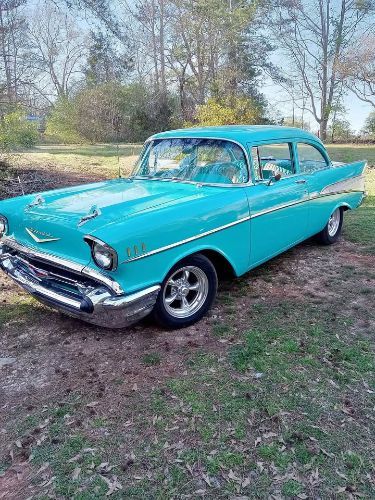
The 1957 Bel Air came in a range of body styles, from the four-door sedan through the Sport Coupe hardtop, the convertible, and the Nomad wagon, which technically wore Bel Air trim as its top-line wagon offering. Production volume dropped sharply as you moved up that list. Sedans numbered in the hundreds of thousands, hardtops considerably fewer, and the convertible and Nomad sat at the scarce end of the range, built in numbers small enough that surviving examples command real premiums today.
That scarcity gradient is not a modern collector invention. It reflects actual 1957 buying patterns, where a convertible or a wagon with wood-look side trim cost meaningfully more than a sedan and appealed to a narrower slice of buyers. The cars that were rare when new have stayed rare, and in most cases attrition over the following decades thinned the surviving population even further, since convertibles in particular saw harder use and higher accident and rust attrition than sedans that spent their lives as reliable family transportation.
Reading a trim tag like a historian
Every 1957 Bel Air left the factory with a trim tag encoding body style, interior trim, paint combination, and assembly plant in a compact alphanumeric string. Learning to read that tag correctly is the single most useful skill for anyone trying to verify a car's originality against its documented history. I have corrected more than one confident claim about a car's rarity simply by cross-referencing the trim tag against the plant and production data, and it is rarely a popular correction to make in the moment, though it is always the right one.
Misreadings happen constantly, usually because a tag has been repainted over, partially obscured by decades of grime, or misinterpreted by someone working from an incomplete reference. The temptation to round a car's story up toward rarer and more valuable is understandable, but the actual production data does not bend to wishful thinking, and a careful researcher owes the car and the buyer an accurate account either way.
"People want their car to be the rare one. The trim tag does not care what people want. It records what actually left the plant, and my job is to read it correctly even when the answer disappoints someone."
- Tom Ramirez
What annual production data does and does not tell you
It is worth being precise about what a total production figure actually proves. A number like total Bel Air output for the model year tells you how many cars Chevrolet built across every body style combined, but it says nothing on its own about how many of a specific configuration, a Nomad with a particular engine and color combination, for example, actually exists. Researchers who quote a single headline production number as though it applies evenly across every variant are doing readers a disservice, because the real scarcity story lives in the narrower slices of that data, broken down by body style, engine, and even assembly plant.
I have spent considerable time cross-referencing dealer records, regional new car registration data where it survives, and Chevrolet's own internal production planning documents to build a clearer picture of these narrower slices. It is slow, unglamorous research, the kind that rarely produces a single dramatic headline number, but it is the only way to responsibly answer a question like how many fuel-injected Bel Air convertibles actually left the factory in 1957, a figure casual sources tend to round confidently without real backing.
Why these numbers still shape the market
Understanding 1957 Bel Air production is not just an academic exercise. It directly explains why a convertible or Nomad commands a price multiple over a comparable sedan, and why documentation proving a car's originality against its trim tag carries real financial weight at auction. Buyers who understand the actual production picture make better decisions than buyers relying on secondhand swap meet folklore about how many of a given body style survive.
For the fuller context behind these figures, including how the 1957 model year fit into Chevrolet's broader plans for the era, 1957 chevy bel air history lays that groundwork. Readers curious about how production scarcity translates into modern collector value should also look at a related story covering that side of the equation. And for anyone whose research has turned into an active search, there are usually a few Airs for sale now worth cross-checking against everything covered here.
A note on regional variation
Cars built for different regional markets sometimes carried small equipment differences tied to local dealer preferences and climate, another wrinkle that complicates any simple national production tally. A researcher working with a specific car benefits from knowing not just when and where it was assembled, but which regional distribution network it originally served, since that context occasionally explains an otherwise puzzling equipment combination.
The discipline of getting it right
Production history rewards patience over enthusiasm. The plant codes, the body style breakdowns, the trim tag conventions, none of it is glamorous work, but it is the foundation everything else about a 1957 Bel Air's value and authenticity rests on. Cars that can back up their story with accurate documentation are simply worth more, both financially and historically, than cars asking to be taken on faith.
Sources and notes
Related Reading

About the author
Tom Ramirez
Corvette researcher and historian based in Bowling Green, Kentucky. Two decades documenting Corvette production history from original factory records.
Related Listings - Chevrolet Bel Air



Comments
Be the first to comment on this article.