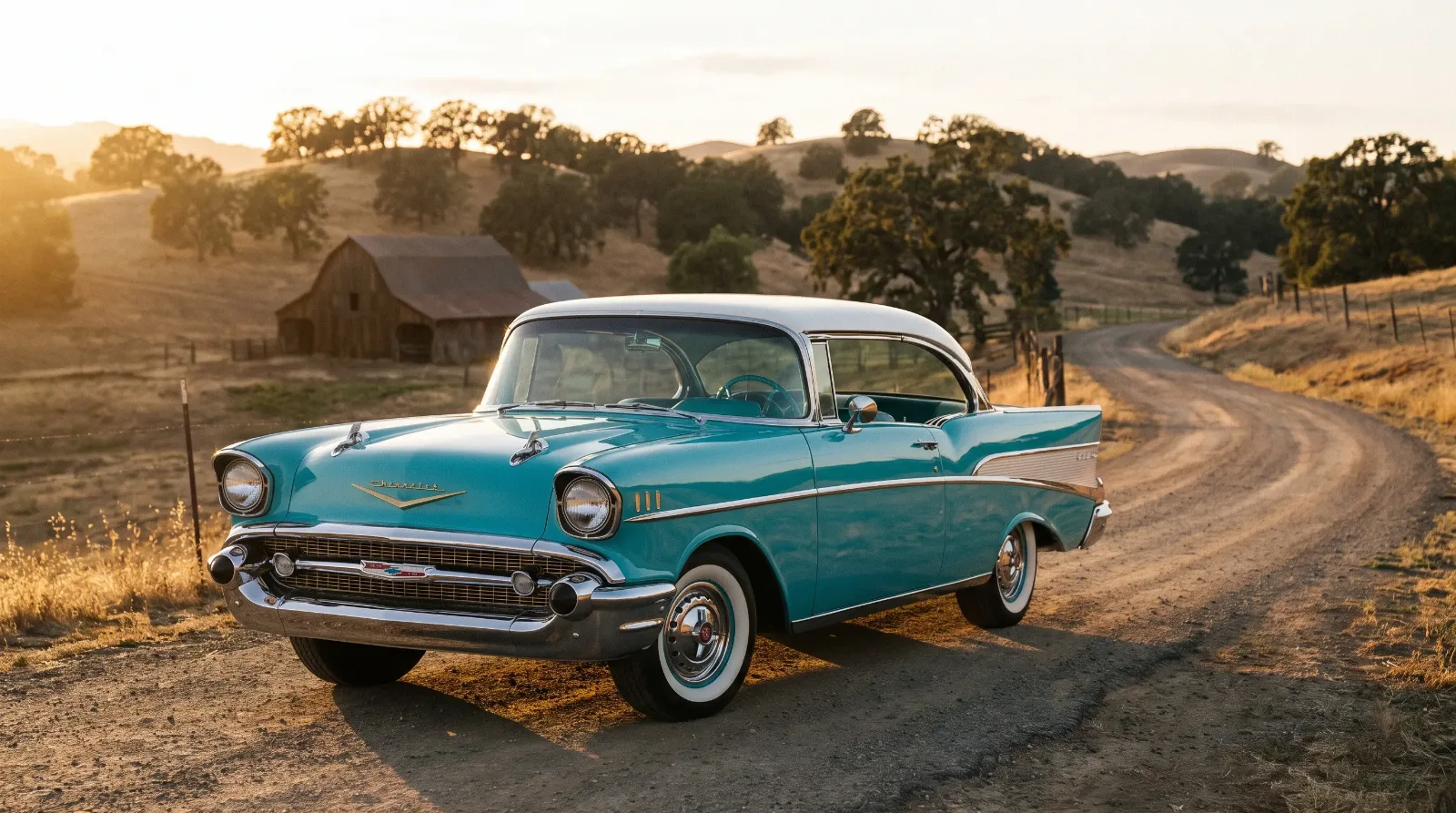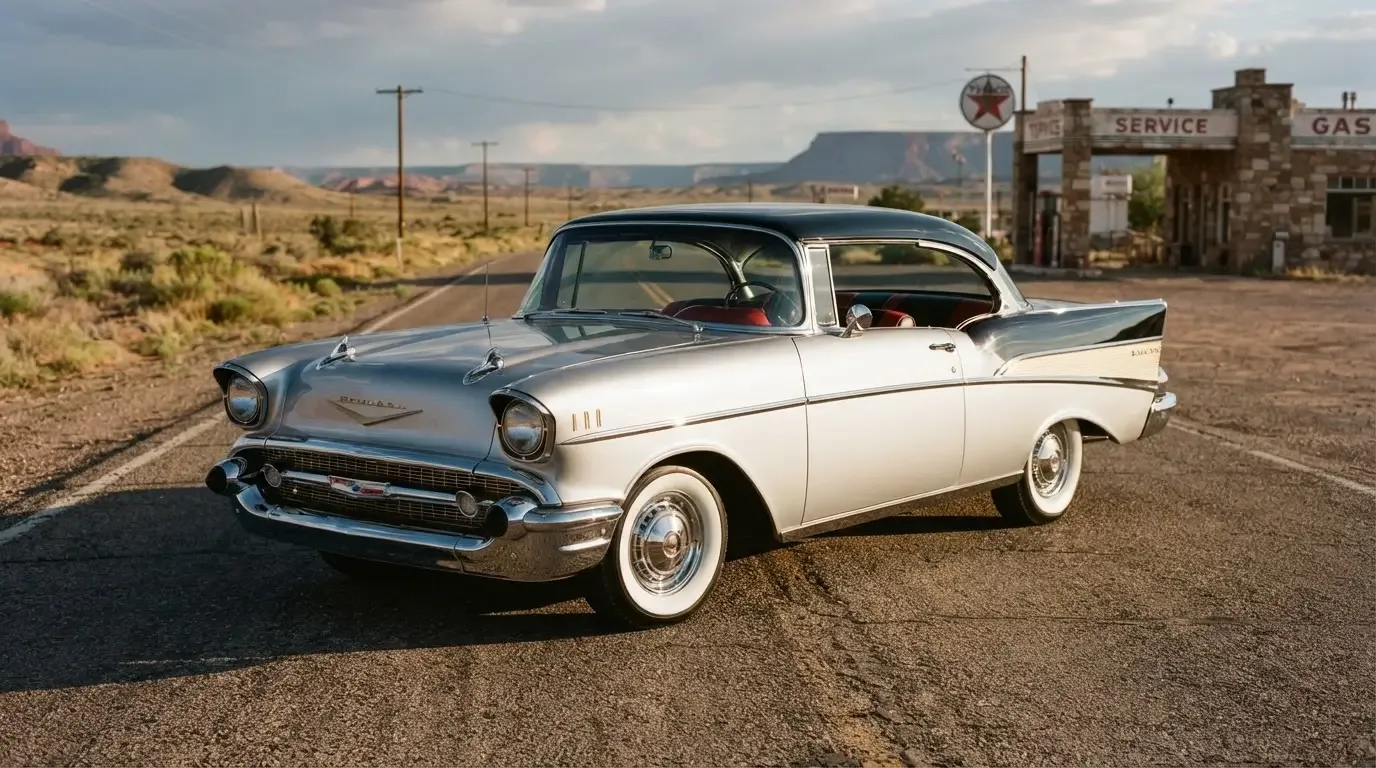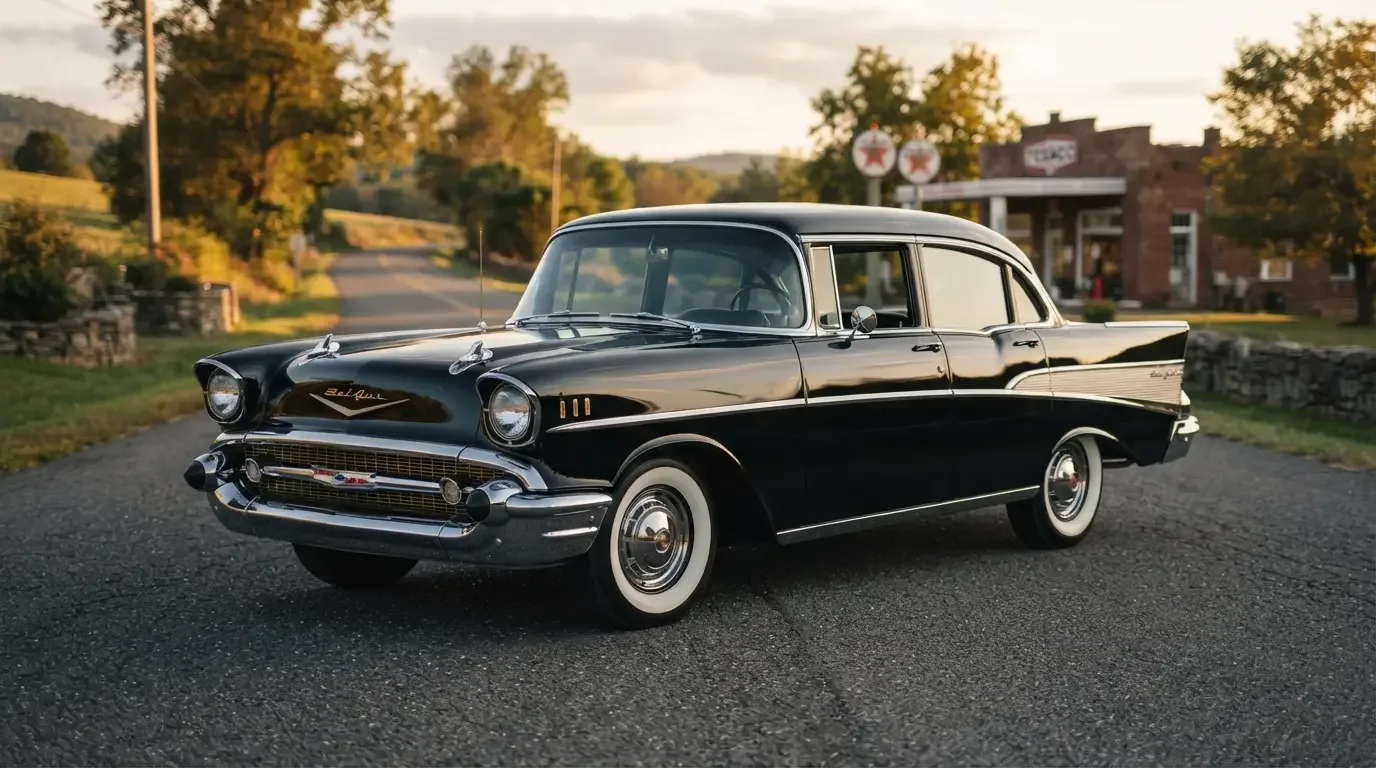
The 1957 Bel Air interior does not get the attention the fins and grille receive, and that has always struck me as a research oversight. Step past the chrome and sit inside one of these cars and you are looking at a dashboard that Chevrolet's stylists treated with nearly the same ambition as the exterior sheet metal. As someone who spends most of my working hours with concours judging sheets and original documentation rather than driveways, I can say the interior is where the real evidence of a car's authenticity tends to live, and it deserves a closer look on its own terms.
A dashboard built to look aeronautical
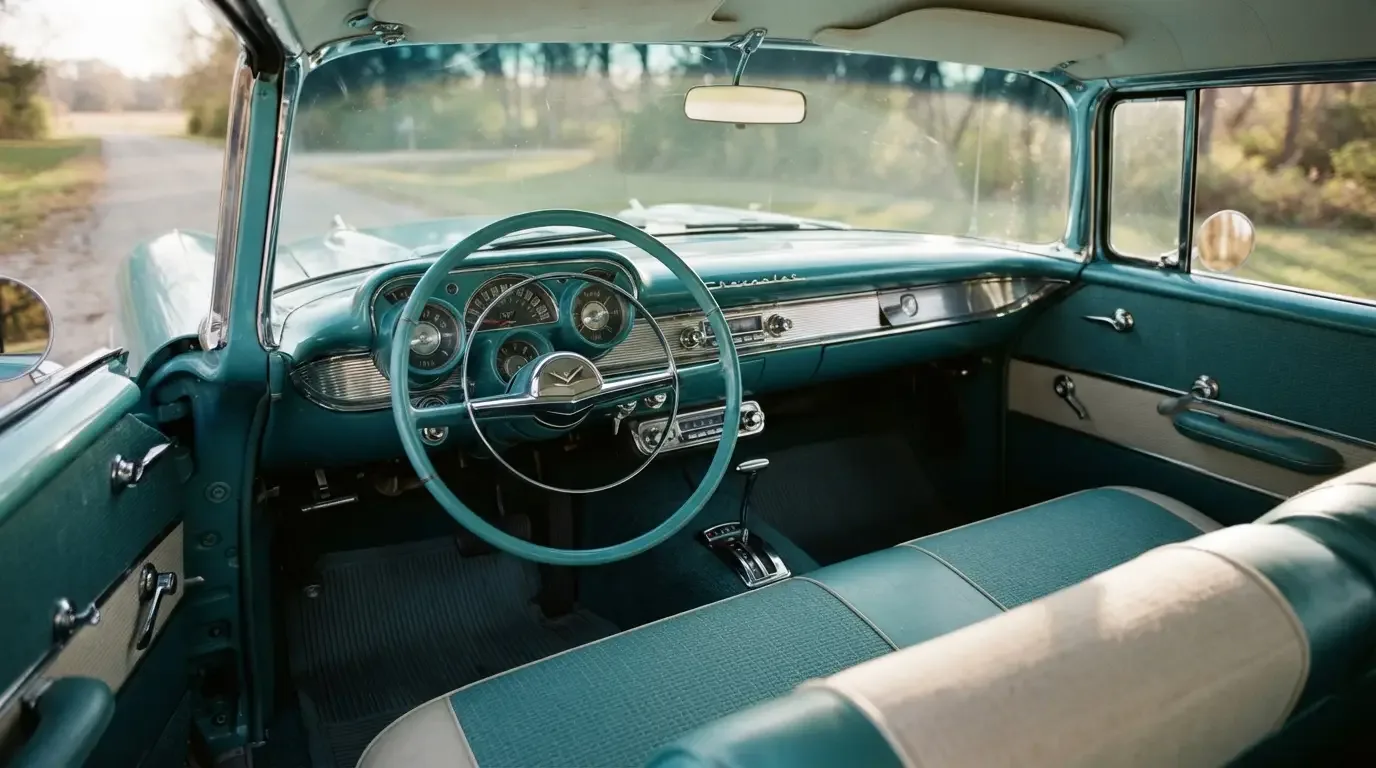
Chevrolet's 1957 dash was designed around a wide, symmetrical instrument cluster flanked by a sweeping chrome bezel that echoed the jet-age styling cues showing up across the industry that year. The speedometer sat in a rectangular pod, flanked by smaller gauges and warning lights, all trimmed in bright metal against a painted crackle finish. It was a deliberate departure from the more upright, utilitarian dashboards of the early 1950s, and it signaled to buyers that this was a modern car built for a modern decade.
The steering wheel itself carried a horn ring and a color-keyed hub that matched the interior trim, a detail that is easy to overlook until you are trying to verify whether a restored car has the correct wheel for its documented trim code. Original wheels in the correct color are increasingly hard to source, and reproduction parts vary in how closely they match the factory tone; the exact hub-to-trim color pairings varied enough by series and interior code that a buyer should confirm the specific combination against a trim tag or parts reference rather than assume a single universal chart applies.
Seats, door panels, and the two-tone philosophy indoors
Chevrolet carried its exterior two-tone thinking straight into the cabin. Seat inserts and door panel inserts were finished in patterned vinyl or a vinyl and cloth combination, bordered by a contrasting solid vinyl bolster, and the specific pattern changed depending on trim level and body style. Bel Air trim, sitting at the top of the 1957 lineup below the Nomad and convertible specialty bodies, received the most elaborate patterns and the widest color range, while the lower 150 and 210 series used simpler, more restrained trims.
Documentation matters enormously here. A trim tag records the interior code, and that code should correspond to a specific combination of seat pattern, door panel design, and color family. When I evaluate a car for a concours judging sheet, mismatched interior trim against the documented code is one of the fastest ways a car loses points, even if the upholstery work itself is beautifully executed. Correct is not the same as pretty.
Small details that separate original cars from later reproductions
The heater and radio controls, the glove box latch, the sun visor mounts, all of these small pieces carry period-specific design language that changed subtly across the three years GM used this basic body, 1955 through 1957. Researchers and appraisers who work with these cars regularly learn to read those small differences the way you would read a signature. A 1957-specific dash trim piece will not interchange cleanly with a 1956 car despite looking similar from three feet away, and buyers who assume otherwise sometimes end up with a car that presents well in photographs but fails closer inspection.
Instrument cluster lettering, the specific typeface and layout of the speedometer numerals, is another detail collectors have learned to scrutinize. Reproduction clusters exist, and while many are well made, subtle differences in font weight or numeral spacing can tip off a careful eye that the piece is not original to the car.
"The exterior tells you what a 1957 Bel Air wants you to feel. The interior tells you what the car actually is, down to the trim tag and the stitch pattern, and that is where the real documentation work happens."
- Sarah Whitfield
Materials that have not aged the way people expect
One thing that surprises newer collectors is how well certain original vinyls and cloths have held up compared to modern reproduction materials that try to replicate them. Original 1957 vinyl, when it survived dry storage rather than decades outdoors, often retains its color and grain far better than early reproduction batches did in the 1980s and 1990s, when the supplier base for correct patterns was thin and manufacturers worked from imperfect samples. That has improved considerably as more original material has been scanned and documented, but a researcher evaluating a car still needs to know roughly when a given reproduction interior was installed, since the quality and accuracy of aftermarket trim has shifted generation by generation.
Headliners tell a similar story. The bow style and material used in a 1957 Bel Air headliner changed subtly depending on body style, and a coupe, a sedan, and a convertible each present different structural considerations that affect how a correct headliner is installed and how it should look once finished. Judges at serious concours events know to check these details specifically because they are among the easiest things for a rushed restoration to get wrong, even when the rest of the car looks superb.
Why the interior shapes value as much as the paint does
Buyers focused purely on exterior condition sometimes underweight the interior when evaluating a car, and that is a mistake. A correctly trimmed, well-documented 1957 Bel Air interior, matching its trim tag and free of incorrect reproduction shortcuts, supports a stronger overall valuation than an equally nice exterior paired with a generic aftermarket redo. For anyone building out the fuller picture of this generation before making a purchase decision, our complete history is a useful place to start, and once you know what to look for inside the cabin, it is worth taking that knowledge directly to browse classic Air listings with a more critical eye than most casual shoppers bring.
Documenting an interior properly
When I catalog an interior for a club or a private client, I photograph every panel, every stitch line, and the underside of the seat frames before touching anything, because that record becomes the baseline against which future work gets measured. It is tedious, methodical work, and it rarely feels urgent in the moment, but it is exactly the kind of documentation that protects a car's value years later when a future owner or judge wants proof of what was original and what was subsequently replaced.
Reading a cabin like a researcher
The habit worth building, whether you are appraising a car for a club event or simply trying to understand what you are looking at, is to treat the interior as a primary document rather than decoration. Every stitch pattern, every trim tag code, every control layout choice was specified deliberately by Chevrolet in 1957, and the cars that survive with that specification intact are telling a more complete story than the ones that have been reupholstered to modern taste. That is not a small distinction to a researcher. It is often the entire difference between a car that is simply old and a car that is genuinely original.