
Treat the 1957 Bel Air value question like any other asset conversation and the answer gets more useful than the usual "they don't make them like this anymore" line. I look at auction results and price trends for a living, and the 1957 Bel Air is one of the more data-rich cars in the classic market because it trades often enough, across enough body styles and condition levels, to build a real picture of how it behaves as an investment rather than just a nostalgia purchase.
Car Features
7 min read
The 1957 Bel Air as an Investment: What Actually Drives Value
A data-first look at 1957 Bel Air value, from the price gap between sedans and convertibles to why documentation matters more than a fresh paint job.
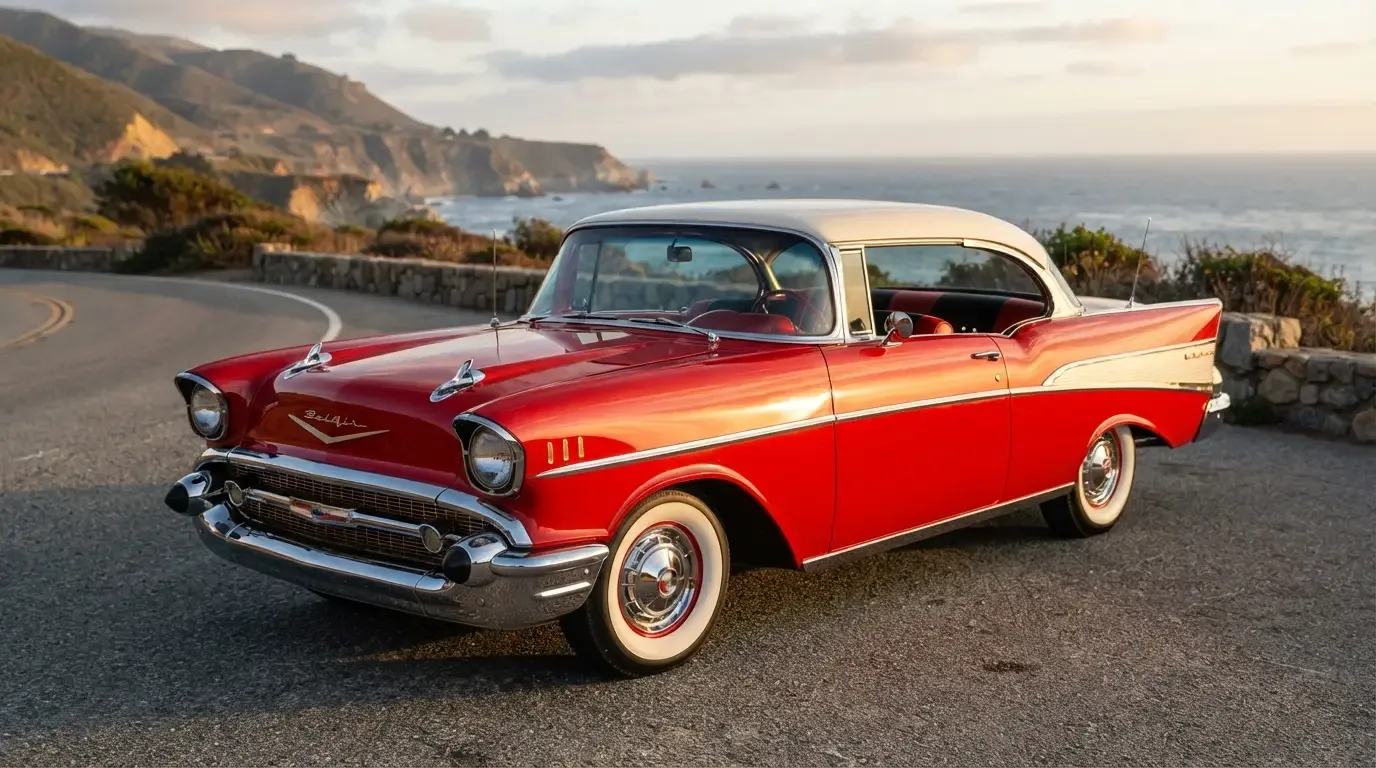
What the price spread actually looks like
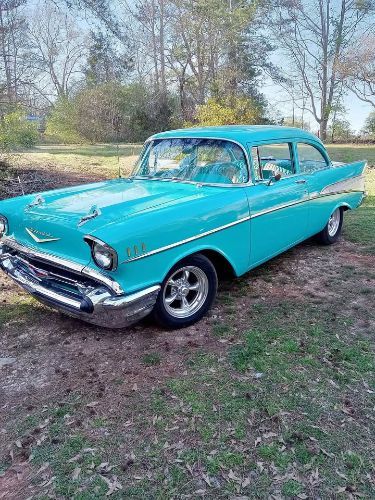
A 1957 Bel Air four-door sedan in solid driver condition sits at the accessible end of the market, often trading for a fraction of what a well-documented convertible or Nomad brings at the same auction house on the same weekend. That spread is not random. It tracks directly with the production scarcity discussed elsewhere in this series, plus the simple reality that a two-door hardtop or convertible reads as more desirable to most modern buyers than a family sedan, regardless of mechanical equivalence.
Fuel-injected cars, the genuine 283 cubic inch "Fuelie" equipped examples, occupy their own tier entirely, commanding a real premium over comparable carbureted cars when documentation supports the claim, since the fuel injection option was ordered by only a small fraction of 1957 buyers. That premium collapses fast, though, if the fuel injection cannot be verified against the correct casting numbers and paperwork, which is why buyers researching this segment need to separate genuine value drivers from surface-level marketing claims before they bid; the exact dollar premium moves with each auction cycle, so treat any specific figure as a snapshot rather than a fixed multiple.
Condition and originality move price more than most buyers expect
Two 1957 Bel Airs of the same body style and color can trade at wildly different prices depending on how much of the car is original versus replaced. A car retaining its original interior, original drivetrain matched to its trim tag, and unmolested sheet metal will consistently outperform a nicer-looking car built from a mix of reproduction parts and undocumented modifications. That is not sentimentality, it is liquidity. Buyers at the top of this market are increasingly sophisticated and increasingly willing to pay for verified originality rather than a shiny paint job with an uncertain history behind it.
Restoration quality matters too, obviously, but a concours-level restoration on a car with thin documentation will generally trail a slightly rougher car that can prove every major component is correct to its build sheet. That gap has widened over the past several years as buyers have gotten better educated about what they are actually looking at.
How the market has trended and where it may be headed
Interest in 1950s Chevrolets has stayed remarkably durable compared to some other segments of the classic market that have cooled as their original enthusiast generation ages out of active buying. Part of that durability comes from the 1957 Bel Air's crossover appeal, it draws traditional muscle car and classic Chevy collectors, but it also draws a broader hot rod and custom culture audience that values the shape and the era regardless of matching-numbers originality. That dual audience gives the model more price support than a car dependent on a single narrow collector base.
None of that guarantees continued appreciation, and buyers should be cautious about assuming past performance simply continues indefinitely. What it does mean is that a well-documented, correctly optioned 1957 Bel Air has historically held value better through market softness than more speculative classics, which matters if you are thinking about this as something more than a weekend hobby purchase.
"I do not care how a car makes you feel when I am pricing it. I care what it can prove about itself, and the 1957 Bel Air market rewards documentation more consistently than almost any other model I track."
- David Mercer
Comparing this car to other collector segments
It helps to place the 1957 Bel Air alongside other classic segments when thinking about it as an investment rather than judging it purely on its own historical trajectory. Compared to some muscle car era Chevrolets from the late 1960s, the 1957 Bel Air market has been less prone to sharp speculative spikes and corrections, largely because its buyer base skews toward long-term collectors and enthusiasts rather than short-term flippers chasing a trending model. That relative stability is itself a data point worth weighing, especially for a buyer who values predictability over the chance of a rapid short-term gain.
At the same time, the 1957 Bel Air does not offer the kind of explosive upside some rarer, more speculative classics have shown in isolated years. It is, in my assessment, a steadier holding within a collector portfolio rather than a growth play, and buyers should calibrate their expectations accordingly. Treating it as a speculative flip is generally a mistake; treating it as a durable, well-understood asset with a long collecting history behind it is a much more accurate framing.
A straightforward read on buying in today
For a buyer entering this market now, the practical advice is simple. Prioritize documentation over cosmetics, understand that body style alone can shift value by a large multiple, and treat any Fuelie or convertible claim with healthy skepticism until it is verified. Sedans remain the most accessible entry point and, in my view, still represent reasonable value relative to the rest of the lineup, since they carry the same styling and much of the same driving character at a fraction of the cost of the rarer body styles.
Anyone building a fuller picture before committing real money should start with the whole picture, which covers the model's broader history beyond the numbers discussed here. And once the research phase turns into an actual search, it is worth taking the time to find a classic Air that matches the documentation standard this analysis argues for, rather than settling for the first attractive listing that turns up.
A note on maintenance costs and total ownership
Price at purchase is only part of the investment picture, and buyers who ignore ongoing costs often end up disappointed with their real return even on a car that appreciated on paper. Parts availability for the 1957 Bel Air is genuinely good compared to many classics thanks to a large and active reproduction parts industry, which keeps routine maintenance costs more predictable than owners of rarer, less-supported classics typically experience. Storage, insurance, and periodic mechanical attention still add up over years of ownership, and anyone modeling this car as a financial asset should account for those carrying costs rather than looking only at the eventual resale figure.
The bottom line on value
The 1957 Bel Air value story is not complicated once you strip away the nostalgia. It is a car whose price is driven by production scarcity, verified originality, and body style desirability, in roughly that order, and buyers who understand that hierarchy consistently make better purchase decisions than buyers chasing a feeling.
Sources and notes
- Conceptcarz: Auction Results and Sales Data for 1957 Chevrolet Bel Air
- Classic.com: 1957 Chevrolet Bel Air Dual Quad Convertible, Mecum Kissimmee 2025
- Barrett-Jackson: 1957 Chevrolet Bel Air Custom Convertible, Scottsdale 2024
- Classic Industries: 1955-57 Chevy Bel Air, 210, and 150 Production Numbers
- Wikipedia: Chevrolet Bel Air
Related Reading


About the author
David Mercer
Classic car market analyst with two decades of experience tracking collector car valuations, auction results, and investment trends.
Related Listings - Chevrolet Bel Air


Comments
Be the first to comment on this article.