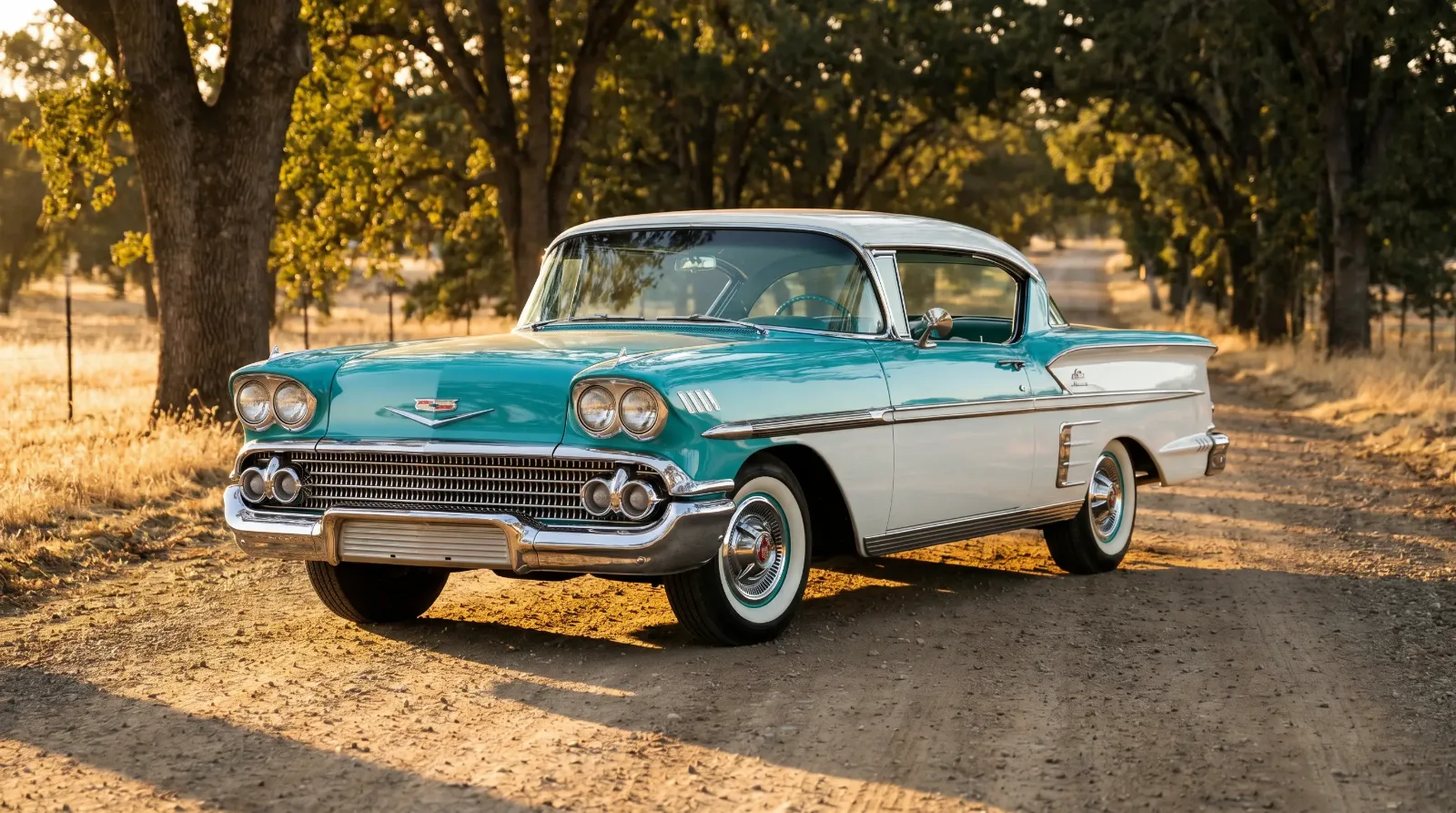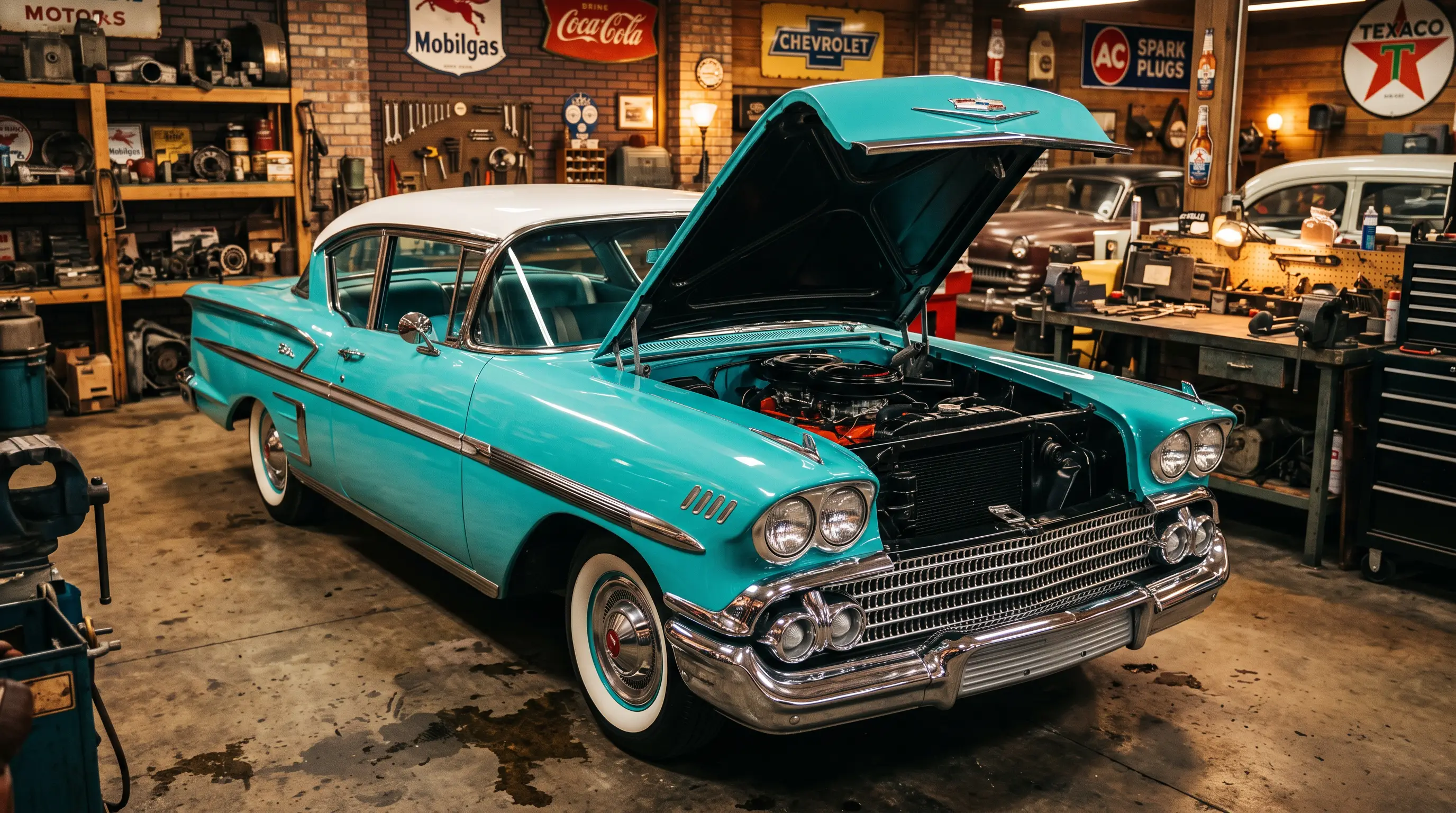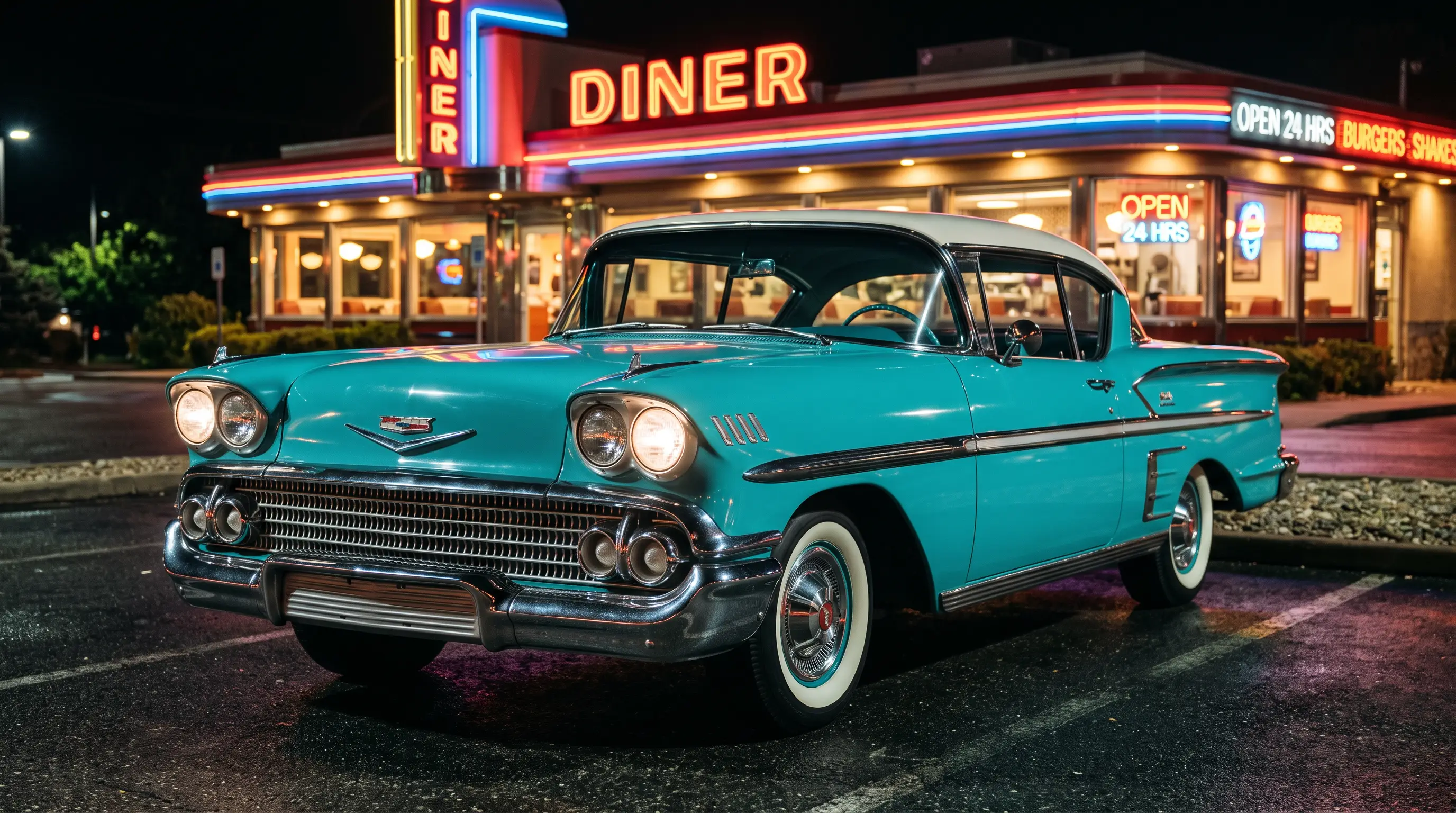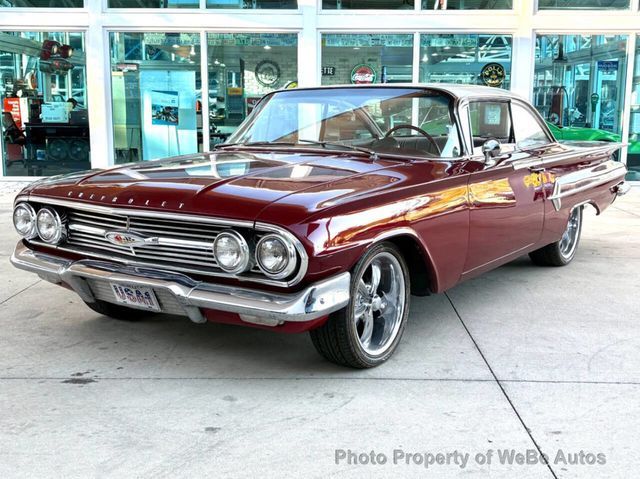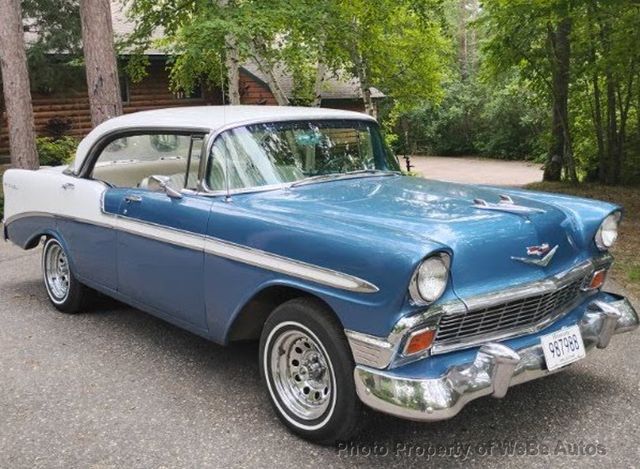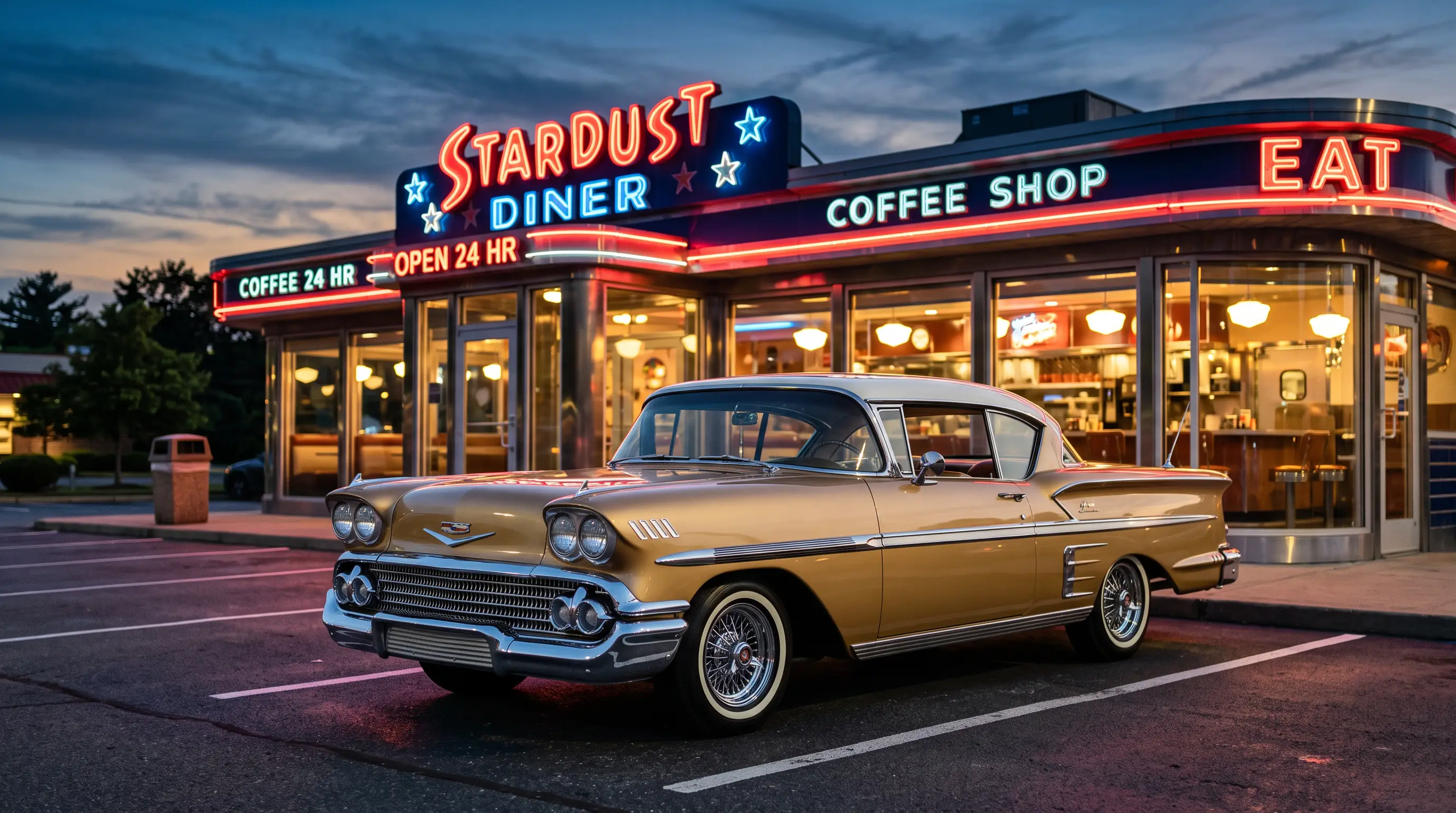
Factory records on the 1958 bel air body styles tell a story that showroom brochures never fully captured. Chevrolet did not simply restyle the Bel Air for 1958, it built the car on an entirely new platform and then offered that platform in a spread of body configurations wider than almost anything the division had produced before. Understanding which body styles actually reached production, and in what numbers, separates a well-documented restoration from guesswork.
A new platform meant a new lineup
The 1958 model year sits on Chevrolet's all-new full-size chassis, a wider and longer platform than the 1955 through 1957 body that preceded it. That new architecture gave engineers room to offer the Bel Air in more configurations than the previous generation, and Chevrolet's production planners took full advantage. Buyers could order a two-door sedan, a four-door sedan, a two-door hardtop marketed as the Sport Coupe, a four-door hardtop called the Sport Sedan, and a convertible, each built on the same basic chassis but finished with distinct rooflines and door structures that required their own tooling.
This range reflected how competitive the full-size market had become. Ford and Plymouth were both offering similarly broad body style menus, and Chevrolet's factory planners understood that a buyer cross-shopping a Fairlane or a Belvedere expected the same variety from a Bel Air. The result is a model year where the same nameplate covers a genuinely wide spread of intended use, from a basic family sedan to a convertible aimed squarely at buyers who wanted to be seen.
The Sport Coupe and its hardtop roofline
Of all the 1958 body styles, the Sport Coupe two-door hardtop is the one most collectors chase today. Its pillarless roofline, with no B-pillar to interrupt the glass when both windows were down, gave the car a lighter, more open profile than the sedans, and Chevrolet's stylists shaped the rear roof pillar with a distinctive wraparound treatment that became one of the year's signature design elements. That roofline was not shared with the four-door hardtop, which used its own stamping to accommodate the rear door opening, a detail that means Sport Coupe and Sport Sedan roof panels are not interchangeable despite looking similar in silhouette.
The convertible shared the Sport Coupe's general proportions but obviously dispensed with a fixed roof entirely, relying instead on reinforced rocker panels and a beefed up frame section to maintain rigidity without the structural benefit of a roof. That reinforcement adds weight, and it is one of the reasons a well-preserved 1958 convertible commands such a premium over a hardtop in comparable condition. Fewer were built, and fewer still survived the decades that followed without significant rust or structural repair.
| Body Style | Roof Configuration | Doors |
|---|---|---|
| Sport Coupe | Pillarless hardtop | 2 |
| Sport Sedan | Pillarless hardtop | 4 |
| Sedan | Fixed B-pillar | 2 or 4 |
| Convertible | Folding fabric top | 2 |
Sedans built the volume the hardtops could not
It is easy to focus entirely on the hardtops and convertible because those are the body styles that dominate car show fields today, but the sedans were the volume sellers in 1958. Four-door sedans in particular moved in far greater numbers than any of the more glamorous body styles, because they served the buyer who needed a practical family car rather than a style statement. That production reality matters for anyone researching the model year, since it means surviving sedans, while less prized by collectors, are actually a more accurate representation of what a typical 1958 Chevrolet buyer drove home.
The two-door sedan sat in an interesting middle position, offering the lower price point of a fixed-roof body without the practicality of rear doors. It found buyers who wanted a Bel Air's trim level and styling without paying for the hardtop's more complex window mechanisms, and it remains one of the less discussed body styles from the year despite reasonably healthy production. Anyone assembling a full picture of the model year should start with where this started, which lays out the broader context this body style breakdown fits into.
Trim levels layered on top of body style choices
Body style was only one axis of the 1958 lineup. Chevrolet also offered the Bel Air across a trim hierarchy that year, with the Bel Air Impala trim introduced as the top of the range, available specifically on the Sport Coupe and convertible body styles rather than across the entire lineup. That decision, restricting the flashiest trim to the sportiest bodies, was itself a piece of product strategy that previewed Impala's eventual split into its own standalone nameplate the following year. A buyer who wanted Impala trim on a four-door sedan simply could not get it in 1958, which is a detail that trips up people trying to identify unusual surviving cars.
That layering of body style and trim level means two 1958 Bel Airs can look dramatically different despite sharing a chassis and drivetrain options. A base two-door sedan with steel wheels and minimal brightwork sits at one end of the spectrum, while an Impala trim convertible with full brightwork and two-tone paint sits at the other, even though both wear a Bel Air badge on the trunk lid in the base car's case, or an Impala badge in the upscale convertible's case. Knowing which combinations Chevrolet actually built protects buyers from cars assembled after the fact from mismatched parts.
"People assume every fancy 1958 Chevrolet was an Impala, but the factory records are specific. Impala trim only came on the Sport Coupe and the convertible that year, full stop."
- Tom Ramirez
What survives on the market today
Sixty-plus years of attrition have not been kind to the more delicate body styles. Convertibles and Sport Coupes survive in smaller numbers relative to their original production than the sedans do, and that scarcity shows directly in asking prices for clean, documented examples. Buyers researching the market should expect real variation depending on body style, trim level, and originality, since a numbers-matching Impala convertible occupies an entirely different price tier than a base two-door sedan even from the same model year. Anyone ready to compare what is actually available can browse classic Air for sale to see how body style shapes both asking price and buyer interest across the current market.
Understanding these body style distinctions is not just trivia for concours judges. It is the difference between correctly valuing a car and overpaying for a common configuration dressed up to look rare, or underpaying for a genuinely scarce body style that a casual seller has not properly identified. The 1958 model year rewards buyers who do their homework before they ever open their wallet.
Factory paperwork, when it survives, remains the best tool for settling any dispute about a given car's original body style and trim combination. Trim tags, cowl plates, and dealer invoices all carry codes that identify body style, and cross-referencing those codes against Chevrolet's published production data is far more reliable than trusting a seller's memory or a repainted badge on the trunk lid. Serious researchers treat this documentation the same way an archivist treats a primary source, because in a very real sense that is exactly what it is.