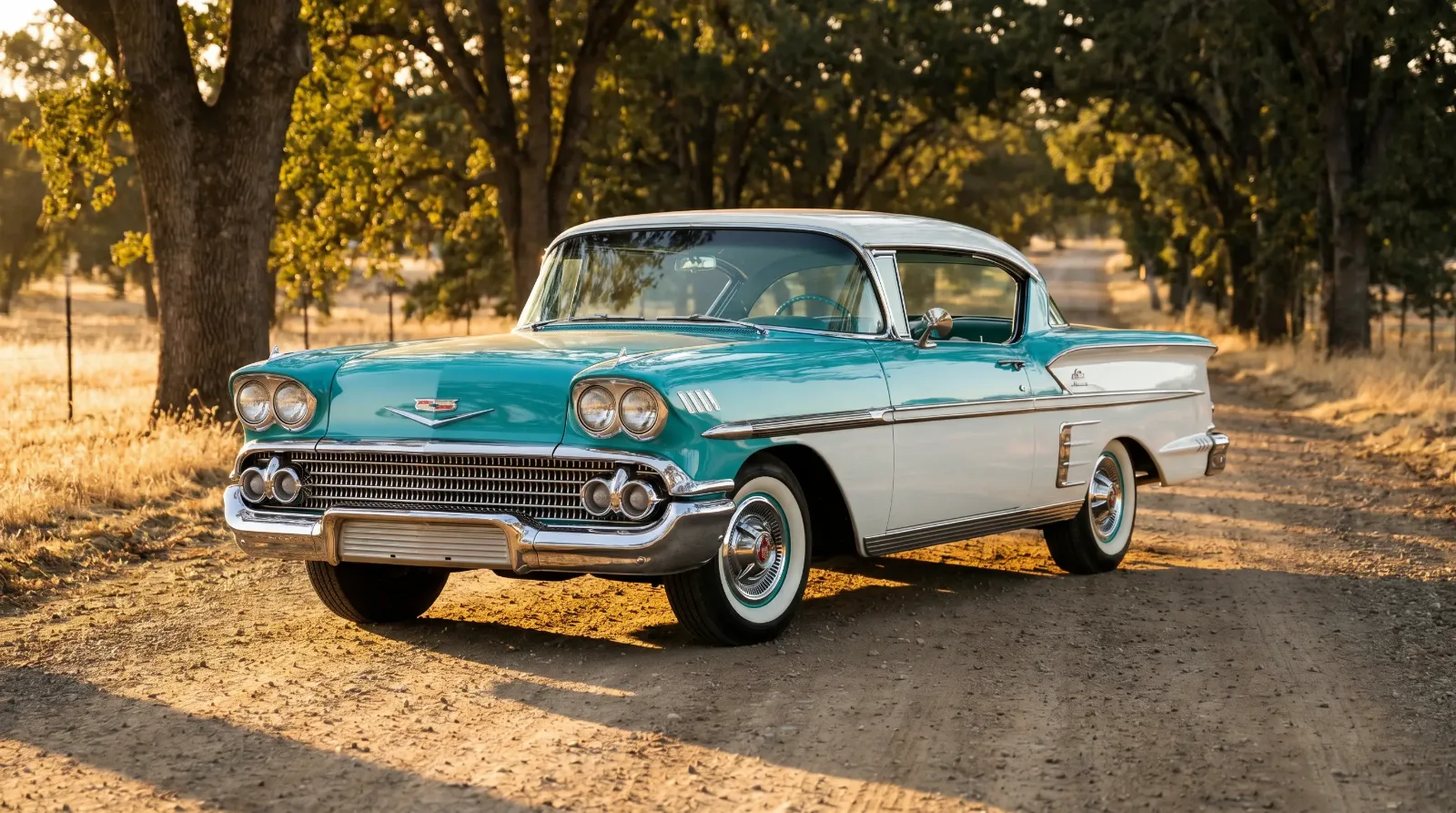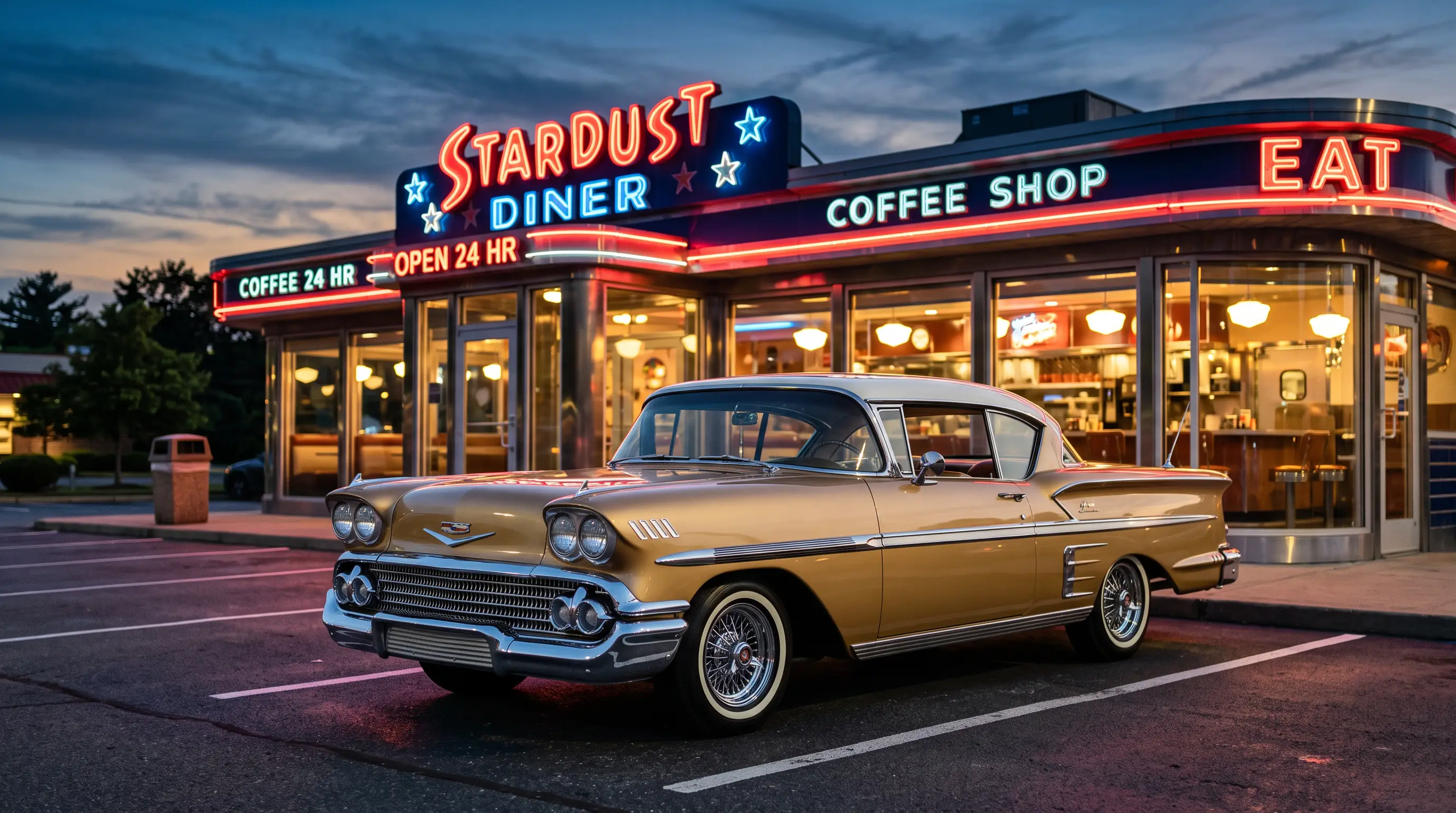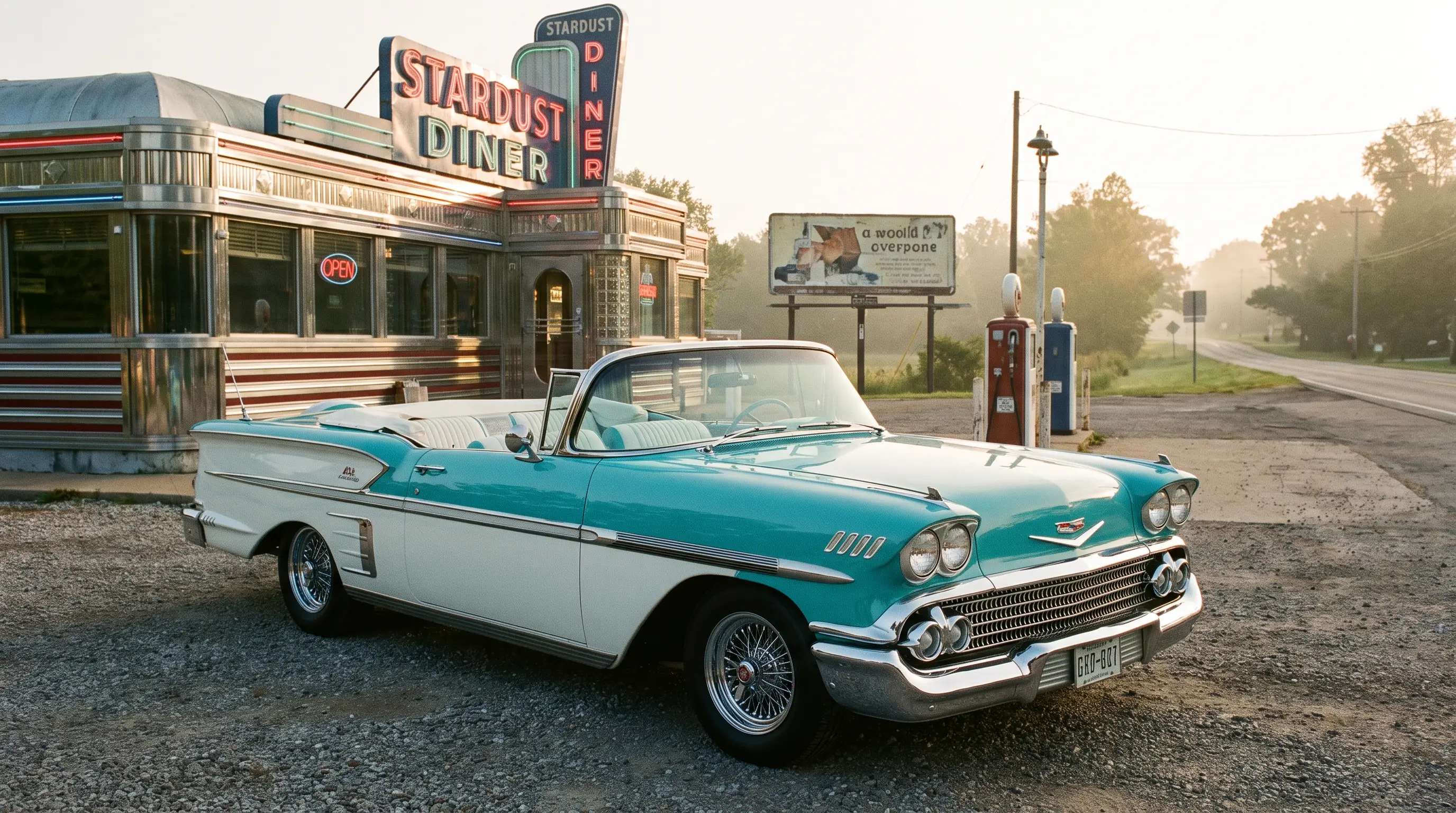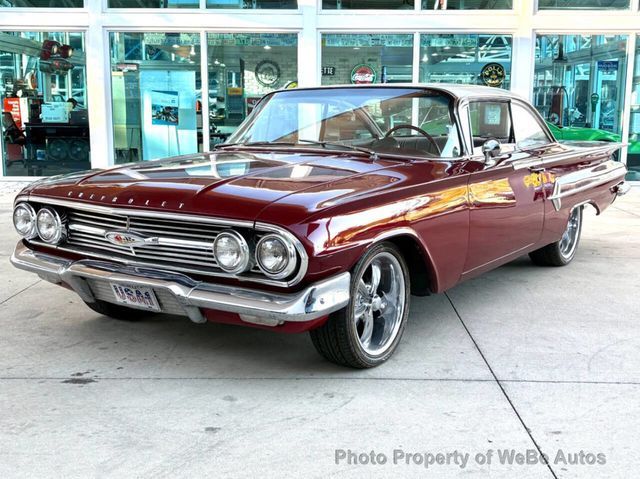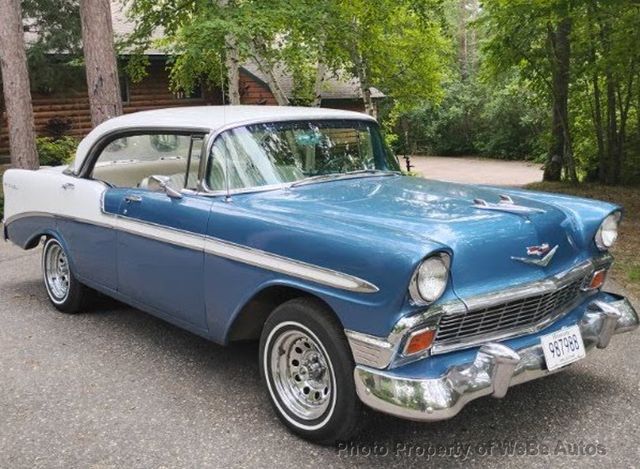
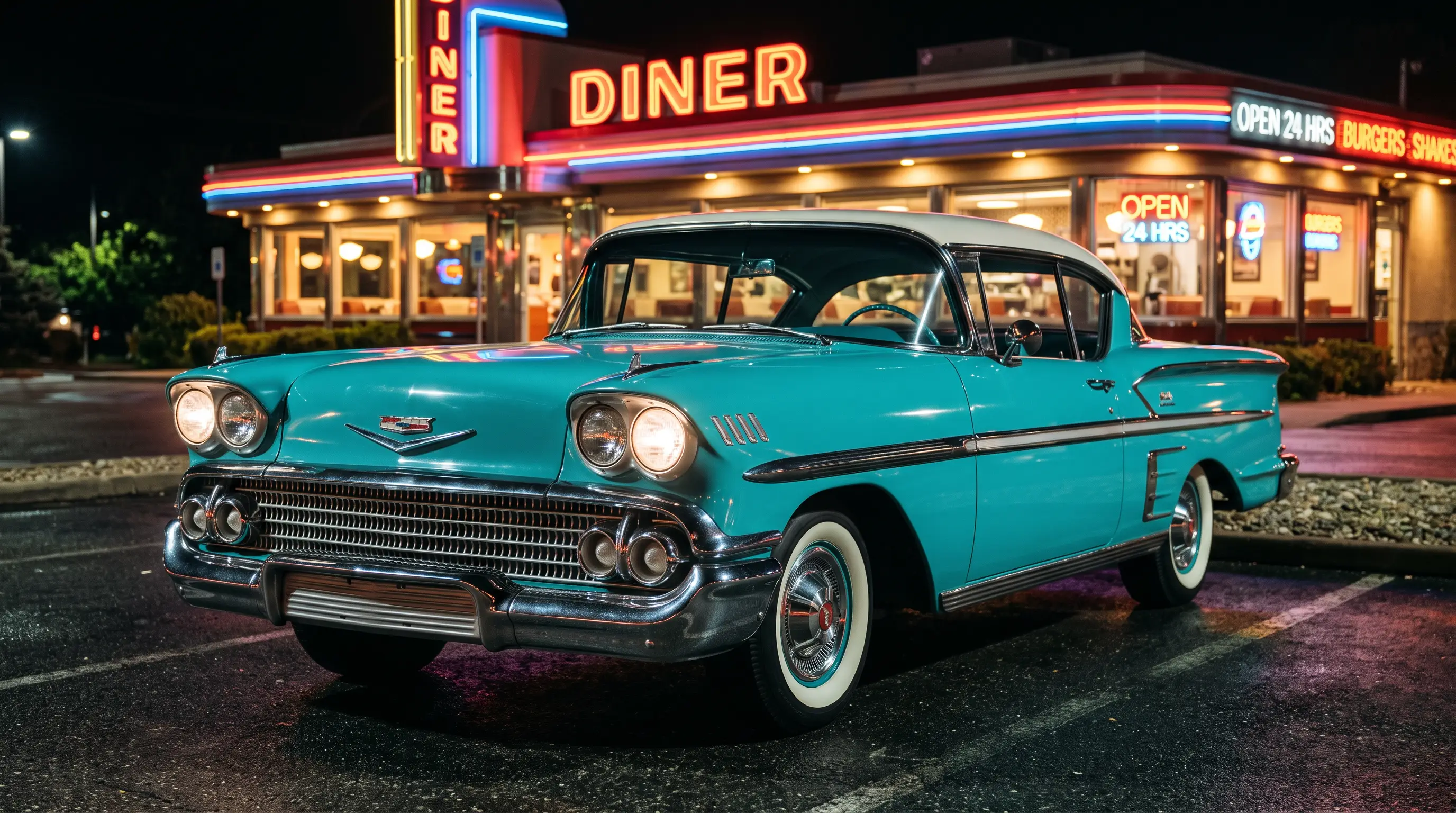
The arrival of 1958 chevy quad headlights marks one of the clearest visual dividing lines in Chevrolet's history. A single glance at the front end tells you whether you are looking at a 1957 car or the 1958 that replaced it, and that shift from two headlights to four was not a minor trim update. It was a change driven by regulation, competition, and a design language that Chevrolet's stylists had been developing for years before it finally reached production.
A regulatory door that opened all at once
Quad headlights were not legal on American roads until state lighting codes were updated to allow them, and 1957 was the year that permission spread widely enough for manufacturers to commit tooling and design resources to the new format for the 1958 model year. Chevrolet was not alone in making the jump. Nearly every domestic manufacturer redesigned their front ends for 1958 around the four-lamp layout, which meant the change was less a Chevrolet-specific innovation and more an industry-wide reset that happened to land on a year when Chevrolet was already launching an entirely new full-size platform.
That timing mattered enormously. Because the 1958 Bel Air was built on new sheet metal from the ground up, Chevrolet's designers could integrate the quad headlight layout into the car's face from the start rather than retrofitting it onto an existing design, the way some competitors were forced to do. The result is a front end where the headlights sit as a genuinely designed element, stacked horizontally within a wide chrome surround rather than looking bolted on as an afterthought.
How the lamps were arranged and why it mattered
Chevrolet arranged the 1958 quad headlights horizontally, side by side within each housing, rather than stacked vertically the way some competitors and later Chevrolet generations would configure them. This horizontal pairing gave the car's face a wide, low stance that stylists reinforced with a broad grille spanning the space between the headlight clusters. The choice of horizontal versus vertical arrangement became something of a design signature question across the industry for the next several years, and Chevrolet's decision to go horizontal in 1958 shaped how the Bel Air read from a distance, wider and more planted than the 1957 model's twin-headlight face.
Each headlight cluster combined a high beam and low beam sealed unit, a technical requirement of the format that also drove much of the front-end packaging. Engineers had to route wiring and mounting hardware for twice as many lamps as the previous year's front clip required, and the bezels themselves became a design opportunity, chromed and shaped to draw the eye across the entire width of the car rather than isolating attention on two separate points the way the old twin-lamp layout had.
Restoring and identifying original quad lamp assemblies
For anyone researching or restoring a 1958 Bel Air, the headlight bezels and sealed beam units carry their own documentation trail worth understanding. Original bezels used specific chrome plating processes and mounting hardware that reproduction parts do not always match precisely, and concours judges scrutinize these details closely because the quad headlight treatment is such a defining feature of the model year. A car wearing incorrect bezels, mismatched sealed beam brands, or aftermarket housings loses points in judged competition even if the rest of the restoration is otherwise excellent.
The wiring harness behind the quad headlight system also differs meaningfully from the simpler twin-lamp harness used in 1957 and earlier, since the added lamps required additional circuits and connectors that a period-correct restoration needs to replicate rather than simplify. Collectors who prioritize originality treat this as seriously as they treat engine casting numbers, because a car's front-end wiring is exactly the kind of detail that gets quietly modernized during amateur restorations and then goes unnoticed until an expert eye examines it. For the full context of how this styling choice fit into the rest of the 1958 redesign, the full story covers the broader model year in depth.
"Judges do not just look at whether a car has four headlights. They look at whether it has the correct four headlights, mounted the correct way, wired the correct way. That is the difference between a nice car and a documented one."
- Sarah Whitfield
Why the quad headlight era still resonates
The quad headlight period did not last forever in its original horizontal Chevrolet configuration. Later model years experimented with different arrangements and eventually moved toward stacked layouts as styling trends shifted, which means the 1958 model year's specific horizontal quad treatment has a genuinely narrow production window. That narrowness is part of what makes it appealing to collectors who specialize in transitional design years, since the 1958 front end represents a single, specific answer to a design question that manufacturers were still actively working out in real time.
Archival photography from period dealer showrooms shows just how much attention Chevrolet's marketing placed on the new front-end treatment, often photographing cars head-on specifically to feature the four-lamp layout as a modern, forward-looking element. That marketing emphasis tells its own story about how significant the change felt at the time, even though quad headlights would become standard across the industry within just a few years and stop being a selling point at all. For buyers wanting to see how well-preserved examples of this specific design era have held their value, it is worth taking time to browse classic Air listings and compare front-end condition across available cars, since headlight bezel and trim condition is often the fastest tell for how carefully a given example has been maintained.
Documenting a car's quad headlight components correctly is a small but genuinely important part of understanding the 1958 Bel Air as a whole. It is a feature that defines the model year at a glance, and getting it right, whether in restoration work or simple appreciation, connects directly back to the larger story of how Chevrolet redesigned its entire full-size lineup for a single, defining year.
Comparing the format across the 1958 lineup
It is worth noting that the quad headlight treatment was not unique to the Bel Air within Chevrolet's own catalog that year. The entry-level Delray and Biscayne models shared the same basic front clip architecture, since Chevrolet built the full-size lineup on shared sheet metal regardless of trim level. What changed between trims was the surrounding brightwork, with higher trim levels receiving more elaborate chrome detailing around the same basic four-lamp housing. That shared engineering meant Chevrolet only had to solve the quad headlight packaging problem once and then apply trim-level differentiation on top of a common foundation, a cost-effective approach that also explains why base and upscale 1958 Chevrolets read as clearly related despite their different price points.
Researchers comparing surviving cars today should also account for how sun exposure and decades of parking have affected original chrome bezels differently across regions. A car that spent its life in a dry climate often retains brighter original plating than one that lived through harsh winters, and that condition difference shows up first and most visibly around the headlight surrounds, since they sit at the most exposed point on the entire front clip. Evaluating bezel condition honestly, rather than assuming shiny chrome always means original chrome, is one of the more reliable tells experienced appraisers rely on when assessing how much of a given car's front end has actually survived unmolested since 1958.
Sources and notes
- A Brief History Of Headlamp Styles In The U.S. - Classic Cars Today Online
- All The 1957 Cars With Alternate Quad and Single Headlight Front Ends - Curbside Classic
- Chevrolet Biscayne - Wikipedia
- One Year Only: The 1958 Chevrolet Delray - Mac's Motor City Garage
- 1958 Chevrolet Fact Sheet - Over-Drive Magazine