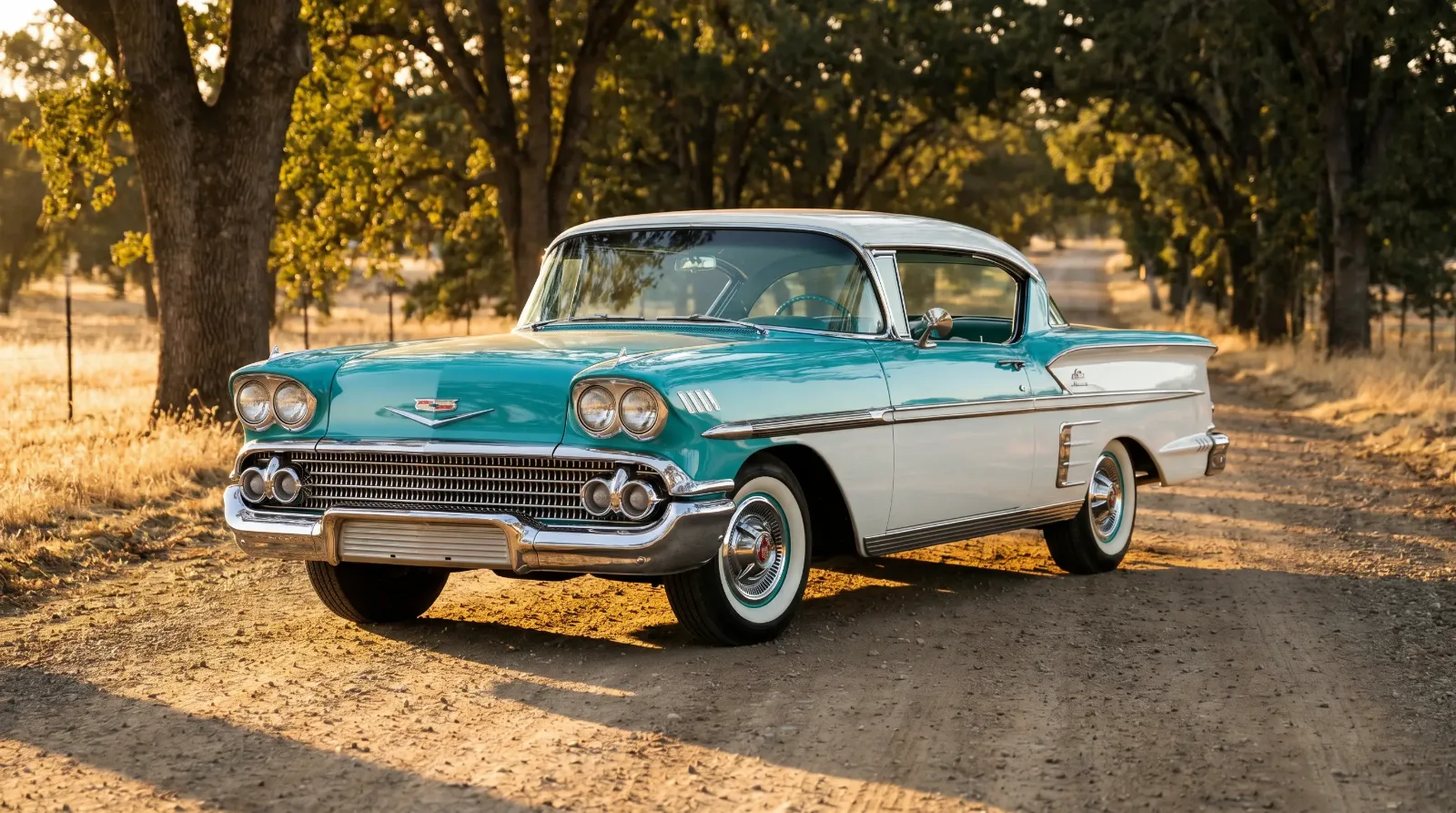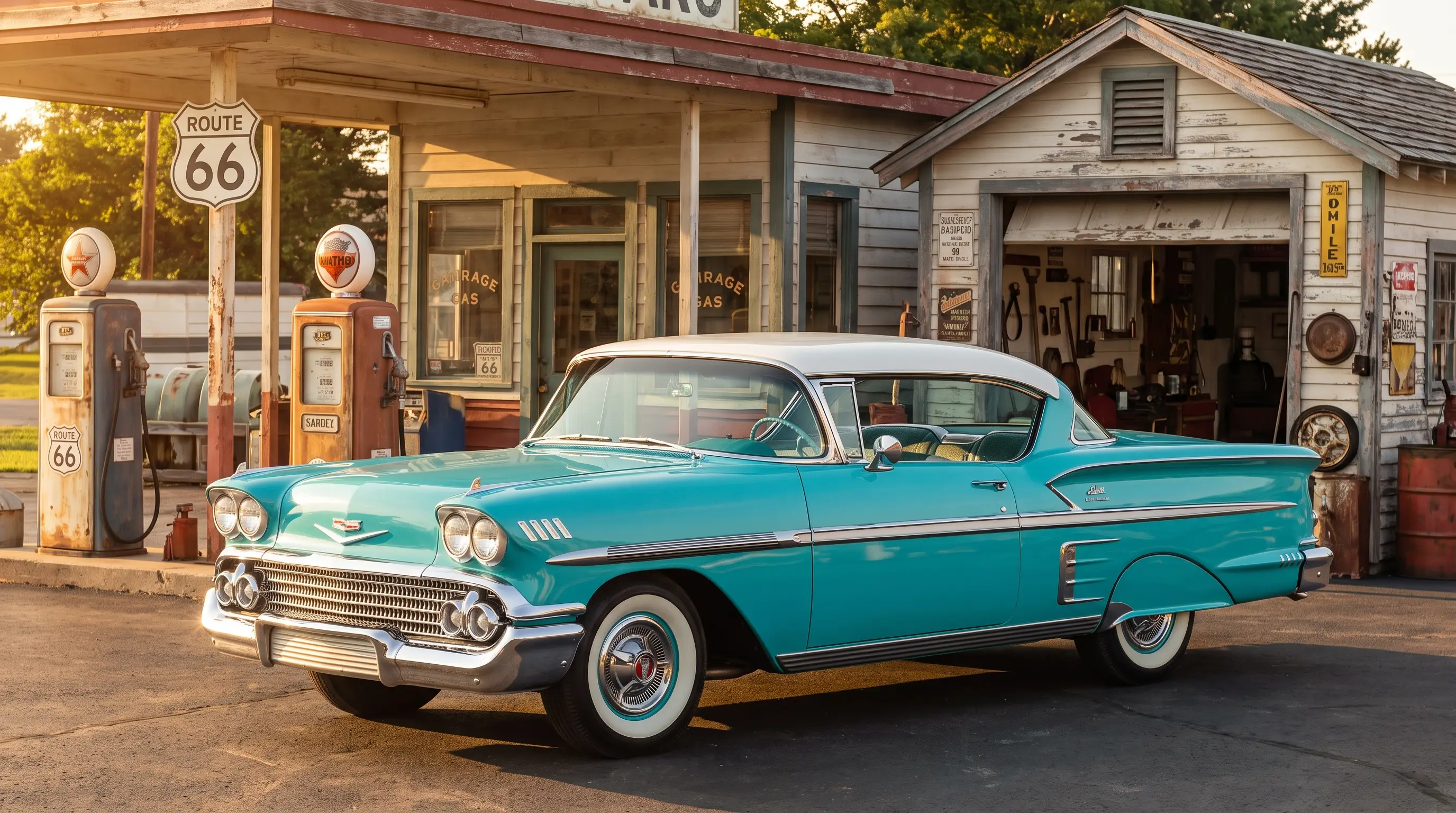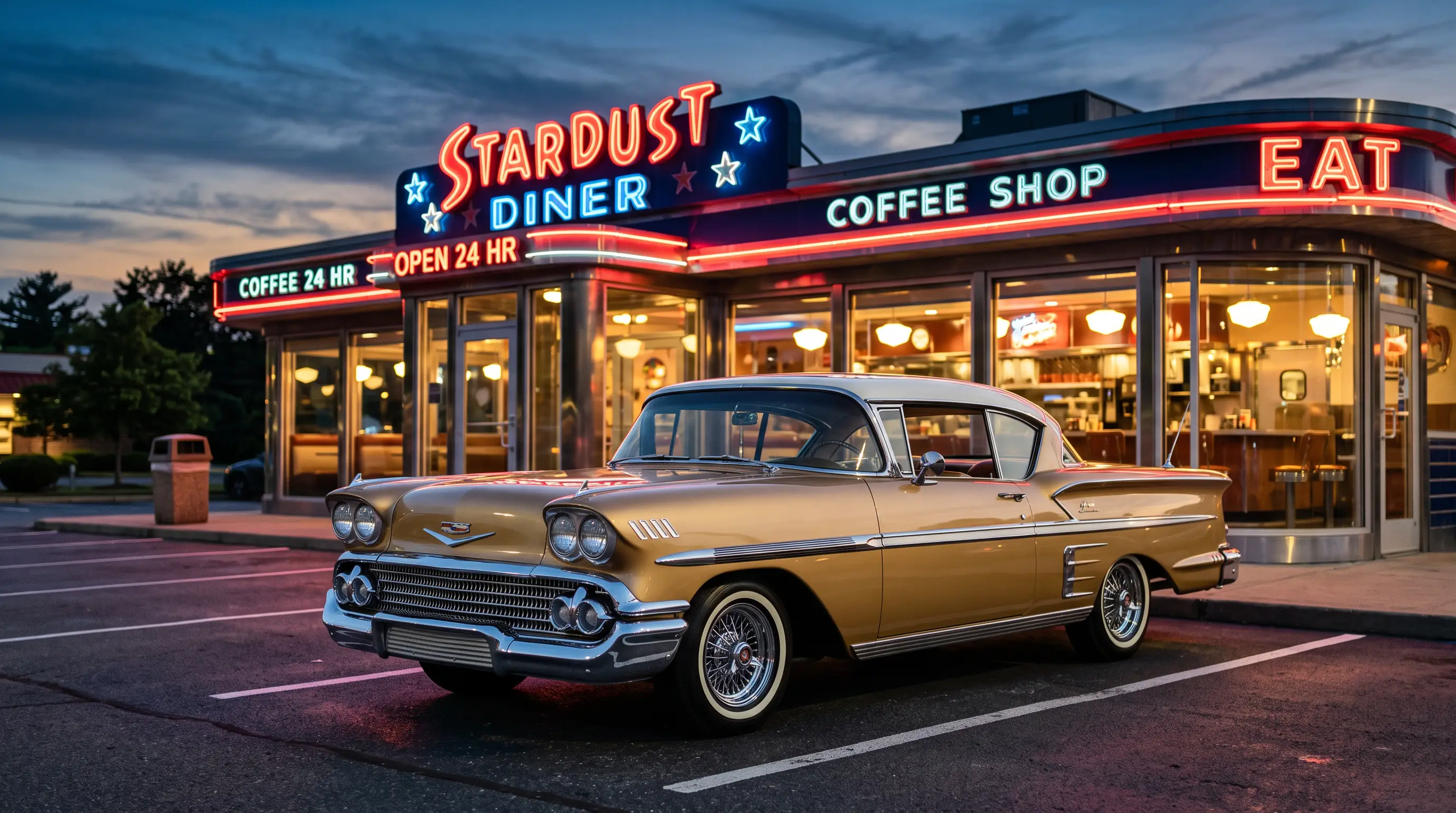
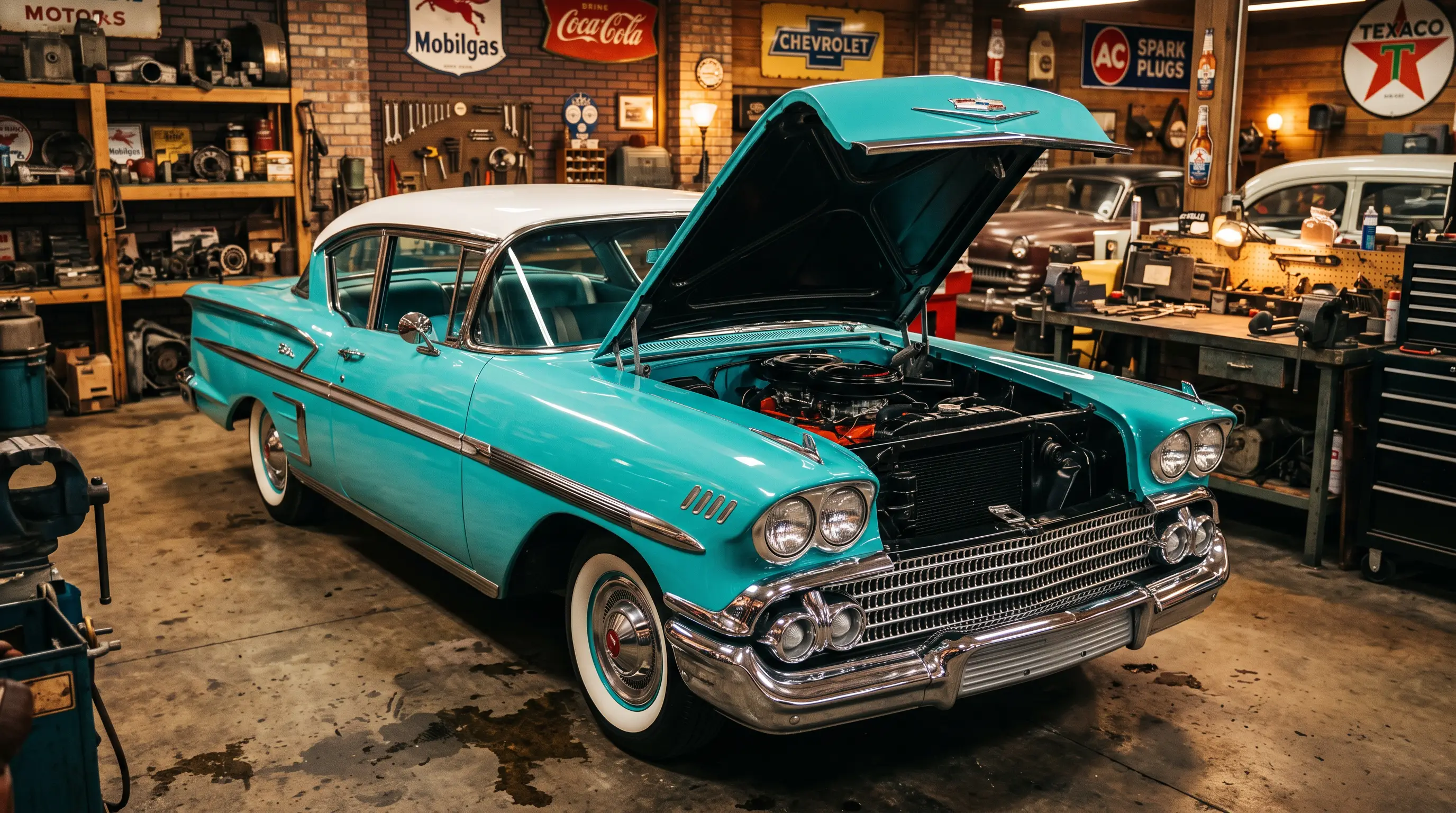
The chevy 348 w engine 1958 debut is one of those moments where Chevrolet's engineering department quietly rewrote the rules of what a full-size car could carry under its hood. Before 1958, Bel Air buyers who wanted real power looked at the 283 small block and stopped there. The new W-series 348 cubic inch V8 changed the math, and it did it with a design that looked nothing like anything Chevrolet had built before.
Why the small block ran out of room
By 1957, the 283 had proven itself, but its displacement ceiling was real. Chevrolet's engineers needed a bigger canvas for the horsepower race that was picking up speed across Detroit, and rather than stretch the existing small block architecture past its comfort zone, they built something new from the ground up. The 348 arrived as a heavy-duty design borrowed in spirit from Chevrolet's truck engine program, which is part of why it feels overbuilt compared to the small block it sat beside on showroom order sheets.
The result was a taller, heavier engine with a distinctive scalloped valve cover shape that owners nicknamed the "W" for the way the rocker covers stepped up and down across the top. That shape is not cosmetic. It follows the unusual combustion chamber geometry, where the cylinder walls slope inward and the piston domes rise to meet them, a wedge-style chamber that let Chevrolet push compression higher than a flat-top small block could tolerate on the pump gas of the era.
What made the W-engine different under the covers
The 348 used an unconventional block design, with a 74-degree deck angle and combustion chambers formed largely in the block rather than the cylinder head, plus a forged crankshaft in its higher-output variants. Bore and stroke landed at roughly 4.125 by 3.25 inches, a combination that gave the engine a broad torque curve rather than the high-revving character of a small block tuned for RPM. That torque-first personality made the 348 a natural fit for a full-size Bel Air that weighed well over 3,500 pounds.
Depending on carburetion and compression, the 348 shipped in several states of tune for 1958. The base two-barrel version was tame enough for a family car, while the triple two-barrel "Tri-Power" setup pushed output toward 315 hp in the hottest mechanical-lifter street configuration, a figure that put the Bel Air in company with cars that cost considerably more. Chevrolet marketed the engine hard, leaning on drag strip results and NASCAR appearances to prove the W-series was not just a bigger number on a spec sheet.
| Spec | 1958 348 W-Engine |
|---|---|
| Displacement | 348 cubic inches |
| Configuration | OHV V8, wedge chamber |
| Induction options | Single 4-barrel, Tri-Power triple 2-barrel |
| Valve cover profile | Scalloped "W" shape |
| Common application | Bel Air, Impala-trim 1958 models |
Living with a 348 in period
Owners who ordered the 348 in 1958 were not buying a subtle car. The engine's extra weight over the front axle changed the way a Bel Air handled compared to a small block equipped car, and mechanics of the era noted that the W-series ran hotter under sustained highway use, a trait that led to running changes in cooling capacity across the model year. None of that stopped the engine from becoming a favorite among buyers who wanted genuine performance in a package that still looked like a family sedan from the driveway.
The 348 also mattered because it previewed where Chevrolet's big block program was headed. Two years later the W-series would grow into the 409, an engine that needs no introduction to anyone who has heard the Beach Boys sing about it. But the 409 does not exist without the groundwork the 348 laid in 1958, from the wedge chamber design to the reinforced block that could handle real cylinder pressure. For the full arc of how the 1958 model year came together, more on the 1958 chevy bel air lays out the styling and market context the 348 launched into.
Finding a 348 car today
Original 348 cars are less common than small block Bel Airs on the collector market, which makes them a genuine find when a well-documented example surfaces. The block casting numbers and carburetor configuration matter enormously to value, since Tri-Power cars command a real premium over their two-barrel siblings, and unmatched numbers engines that have been swapped in from later 348 or 409 applications need to be disclosed honestly by any seller. Anyone tracing the Bel Air's engineering roots should read where this started to see how a mid-decade trim level grew into a nameplate serious enough to headline a new engine family.
Buyers actively shopping should expect to pay close attention to documentation. A W-engine Bel Air with a clean title history and matching numbers is a different proposition entirely from a car with a generic 348 dropped in during a later restoration. Browse classic Airs on the market to see the current spread between documented Tri-Power cars and more modest single-carburetor examples.
"The 348 gets overshadowed by the 409 in every conversation, but the 348 is the engine that proved Chevrolet could build a big car engine that didn't feel like a truck motor wearing a tuxedo."
- Emily Chen
Why the 348 still matters to collectors
Engineering history rewards the cars that took the real risk, and in 1958 the 348 was the risk. Chevrolet could have simply bored out the 283 and called it a day. Instead the company built a heavier, purpose-designed V8 that borrowed truck-grade durability and married it to genuine street performance, a combination that few competitors matched at the time. That decision is why the 348 still draws attention from collectors who care less about outright horsepower numbers and more about what an engine represents in a manufacturer's development story.
The 348's run was relatively short by Chevrolet standards, phased out as the 409 took over the performance mantle by the early 1960s, but its influence on how Chevrolet approached big block design never really left. Anyone evaluating a 1958 Bel Air with the W-series 348 under the hood is looking at more than an engine option. They are looking at the first real chapter of Chevrolet's big block story, built a few years before the song made it famous.
What the 348 taught Chevrolet's engineers
The lessons from the 348 program shaped how Chevrolet approached every big block that followed. Engineers learned that a wet-deck block could handle the cylinder pressure of a high compression wedge chamber without the warping problems that plagued some competitors, and that lesson carried straight into the 409 and later into the Mark IV big block family that powered everything from Corvettes to work trucks well into the 1970s. None of that later success erases what the 348 accomplished on its own terms in 1958, a year when most manufacturers were still fighting over horsepower with warmed-over prewar architecture.
There is also a manufacturing story here that gets overlooked. Chevrolet built the 348 on the same general assembly principles as the small block, which kept tooling costs down and let the division scale production quickly once demand for the Tri-Power option took off. That kind of practical engineering, building something genuinely new while still respecting cost and manufacturability, is the throughline in almost everything Chevrolet did well during this era. The 348 is a small case study in how a division under real competitive pressure from Ford and Chrysler managed to innovate without blowing up its own production line.
For a car this significant mechanically, documentation is everything. A 348 equipped Bel Air with its original build sheet, the correct carburetor linkage for Tri-Power cars, and a block casting number that matches the VIN era is a fundamentally different asset than a car wearing a later 348 or a reproduction air cleaner setup. Collectors who specialize in 1958 Chevrolets tend to know these details cold, and it is worth asking pointed questions before assuming any 348 under a Bel Air's hood is the numbers-matching original.
Sources and notes
- Chevrolet big-block engine - Wikipedia
- Throwback Thursday: The 348 Cubic-Inch W-Series Engine - ChevyHardcore
- Chevrolet's W-Series Engine Specifications 1958-1965 - Over-Drive Magazine
- Chevy 348-409 Engine Block Guide - ChevyDIY
- Chevy 348 and 409 Strokers - Engine Builder Magazine
- 1958 Chevrolet Impala with 348 Tri-Power - autoevolution