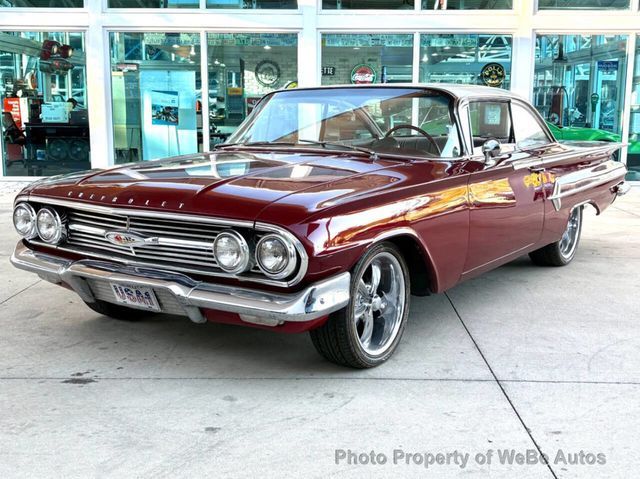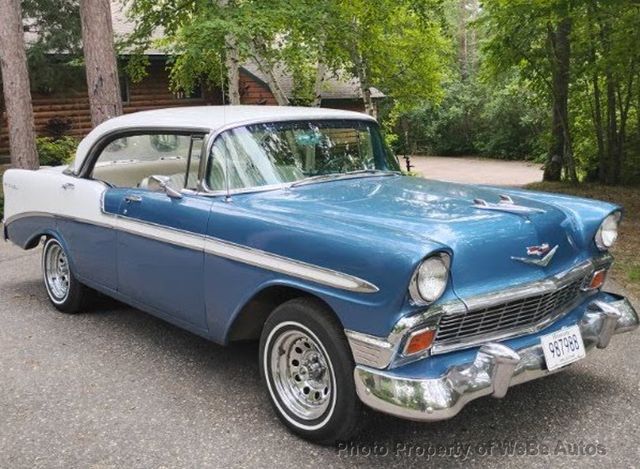
Ask a casual fan why 1958 chevy end of tri five happened and most will guess the tri five stopped selling, or that Chevrolet ran out of ideas for the shape. Neither is true. The tri five ended for reasons that had almost nothing to do with the car's popularity and everything to do with decisions made years earlier inside Chevrolet's engineering and design divisions.
The tri five was still selling well when it ended
Production and sales figures for 1957 do not show a car in decline. The tri five era closed at or near its commercial peak, not after a slow fade the way many discontinued models exit the market. That fact surprises people who assume model changes follow a rise and fall pattern tied directly to sales performance. Chevrolet's decision to retire the tri five body had little to do with whether customers still wanted it and everything to do with a body and chassis program already committed years in advance.
General Motors in this era planned major body changes on long lead times, often three to five years ahead of a car actually reaching a showroom floor. The tooling, the engineering validation, and the manufacturing changeover for a new chassis platform simply could not be reversed on short notice because a competitor had a strong year or because the outgoing car happened to be popular. The tri five's replacement was locked in well before 1957 sales figures were even final.
A new platform, not a facelift, arrived for 1958
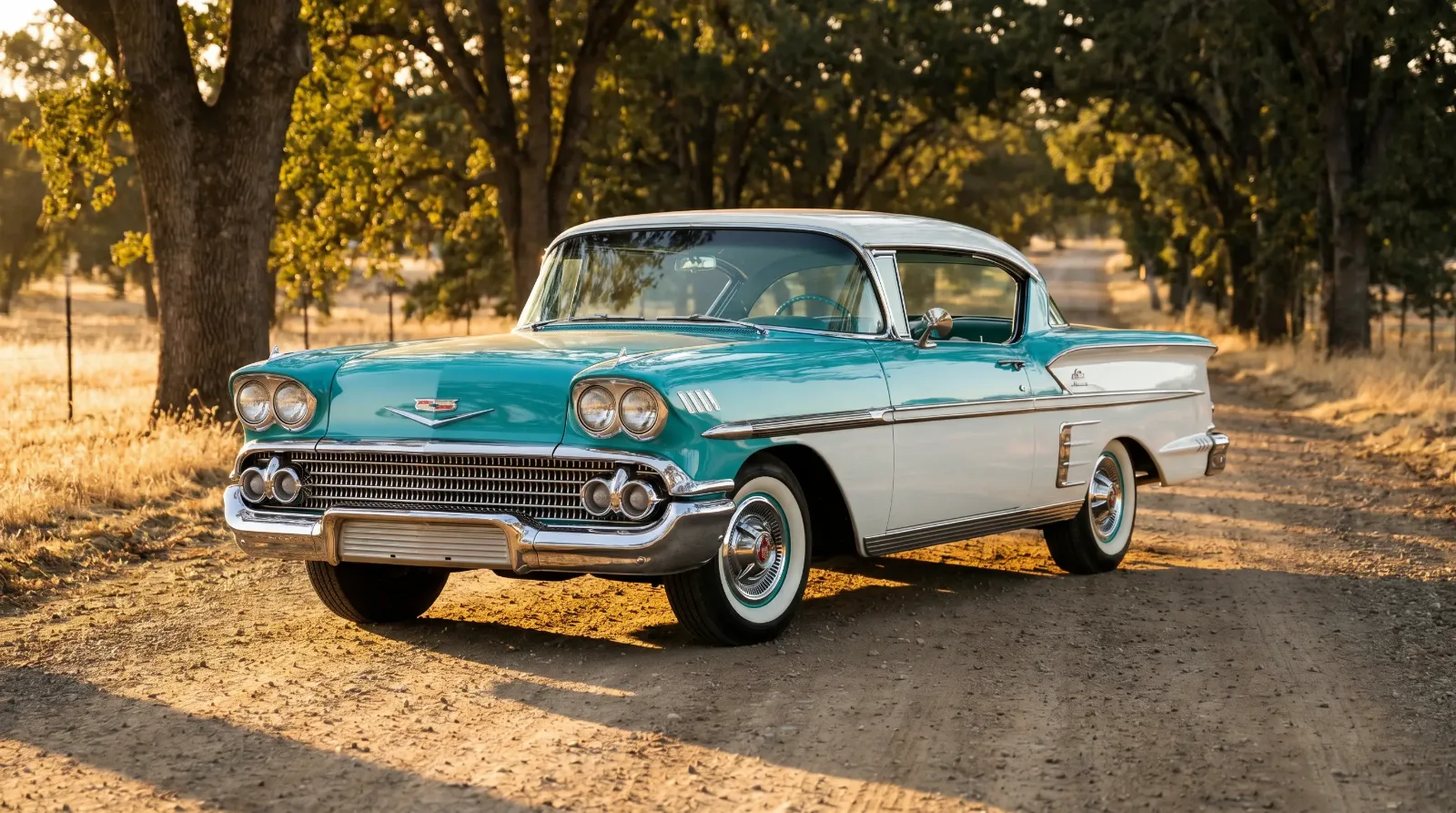
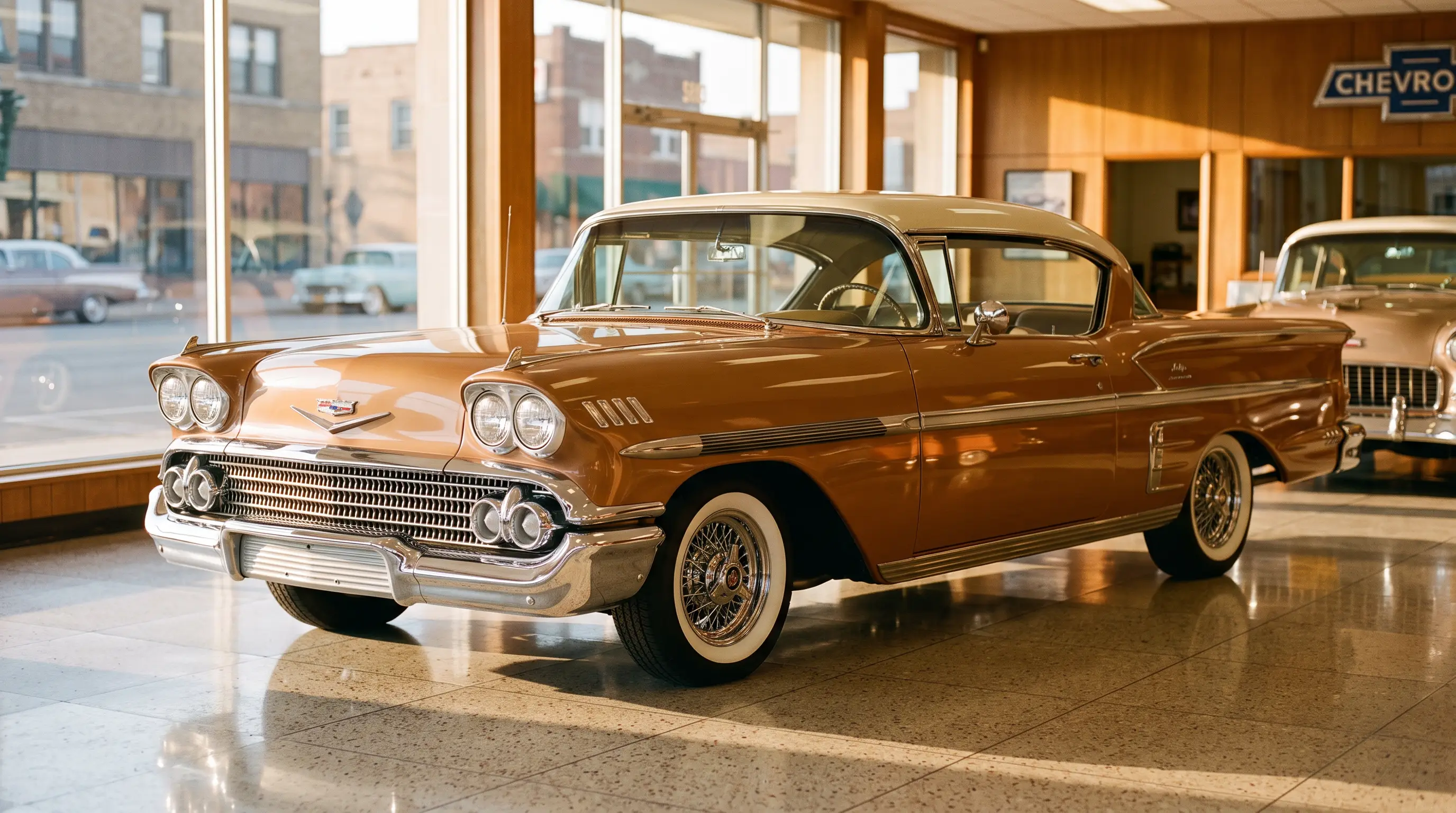
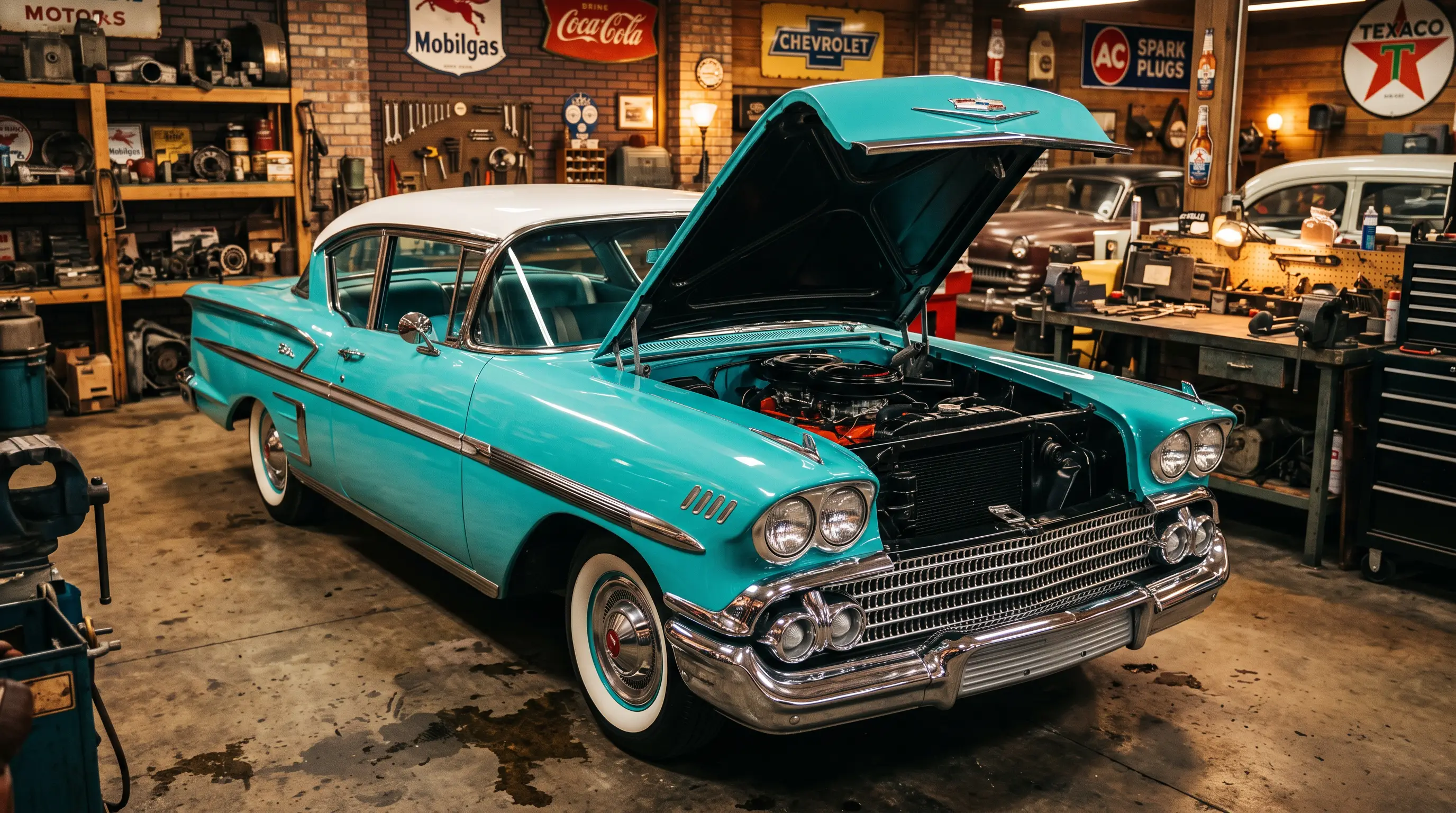
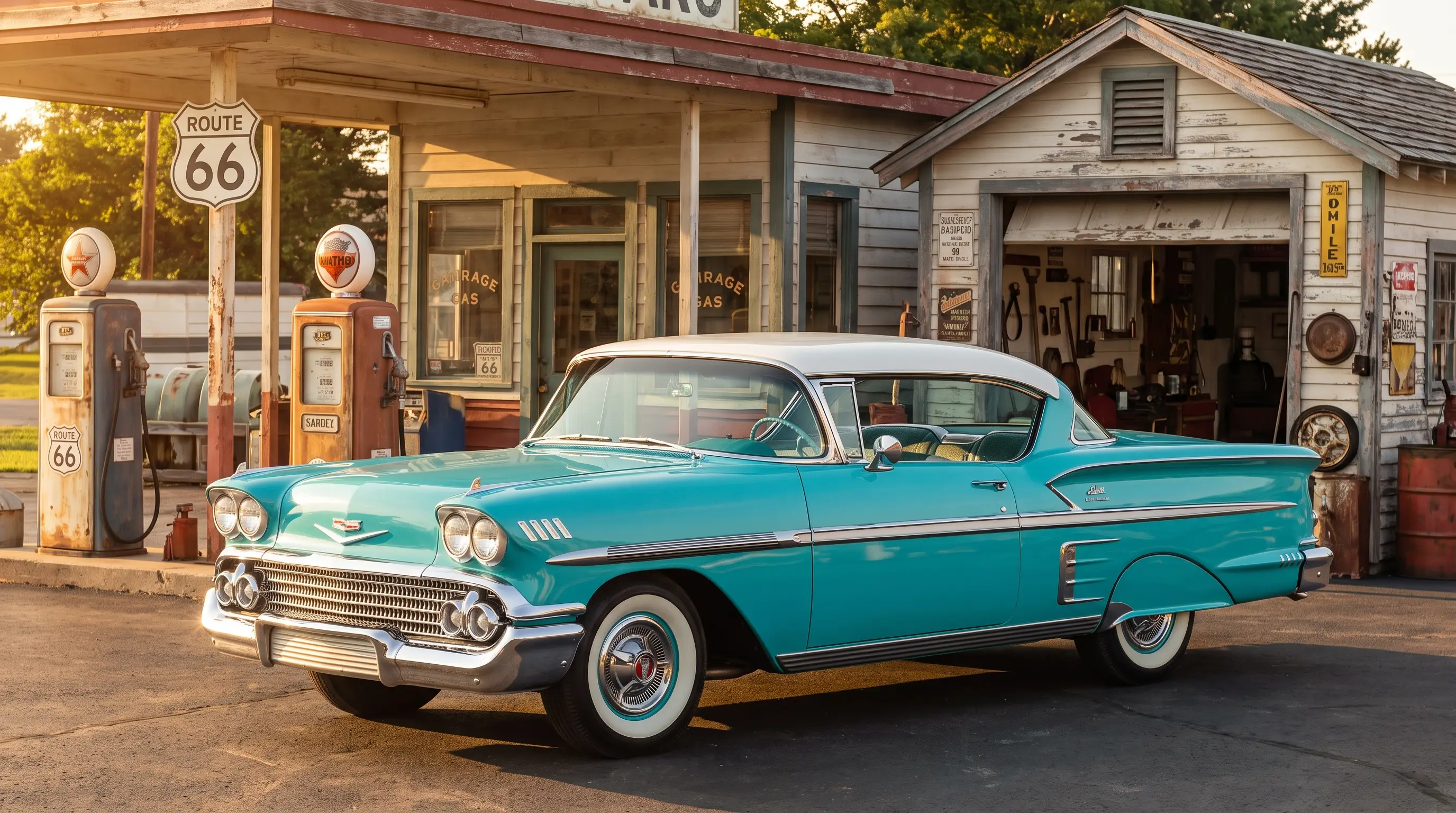
What replaced the tri five for 1958 was not a styling refresh of the same underlying car. Chevrolet introduced a new X-frame, a larger body, and quad headlights, along with the debut of the 348 cubic inch W-series V8, an entirely different engine family from the small block that had defined the tri five years. That is a genuine generational break, not a running change, and it explains why 1958 feels so different sitting next to a 1957 despite being only one model year removed. Readers curious about the tri five years leading into this change can read the background on how the two eras connect.
Industry wide trends pushed in the same direction. American buyers in the late 1950s were gravitating toward bigger, more heavily chromed cars, and Ford and Plymouth were both rolling out larger, more dramatically styled models around the same time. Chevrolet's 1958 redesign was as much a response to where the whole market was heading as it was an internal styling decision, and staying with the tri five's smaller, cleaner shape past 1957 would have left Chevrolet looking dated against its two biggest rivals.
What the tri five's end meant for the small block V8
The tri five years are inseparable from the small block V8's rise to legend, and 1958's platform change did not kill that engine, it simply changed its role. The small block continued in Chevrolet's lineup well past 1958, but the new flagship engine story for the bigger cars became the 348 W-series V8, developed specifically to suit the larger, heavier 1958 body in a way the smaller displacement engine was not originally intended for. Owners chasing the small block's continued story after the tri five years, including the bigger W-series engines that followed it into Chevrolet's larger cars, may find worth a look too as a natural next stop.
"The tri five did not lose a popularity contest. It ran into a chassis program that had already been signed off years before anyone knew how good 1957 was going to be. That is just how GM's planning worked in this era."
- Tom Ramirez
| Model year | Chassis | Flagship V8 | Notable change |
|---|---|---|---|
| 1955 | Tri-five perimeter frame | 265 small block | First small block V8 Chevy |
| 1957 | Tri-five perimeter frame | 283 small block | Fuel injection option, fin styling |
| 1958 | New X-frame | 348 W-series | Full body and chassis redesign, quad headlights |
How dealers and buyers reacted at the time
Period dealer accounts and advertising from late 1957 and early 1958 show a sales approach built around novelty rather than apology. Chevrolet did not frame the 1958 lineup as a replacement for something that had let buyers down. It framed it as bigger, more modern, and more capable, leaning on the new frame, the wider body, and the available 348 W-series V8 as reasons to trade up rather than reasons to forgive a previous shortcoming. That framing only works when the outgoing car was not actually failing, and it lines up with the sales data showing the tri five closing out on strong footing rather than a decline that needed explaining away.
Some longtime Chevrolet buyers were resistant at first. The tri five's proportions had become familiar and, to a lot of owners, exactly right, and a car that much larger and more heavily chromed did not appeal to every previous customer equally. That resistance faded quickly enough in the sales numbers, but it left behind a small, persistent group of buyers who skipped 1958 entirely and either kept driving their tri five or waited to see what came next in 1959, which is part of why tri five cars stayed in daily use, and therefore stayed familiar to the public, well past their original production run.
Why the ending still matters to collectors
Understanding that the tri five ended by design, not by failure, changes how collectors should think about the car's legacy. It was not a shape the market rejected. It was a shape Chevrolet chose to retire on its own schedule while the car was still winning showroom comparisons against Ford and Plymouth. That context is part of why the tri five's reputation has only grown since, since nostalgia for a car that went out on top hits differently than nostalgia for one that limped to the finish line.
For buyers and researchers who want to see the full arc from tri five peak to 1958 transition in person, dealers carry examples from both eras, and it is worth the trip to shop classic Air listings spanning 1955 through 1958 side by side. Standing between a 1957 and a 1958 on the same lot is still the fastest way to understand exactly how much changed, and why, in a single model year that had nothing to do with the tri five falling out of favor.
A planned ending, not a forced one
The clearest way to summarize the 1958 chevy end of tri five story is that Chevrolet chose the timing, not the market. Long lead body programs, a shift in national buyer taste toward bigger cars, and the introduction of an entirely new engine family all converged on the same model year by design, not by accident and not by necessity. The tri five ended the way most well run product transitions end, quietly, on schedule, and without any real evidence that the outgoing car had done anything wrong. That is a better ending than most classic nameplates get, and it is a big part of why the tri five's reputation has only grown stronger with every decade since.