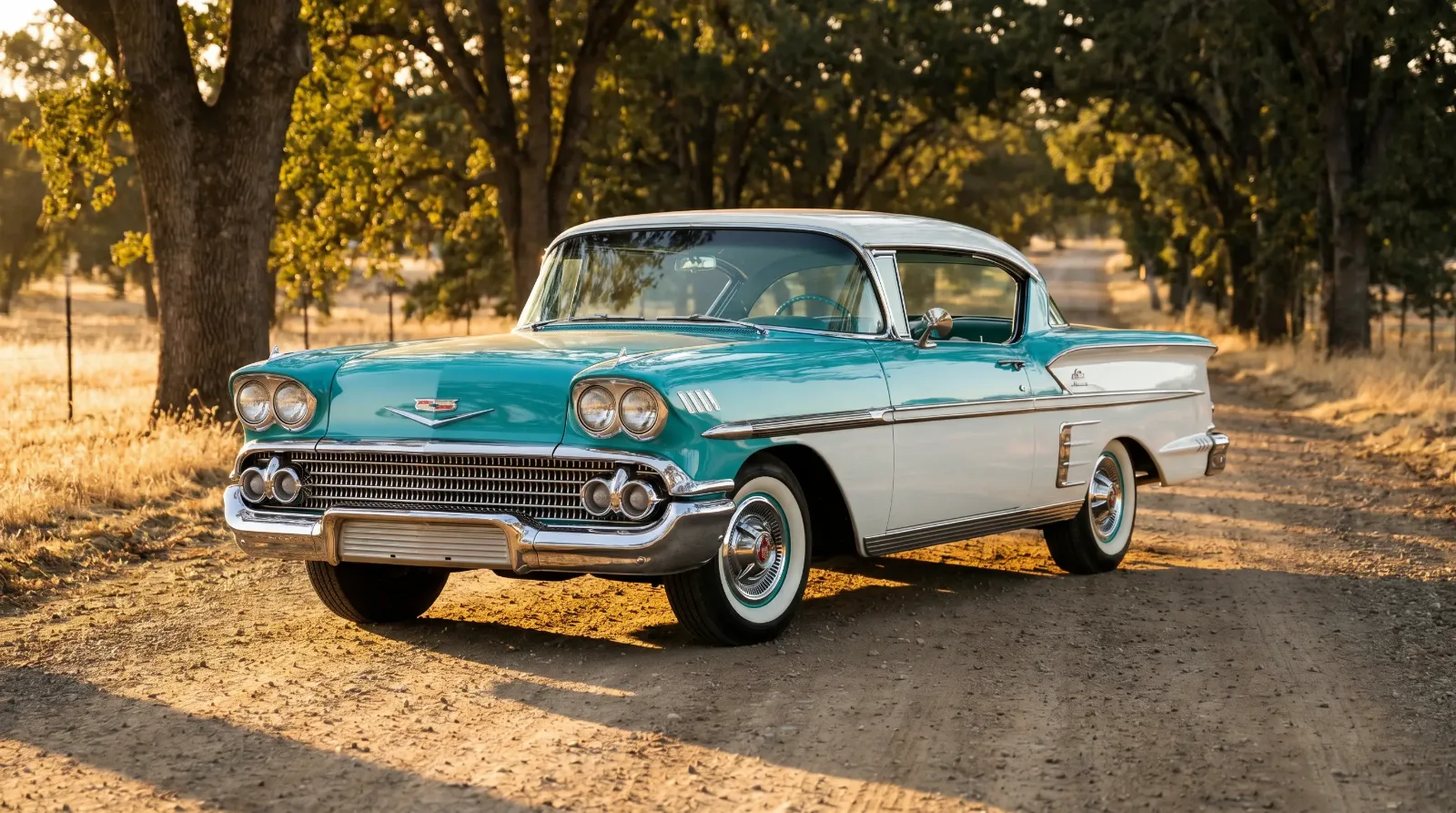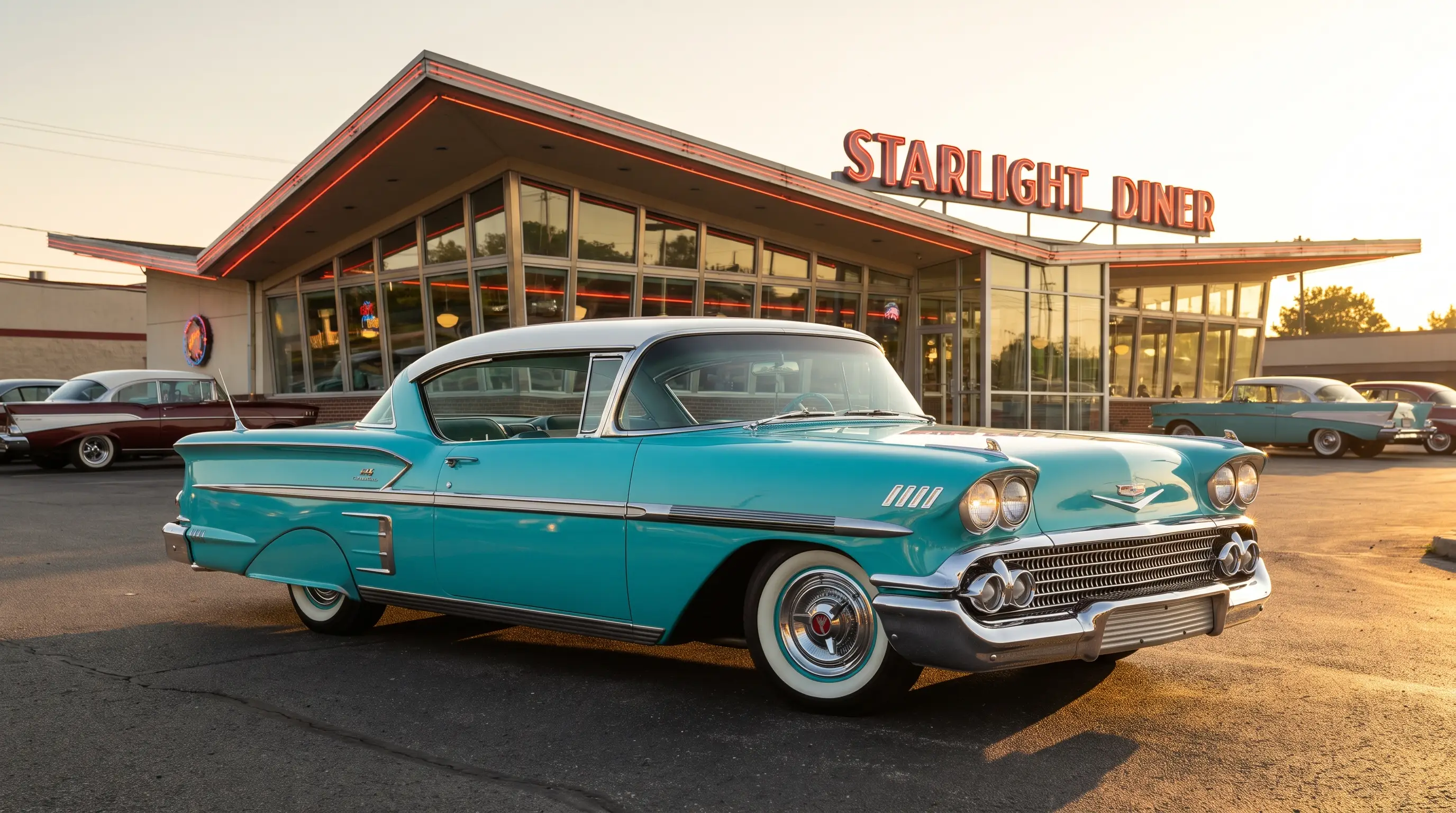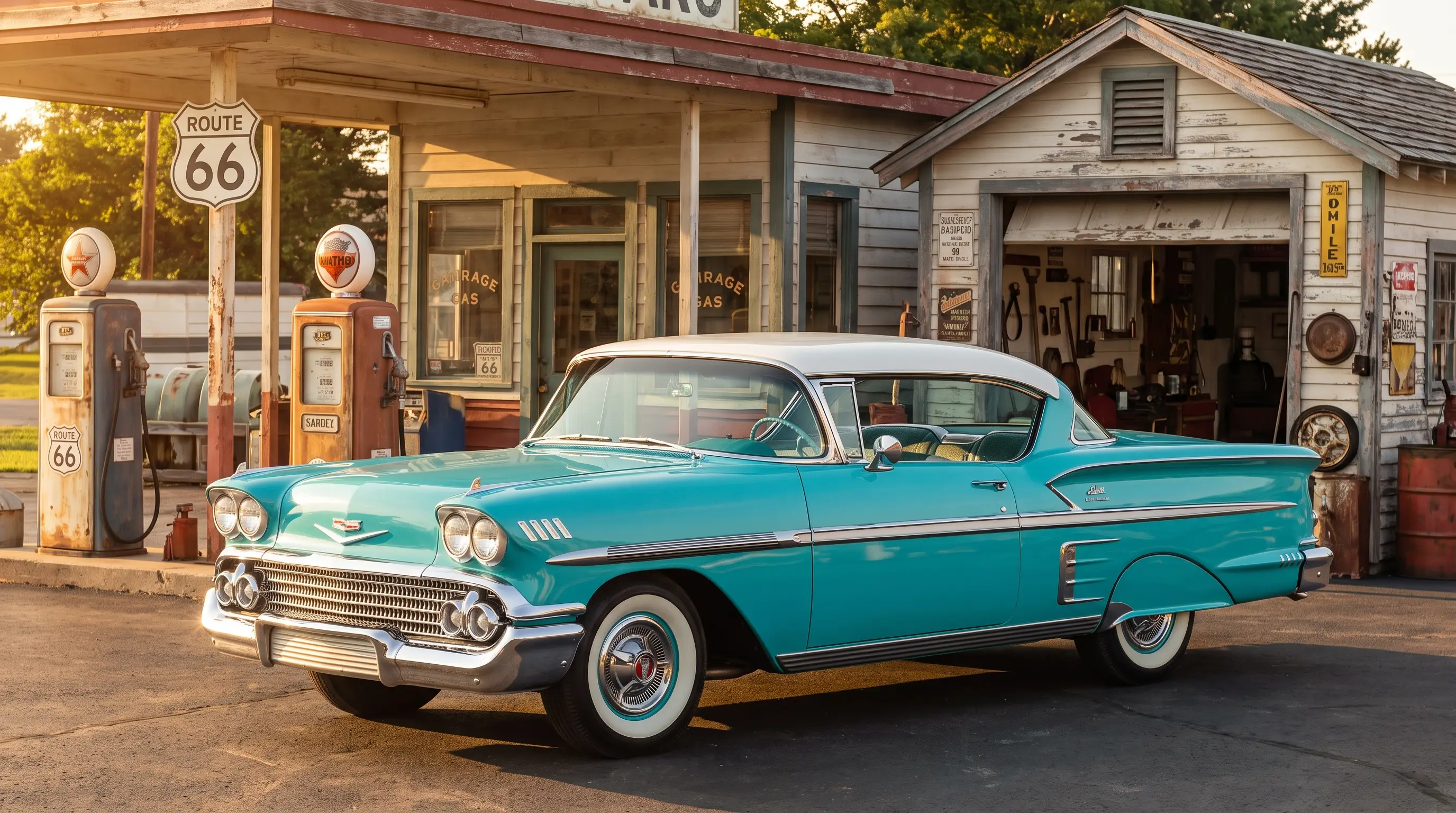
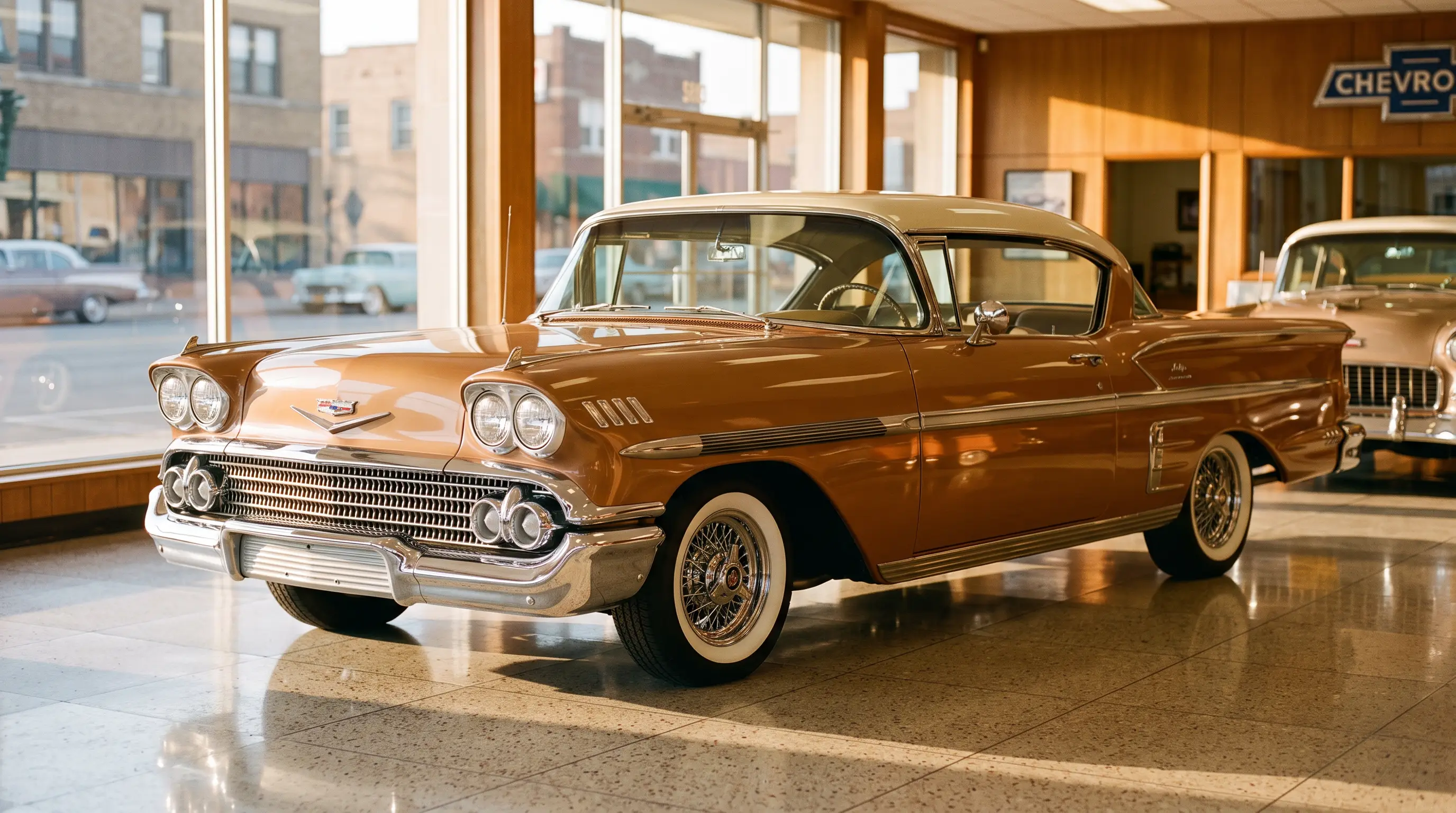
The badge on the trunk lid reads Impala, but the car underneath was born inside the Bel Air line. The 1958 Bel Air Impala is one of the more overlooked pivot points in Chevrolet history, a single model year top trim package that existed for one season before Chevrolet spun it off entirely, and understanding that origin changes how a researcher reads the whole Impala nameplate that followed.
A trim level, not yet a separate car
For 1958, Chevrolet introduced Impala as the top of the line trim available specifically on Bel Air two door hardtop and convertible bodies. It was not a standalone model with its own body engineering the way it would become for 1959. It was, precisely and administratively, a Bel Air Impala, sharing its structure with the rest of that year's restyled lineup while distinguishing itself through trim, badging, and a set of exterior details that Chevrolet reserved for the top of the range.
Those distinguishing details were deliberate and documented. Impala equipped 1958 Bel Airs carried unique triple taillight clusters instead of the standard dual arrangement, a distinct rear deck lid trim treatment, and additional brightwork that set the Impala apart from a standard Bel Air on a dealer lot even at a glance. Interior trim and upholstery patterns were also upgraded relative to the standard Bel Air, part of a deliberate strategy to give Chevrolet a genuine flagship offering for the first time in the Bel Air lineage.
Why Chevrolet needed a flagship in 1958
Chevrolet's competitive position in the late 1950s explains the decision. Buyers with rising incomes were increasingly tempted by mid priced brands like Pontiac, Oldsmobile, and Buick, and Chevrolet's dealer network wanted a product that could hold those customers inside the Chevrolet showroom rather than losing them to a GM sibling division. A halo trim built on the all new, larger 1958 body gave Chevrolet exactly that, a way to compete upmarket without abandoning its core low priced positioning across the rest of the lineup.
The strategy worked well enough, and quickly enough, that Chevrolet made the obvious next move. For 1959, Impala graduated from a Bel Air trim package to its own full model line, sitting above Bel Air in the hierarchy permanently rather than sharing its badge for one transitional season. The 1958 Bel Air Impala, in that light, functions as a prototype year, a real world test of a flagship concept before Chevrolet committed to it as a standalone nameplate.
Documenting a genuine 1958 Impala today
Because the 1958 Bel Air Impala existed for a single model year as a trim rather than a separate body, correctly documenting one today requires more care than documenting a later, standalone Impala. Trim tags, factory build sheets, and the specific option codes tied to the Impala package are the tools a researcher relies on to confirm a car's status, since the visual cues alone, while distinctive, have been reproduced on cars that were not originally factory Impala trimmed.
That documentation gap matters to collectors and researchers alike. A properly verified 1958 Bel Air Impala carries a specific place in Chevrolet history as the transitional car between an ordinary top trim Bel Air and an entirely new nameplate, and that historical position is part of what makes correctly authenticated examples significant beyond their rarity alone. Readers wanting the fuller context around this transitional year, including the chassis and body changes that made the Impala trim possible in the first place, can find it in our complete history of the 1958 model year.
"People treat 1958 as a footnote between the tri five and the 1959 Impala, but it is the year the whole flagship idea got tested in public. Everything the Impala became started as a Bel Air option code."
- Sarah Whitfield
Mechanical options that set the Impala apart
Trim was not the only thing separating a 1958 Bel Air Impala from its lesser siblings. The Impala package was available with the full range of engines Chevrolet offered that year, including the new 348 cubic inch W-series V8, and buyers who ordered the top trim tended, on average, to check more of the performance and comfort options than buyers of a standard Bel Air. That correlation between trim level and options was not accidental. Chevrolet's dealer literature for 1958 positioned the Impala explicitly as the car for a buyer who wanted the full expression of what the new, larger platform could offer, not just the styling upgrade.
Power steering, power brakes, and factory air conditioning, still a rare and expensive option in 1958, appeared more frequently on Impala trimmed cars in period sales data than on standard Bel Airs, reinforcing the idea that the Impala buyer in 1958 was meant to feel like they were buying into Chevrolet's best effort rather than simply a nicer looking version of the same car.
Separating fact from dealer legend
A persistent piece of showroom folklore claims Chevrolet always intended Impala to become its own model and that the 1958 trim package was merely a formality on the way there. The documentary record complicates that tidy narrative. Internal planning for a full model split was still being finalized during 1958, and the immediate commercial success of the Impala trimmed Bel Airs that year appears to have accelerated, if not outright triggered, the decision to give Impala its own body and nameplate for 1959. Treating 1958 as a foregone conclusion undersells how much that one model year's sales results actually shaped what came next, rather than simply executing a plan that had already been locked in.
A transitional car with a permanent legacy
The 1958 Bel Air Impala never got the chance to define itself as its own model, and within a year it did not need to, since Chevrolet had already decided the concept deserved a permanent place in the lineup. That short window makes the 1958 cars a genuinely distinct collecting category, neither a standard tri five era Bel Air nor a true standalone Impala, but the specific bridge between the two.
For researchers, restorers, and buyers drawn to that particular transitional status, examples do surface on the market from time to time, and it is worth taking the time to find a classic Air from this specific year if the goal is owning a piece of that one season flagship experiment rather than a more common tri five or a later, fully independent Impala.
Whatever the eventual acquisition looks like, the research work is what makes ownership meaningful in this particular case. A 1958 Bel Air Impala without paperwork is simply an old Chevrolet with nice trim. A 1958 Bel Air Impala with a verified build sheet and a documented option list is a small, specific piece of how one of the best known nameplates in American car history actually got its start, one model year and one trim code at a time.
The 1958 Bel Air Impala became a legend in its own right, a story continued in the 1958 Chevrolet Impala feature.