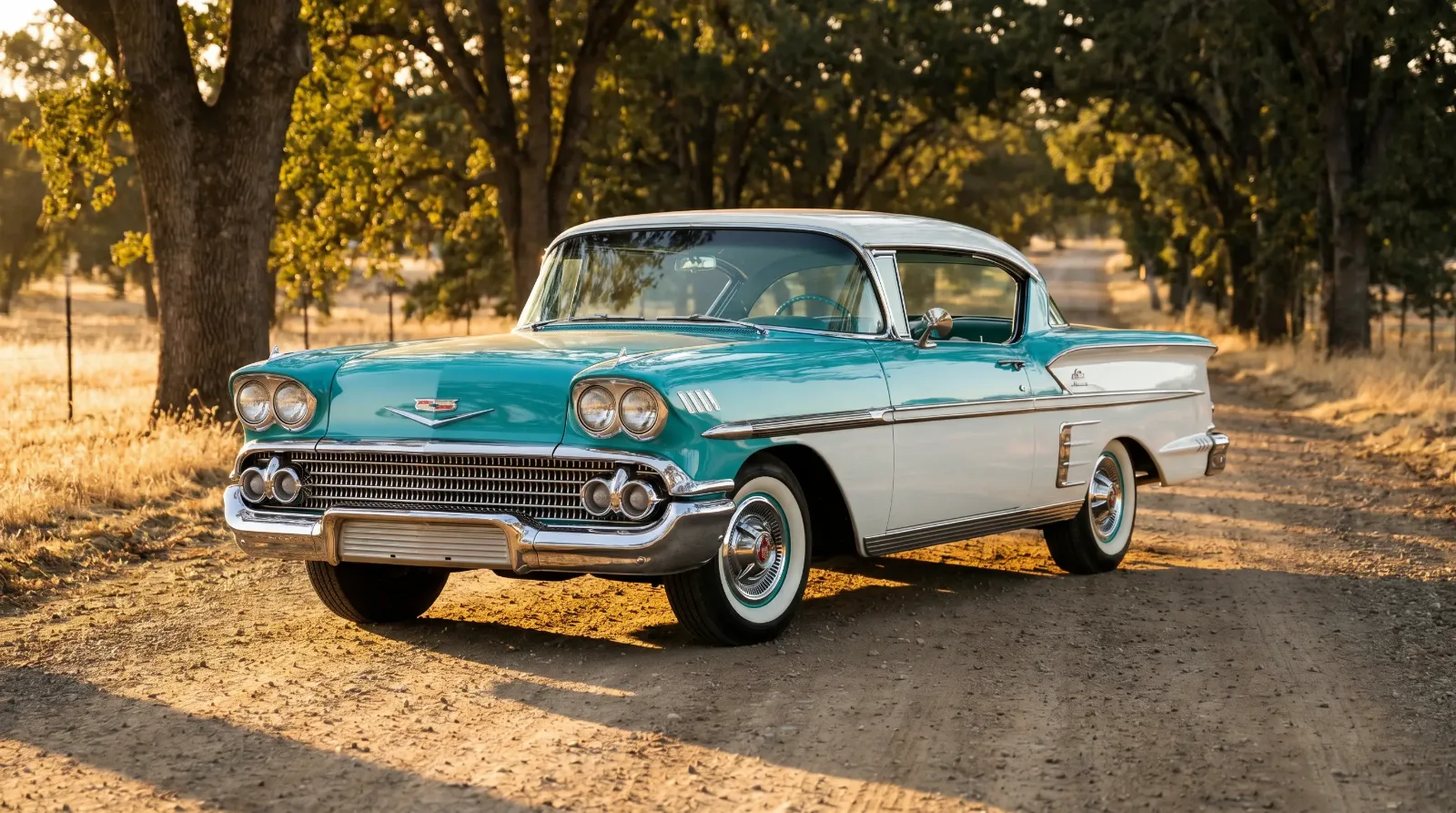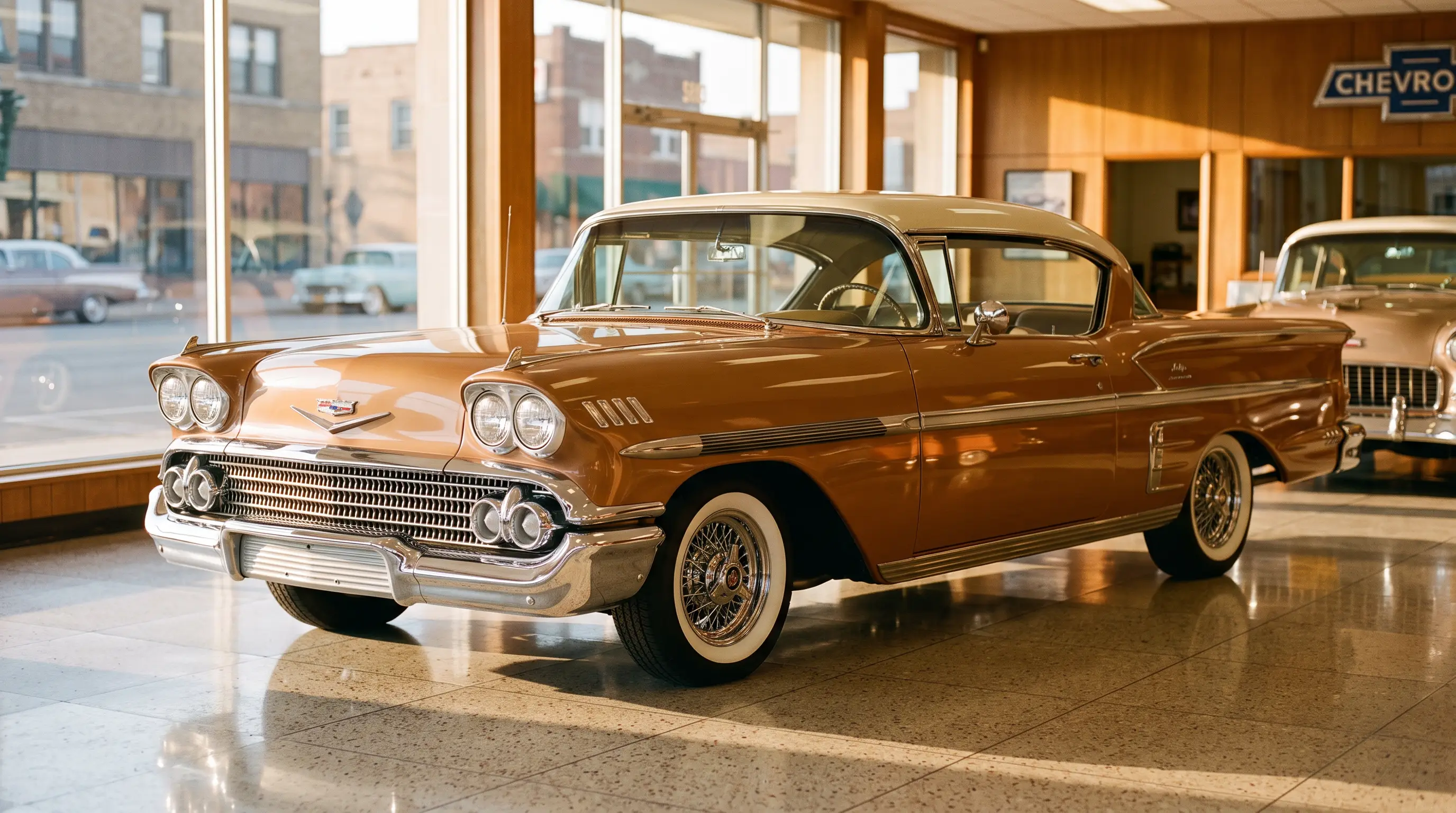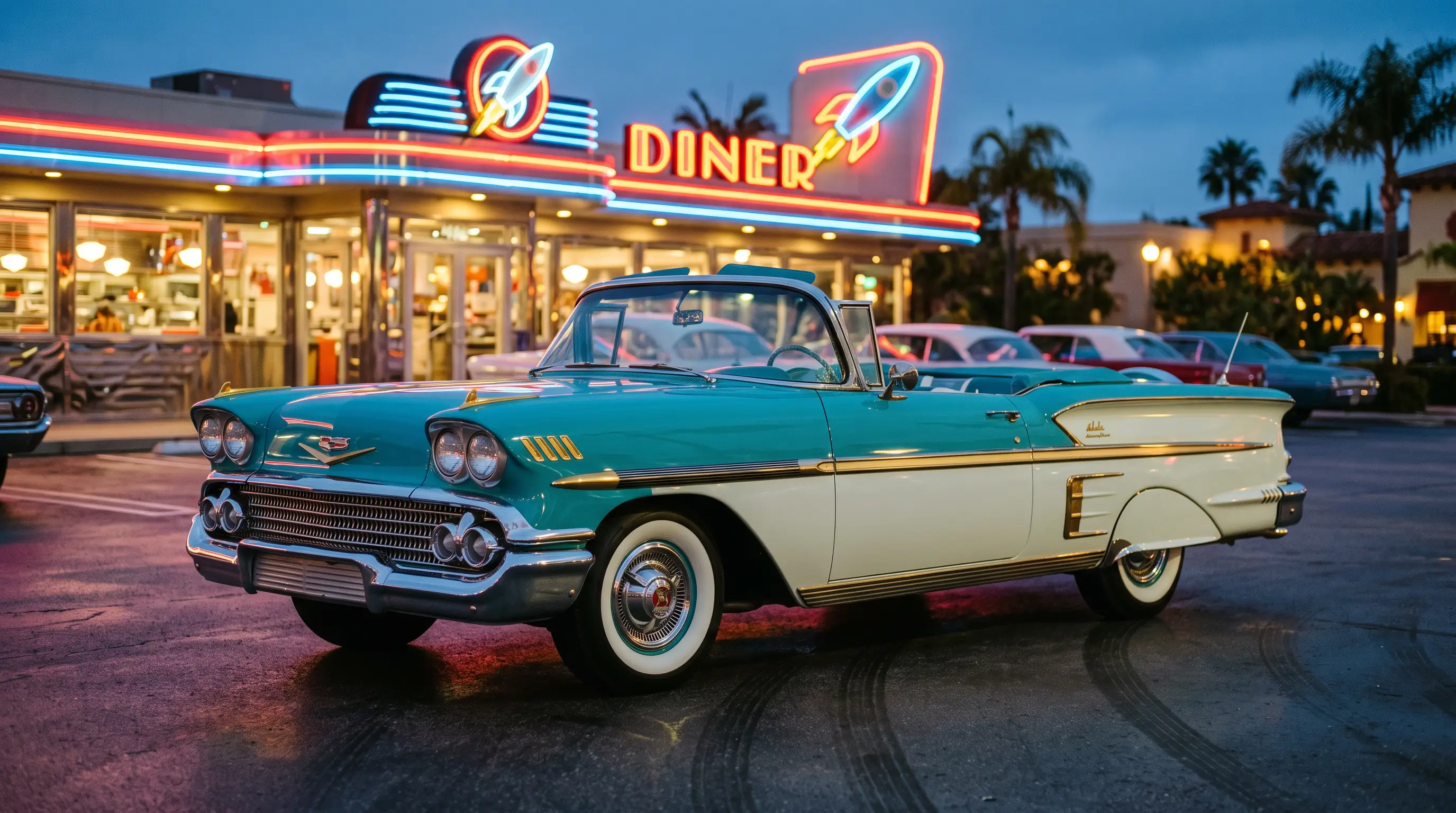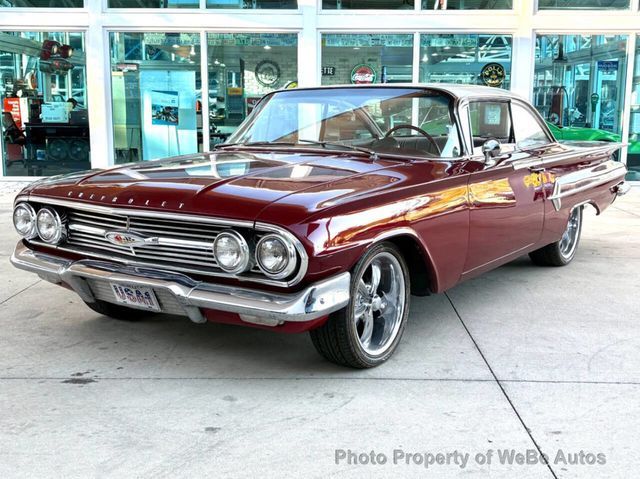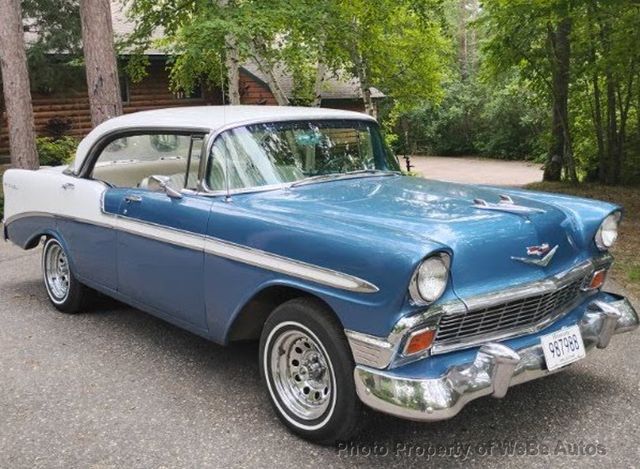
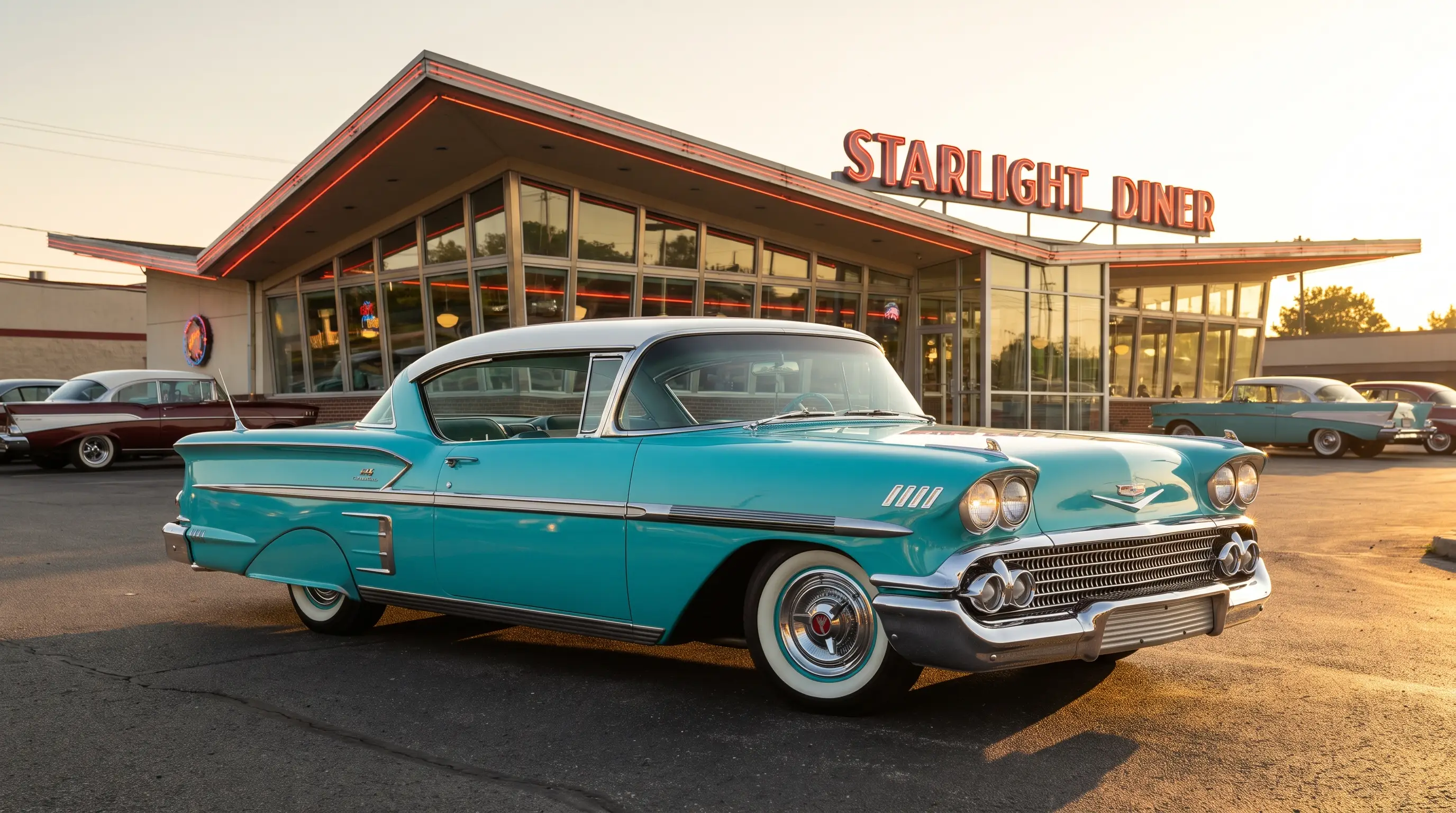
The 1958 Bel Air restyle did not tweak the previous car, it replaced nearly everything about it. Chevrolet's design and engineering teams threw out the tri five's chassis architecture, its body dimensions, and much of its visual language in a single model year, and the result looked so different from the 1957 sitting next to it on the lot that some buyers assumed it was an entirely new nameplate rather than the same car one year later.
A new chassis under a new body
The most consequential part of the 1958 Bel Air restyle happened where buyers could not see it. Chevrolet introduced a new X-frame, sometimes called a cruciform or Safety-Girder frame, that year, a significant departure from the perimeter-style frame the tri five cars used, and it gave the 1958 cars a wider, lower stance along with a smoother ride than the tri five cars ever managed. This was not a trim update dressed up as news. It was a genuine platform change, developed on its own timeline and arriving with a full body to match.
Overall length and width grew noticeably compared to 1957, which let designers stretch the new bodywork into something far more substantial looking. Buyers cross shopping a 1957 and a 1958 side by side at a dealership noticed the difference immediately, and Chevrolet's marketing leaned hard into the bigger, more substantial feel as a selling point against Ford and Plymouth's own 1958 offerings.
Quad headlights and a completely different face
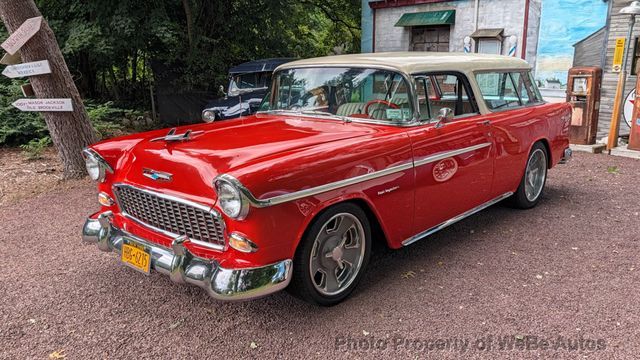
1958 was the first year Chevrolet fitted dual headlights on each side, a new federal allowance that most of the industry adopted at roughly the same time, and it changed the entire front end composition. Where the tri five cars had a single round headlight per side framed by relatively restrained trim, the 1958 face carried four headlights across a wider grille, giving the car a heavier, more formal presence that read as expensive rather than sporty.
The rear end told a similar story. Chevrolet moved away from the tri five's fin language toward a broader, more horizontal treatment with large round taillights set into the rear fenders. It was a styling direction that would not last long in Chevrolet's own lineup, since 1959 brought yet another dramatic redesign, but for one model year it gave Chevrolet a look distinct from everything that came before or after it.
Why the restyle happened when it did
General Motors ran its full lineup through major body changes on a rough multi year cycle, and 1958 landed as a transitional year across several divisions, not just Chevrolet. Buyer tastes were shifting toward bigger, more chrome laden cars industry wide during the late 1950s, and Chevrolet's design studios responded with a car that matched that mood even though it meant walking away from a shape, the tri five, that had been enormously successful and was still selling well.
That willingness to abandon a winning formula says something about how GM operated in this era. The tri five did not fail in the market. It was retired at the height of its popularity because the next body was already committed to production, and Chevrolet's internal planning cycles did not wait around for public sentiment to catch up. Readers who want the fuller 1958 chevy bel air history can trace exactly how that internal planning played out across the full model year.
"People assume Chevrolet redesigned the Bel Air in 1958 because the tri five was struggling. The sales figures do not support that at all. This was a planned generational change, not a reaction to a problem."
- Tom Ramirez
Interior changes matched the exterior ambition
Inside, the 1958 restyle pushed the Bel Air's interior upmarket in a way that matched the bigger, chrome heavy exterior. Dashboards grew wider and more elaborate, upholstery patterns and materials moved toward a plusher, more formal presentation, and options that had been unusual or unavailable on the tri five cars became more common on the 1958 lineup. Chevrolet clearly wanted the Bel Air, and especially the new top trim sitting above it, to feel like a step up from what a working family car had meant just one year earlier.
That interior push mattered because Chevrolet was not just fighting Ford and Plymouth for buyers anymore. It was also fighting the pull of mid priced brands like Pontiac and Oldsmobile, whose customers sometimes drifted down to a well equipped Chevrolet when money got tight, and sometimes drifted up when it did not. A more substantial, better appointed 1958 interior helped Chevrolet hold onto buyers tempted in either direction, reinforcing the restyle's broader goal of making the whole lineup feel like more car for the money.
How the restyle set up what came next
The 1958 body and chassis lasted only that single model year before Chevrolet moved on again for 1959, making 1958 something of an orphan generation sandwiched between two much longer running, more celebrated designs. That short lifespan has made surviving 1958 Bel Airs somewhat less common on the show circuit than tri five cars, even though total production for the year was healthy.
The restyle also opened the door for one of the most consequential nameplate stories in Chevrolet history, since the top trim package introduced within the 1958 Bel Air lineup that year would be spun off as its own model within a matter of months. That story is covered in more detail in a related story, and it is impossible to understand that spin off without first understanding the scale of the 1958 restyle that made room for it.
For collectors and buyers interested in this transitional year specifically, there are usually Airs for sale now spanning both the tri five years and the very different 1958 body, and putting the two side by side in person is the fastest way to appreciate just how much changed in a single model year.
Reading the restyle correctly today
Modern buyers sometimes come to the 1958 Bel Air already primed to see it as a lesser sibling to the tri five, mostly because the tri five's cultural footprint is so much larger. That framing undersells what the 1958 restyle actually accomplished from an engineering and design standpoint. A new frame, a substantially larger body, a brand new engine family, and a completely different face all arriving in the same model year represents a bigger single year leap than most manufacturers attempt even today, let alone in an era without computer modeling or the parts sharing that later generations of GM cars would rely on.
Judged on its own terms, separate from the tri five's shadow, 1958 stands as one of the more ambitious single year redesigns Chevrolet ever executed, and the car deserves to be understood that way rather than simply as the year after the good years ended.