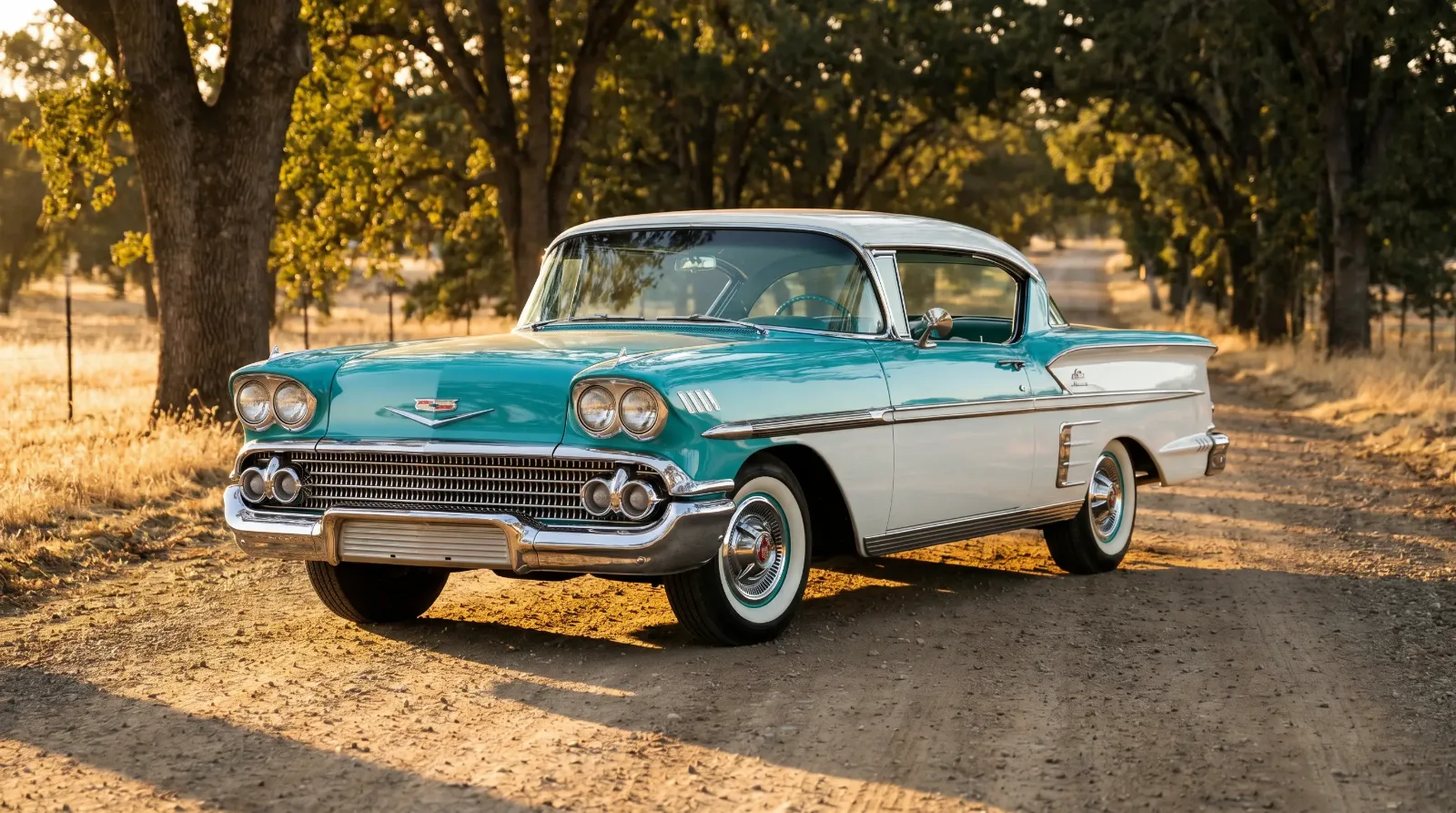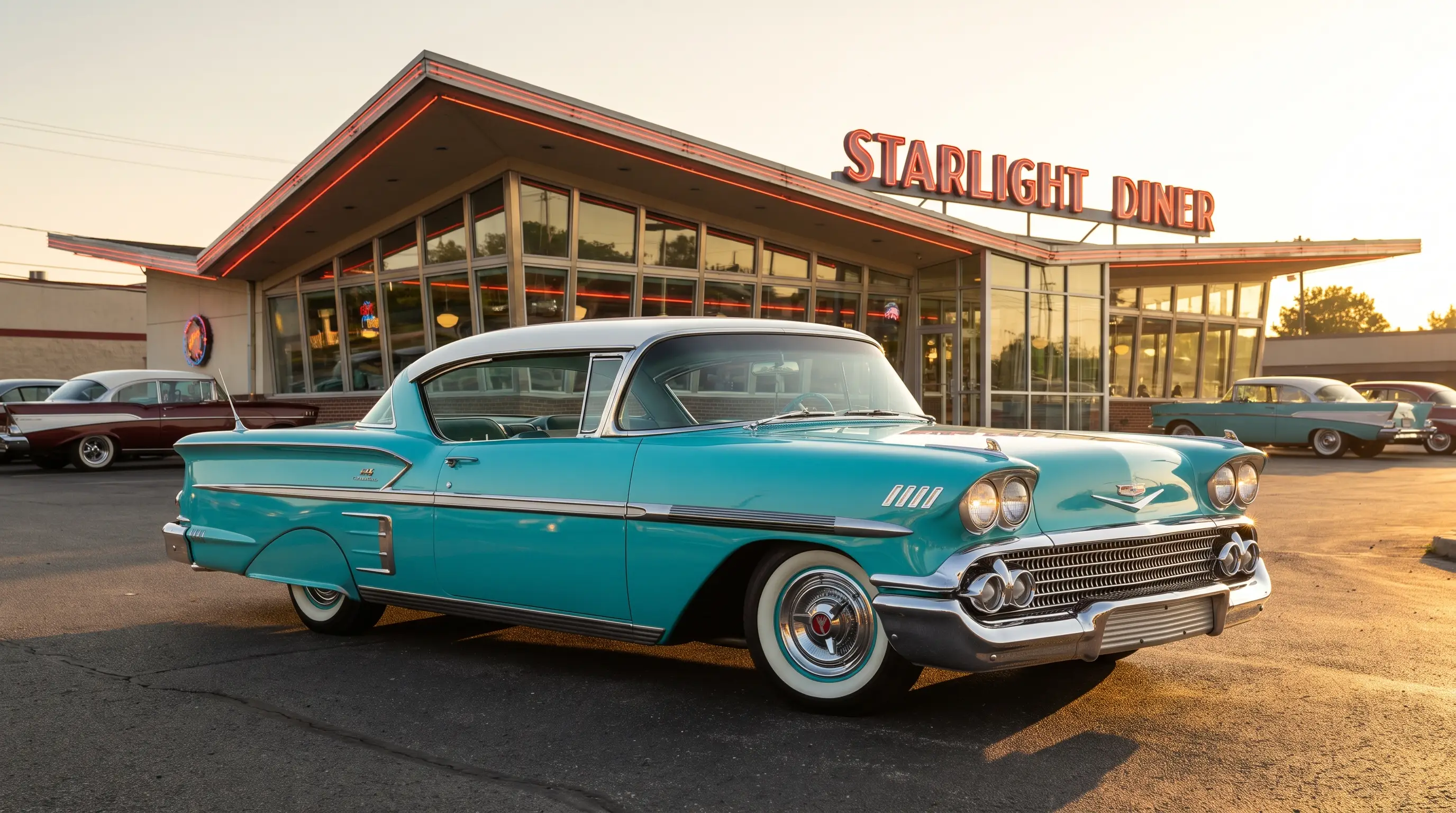
Assessing 1958 bel air value honestly means separating nostalgia from the actual factors that move a price. This is a model year with real design significance, a one-year-only body, and a spread of body styles and options that create genuinely different value tiers under the same nameplate. Buyers who treat every 1958 Bel Air as equally desirable end up either overpaying for common cars or walking away from genuinely scarce ones because the asking price seemed high in isolation.
Body style is the first value filter
Before condition, before documentation, before options, body style sets the baseline. A four-door sedan, the highest production body style that year, sits at the lower end of the value range regardless of how clean the example is. A convertible, the lowest production body style, sits at the top, and a well-documented Sport Coupe lands somewhere between the two depending on trim level and options. This is not a subjective preference. It reflects straightforward supply and demand, since fewer convertibles were built, fewer survived, and more buyers actively want one than there are cars available.
Trim level compounds this. Impala trim, offered only on the Sport Coupe and convertible in 1958, adds a documented premium over standard Bel Air trim on the same body styles, since Impala's later emergence as its own standalone nameplate has made 1958's Impala-trim cars a kind of historical curiosity in their own right. A base Bel Air convertible and an Impala-trim Bel Air convertible are not the same asset, and pricing them identically is a mistake I see sellers and inexperienced buyers make regularly.
| Value Factor | Impact |
|---|---|
| Body style | Convertible and Sport Coupe command the highest premiums |
| Trim level | Impala trim adds a documented premium over base Bel Air |
| Engine option | Tri-Power 348 cars outvalue base six-cylinder and standard V8 |
| Documentation | Numbers-matching, verified history adds significant value |
Engine options move the number too
A Tri-Power 348 under the hood adds real value on top of body style and trim, and a documented, numbers-matching Tri-Power car in a scarce body style represents the intersection of several separate premiums stacking on top of each other. That stacking effect is why the highest-value 1958 Bel Airs at auction tend to be convertibles or Sport Coupes with Impala trim and the top engine option, verified through build sheets and casting numbers rather than taken on a seller's word. Each layer of documentation and desirability adds to the number, and buyers should expect to pay for each layer independently rather than assuming a single "classic car premium" covers everything.
Base six-cylinder cars, by contrast, sit at a real discount to V8 equipped examples even within the same body style and trim level, since collector demand skews heavily toward V8 power regardless of how usable a six-cylinder car might be as a driver. That discount is worth knowing if a buyer is looking for a more affordable entry point into 1958 Bel Air ownership, since a clean six-cylinder sedan can represent genuine value relative to the more sought-after configurations without sacrificing the styling and history that draws people to the model year in the first place.
What actually moves the needle at appraisal time
Condition matters, obviously, but documentation matters just as much for a car this specific to a single year. A trim tag, cowl plate, and build sheet that confirm original body style, trim level, and engine option combination remove doubt from an appraisal, and removing doubt is worth real money to a serious buyer. Cars without that paperwork still have value, but they carry a documentation discount that reflects the genuine uncertainty a buyer takes on when purchasing a car whose specific original configuration cannot be fully verified. For the broader context of why this model year commands the attention it does, the whole picture covers the styling and platform story that underpins collector demand.
Risk framing matters here too. A 1958 Bel Air convertible with full documentation and a clean title history is a relatively liquid asset within the classic car market, meaning it should sell within a reasonable window at a fair price if the owner needs to exit. A poorly documented sedan with an unclear history is a much less liquid asset, and buyers should price that illiquidity into any offer rather than assuming a "classic Chevrolet" label alone guarantees an easy resale down the line.
"Value is condition plus documentation plus liquidity, minus whatever risk you cannot verify. A pretty paint job does not answer any of those questions on its own."
- Marcus Feld
Practical guidance for buyers
Anyone shopping this market should build a checklist before falling in love with a specific car. Confirm body style and trim level against the trim tag, verify engine casting numbers against build documentation where available, and get an honest assessment of body panel originality given how difficult correct replacements are to source for this specific model year. Skipping any of these steps means buying on faith, and faith is not a strategy that holds up well when it comes time to resell.
The good news is that a properly documented, well-preserved 1958 Bel Air remains a genuinely strong asset within the classic Chevrolet market, combining real design significance with the kind of one-year scarcity that tends to hold value better than more common multi-year platforms over time. Buyers ready to start comparing real options should shop classic Air listings and apply this same framework, body style, trim, engine, and documentation, to whatever specific cars come up for sale.
How this market has trended
Auction results over recent seasons show the gap between top-tier and entry-level 1958 Bel Airs widening rather than narrowing, a pattern consistent with the broader collector market's growing preference for documented, high-condition examples over project cars in almost any classic segment. A rough driver-quality sedan has not appreciated at anywhere near the rate of a documented convertible or Tri-Power Sport Coupe, and buyers looking at this model year purely as an investment should factor that divergence into their expectations rather than assuming a rising tide lifts every 1958 Bel Air equally.
That divergence also creates opportunity for buyers who care more about ownership experience than resale ceiling. A solid six-cylinder sedan, honestly priced and mechanically sound, can be a genuinely satisfying way to own a piece of this specific and historically significant model year without competing for the same small pool of documented convertibles that command headline auction numbers. Knowing which tier you are actually shopping in, and being honest with yourself about which tier you are trying to buy, is the single most useful thing a prospective buyer can do before writing a check.