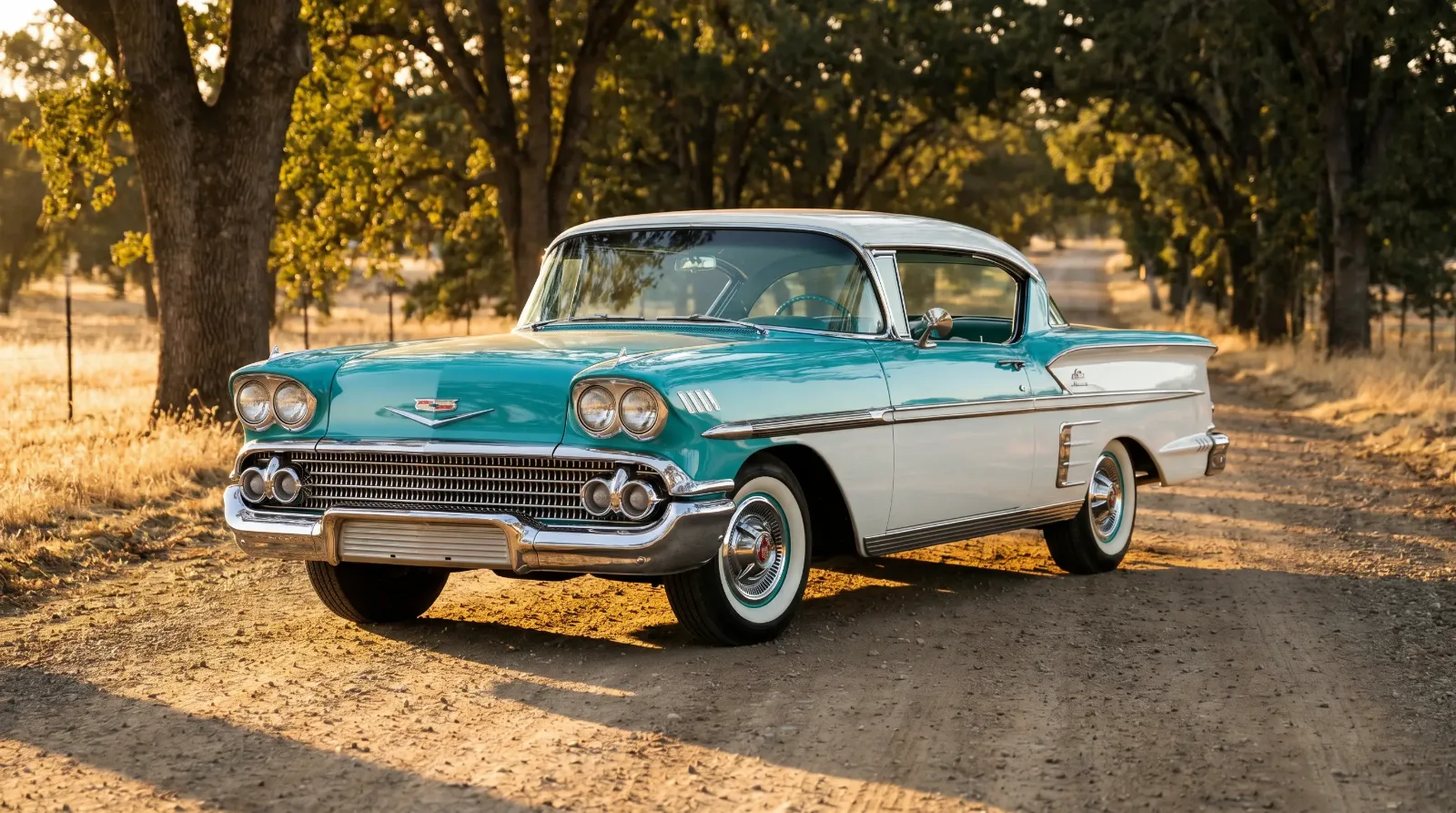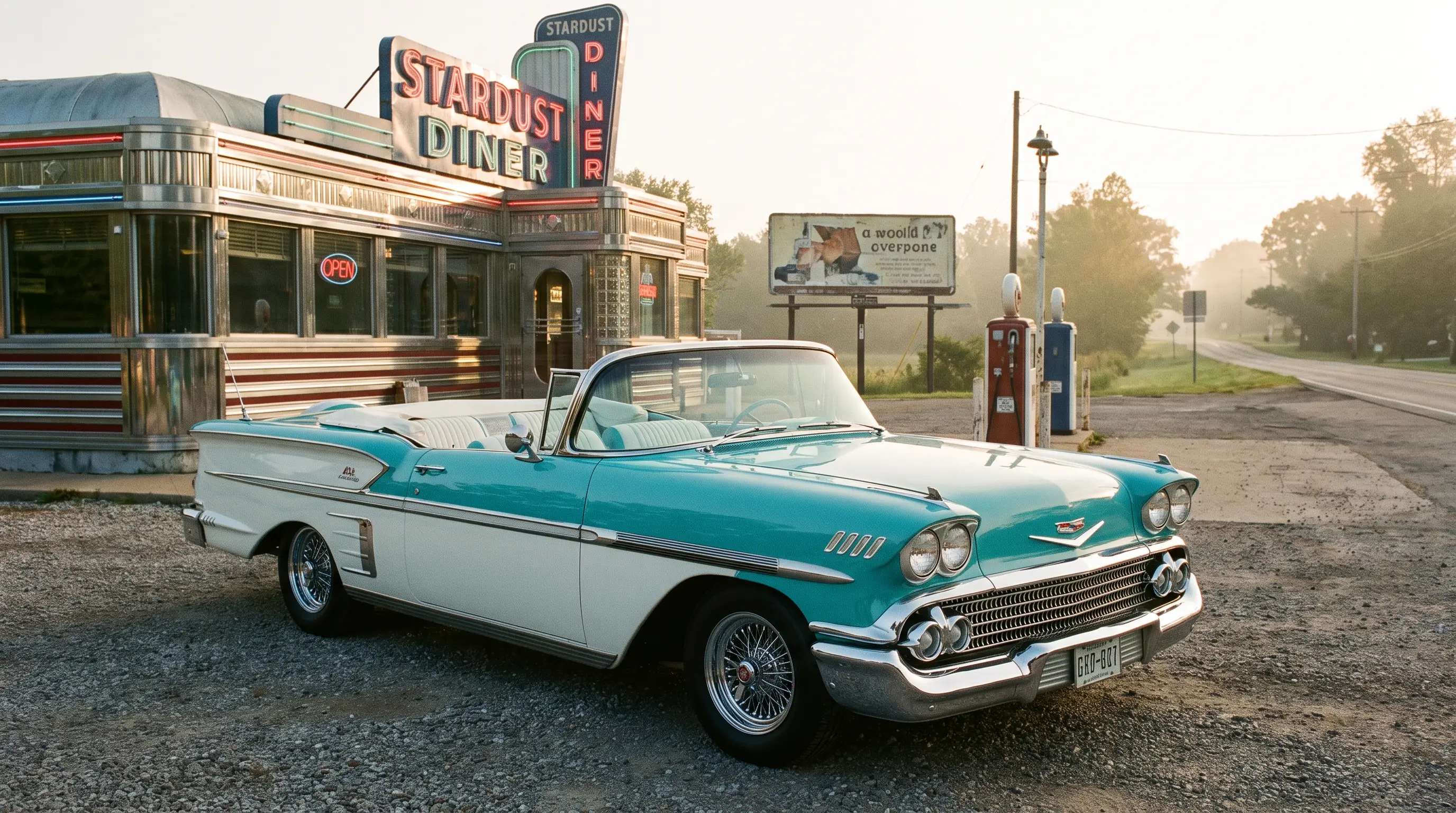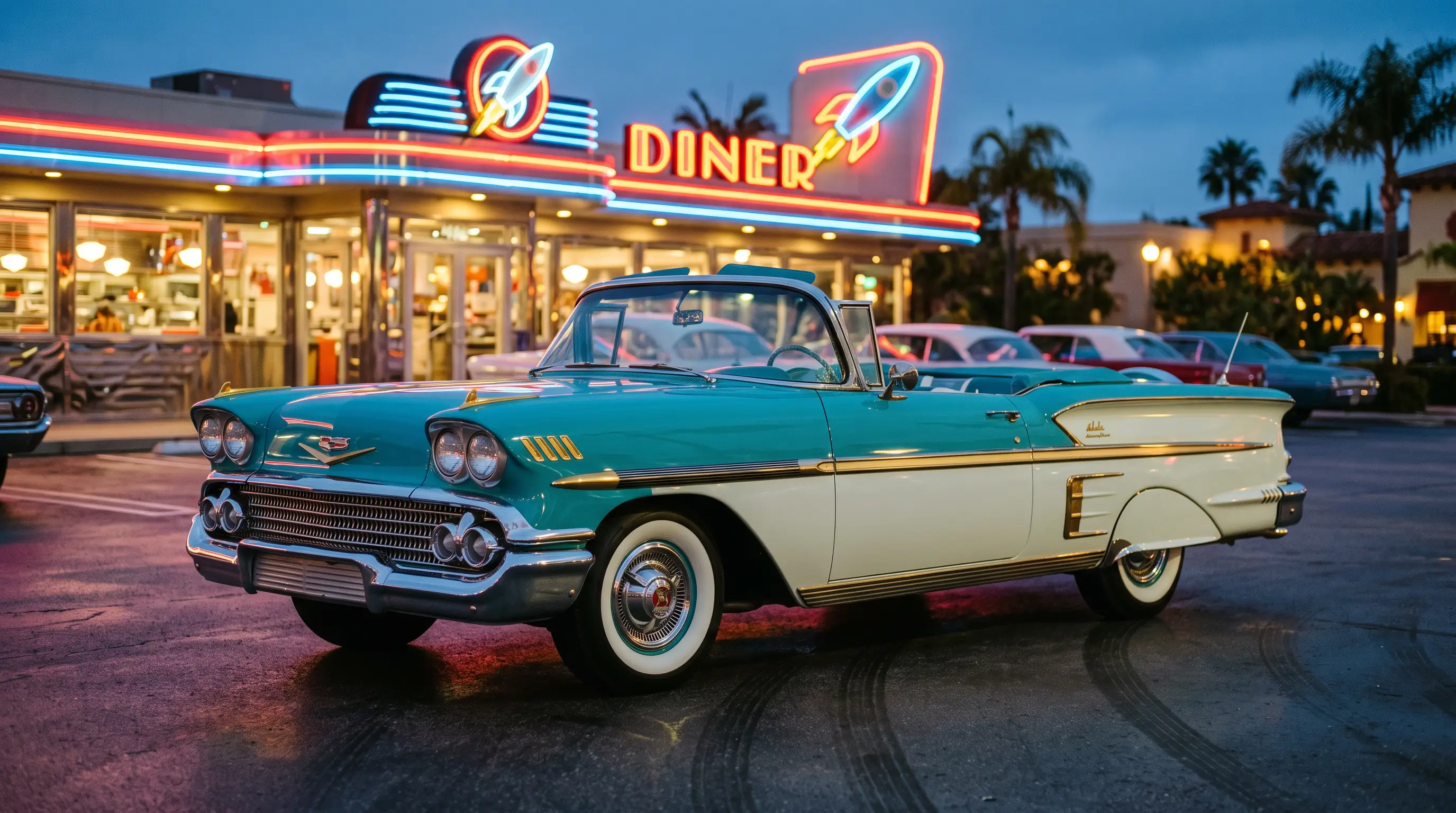
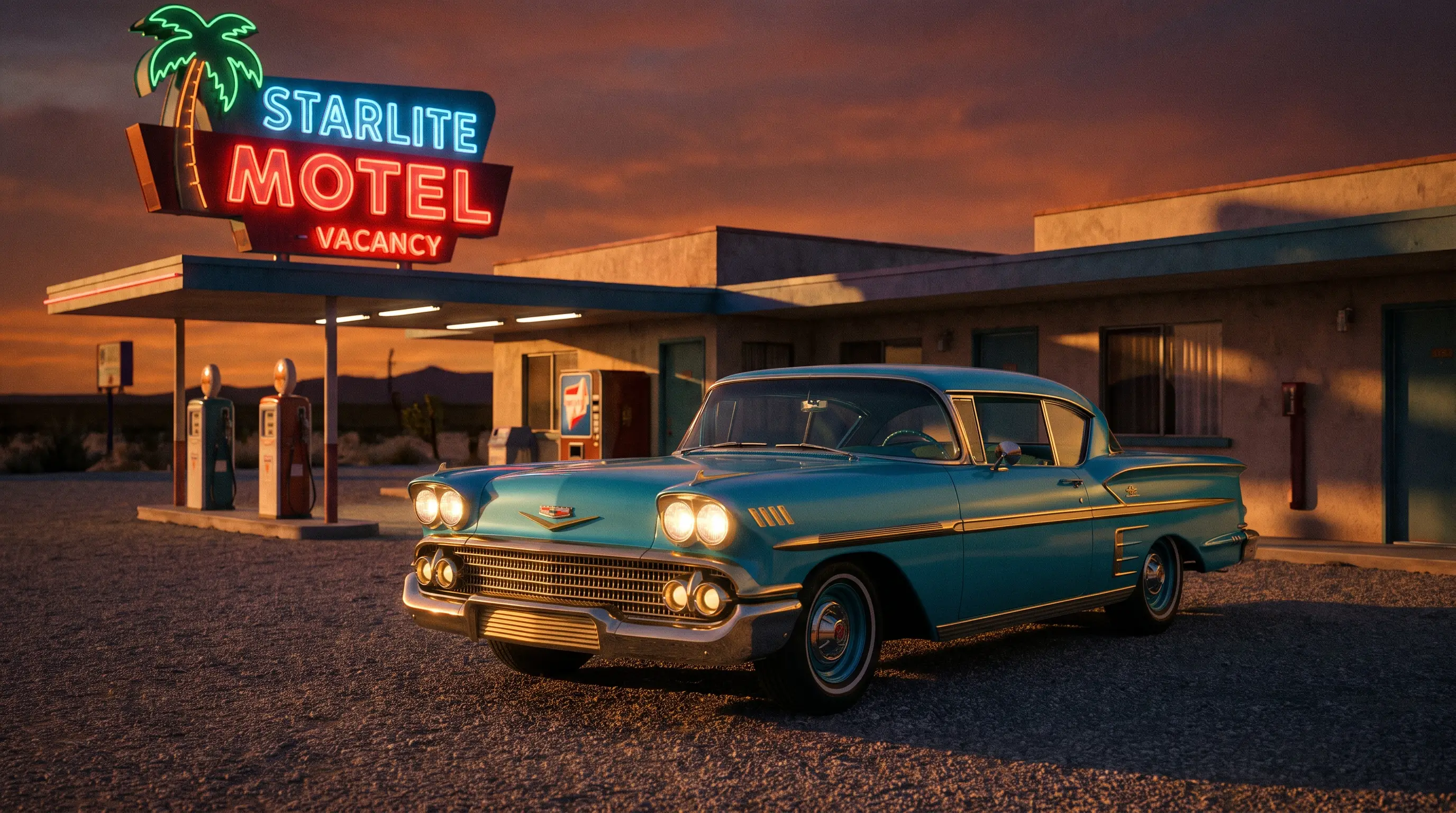
The phrase 1958 chevy one year body gets used casually by sellers and enthusiasts alike, but it carries real technical weight for anyone documenting or restoring a Bel Air from this model year. Chevrolet built the 1958 full-size lineup on a chassis and body architecture used for exactly one model year before an entirely new design replaced it in 1959. That single-year status shapes everything from parts availability to how collectors approach originality.
Why 1958 stands alone in the lineup
Chevrolet's full-size cars had shared a general body architecture from 1955 through 1957, a run collectors often refer to as a single family despite yearly styling updates. The 1958 model year broke that pattern entirely. Engineers built a new, wider, longer platform specifically for 1958, then Chevrolet's design department moved on again for 1959 with a completely different body featuring the now-famous batwing rear fins. That left 1958 as an island, sharing meaningful architecture with neither the generation before it nor the generation after.
This one-year status was not an accident of styling preference alone. The 1958 body responded to specific market pressures, including the new legality of quad headlights and a broader industry shift toward longer, lower, wider full-size cars. Chevrolet answered those pressures with a body designed to meet 1958's specific conditions, then answered a different set of conditions with a different design just twelve months later. Few Chevrolet model years since have been quite so isolated architecturally.
What the isolation means for parts and restoration
Practically speaking, one-year-only body status means fewer donor cars and fewer interchangeable parts than a collector working on a multi-year body run would enjoy. A 1956 Bel Air owner can often source certain trim and structural pieces from 1955 or 1957 equivalents with reasonable confidence. A 1958 owner has no such luxury for body-specific components, since neither the 1957 nor the 1959 Chevrolet shares the sheet metal, trim mounting points, or glass dimensions with the 1958 car in any meaningful way.
That scarcity has pushed the reproduction parts industry to fill gaps that interchange cannot, but reproduction quality and availability still lag behind what exists for more common multi-year platforms. Restorers working on a 1958 Bel Air often report longer sourcing timelines and higher costs for certain body panels and trim pieces precisely because the one-year-only status limits both the used parts supply and the incentive for manufacturers to tool up reproduction runs for a narrower potential customer base.
| Model Year Span | Shared Body Architecture |
|---|---|
| 1955 to 1957 | Shared general platform, yearly updates |
| 1958 | Unique, one-year-only platform |
| 1959 to 1960 | New shared platform, own generation |
Collector value tied to originality
Because sourcing correct parts is harder, a 1958 Bel Air with its original body panels, trim, and glass intact carries a documentation premium that some other model years do not command to quite the same degree. Collectors and appraisers pay close attention to whether a car's fenders, hood, and deck lid are original to the body or represent later replacements, since replacement panels on a one-year-only body often mean sourcing from another 1958 car rather than a simpler cross-year swap. That sourcing difficulty is itself a form of provenance information, and a car that has clearly never needed major body panel replacement tends to be viewed as a more reliable survivor of its specific and narrow production window.
This is part of why concours judging for 1958 Chevrolets places such emphasis on body originality specifically, beyond the general originality concerns that apply to any classic car. Judges know how difficult correct 1958-specific parts are to source, so a well-preserved original body carries weight that goes beyond simple aesthetics. For readers who want the fuller picture of how this one-year design came together, read the background on the model year's development and styling decisions.
"A one-year body is a documentation collector's dream and a restorer's headache in equal measure. You cannot borrow your way out of a parts problem the way you can on a multi-year platform."
- Sarah Whitfield
What buyers should watch for
Given the parts scarcity, buyers evaluating a 1958 Bel Air should pay particular attention to body panel condition and any evidence of prior collision repair or panel replacement, since those repairs are harder and costlier to execute correctly on a one-year-only platform than they would be on a more common body generation. A seller's honesty about panel originality matters more here than it might on a car built across a multi-year run, simply because the stakes of getting a replacement wrong, or paying a premium for a car that turns out to have replaced panels, are higher.
The one-year-only nature of the 1958 body is ultimately part of what makes the model year interesting to serious collectors rather than simply a challenge to work around. It is a genuinely distinct design chapter in Chevrolet's history, built to answer conditions specific to that single year, and preserved examples represent a narrower and in some ways more precious slice of the brand's story than years with longer production runs. Anyone drawn to that story should find a classic Air and see how body originality factors into what is currently available on the market.
How this compares to other single-year Chevrolet bodies
The 1958 model is not the only single-year body in Chevrolet's postwar history, but it is one of the more consequential examples because of how much changed underneath the skin at the same time. Other transitional years sometimes carried over chassis engineering while changing only sheet metal, which softened the parts sourcing problem somewhat. The 1958 redesign changed the platform and the body together, which means the one-year isolation is more complete here than in cases where a car at least shared a frame or suspension architecture with its neighboring model years.
That completeness of change is exactly why researchers and restorers treat 1958 as its own category rather than lumping it in with the "tri-five" era that precedes it or the fin-heavy 1959 and 1960 generation that follows. Grouping it with either neighbor misrepresents the engineering reality, and collectors who understand this distinction tend to have a more accurate sense of what they are actually buying, restoring, or valuing when a 1958 Bel Air comes up for sale.
Clubs and registries dedicated specifically to 1958 Chevrolets have grown partly out of this exact problem, since owners found that general full-size Chevrolet clubs, spanning many model years, did not always have the specialized parts knowledge that a one-year body demands. A dedicated 1958 registry can track surviving cars, catalog which reproduction parts actually fit correctly, and build the kind of institutional knowledge that a broader multi-year club simply has less incentive to maintain. That specialization is a direct, practical response to the isolation built into the car's own engineering history, and it is one more reason the 1958 model year continues to attract a particularly dedicated slice of the Chevrolet collector community.