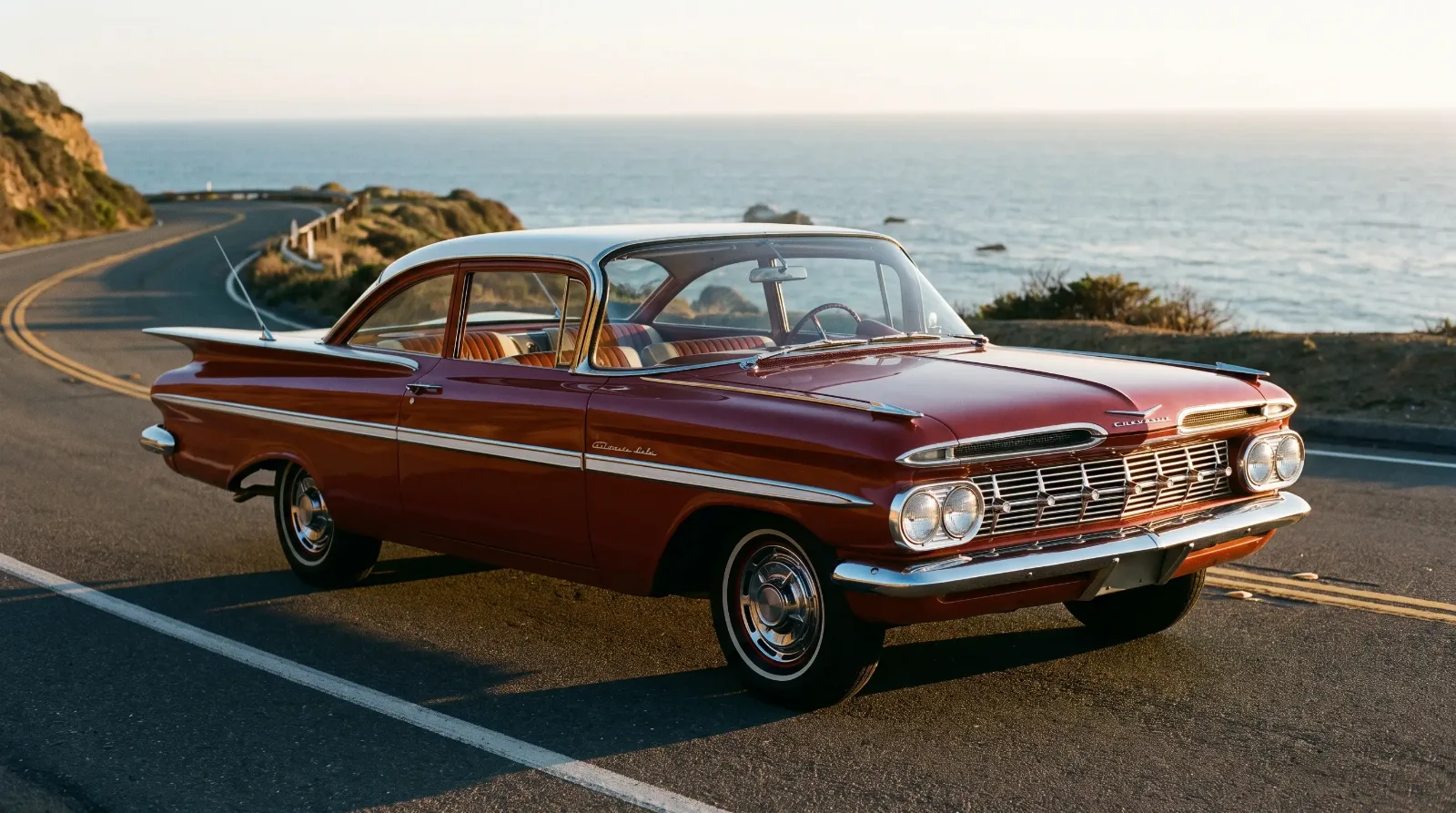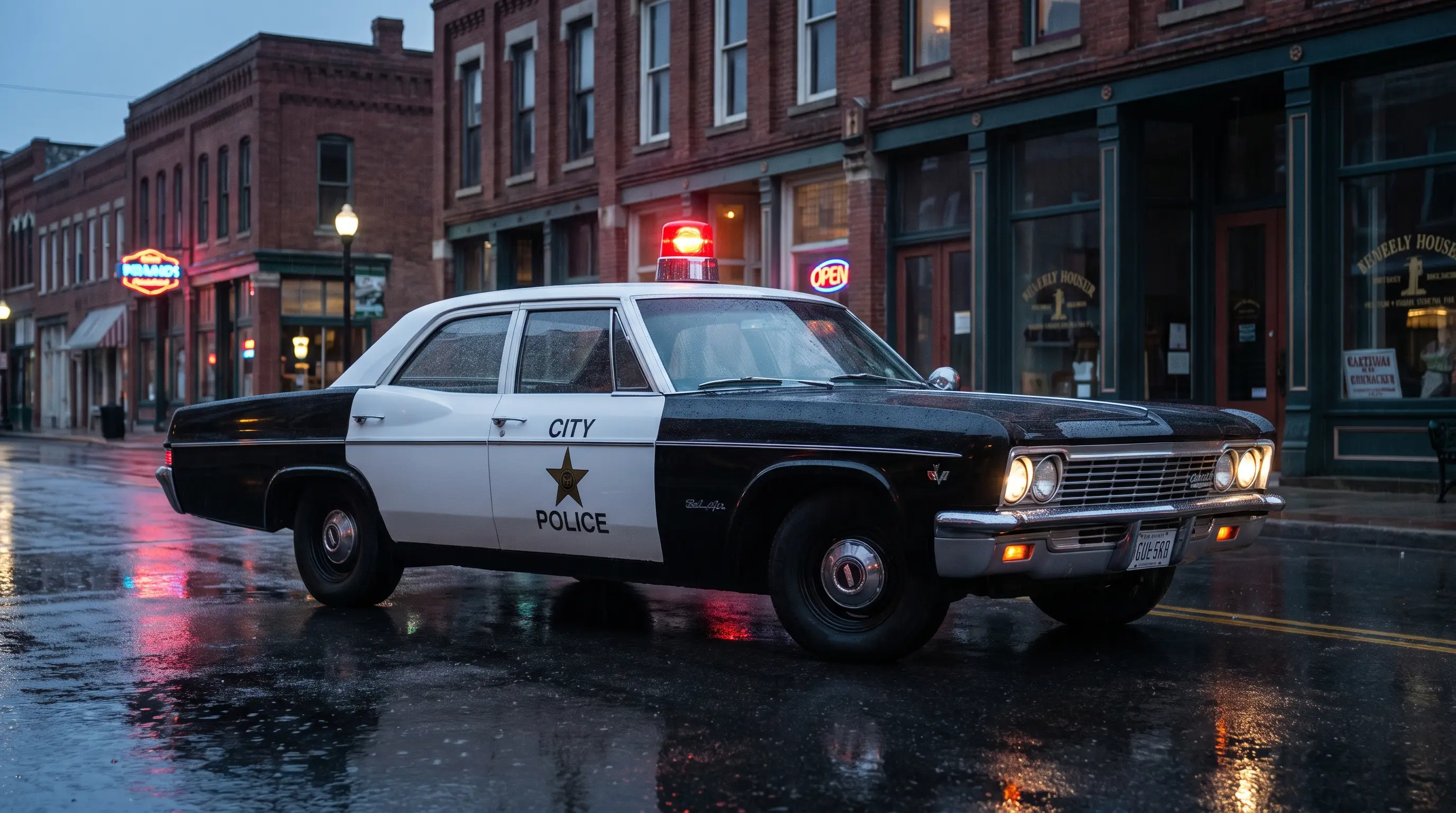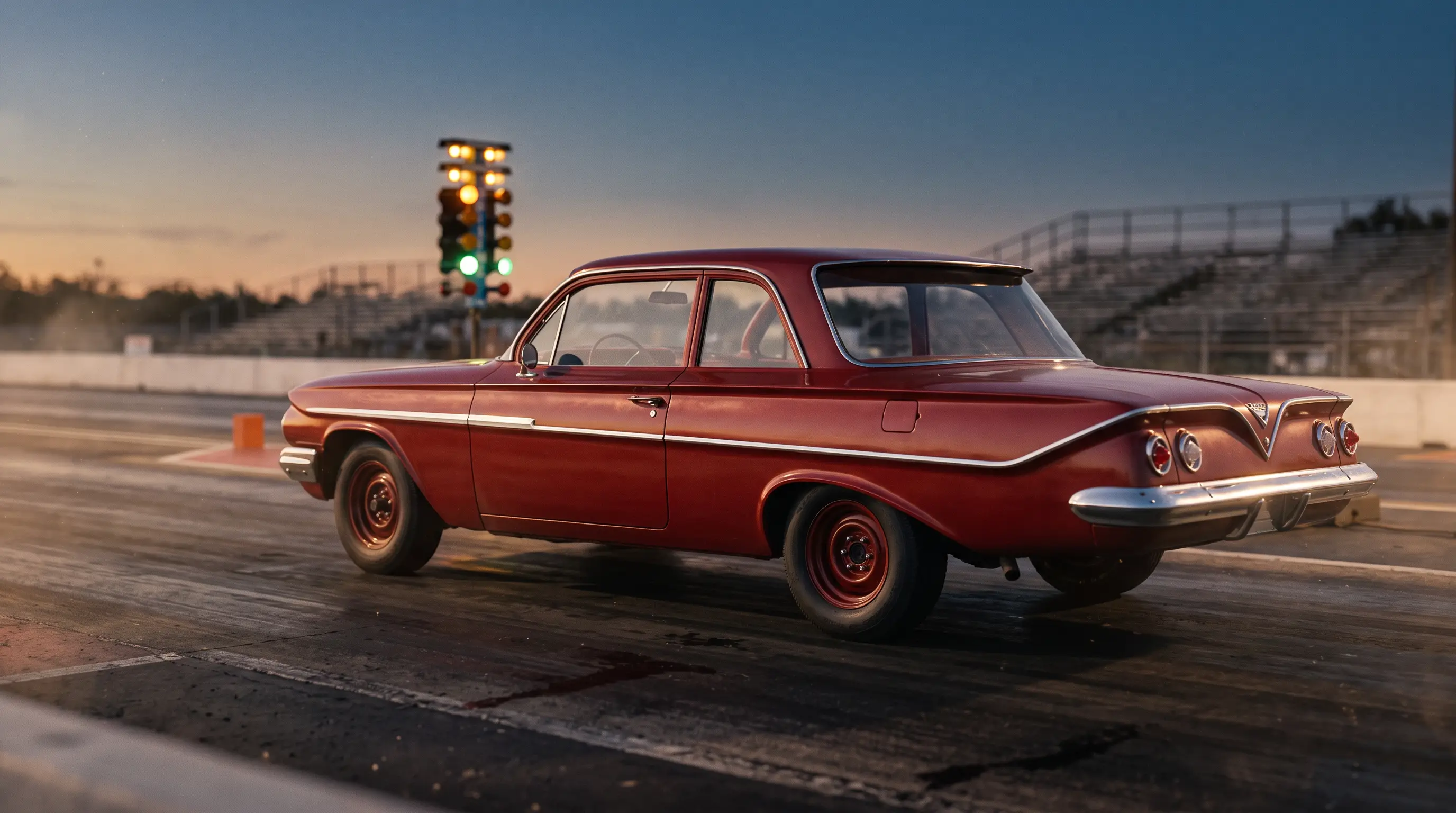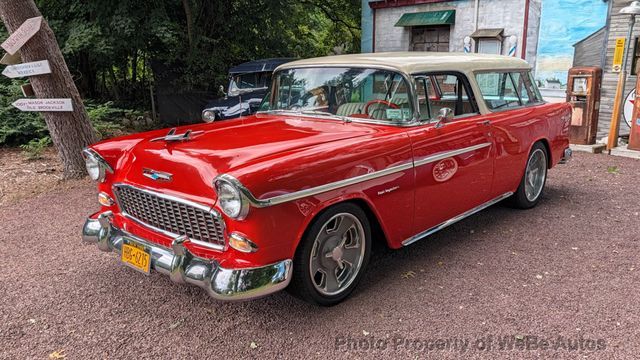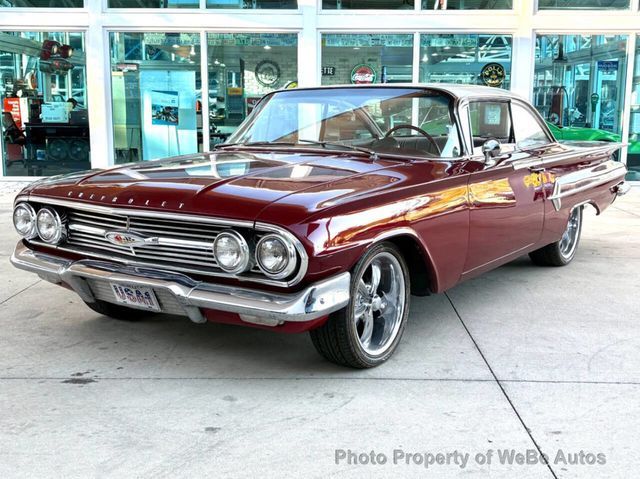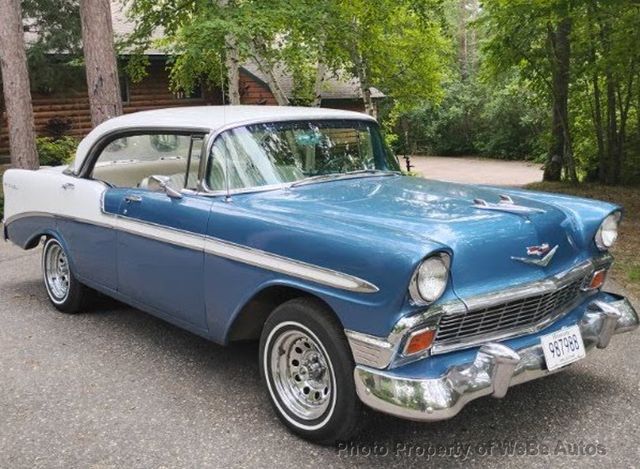
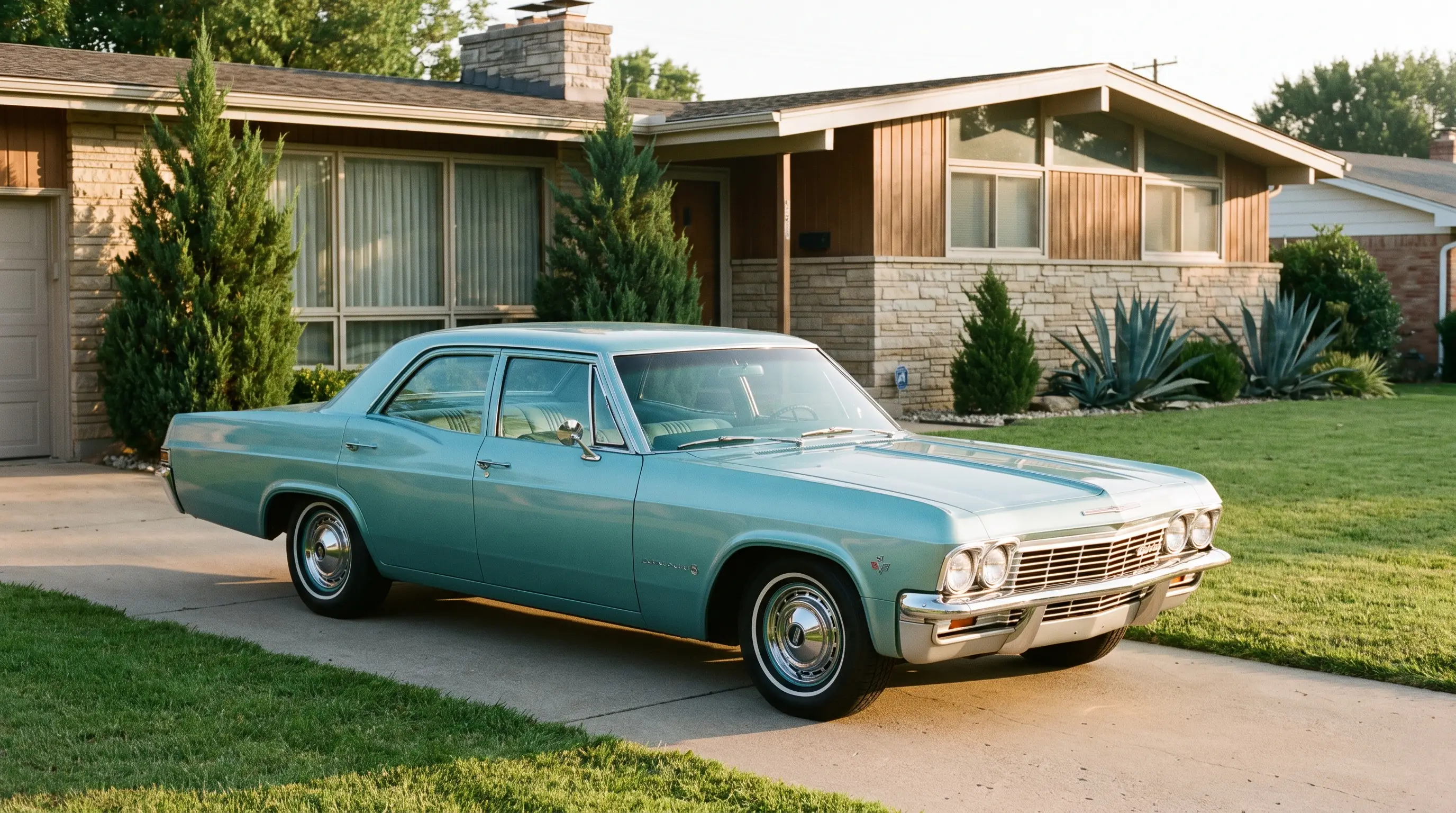
Chevrolet redesigned its full-size cars again for 1965, and the 1965 chevy bel air that emerged from that redesign looked bigger, lower, and more confident than anything wearing the nameplate before it. This was the era when General Motors chased a longer, wider, more sculpted look across its entire full-size range, and the Bel Air rode that wave even as it kept losing ground internally to the Impala, which by now dominated Chevrolet's sales charts and advertising budget.
A new body for an old name
The 1965 restyle gave every full-size Chevrolet a curved side glass profile and a longer wheelbase, technical advances that let designers stretch the body into smoother, more continuous lines than the boxier early 1960s cars allowed. The Bel Air inherited all of this sheet metal but almost none of the marketing attention. Chevrolet's brochures that year were built around the Impala and the new Caprice trim, introduced as an even more luxurious step above it, which meant the Bel Air quietly became the car for buyers who wanted the new body without paying for the new prestige.
That positioning did not change much for 1966, though detail trim, taillight treatments, and grille textures were refreshed to keep the lineup looking current for a second model year on the same basic body. Collectors today can tell a 1965 from a 1966 Bel Air at a glance once they know the small differences, but a casual observer would likely see two nearly identical cars separated by a single production year.
Engines carried over, expectations rising
Under the hood, the Bel Air continued offering the familiar spread of Chevrolet powerplants, from the base inline six through a range of small block V8s. The big block engines that had defined performance full-size Chevrolets earlier in the decade were still available on Bel Air order sheets, though buyers chasing outright performance increasingly gravitated toward the Impala SS or the new Caprice, leaving the Bel Air's V8 options to buyers who wanted real power without the badge to match. This is a recurring theme across the model's history, and it connects directly to the earlier chapters of the story. where this started lays out how the Bel Air first established that same value proposition, offering serious mechanical substance under modest trim, back when it was still Chevrolet's flagship rather than its middle child.
Transmission and rear axle options followed the broader Chevrolet full-size playbook of these years, giving buyers a wide spread between economical highway gearing and stouter setups meant for towing or performance driving. None of it was unique to the Bel Air specifically, but the breadth of choice meant a buyer could still build a genuinely quick car without ever stepping into an Impala showroom display.
Life in the middle of a crowded lineup
By 1965, Chevrolet's full-size range had grown to four distinct trim levels, and the Bel Air occupied an increasingly narrow lane between the stripped Biscayne and the popular Impala. This crowding is easy to miss from a distance but mattered enormously to how the car was marketed, optioned, and ultimately remembered. Sales literature from these years devotes far more space to Impala convertibles and SS badges than to anything wearing a Bel Air script, and that imbalance in attention has followed the car into the modern collector market, where 1965 and 1966 Impalas draw considerably more interest and money than Bel Airs from the identical body and model year.
That gap has created an opening for buyers who want the styling and engineering of this generation without the premium attached to the Impala name. A well kept 1965 or 1966 Bel Air offers nearly everything mechanically that a comparable Impala does, minus some interior trim and badge prestige, at a noticeably friendlier price.
"Nobody wrote songs about the Bel Air in 1965. They wrote them about the Impala and the SS package. But the Bel Air had the same frame, mostly the same engines, and a much shorter line at the dealer."
- Tom Ramirez
Two door hardtops and the styling that still holds up
The two door hardtop body style from this generation remains the most visually striking Bel Air configuration, with a roofline that flows uninterrupted from windshield to trunk without a B pillar breaking the profile. Four door sedans and wagons carried the same basic proportions but read as far more conservative, which is exactly why so many were bought by families rather than enthusiasts at the time. Collectors today generally chase the hardtops first, though the sedans and wagons have their own quiet following among buyers who want a usable classic without competing for the same handful of coupes at every auction.
Interior details that separate a real Bel Air from a dressed up Biscayne
Trim swaps between full-size Chevrolet models were common enough over the decades that a buyer needs to know what to look for before trusting a badge alone. Genuine Bel Air interiors from 1965 and 1966 carried specific door panel patterns and dash trim that differ from both the plainer Biscayne and the richer Impala, and a car wearing Bel Air emblems with mismatched interior trim is worth a closer look before any money changes hands. Steering wheel design, seat pattern, and even the door sill plates all carry model specific details that a knowledgeable buyer can check in a few minutes.
Exterior badging is easier to fake than interior trim, since emblems can be swapped between cars in an afternoon with basic tools. That is exactly why interior details, along with the cowl tag data, matter more than chrome script when confirming a car is what a seller claims it to be.
Shopping this generation now
Condition matters enormously with any car from this era, since rust and interior wear tend to hit these full-size Chevrolets in predictable spots, particularly around the rear quarter panels and floor pans. Buyers should also confirm whether an engine is original to the car, since swaps between full-size Chevrolet models from these years were common enough during the muscle car boom that numbers matching examples now carry a real premium. For anyone ready to compare what is currently available, there is a rotating selection of classic Air for sale that includes cars from this exact styling generation, giving buyers a direct look at how condition and originality affect asking price across the 1965 and 1966 model years.