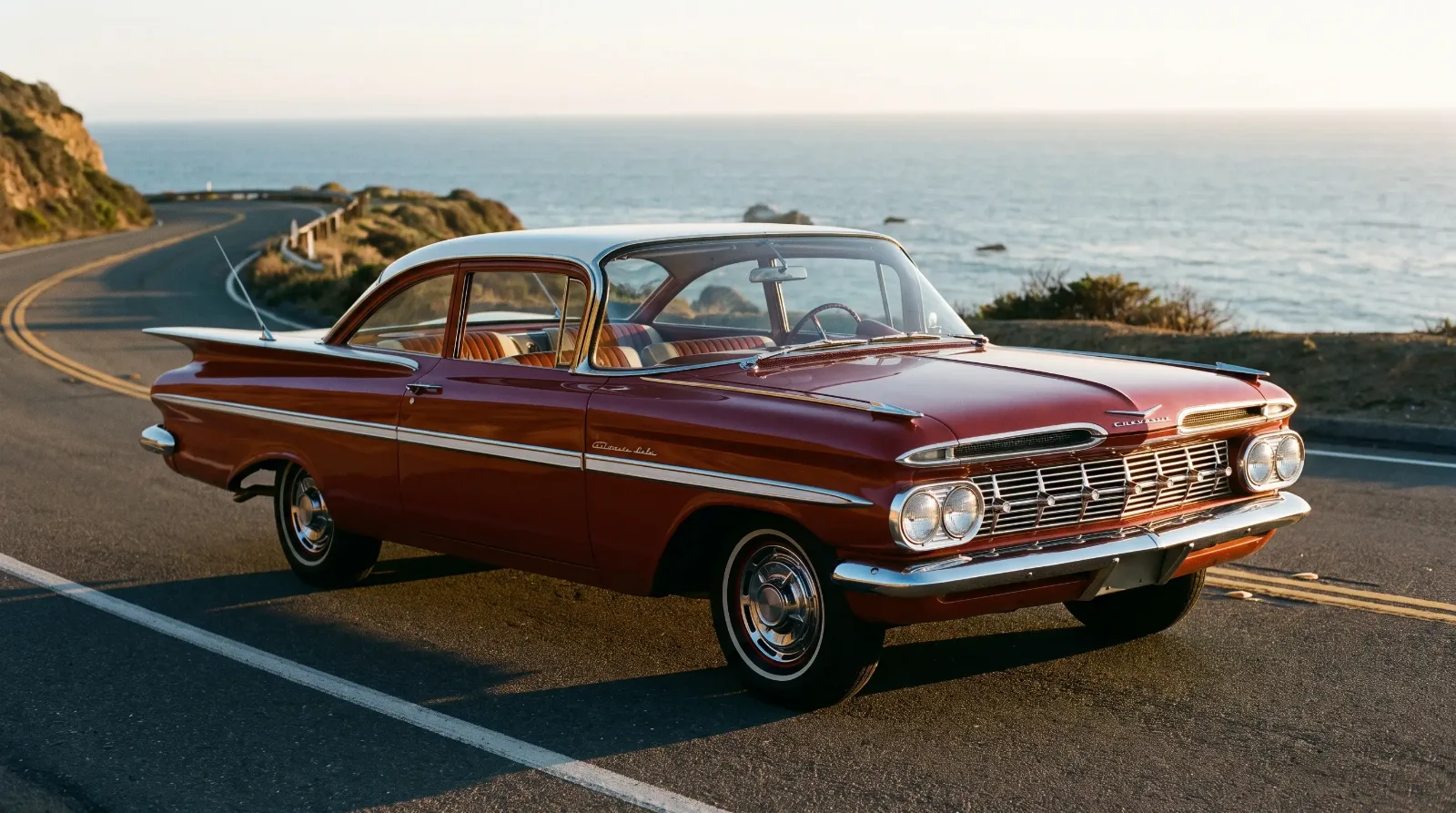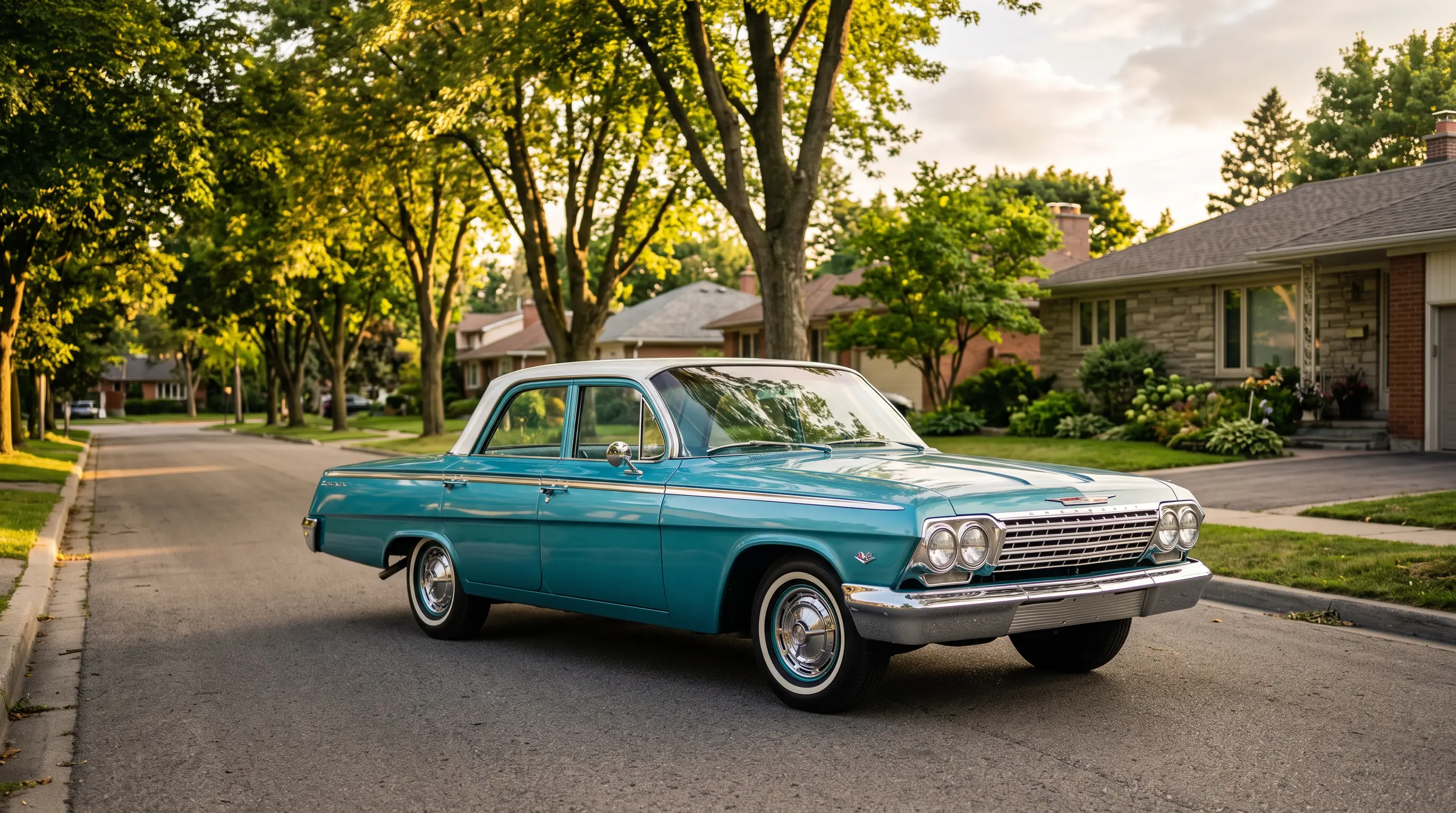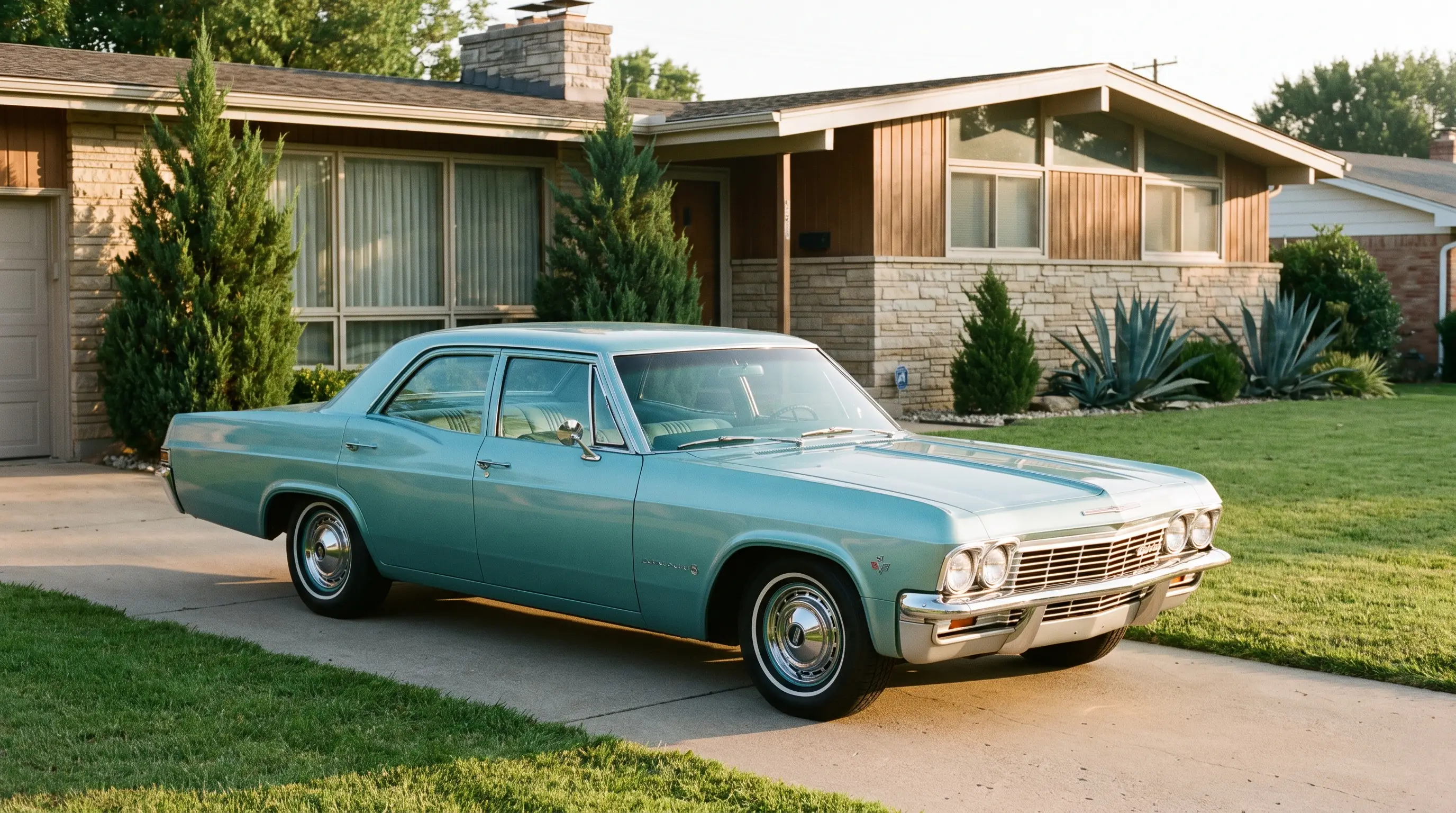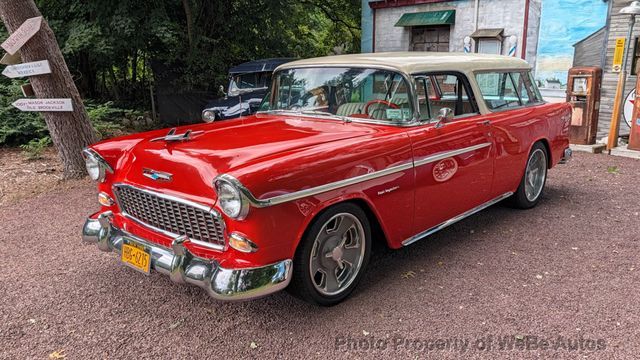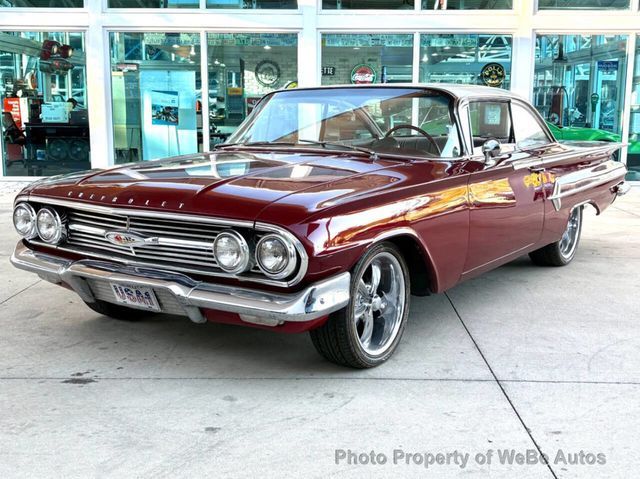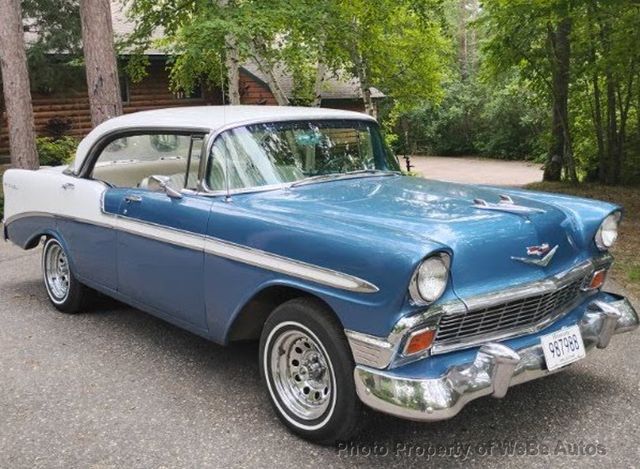
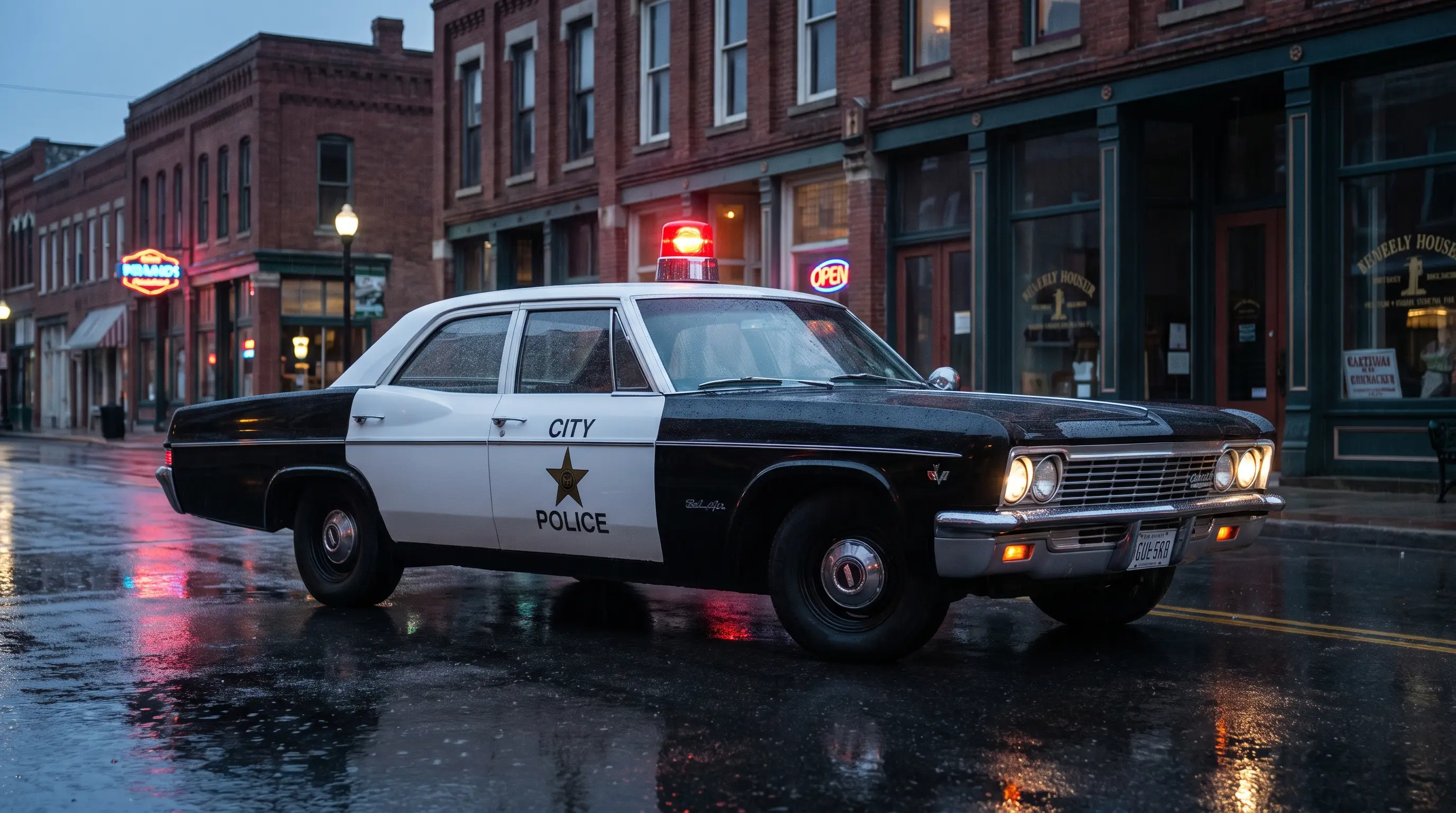
A rookie officer in 1958 did not get to pick his patrol car. He got whatever the department bought in bulk that year, and across a huge stretch of small town and mid-size America, that meant a Bel Air. The bel air police car was never the star of the Chevrolet lineup the way the Impala or the Corvette were, but it quietly did more miles of real American work than either of them, chasing speeders, hauling prisoners, and idling outside diners at two in the morning while a sergeant finished his coffee.
Why departments kept choosing the Bel Air
Municipal budgets in the 1950s and 1960s were not generous, and the Bel Air's position in the Chevrolet hierarchy made it an easy sell to a city council. It sat above the stripped down Biscayne but well below the chrome heavy Impala, which meant a department could order a car with enough engine and enough room for two officers, a radio, and a prisoner cage without paying for wool carpet and a padded dash nobody in the front seat cared about. Chevrolet also built the Bel Air on a heavy duty frame shared across the full-size lineup, which held up under the abuse of stop and go patrol work far better than lighter compact cars from other manufacturers.
Fleet contracts mattered enormously to Chevrolet's bottom line during these years, even if they never showed up in a glossy magazine ad. A single state highway patrol order could run into the hundreds of units, and Chevrolet built specific heavy duty option packages, stiffer springs, upgraded brakes, and in some years a version of the 409 or later big block engines, specifically to win those contracts against Ford and Plymouth. This is the same performance hardware that more on the 1959 chevy bel air covers from the private buyer's side, but on a police order sheet it served an entirely different purpose: keeping up with whatever was speeding down the interstate.
The pursuit package era
By the early 1960s, Chevrolet had formalized what enthusiasts now call police pursuit packages, factory options bundling a bigger engine, heavy duty cooling, reinforced suspension, and sometimes a dual point ignition into a single order code. A Bel Air built this way looked almost identical to the one a farmer might buy for hauling parts into town, right down to the plain hubcaps and bench seat, but underneath it carried hardware closer to what a private buyer would have paid a premium to option separately. That anonymity was part of the appeal for law enforcement. A patrol car that did not look fast was more useful on a rural highway than one that announced itself from half a mile away.
What happened to all those patrol cars
Most did not survive. Police cars in this era were driven until they were worn out, then auctioned off to used car lots, taxi companies, or private buyers who stripped the light bars and radios and drove them into the ground a second time. A handful escaped that fate, sold early to officers who bought their own retiring cruiser, or mothballed by small departments that simply parked an old unit in a garage and forgot about it for thirty years. Those survivors are now some of the more interesting oddities in the Bel Air collector world, valued not for rarity of trim but for the paperwork trail that proves what they actually did for a living.
Documentation is everything with a claimed ex-police Bel Air. Anyone can bolt a spotlight and a set of black and white paint onto a plain sedan, and plenty of sellers have done exactly that over the decades to inflate a car's story. A genuine example usually comes with some combination of a build sheet showing the pursuit package codes, department records, or at minimum a documented chain of ownership back to a municipal auction. Without that paper trail, buyers should treat the police history as decoration rather than fact.
"You can spot the real ones by what is missing as much as what is there. No fake cars ever bother getting the boring parts right, the actual radio mounting holes, the reinforced floor pan, the correct heavy duty alternator bracket."
- Patrick Walsh
Fleet duty beyond the badge
Police work was only part of the Bel Air's institutional life. Taxi companies, delivery services, and government agencies of every size ordered the same basic package for the same reasons a police department did: durability, low purchase cost relative to trim, and a huge dealer network that could keep parts flowing no matter where a fleet vehicle broke down. Rural county governments bought Bel Air sedans and wagons by the dozen for everything from mail routes to inspector vehicles, and none of it made headlines the way a new Corvette did every fall.
This overlooked chapter connects directly back to the nameplate's earliest identity as a practical, well built full-size car rather than a status symbol. where this started traces that identity from the model's introduction, and the fleet years show how consistently Chevrolet delivered on that original promise even after the Bel Air had been pushed down the trim ladder by newer, flashier siblings.
Regional differences worth knowing
Not every department ordered the same car. Northern states with harsh winters often specified different rear axle ratios and heavier batteries than departments in the South, where cooling capacity and interior ventilation mattered more than cold weather starting. Highway patrol agencies covering long open stretches leaned toward the biggest available engine, since a pursuit on a straight rural highway rewarded raw speed more than a car built for stop and go city work ever needed. City police departments, by contrast, sometimes ordered smaller engines paired with heavier duty brakes and suspension, prioritizing stopping power and durability over top speed during short, frequent pursuits through intersections and alleys.
These regional quirks show up in surviving build sheets and are part of what makes tracking down a genuine fleet Bel Air feel closer to detective work than car shopping. A buyer who understands which state or city ordered which combination has a real advantage over someone simply trusting a seller's story, and that knowledge often separates a fair price from an inflated one when a rare documented unit finally surfaces at auction.
Finding one today
A documented ex-fleet or ex-police Bel Air is a genuinely unusual find in today's market, and prices reflect both the novelty and the uncertainty around authenticity. Buyers serious about this niche should budget time for research as much as money for the purchase itself, since verifying a car's institutional history often takes longer than negotiating its price. For anyone ready to start that search, there are classic Airs on the market right now, including sedans and wagons from exactly the fleet friendly years departments favored most.
Sources and notes
- The Police Package - 1950-1970's Chevrolet Police Vehicles
- 1958 Chevrolet Bel Air in Highway Patrol (1955-1959) - IMCDb
- Chevrolet Bel Air - Wikipedia
- Curbside Classic: 1961 Chevrolet Bel Air Sport Sedan
- History Of American Police Cars - CarBuzz
- 1961 Chevrolet Impala SS 409: A Profile of a Muscle Car - HowStuffWorks