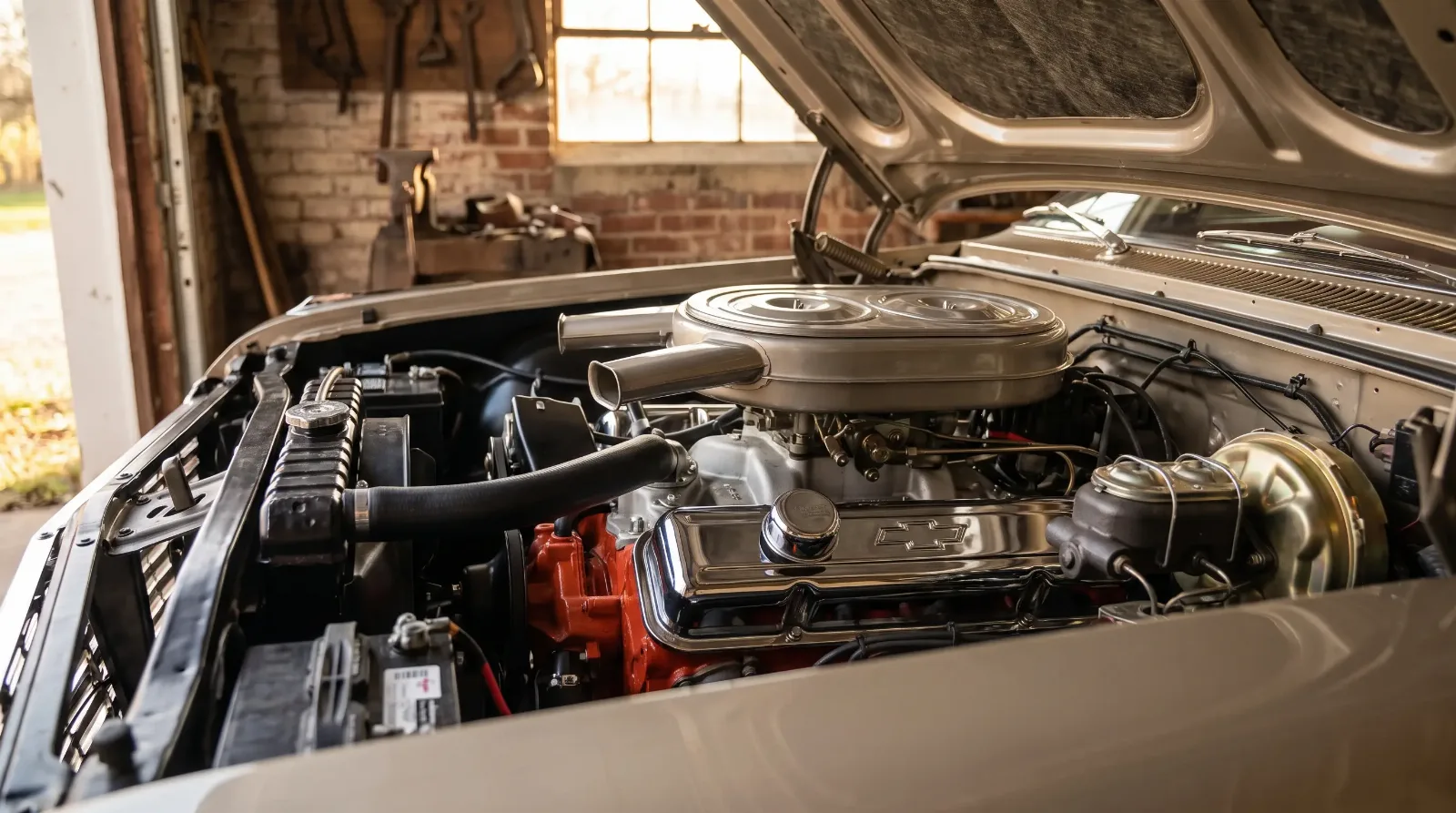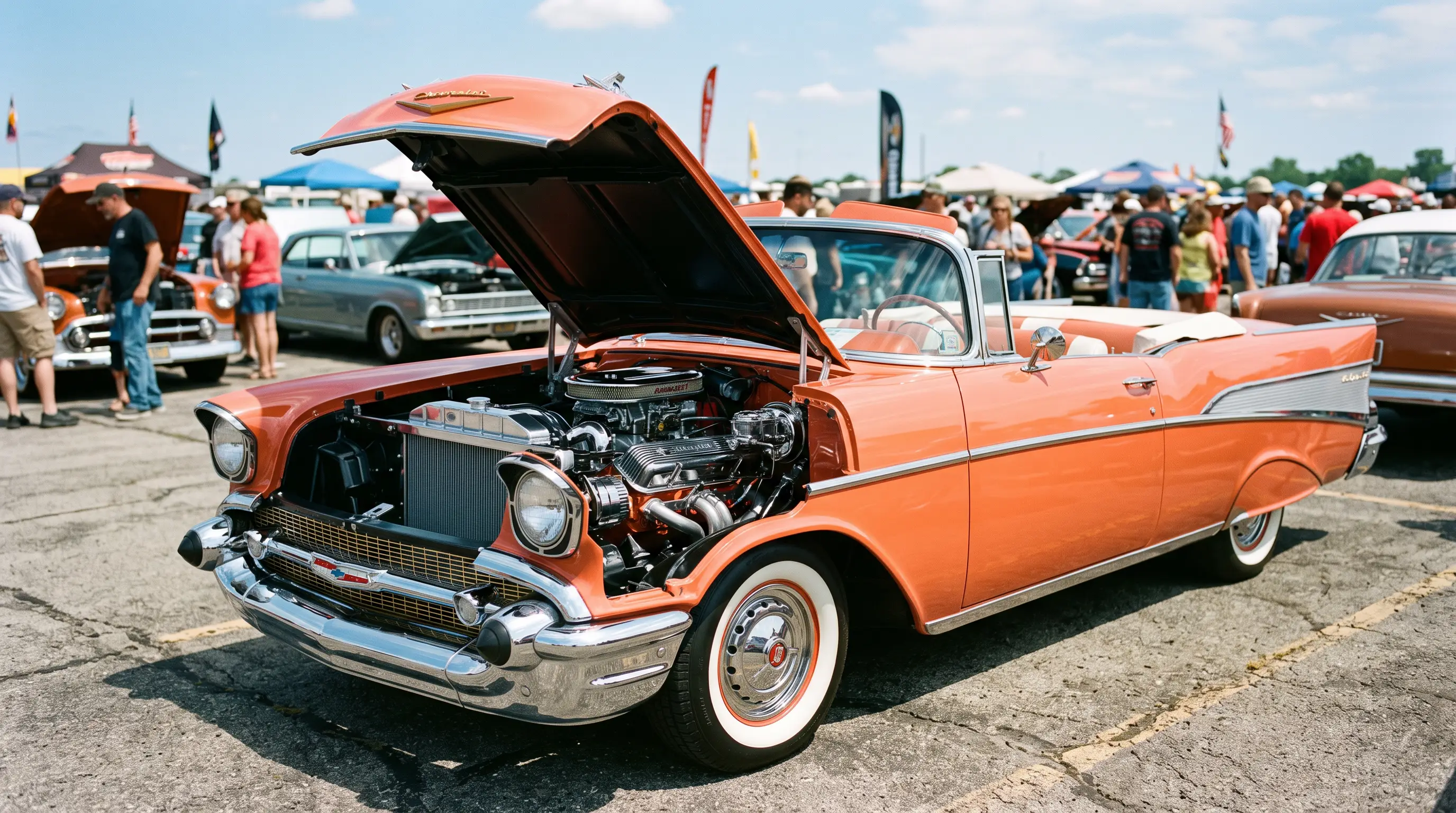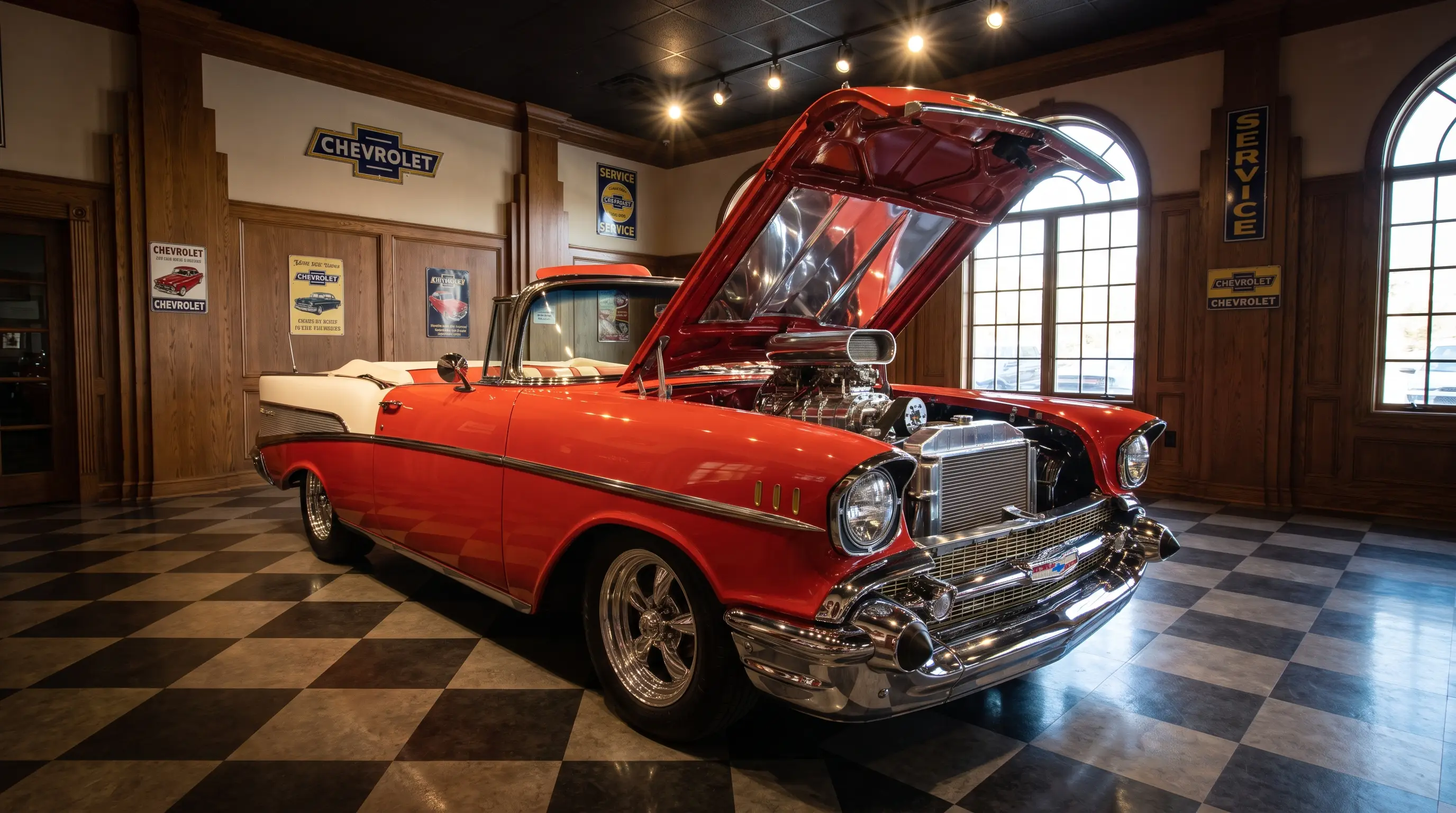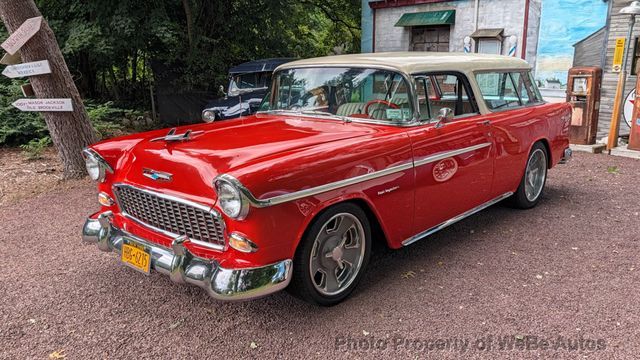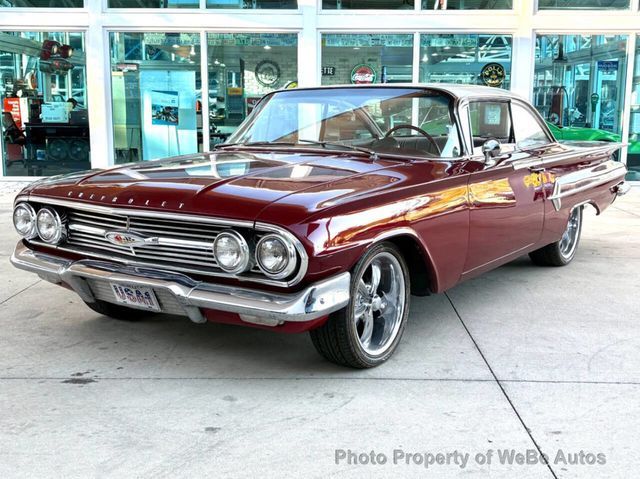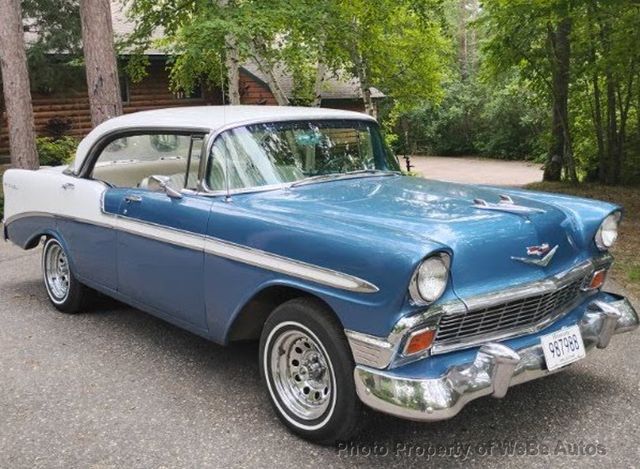
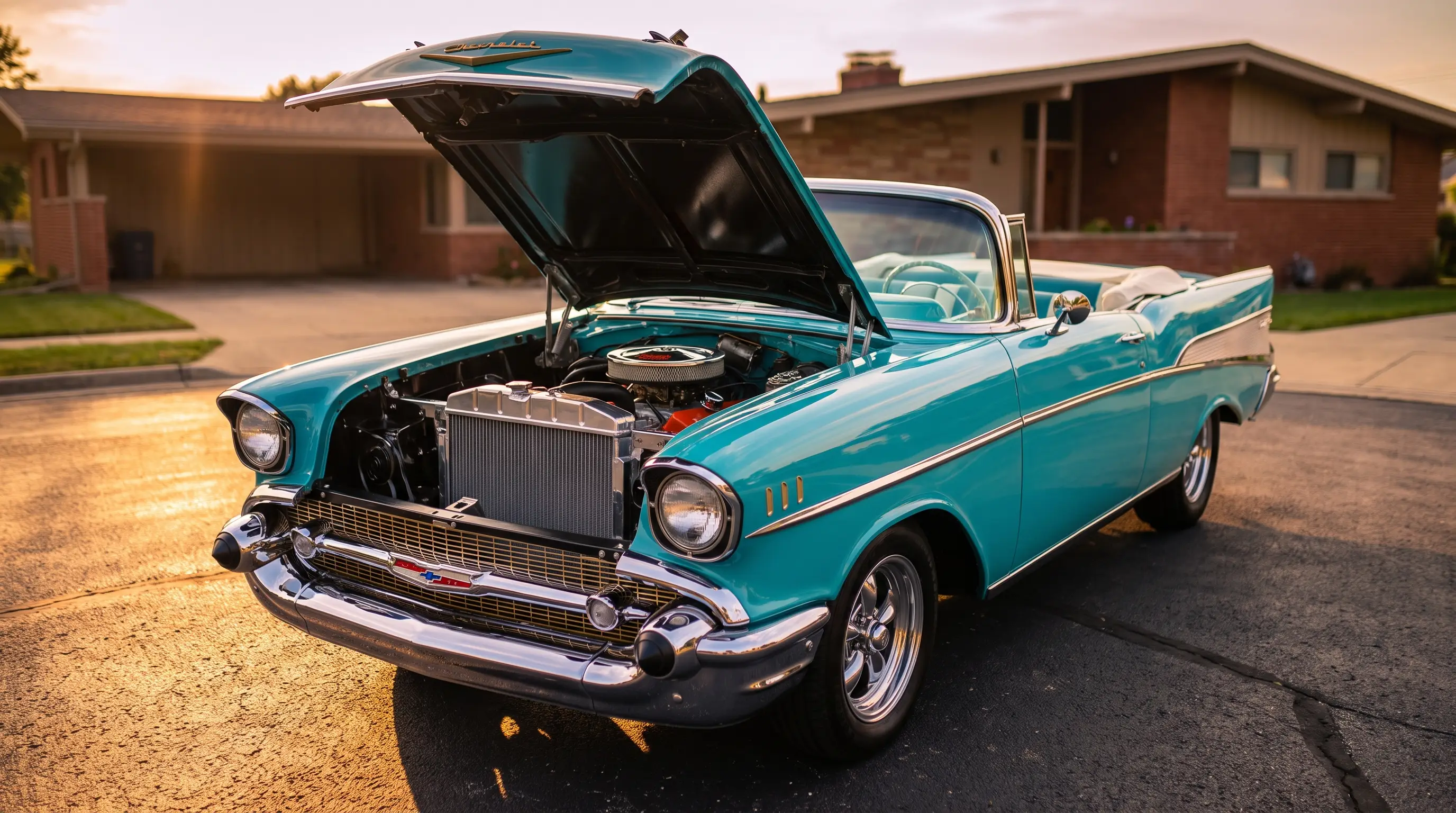
Here is the short version. Before 1955, Chevrolet did not build a V8. After 1955, Chevrolet never stopped. The chevy 265 small block is the engine that flipped that switch, and the Bel Air was the car that carried it into showrooms and onto strips across the country. One engine, 265 cubic inches, and an entire company's identity changed.
The number that mattered: 162 horsepower
The base 265 made 162 horsepower with a two-barrel carburetor. That does not sound like much today. It was plenty in 1955, because it weighed less than the inline sixes it replaced and revved with none of the reluctance older Chevrolet engines carried. Order the Power Pack version with a four-barrel carburetor and dual exhaust and the number jumped to 180 horsepower. That is a 20 percent gain from a carburetor swap and a better exhaust path. Chevrolet engineers had built an engine with headroom, and buyers noticed immediately.
Sales numbers back it up. Chevrolet moved well over 1.7 million cars for the 1955 model year, a record the company had not touched before, and a huge share of that demand traced directly to the new V8 and the reputation it built almost overnight. People walked into dealerships asking for "the V8 Chevrolet," not a Bel Air by name. The car became a delivery vehicle for the engine, not the other way around.
Light block, real numbers, no excuses
The 265 weighed roughly 100 pounds less than the Chevrolet inline six it replaced, and it was competitively light against rival V8s from Ford and Chrysler as well, thanks to a compact design with a shared bore spacing that would carry Chevrolet small blocks for decades afterward. Bore was 3.75 inches, stroke was 3.00 inches, and the block used a two-piece rear main seal that gave mechanics fits for years. Every one of those specifications sounds minor in isolation. Stacked together, they explain why the 265 could rev higher and respond faster than the competition's heavier iron.
| Spec | 1955 265 V8 |
|---|---|
| Displacement | 265 cubic inches |
| Base horsepower | 162 hp |
| Power Pack horsepower | 180 hp |
| Bore x stroke | 3.75 in x 3.00 in |
| Weight advantage vs Chevy six | Approx. 100 lb lighter |
Why racers cared before collectors did
Drag strips picked up on the 265 within a season of its release. Light weight up front, real horsepower for the era, and a bottom end that held together under abuse made stripped-down Bel Airs and 150-series sedans into cheap, quick weekend racers. NASCAR teams took notice too. A Chevrolet with the new V8 could run with cars that cost twice as much, and that kind of result travels fast in a small industry. By 1956 Chevrolet had a factory-backed racing presence it had never seriously pursued before, built on the reputation this one engine earned in its first year.
Read our full chevy 283 engine history if you want to see how the small block grew from here, because 265 was step one of a family, not a one-off experiment.
What it did to the Bel Air's reputation
Before the V8, Bel Air was a well-trimmed car with a decent six-cylinder engine. After the V8, Bel Air became a legitimate performance option, something a buyer cross-shopping a small Ford or a Studebaker had to take seriously on paper, not just on styling. That shift matters to collectors today. A 1955 or 1956 Bel Air with the 265 under the hood carries more weight at auction than an equivalent car with the base six, and the gap has only widened as buyers have learned the history behind the number.
Values reflect it plainly. A documented Power Pack car in solid condition sells for a real premium over a six-cylinder equivalent, sometimes 20 to 30 percent depending on body style and options. That premium exists because the 265 is not a footnote. It is the reason collectors care about mid-1950s Chevrolets at all.
"Every small block Chevrolet built after 1955 owes its bore spacing to this engine. That is not sentiment. That is an engineering fact you can measure with calipers."
- Dan Reeves
What the design got right the first time
Chevrolet's engineering team, working under Ed Cole, did not have decades of small block experience to draw on. They had a clean sheet and a mandate to build something lighter and cheaper to produce than the flathead V8s Ford and Chrysler were still leaning on. The result used thin-wall casting techniques that were aggressive for the mid-1950s, stamped steel rocker arms instead of expensive forged pieces, and a valvetrain that tolerated real revs without falling apart. None of that was flashy. All of it was correct, and correct engineering compounds over time.
That is the real story behind why this block spawned decades of descendants. Chevrolet did not need to redesign the fundamentals when displacement grew to 283, then 327, then 350 and beyond. The bore spacing established in 1955 stayed the architecture for the small block family into the 1990s in some applications. Few engines in American automotive history can claim that kind of staying power from a first-year design.
Buying one today: what to check
A genuine 1955 or 1956 265 is not automatically what a seller says it is. Casting numbers on the block tell the real story, and a numbers-matching engine commands a real premium over a later small block dropped in during a prior restoration. Ask for casting numbers before you get emotionally attached to a listing. Ask whether the carburetor and intake match the Power Pack configuration if that is what is advertised, because a two-barrel base engine wearing a later four-barrel setup is a common and easy swap that inflates a car's apparent performance pedigree without inflating its actual history.
The bottom line on the 265
162 horsepower base, 180 with Power Pack, roughly 100 pounds lighter than the six it replaced, and a two-year production run that changed how an entire company built engines for the next generation. Those are the numbers that matter. Everything else, the styling, the chrome, the two-tone paint, was already good before the V8 arrived. The engine is what made the Bel Air worth remembering.
Two model years is not a lot of production time to build a reputation, but 1955 and 1956 Bel Airs equipped with the 265 are treated as a distinct category by serious collectors, separate from the 283-powered cars that followed in 1957. Some buyers actually prefer the 265 specifically because it is the original, the version with no successor to overshadow it. That is a defensible position. It is also a minority one, since most casual buyers gravitate toward the higher horsepower numbers the 283 delivered a year later.
If the history has you hunting for one, read a related story on the engine that followed it, then go look at what is actually available. Current Airs for sale now range widely in condition and originality, so verify the engine matches the build sheet before you commit any real money. Numbers only mean something when they are documented.
Sources and notes
- 1955 Chevrolet Bel Air 265 V-8 Specs - Automobile Catalog
- Collector Car Corner: 1955 Chevy 265-V8 - The Spokesman-Review
- Chevrolet Small-Block Engine - Wikipedia
- 1955 Chevrolet - Wikipedia
- Ranking the Top 5 Small Block Chevy Engines: The Original 265 - OnAllCylinders
- 1955 4.34L 265ci V8 Engine Guide - CorvSport