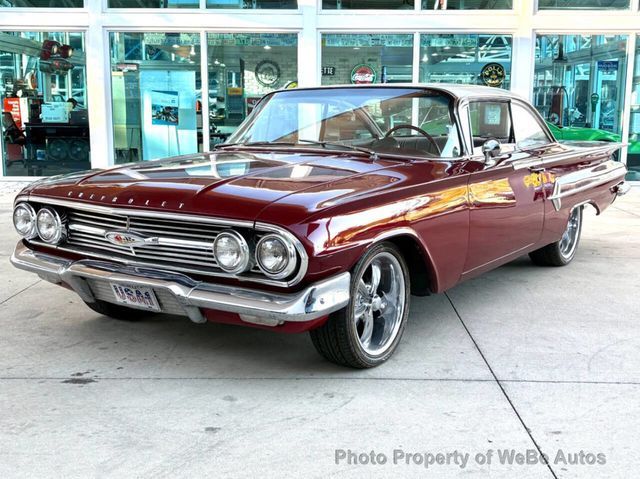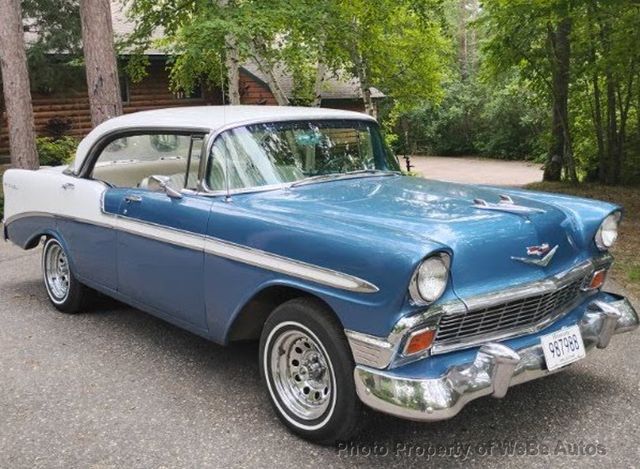
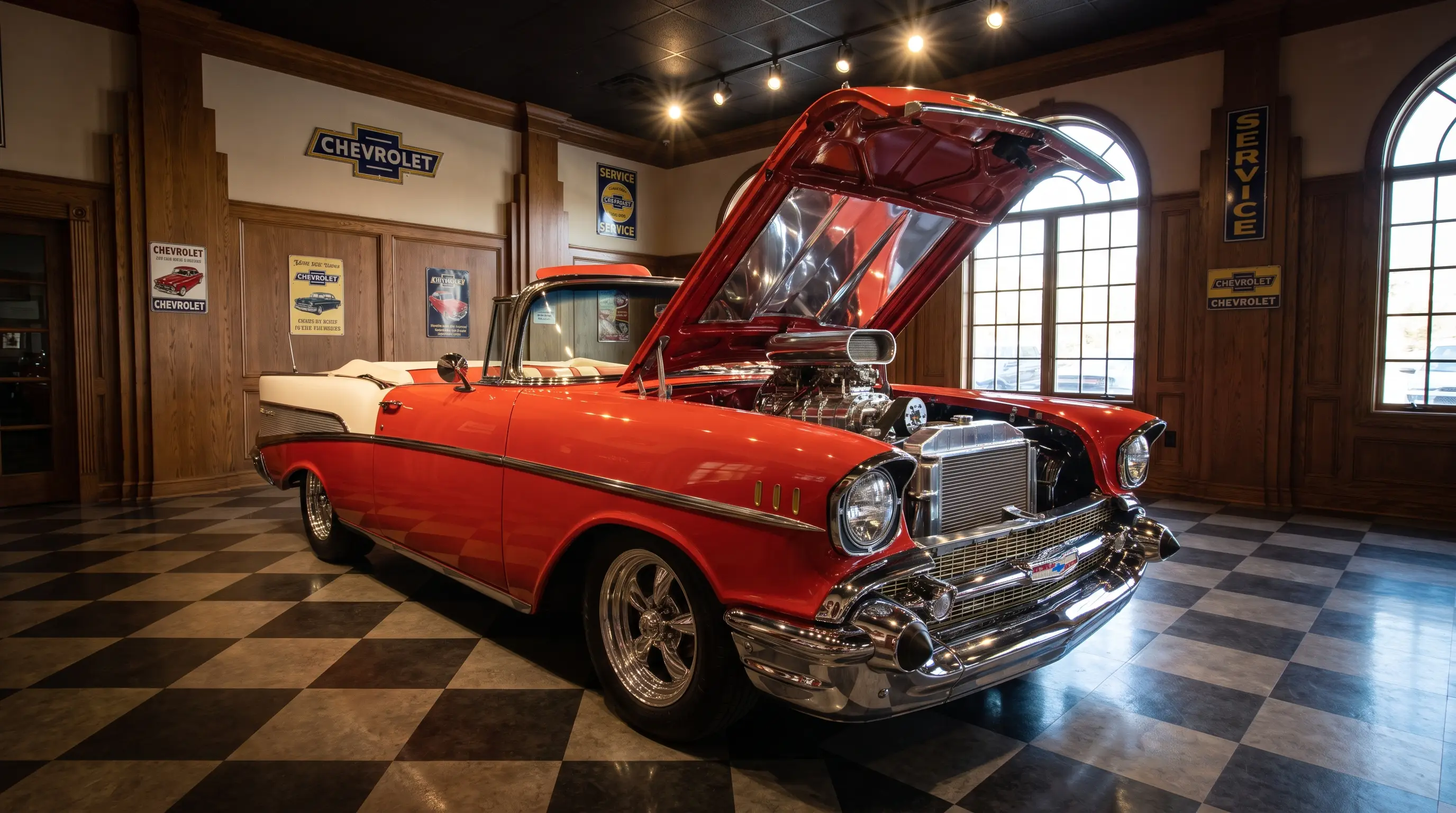
Bel Air horsepower did not climb in a straight line. It jumped, stalled, jumped again, then got strangled by insurance men and smog rules before the model name disappeared from American showrooms. Anyone who tells you the story is a tidy upward curve has not looked at the numbers. Here is what actually happened, year by year, engine by engine, with the hype stripped out.
1955: the number that started it
The base six-cylinder Bel Air made 123 horsepower. Nobody remembers that number because nobody bought the car for that engine. The 265 cubic inch V8, offered as an option, made 162 horsepower in its mildest form and up to 180 with the Power Pack option. That gap between the base six and the optioned V8 is the whole reason the small block became a legend. Nineteen fifty-five buyers who checked the V8 box got almost fifty percent more power for a few hundred extra dollars. That is not marketing. That is a spreadsheet decision, and hundreds of thousands of buyers made it the same way.
1956 to 1957: displacement does the work
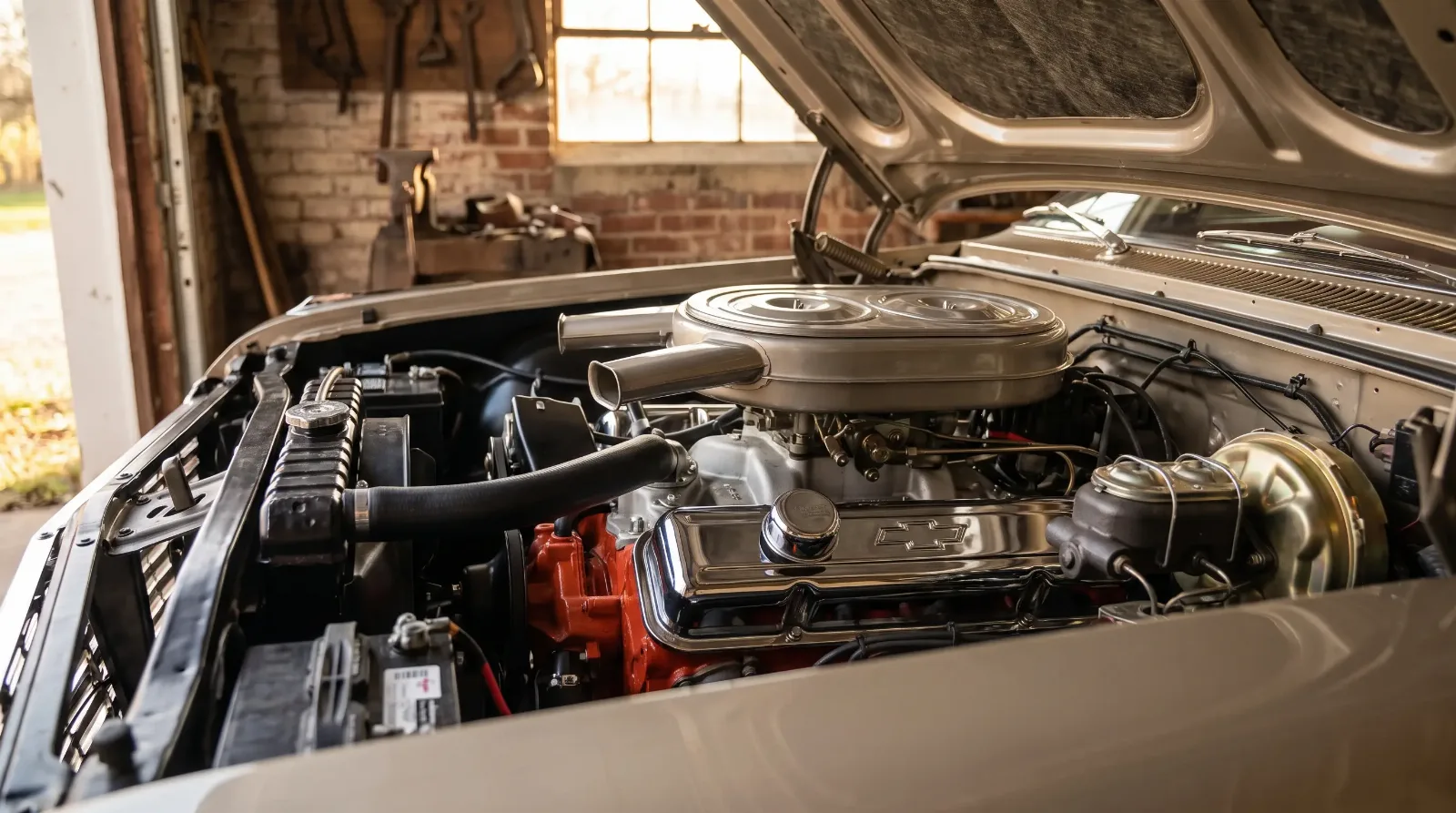
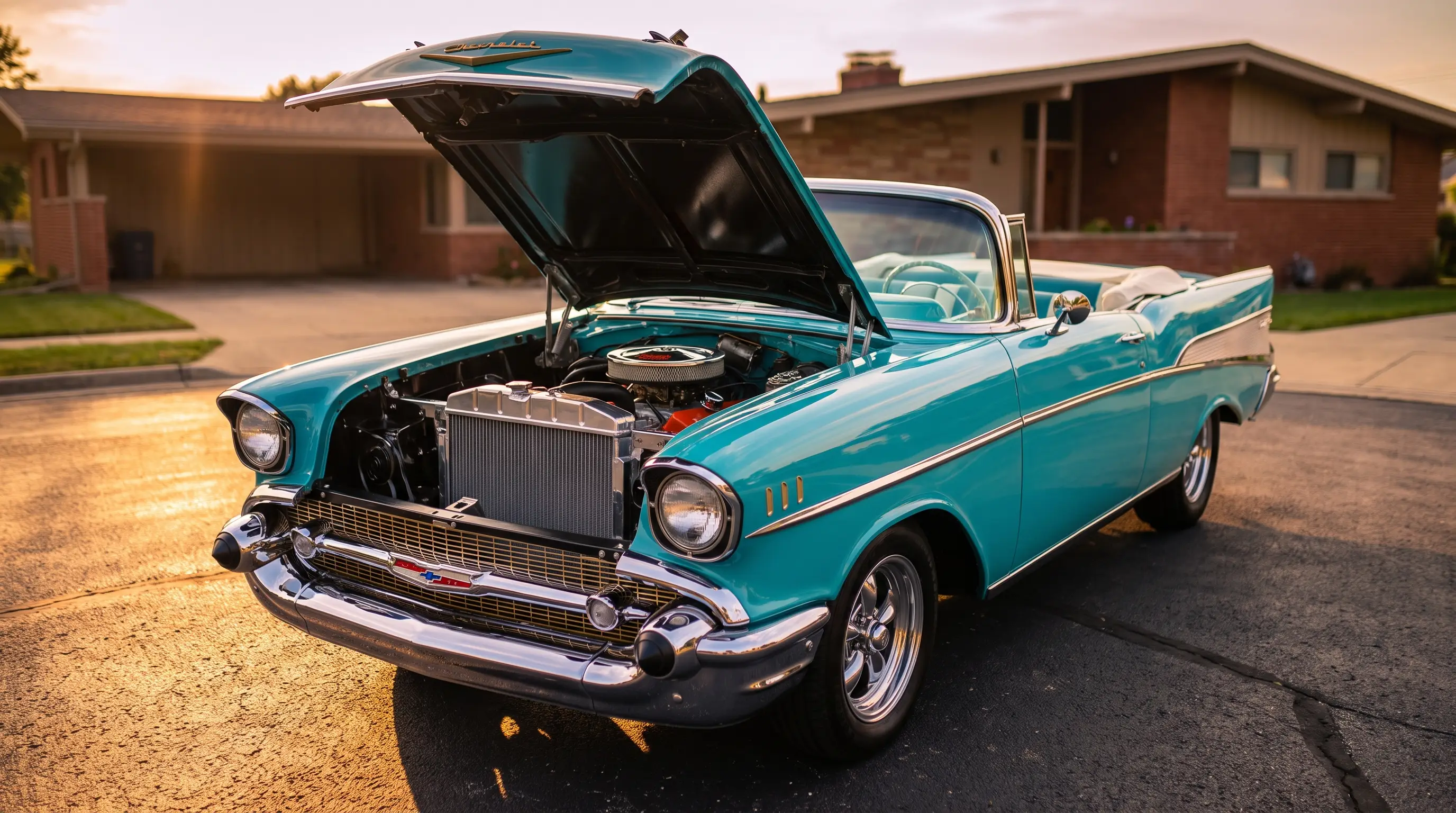
Chevrolet grew the small block to 283 cubic inches for 1957, and the top of the option sheet is where the hype starts getting complicated. The fuel-injected 283, with its solid-lifter Duntov cam, was rated at 283 horsepower, a real dyno figure and the famous one-horsepower-per-cubic-inch claim. Very few of these cars left the factory with that setup. Fuel injection was expensive, finicky, and rare enough that most 1957 Bel Airs on the road carried a four-barrel carbureted 283 rated closer to 220 or 245 horsepower depending on the exact configuration. The number that gets repeated at car shows is the injected figure. The number that actually described most cars sold is lower. Both are true. Only one gets printed on t-shirts.
1958 to 1962: bigger blocks, bigger cars
The Bel Air moved to a full-size platform for 1958 and grew heavier every year after that. Chevrolet answered with bigger engines, including 348 and later 409 cubic inch big blocks that pushed rated output well past 300 horsepower in top tune. But a bigger number on paper did not always mean a faster car in the real world, because the Bel Air itself had gained hundreds of pounds of sheet metal and trim since 1955. Horsepower kept climbing on the spec sheet through this stretch. Power-to-weight, the number that actually determines how a car feels off the line, told a more mixed story.
| Model year | Notable engine | Advertised horsepower |
|---|---|---|
| 1955 | 265 V8, Power Pack | 180 hp |
| 1957 | 283 V8, fuel injected | 283 hp |
| 1957 | 283 V8, four-barrel | 220 to 245 hp |
| 1961 | 409 V8 | 360 hp |
| 1970 | 350 V8, two-barrel | 165 hp (net rated later) |
The muscle car years and the ceiling that appeared
By the mid-1960s the Bel Air had settled into a role as Chevrolet's mid-tier full-size, sitting below the Impala in trim and price. Big block options were available, and horsepower ratings on paper climbed into the 300s and even 400s for the largest engines offered across the platform. But two things were happening at once that most casual horsepower conversations skip. Insurance companies started charging real money to insure high-output engines, which pushed a lot of buyers toward milder combinations even when the big power was on the option sheet. And Chevrolet itself began quietly detuning some engines for emissions compliance well before the more famous horsepower crash of the early 1970s. The number on the window sticker kept rising for longer than most people assume, but the number that actually reached the dealer lot in volume was often smaller.
If you want the whole picture on how every engine family fit together across the model's run, the broader story explains a lot of the option-sheet math that gets flattened into a single "Bel Air horsepower" headline number.
1971 to 1975: the number that actually dropped
This is the part of the story people do not like. Net horsepower ratings, adopted industry-wide starting in 1972, measured engines with accessories installed and no ideal dyno conditions. A 350 V8 that had been rated at 250 gross horsepower a few years earlier could show up rated at 165 net horsepower in a 1972 Bel Air, and the engine had not necessarily gotten meaningfully weaker. The measurement changed. But buyers reading window stickers in 1972 did not know that, and the psychological effect on the whole full-size Chevrolet lineup was real. The Bel Air nameplate quietly exited the American market after 1975, and by then horsepower talk had shifted almost entirely toward Chevrolet's smaller performance models instead.
What the numbers actually tell you
Bel Air horsepower peaked, in advertised terms, at 425 horsepower, the rating on the top solid-lifter 396 and 427 big block options offered across the full-size Chevrolet lineup in 1965 and 1966. The lowest advertised figures came at the very start, in the mild six-cylinder base cars, and near the very end, once net ratings and emissions equipment cut into every published number across the industry. In between sits thirty years of Chevrolet chasing bigger displacement, better breathing, and eventually running straight into insurance actuaries and federal regulators. None of that changes what makes an original high-output car valuable today. It just means the horsepower number by itself, without the year and the exact engine code attached, does not tell you very much.
Compare two window stickers separated by fifteen years and the comparison falls apart fast unless you already know the rules changed underneath the numbers. A 1958 Bel Air rated at 250 gross horsepower is not automatically weaker than a 1972 model rated at 200 net horsepower. In a lot of cases the older engine is doing less real work, not more. Buyers who shop purely by the printed figure end up overpaying for cars that look impressive on paper and underpaying for cars that are actually stronger than their sticker suggests. That mismatch between advertised numbers and real output is not unique to the Bel Air, but the model's three-decade production run makes it a useful case study, because you can watch the entire industry-wide shift happen inside one nameplate's history.
The lesson for anyone chasing a specific number is simple. Ask for the engine code before you ask for the horsepower figure. The code tells you what year's testing standard applies, what accessories were factored in, and whether the number in front of you means what you think it means.
The number that gets repeated at swap meets is rarely the number that matters most to a real buying decision.
"A horsepower number without a year and an engine code attached is not a fact. It's a rumor with a decimal point."
- Dan Reeves
If a specific horsepower figure matters to your buying decision, verify the engine code against the actual build sheet before you trust the seller's headline number. And if the research has you leaning toward ownership, you can shop classic Air listings and start comparing real cars against the numbers in this story.