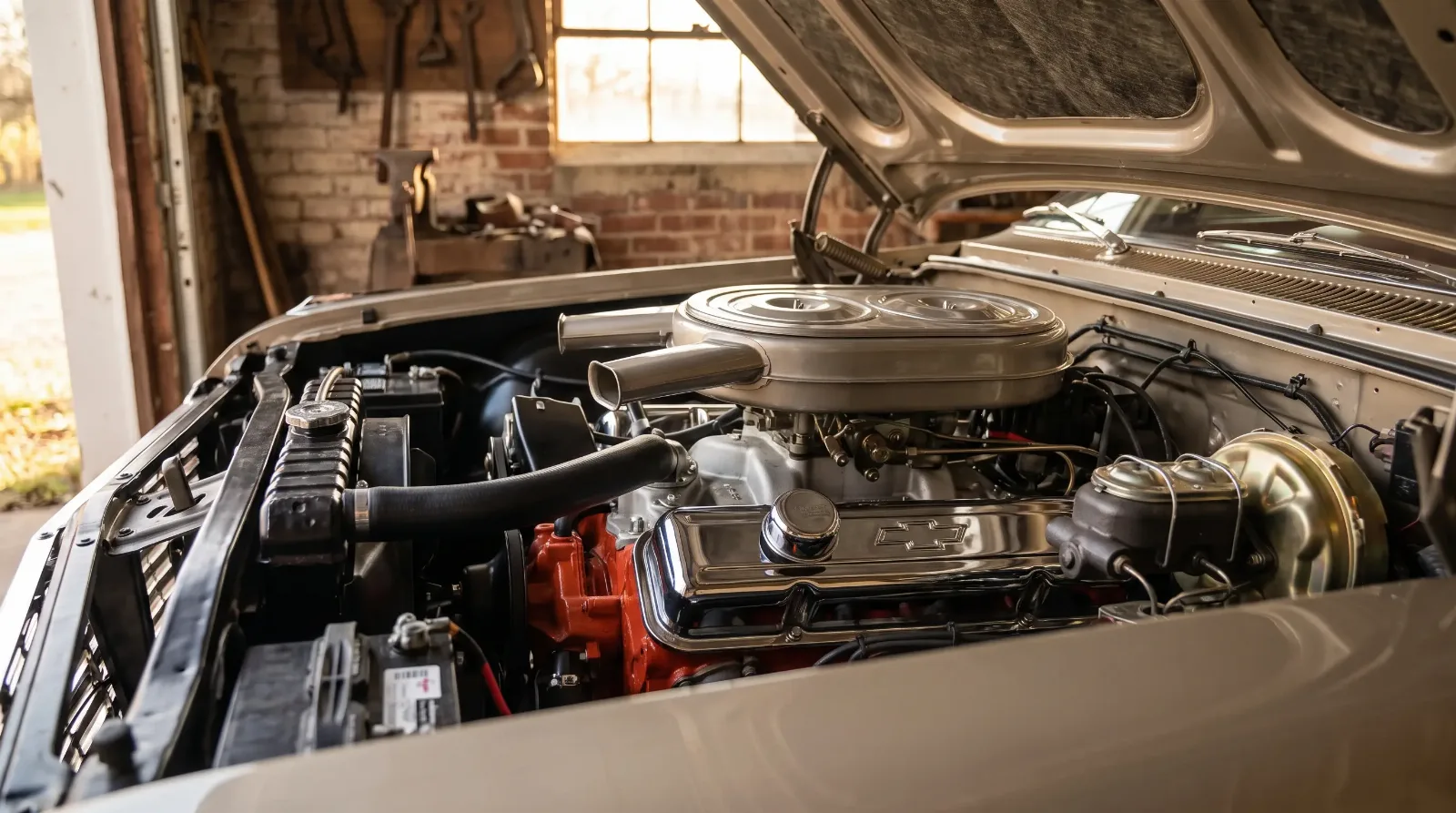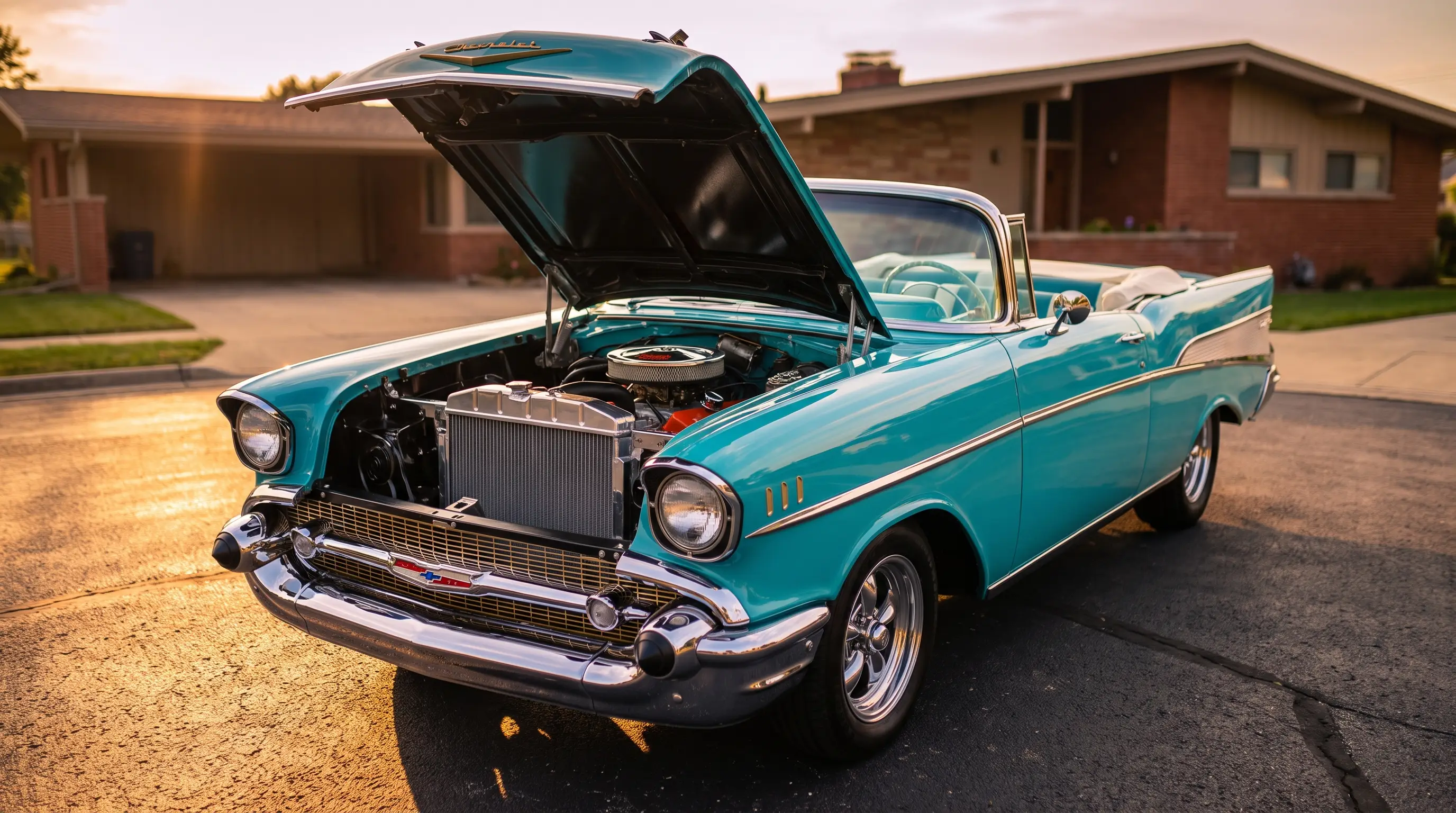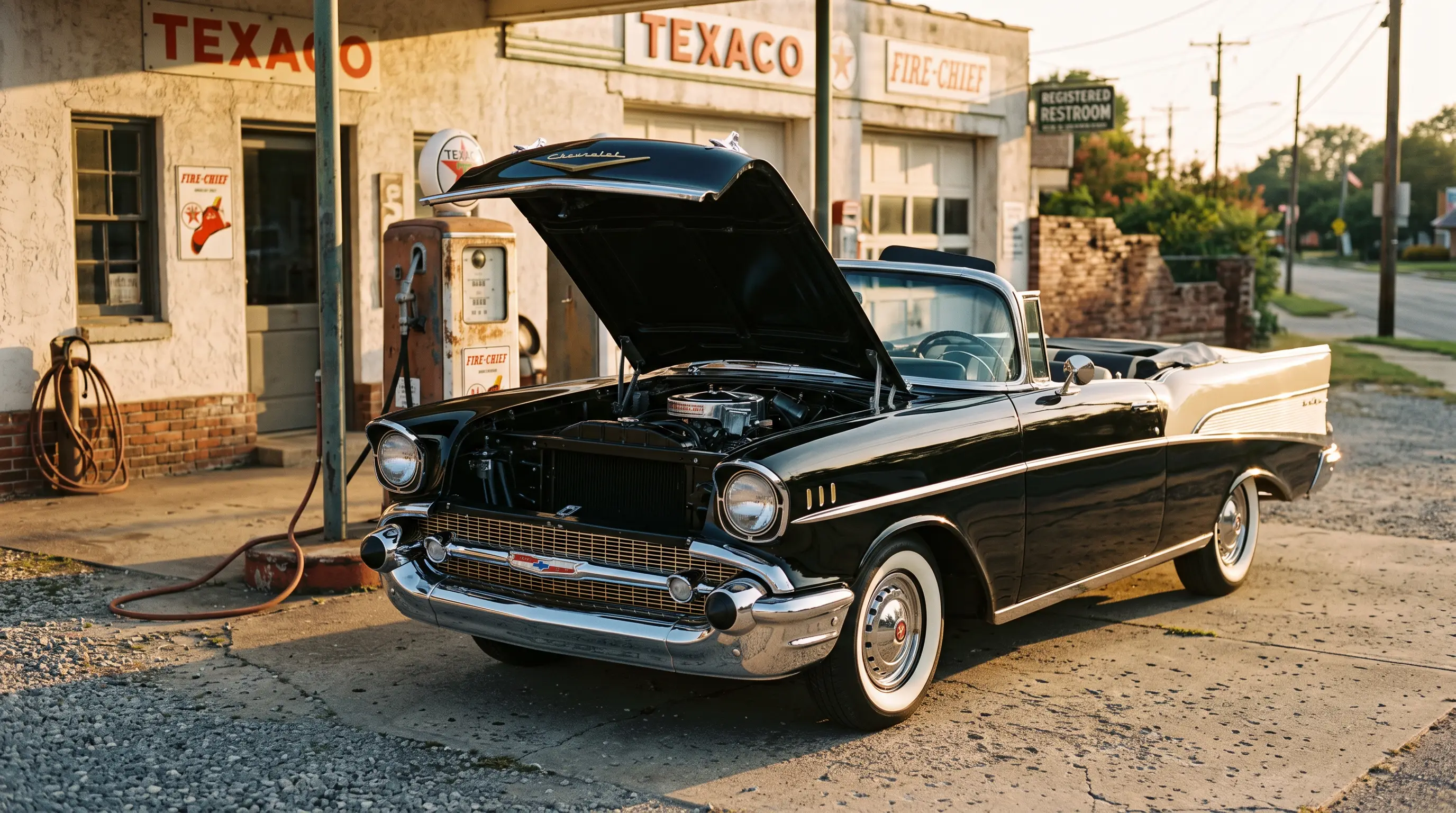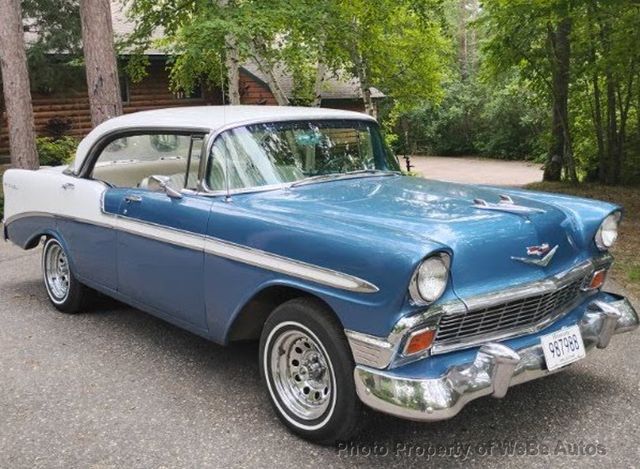
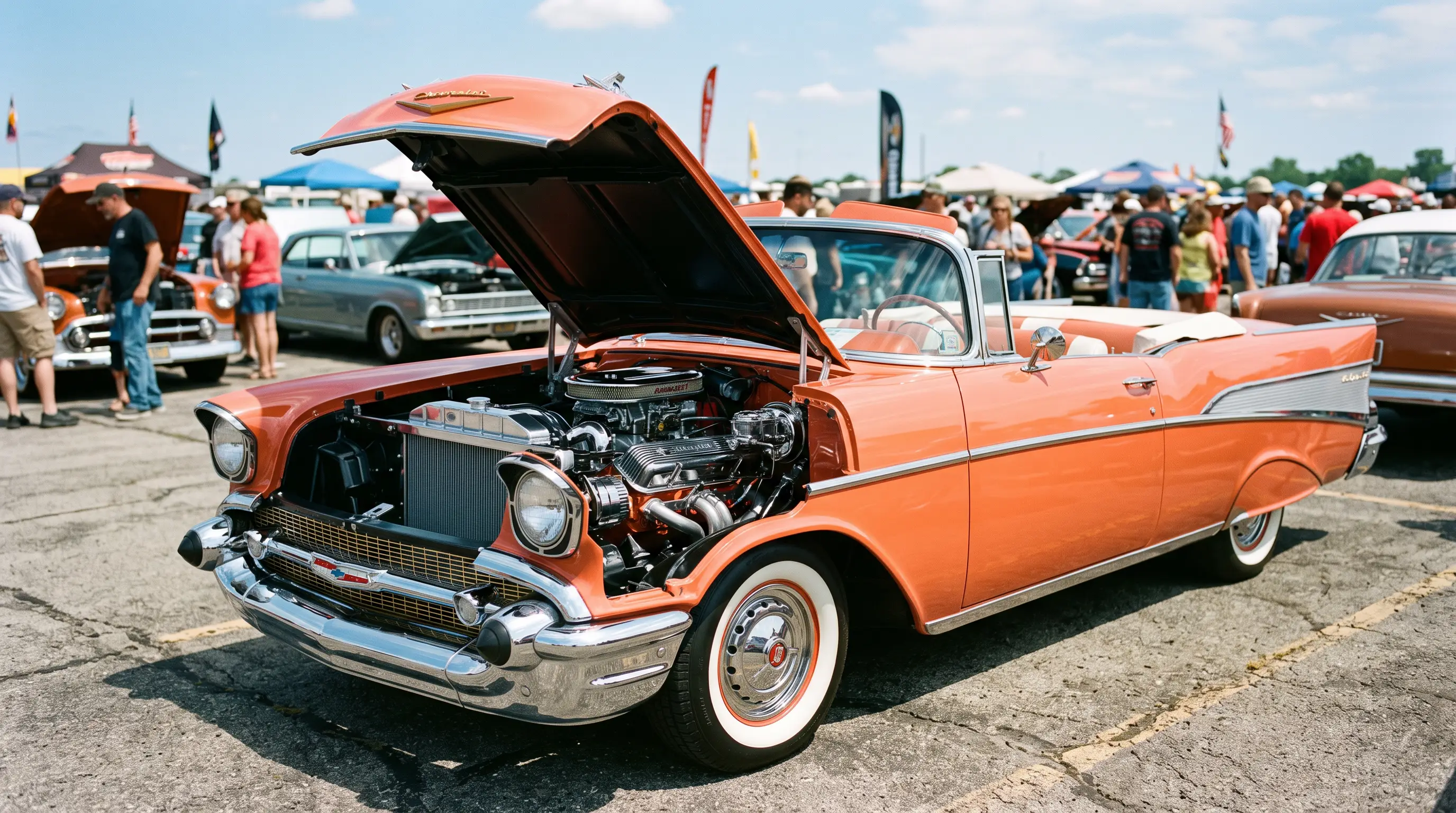
One horsepower per cubic inch. That is the claim attached to the fuel-injected chevy 283 v8, and it is one of the few marketing numbers from the 1950s that actually holds up under scrutiny. 283 cubic inches, 283 advertised horsepower, achieved in the top Ramjet fuel-injected tune offered in the Bel Air starting in 1957. Most era-appropriate performance claims from this decade need an asterisk. This one mostly does not, and that is worth examining properly rather than just repeating as trivia.
How Chevrolet got from 265 to 283
The 283 is not a new engine design. It is a bored-out version of the 265 that debuted in 1955, sharing the same 3.00 inch stroke while growing the bore from 3.75 to 3.875 inches. That is a modest, low-risk way to add displacement, and it worked because the original block architecture had room to grow. Engineers did not need to redesign the casting or the valvetrain to get there. They needed a bigger bore and a slightly reworked cylinder head, and the result was an engine with meaningfully more usable output across the rev range, not just at peak.
Base versions of the 283 made 185 horsepower with a two-barrel carburetor in 1957, a solid but unremarkable figure. The interesting engineering happened further up the options sheet.
The fuel injection tune and why it earned the claim
Chevrolet offered the 283 with Rochester mechanical fuel injection for 1957, and the top tune of that system produced 283 horsepower, an exact one-to-one ratio with displacement that Chevrolet's marketing department could not resist advertising. What makes this claim more credible than most period figures is that independent dyno testing and period magazine road tests generally corroborated numbers in that range, unlike some manufacturer claims from the same decade that collapsed under scrutiny. As with all 1957 figures, the number was an SAE gross rating, measured on a test stand without accessories or a full exhaust system, a methodology that tends to read higher than modern net horsepower ratings would for the same engine.
Fuel injection solved a real problem carburetors of the era struggled with, which was fuel distribution consistency under hard acceleration and cornering. Rochester's mechanical system metered fuel more precisely than a carburetor could manage, which is why the fuel-injected 283 produced its peak number at a relatively low production cost increase relative to the performance gained. It was not a cheap option, but it was not an outlandish one either.
| 283 V8 Configuration | Horsepower |
|---|---|
| Base two-barrel | 185 hp |
| Four-barrel Power Pack | 220 hp |
| Dual four-barrel | 270 hp |
| Ramjet fuel injection (top tune) | 283 hp |
Why the claim mattered more than the number
One horsepower per cubic inch was a threshold nobody in mainstream American production had crossed cleanly before, and it gave Chevrolet a marketing hook that competitors could not immediately answer. The number is simple enough that anyone can understand it without knowing what a carburetor does, which is exactly why it stuck in the public imagination for decades afterward. Engineers appreciate elegant solutions. Marketing departments appreciate elegant numbers. This was both at once, which is rare.
Read our our complete history of the small block family if you want the full progression from the 265 through the later big-inch variants, because the 283 sits at a specific inflection point in that story, not at the beginning or the end.
Reliability data, not just performance data
The early Rochester fuel injection units had a documented reputation for finicky operation, particularly around cold starts and at altitude, and many owners in period had dealerships convert their cars back to carburetors under warranty. That is a fact worth stating plainly rather than glossing over, because it complicates the legend slightly. The system that produced the headline number was also the system most likely to leave an owner stranded if it was not maintained correctly. Both things are true simultaneously, and pretending otherwise does a disservice to anyone actually shopping for one of these cars today.
Carbureted versions of the 283, by contrast, built a reputation for durability that outlasted the car itself in plenty of applications. The 283 remained in Chevrolet trucks and passenger cars well into the 1960s specifically because it proved dependable in ordinary use, which is a different kind of engineering success than the one horsepower per cubic inch headline, and arguably a more important one for the average owner.
"A one-to-one horsepower-to-displacement ratio is a clean number, and clean numbers get remembered. What gets forgotten is that most buyers who wanted that engine's reputation actually bought the more reliable carbureted version instead."
- Emily Chen
How the 283 compares to what came before and after
Placed next to the 265 it replaced, the 283 is not a dramatic redesign, it is a refinement, and that is a compliment. Chevrolet's engineers had a proven architecture and extracted more from it through displacement and induction changes rather than starting over. Placed next to the 348 and later 409 big blocks that arrived for higher-performance buyers by the early 1960s, the 283 looks almost modest, a small block doing small block things well rather than chasing raw cubic inches.
That positioning is exactly why the 283 has such a broad fan base among collectors today. It is not the biggest number in Chevrolet's engine history and it does not need to be. It represents the moment the small block family proved it could scale performance intelligently, through better breathing and better fuel delivery, rather than simply growing bigger. Engineers respect that kind of result more than raw displacement, even when displacement gets the headlines.
Production numbers support the idea that Chevrolet treated the 283 as a mainstream workhorse rather than a specialty item. It appeared across a wide range of body styles and trim levels, not just in top-tier Bel Airs and Impalas, and that broad deployment is part of why parts availability and mechanical familiarity remain strong for the 283 even now, decades after the last one left a factory floor.
What this means for buyers today
If you are chasing a documented fuel-injected 283 Bel Air, verify everything. Casting numbers, the Rochester unit's serial data, and any paperwork trail matter enormously given how frequently these systems were removed and replaced with carburetors during the car's working life. A car advertised as fuel injected without supporting documentation should be priced and evaluated as if it is not, until proven otherwise.
For buyers who care more about a strong small block than a specific horsepower claim, a well-documented carbureted 283 is often the more sensible purchase, easier to maintain and just as capable of representing this era of Chevrolet engineering honestly. Either way, go find a classic Air with real service history behind it before you get talked into a number on a spec sheet that the actual engine cannot back up.