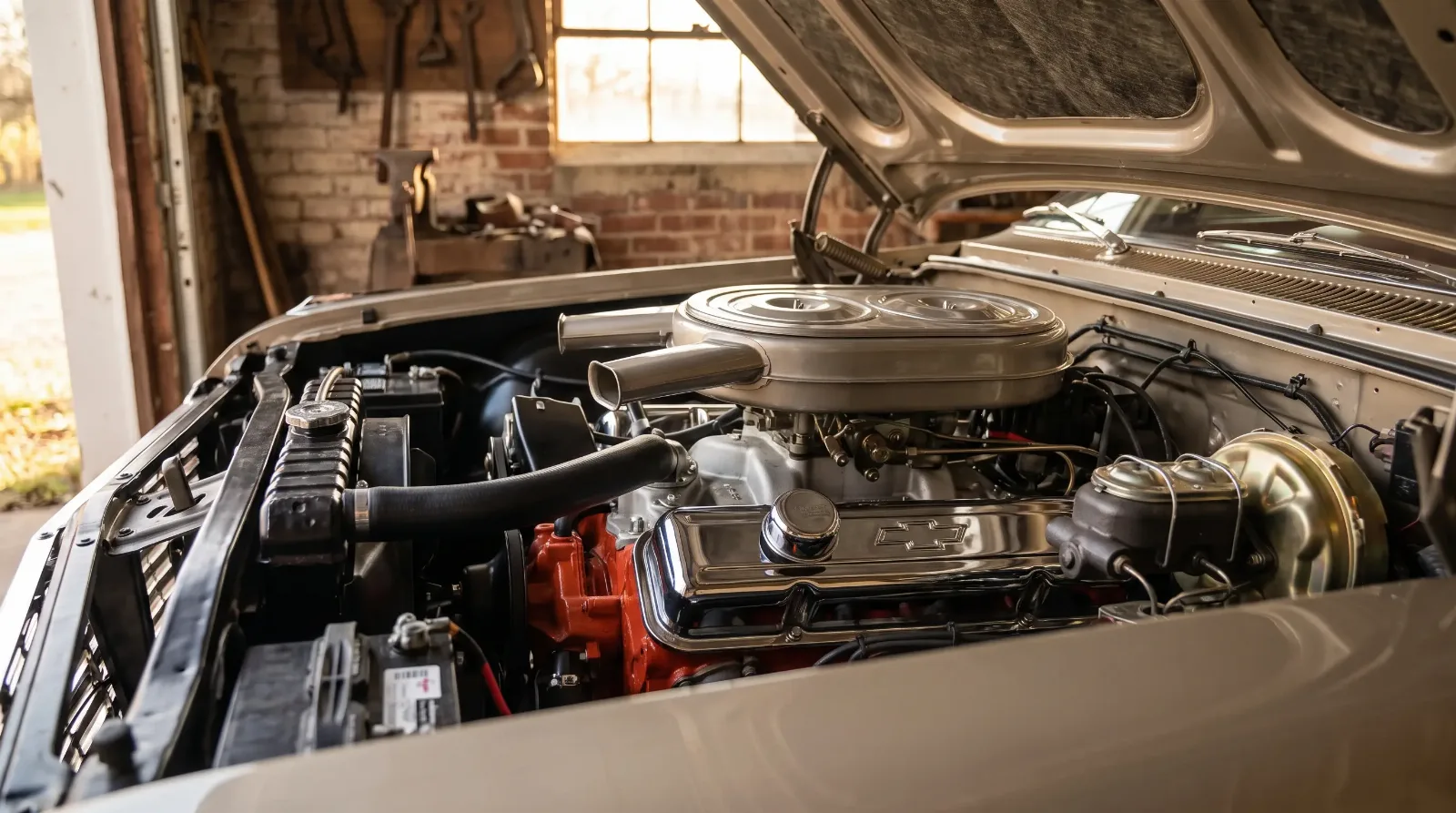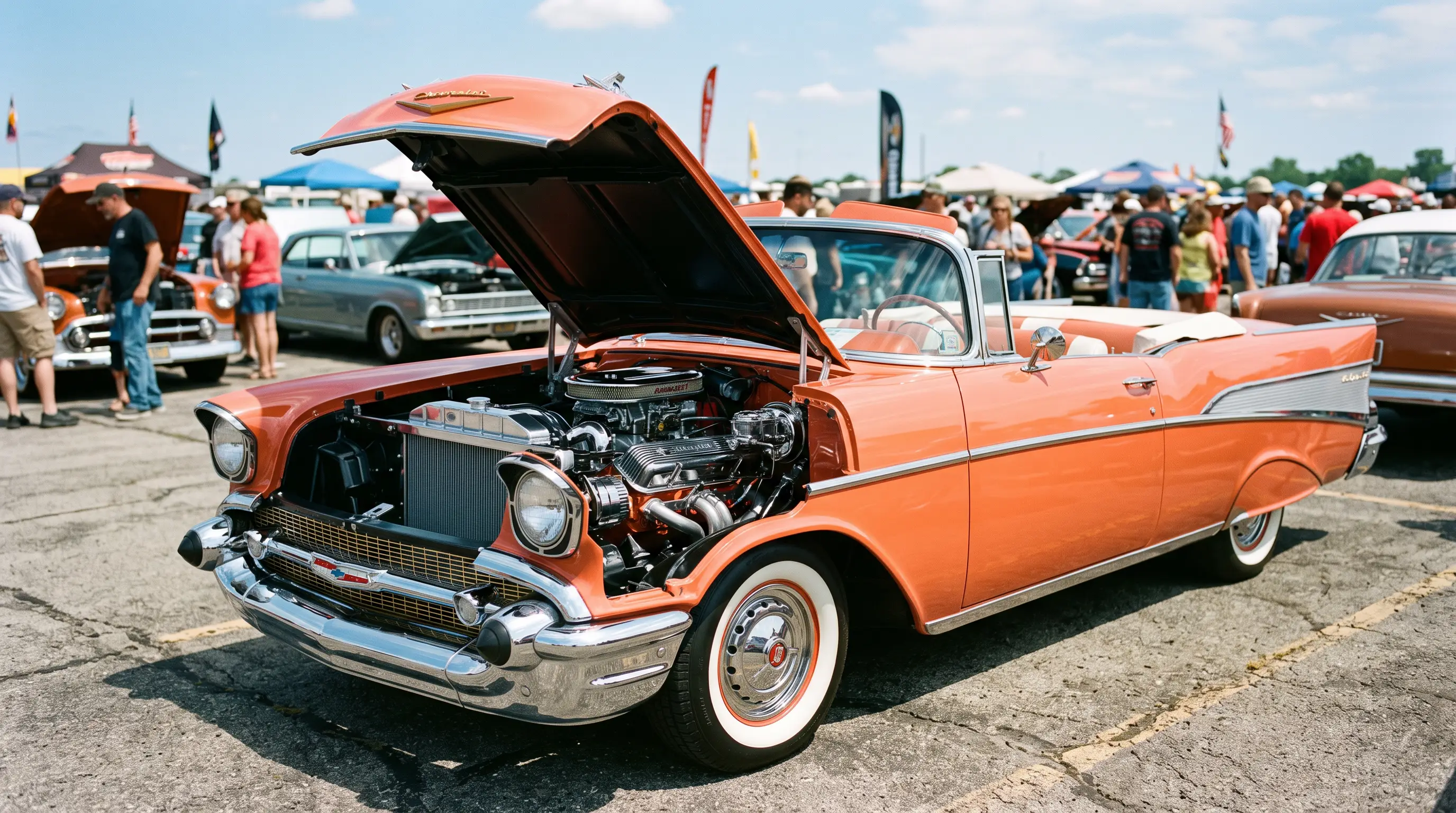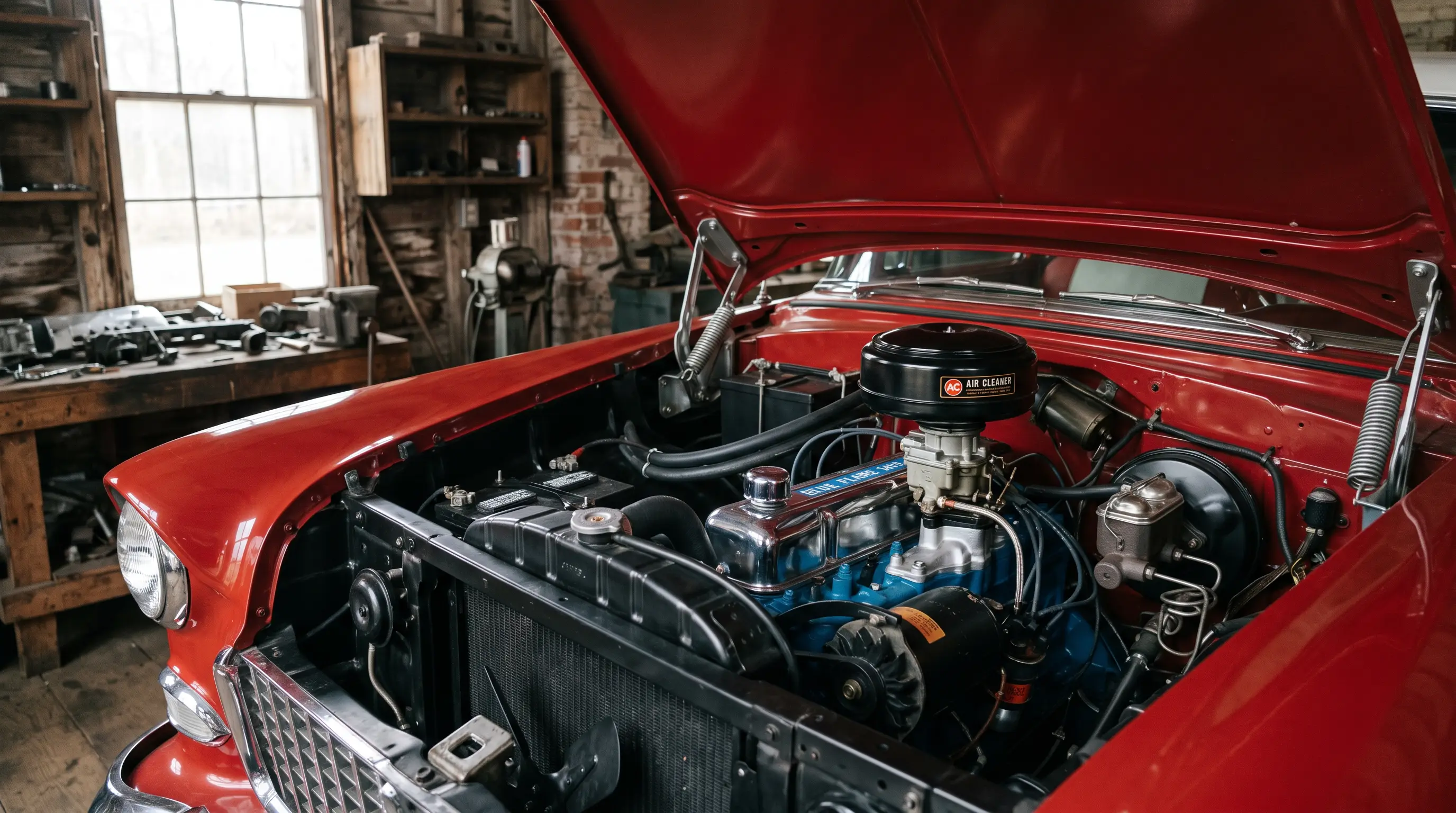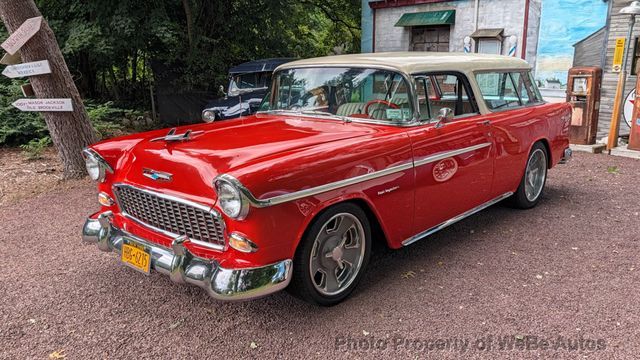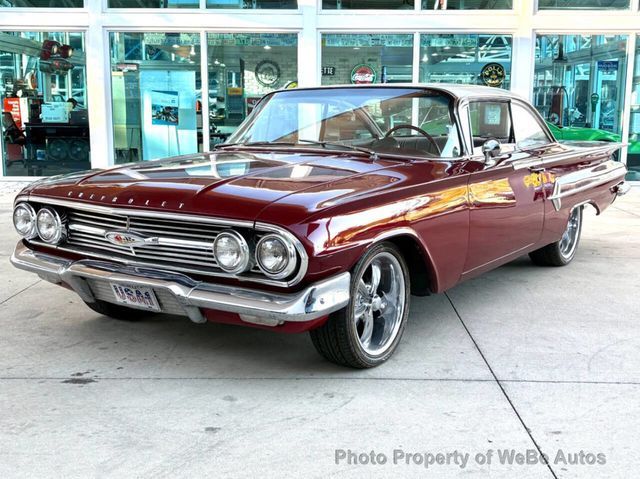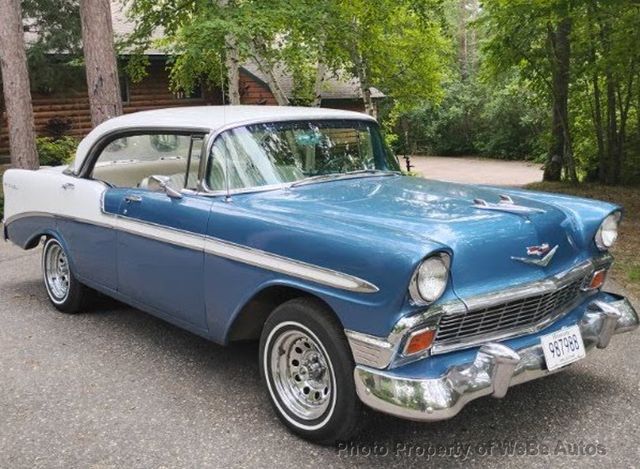
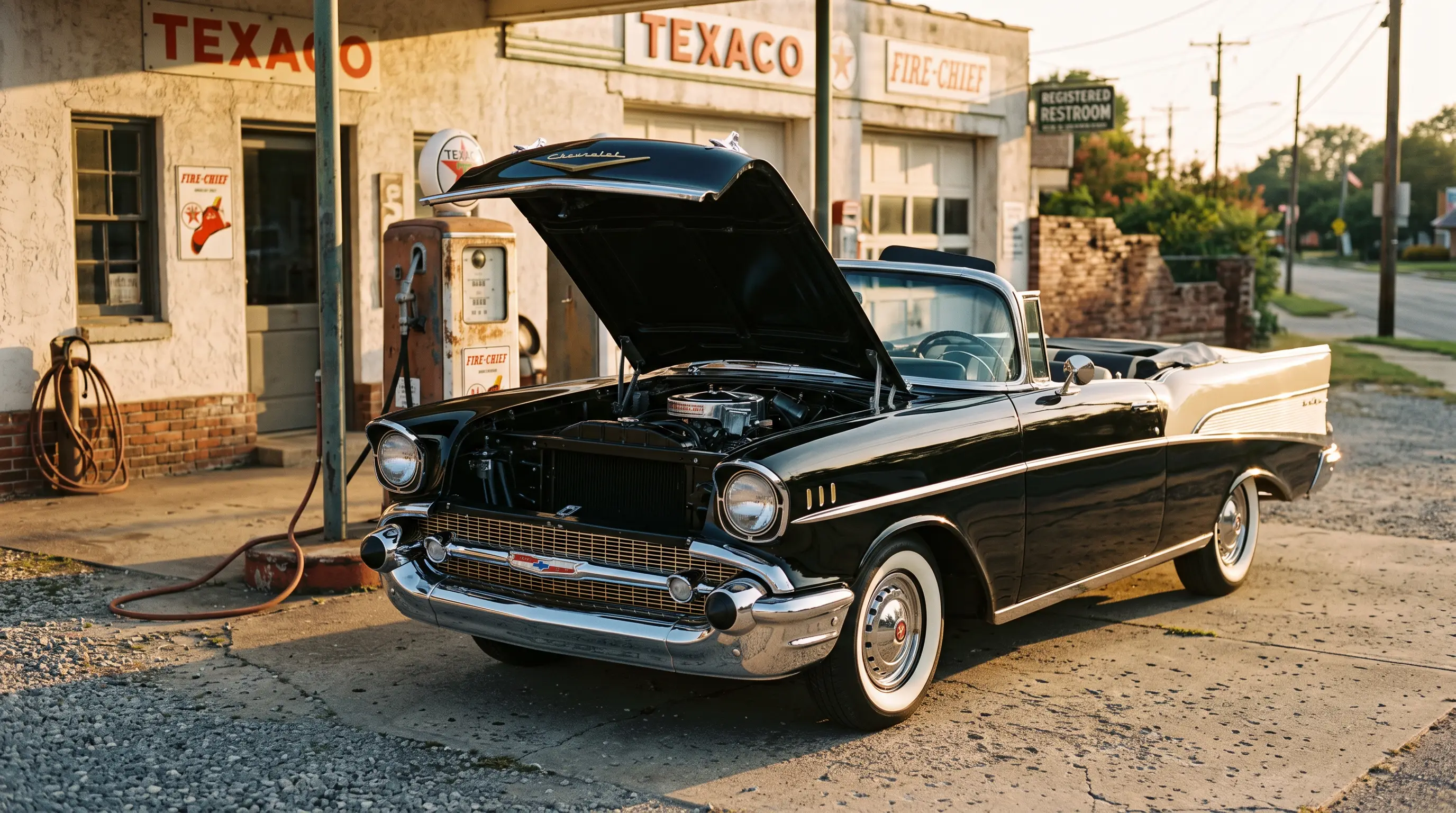
The Fuelie badge meant one thing on a 1957 Bel Air: mechanical fuel injection under the hood, built by Rochester, sold by Chevrolet as chevy ramjet fuel injection, and priced high enough that most buyers walked past it. Sources vary, but roughly 800 to 1,300 Chevrolet passenger cars, Bel Airs included, are believed to have left the factory with Ramjet fuel injection in 1957, out of the roughly 240 Corvettes that got the same option. That is a small number for a system that would go on to define an era of Chevrolet performance marketing.
What Ramjet actually did differently
Carburetors of the 1950s mixed fuel and air in one central location before sending the charge down an intake manifold to each cylinder. That worked, but distances and manifold design meant cylinders further from the carburetor got a slightly different fuel mixture than cylinders closer to it. Ramjet fixed that by metering fuel individually near each cylinder, closer to a modern fuel-injected system's logic than anything else on the American market in 1957. The result was more consistent combustion across all eight cylinders, which translated into a genuine performance advantage, not just a marketing story.
The top Ramjet tune produced 283 horsepower from 283 cubic inches, a number Chevrolet advertised heavily because it was true and because it was simple enough for any buyer to understand without an engineering degree.
Why it cost so much and sold so little
Ramjet fuel injection added a significant price premium over a comparable carbureted engine, and dealership mechanics were not universally comfortable servicing the system. That combination kept take rates low. Buyers who wanted performance and reliability in the same package often chose the dual four-barrel carburetor setup instead, which delivered strong numbers without the added cost and complexity. Fuel injection stayed a low-volume option through its production run, which is exactly why documented Fuelie cars are rare and valuable today.
The reliability problem nobody advertised
Early Ramjet units had a real reputation for finicky cold starts, particularly in colder climates, and altitude changes could throw off the mechanical metering enough to cause rough running. Dealership service departments fielded complaints, and Chevrolet issued running updates to the system across its production years trying to solve the worst of it. Some owners, frustrated with recurring issues, had dealers convert their cars back to a carburetor under warranty. That history matters because it explains why so few original Ramjet systems survive intact. Many were removed decades ago by owners who just wanted a car that started reliably every morning.
| Ramjet Fuel Injection Facts | Detail |
|---|---|
| First model year offered | 1957 |
| Top-tune horsepower | 283 hp from 283 cubic inches |
| Approximate 1957 take rate | Roughly 800 to 1,300 passenger cars |
| Shared with | 1957 Corvette |
Why the rarity built the legend later, not at the time
In period, Ramjet was a curiosity, an expensive option most buyers skipped in favor of proven carburetors. The legend built decades afterward, once collectors recognized how few original systems survived and how significant the technology actually was relative to everything else on the market in 1957. That is a familiar pattern in the collector world. Rarity plus genuine engineering significance plus decades of hindsight equals a legend that did not exist at the point of sale.
Read the background on the small block family in general in our read the background piece, because Ramjet only makes sense in the context of everything Chevrolet was doing with this engine family through the late 1950s. It was not an isolated experiment. It was the top of a very deliberate ladder.
"A thousand-odd units is not a production run. It is a rounding error that happened to change how people talk about Chevrolet performance for the next sixty years."
- Dan Reeves
How the system actually metered fuel
Rochester's unit used a mechanical, continuous-flow design rather than the electronically timed injectors modern cars use. A spider assembly of small fuel lines ran from a central metering unit out to individual nozzles positioned near the intake port of each cylinder, delivering a steady, precisely calibrated fuel stream rather than pulsed shots. That continuous-flow approach was simpler to manufacture than a fully electronic system would have been, but it also meant the tuning tolerances were tight, and a poorly adjusted unit ran worse than a well-tuned carburetor, not better. Getting Ramjet running correctly took a mechanic who actually understood the system, and those mechanics were not evenly distributed across every Chevrolet dealership in the country.
That gap between the engineering promise and the average dealership's ability to service it is the real explanation for the mixed reputation Ramjet earned in period. The hardware was sound. Consistent execution at the service counter was not, and Chevrolet's own sales literature could not fix that problem.
Where values sit for Fuelie cars now
A properly documented, numbers-matching Fuelie Bel Air commands a serious premium over an equivalent carbureted car, often multiples rather than a simple percentage bump, because so few original systems survive in verifiable condition. That premium has grown steadily as collectors have gotten more sophisticated about authentication and less willing to pay top dollar for a car wearing reproduction parts. Anyone shopping in this specific niche should expect to pay for third-party verification as part of the purchase process, not treat it as an optional extra.
Buying a documented Fuelie today
Verification is everything here. The original Rochester unit's casting numbers, the fuel injection-specific intake manifold, and dealership paperwork if it survives are what separate a genuine Fuelie from a carbureted 283 with reproduction fuel injection parts bolted on for show. Reproduction parts exist, they look convincing, and they fool casual buyers regularly. A qualified appraiser who has handled these systems before is worth the fee.
Ask a seller directly whether the fuel injection system has ever been removed, rebuilt, or replaced, and expect a straight answer with documentation to back it up. A seller who gets vague about that specific question is telling you something, even if they never say it out loud. Walk through the unit's tag numbers against known factory casting records before you finalize a price, and factor in a professional rebuild cost if the system has sat unused for years, because a non-functional Ramjet unit on display is not the same asset as a running one.
If Ramjet is out of your price range or you cannot verify authenticity on a specific car, the six-cylinder engine story worth a look too gives useful context on the other end of Chevrolet's engine lineup from this same period, a reminder of how wide the spread was between the base engine and the top option. Either way, when you are ready to buy, shop classic Air listings with documentation as your first filter, not horsepower claims. A car that is honest about being a carbureted 283 is worth more to you long term than one dressed up as something it is not.
Sources and notes
- Rochester Ramjet - Wikipedia
- Throwback Thursday 1957: Chevrolet's Ramjet Fuel Injection - Chevy Hardcore
- Time Capsule: GM's 1957 Fuel Injected Chevy V8 - Fuel Curve
- 1957-1959 Rochester Ram Jet Fuel Injection Exposed - Auto History Preservation Society
- 1957 Chevrolet Fuel-Injected 283 V8 - Curbside Classic
- 1957 Corvette Research Center - CorvSport