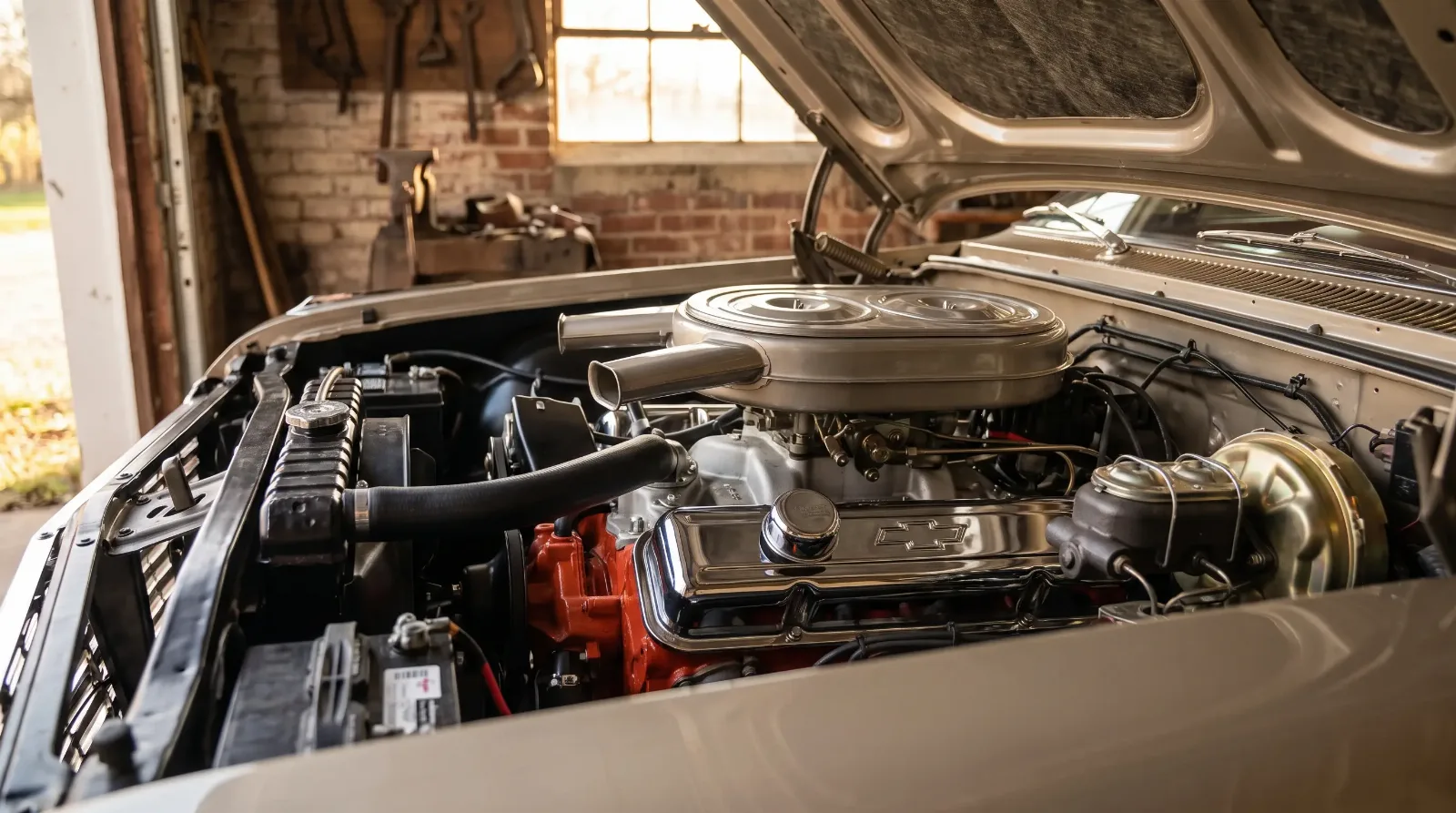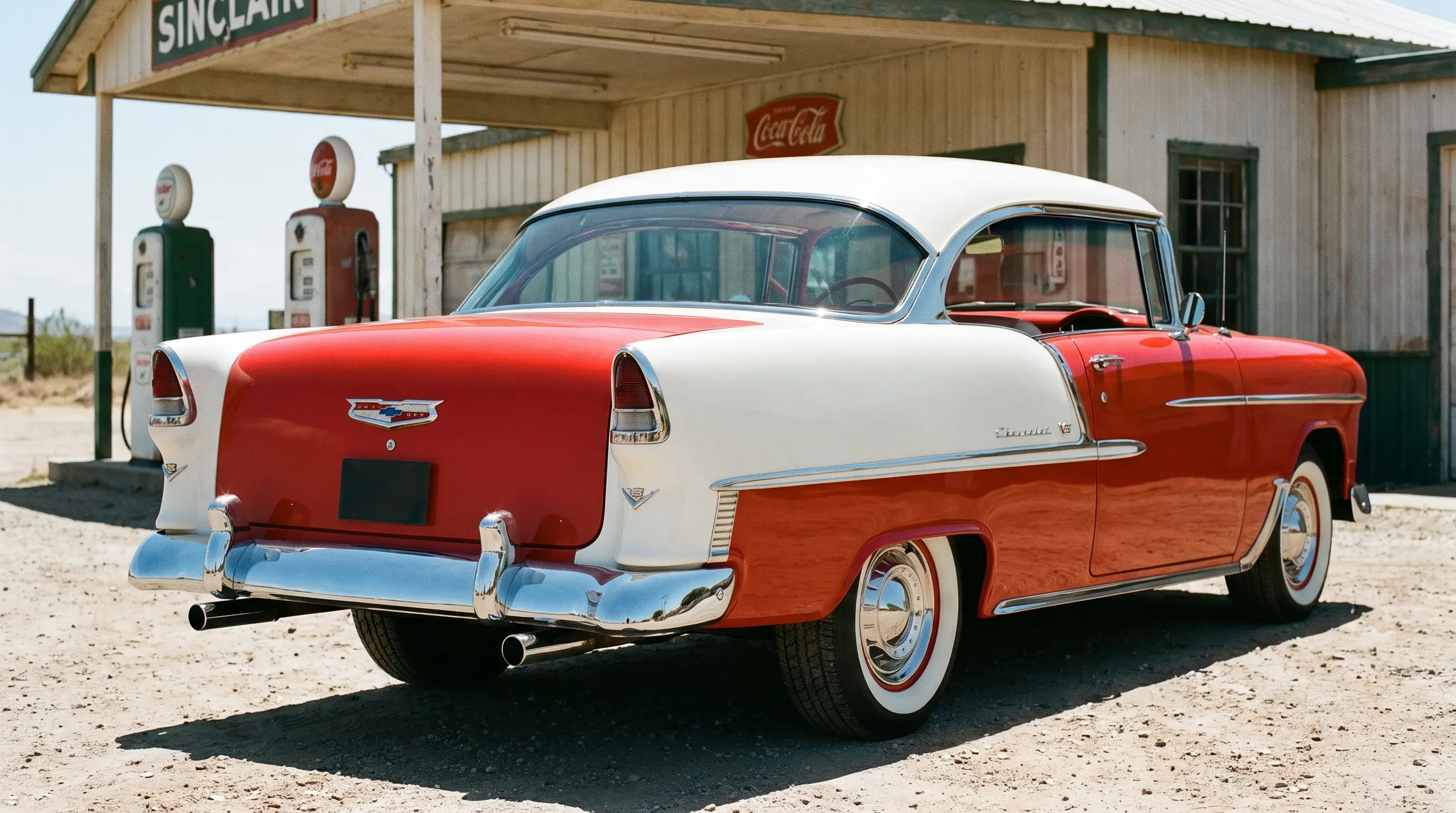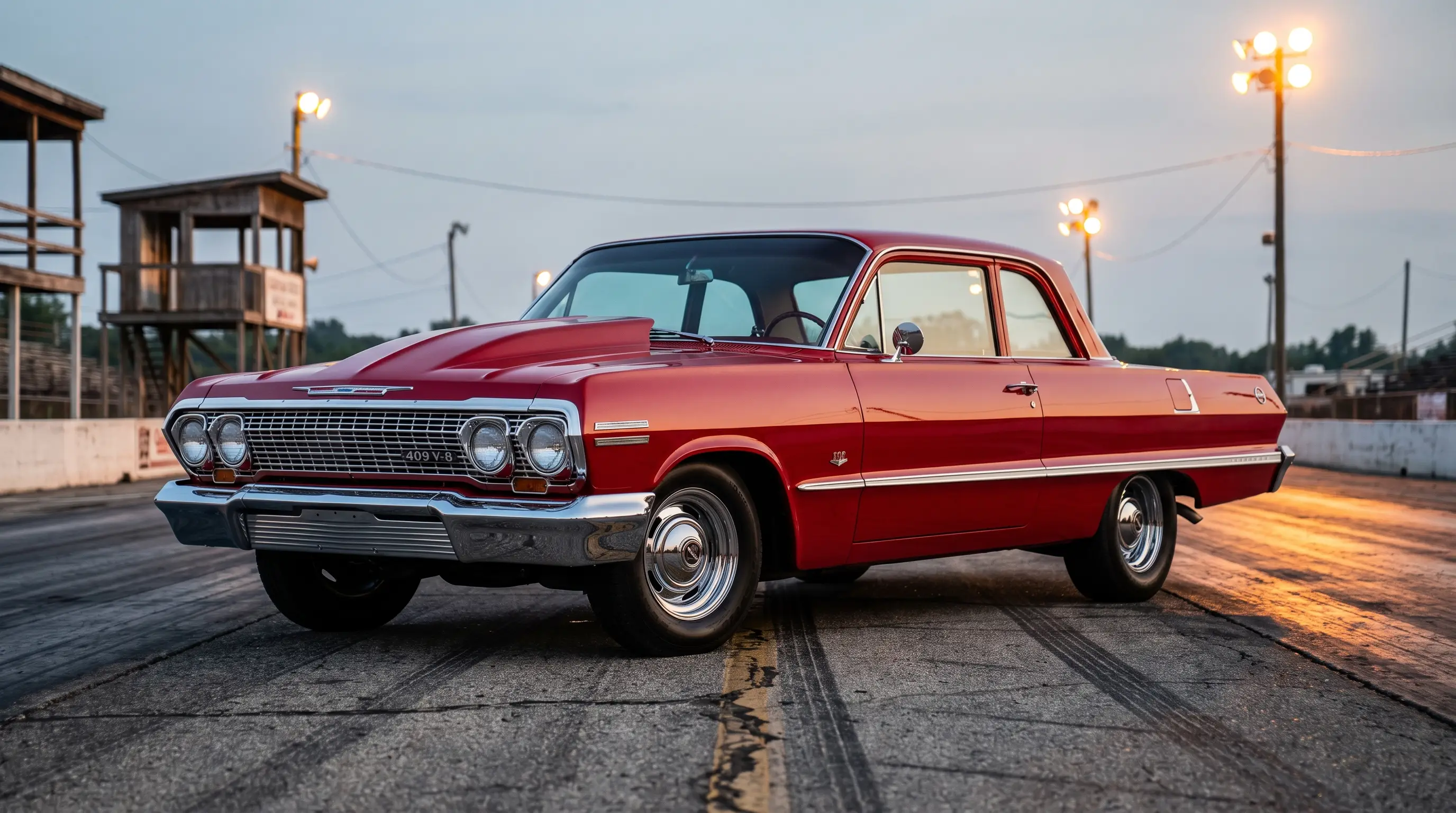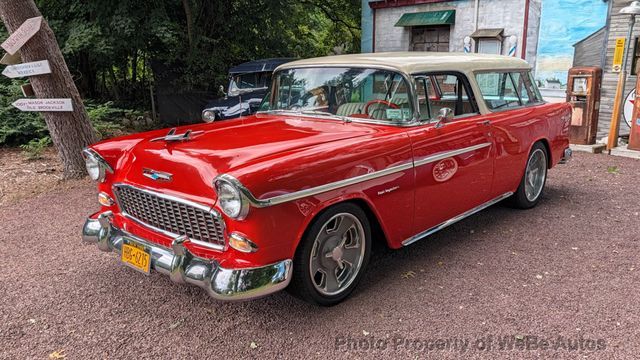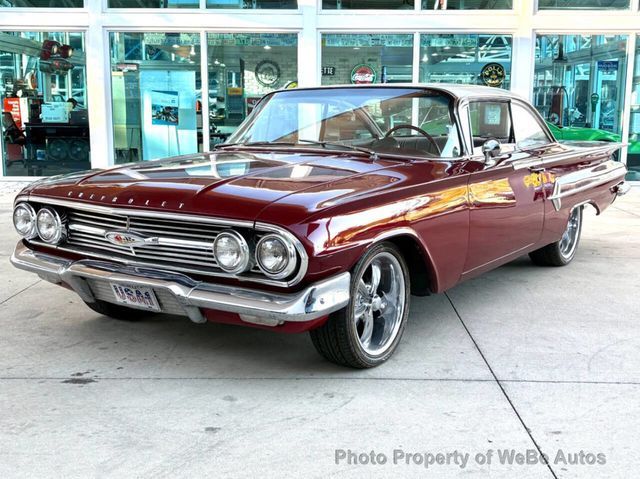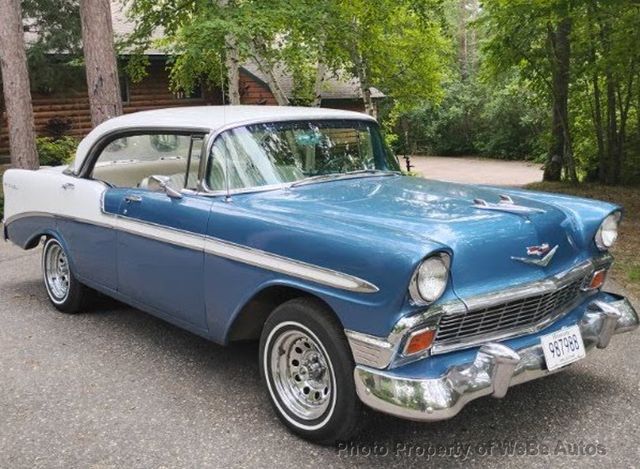
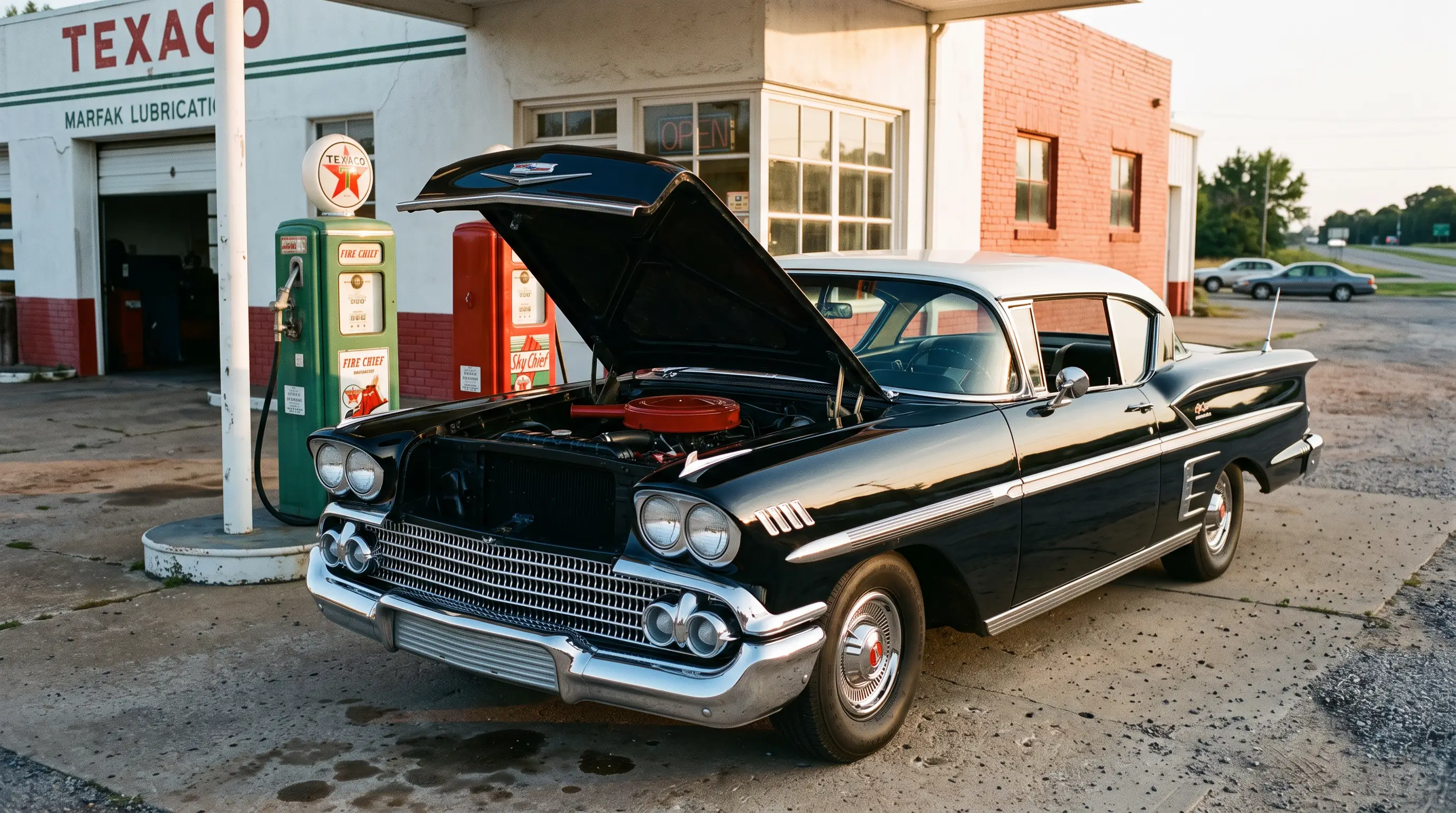
The chevy 348 engine does not share the small block's bore spacing, its casting philosophy, or even its nickname among collectors. It is a genuinely different engine family, introduced for 1958, and understanding why Chevrolet built a second, larger engine line rather than simply growing the small block further explains a real engineering decision, not a marketing gimmick.
Why Chevrolet needed a second engine family at all
By 1958, Chevrolet's full-size cars had grown heavier and Chevrolet trucks needed more low-end torque than the small block, even at its largest displacement, could comfortably deliver without significant redesign. Rather than push the small block architecture past its practical limits, engineers designed the W-series big block from scratch, sharing the mission but not the hardware with the small block family. The 348 was the first production version of that new architecture, and it debuted in both the passenger car lineup, including the Bel Air and Impala, and in Chevrolet's medium-duty trucks the same year.
The nickname "W-engine" comes from the distinctive shape of the valve covers, which sit at an angle that makes the engine's top end look like a stretched W when viewed head-on. That is not just a cosmetic styling quirk. The canted valve arrangement was part of a real combustion chamber design decision, aimed at improving breathing at higher displacement than the small block's architecture was built to accommodate.
| 348 W-Engine Configuration | Horsepower |
|---|---|
| Base four-barrel Turbo-Thrust, 1958 | 250 hp |
| Triple two-barrel Super Turbo-Thrust | 280 hp |
| Triple two-barrel Super Turbo-Thrust Special | 315 hp |
Weight, torque, and what buyers actually felt
The 348 is a heavier engine than the small block, both in absolute weight and in how it changes a car's balance, and buyers cross-shopping a 348 Bel Air against a 283-powered equivalent noticed the difference in low-speed torque delivery almost immediately. This was not a rev-happy engine built for high RPM excitement the way the fuel-injected 283 was marketed. It was built to move a heavier car with authority from a stop, and to tow or haul in truck applications without straining.
That distinction matters for how collectors should think about a 348-powered Bel Air today. It is not a small block with more cubic inches. It is a different kind of engine, built for a different kind of driving experience, and evaluating it against small block benchmarks misses the point of why Chevrolet built it in the first place.
The 348's short but important run
Chevrolet produced the 348 from 1958 through 1961, a relatively brief window before the 409 took over as the flagship big block option. That short production life is part of why documented 348 cars occupy an interesting niche among collectors. They represent the transition point, proof that Chevrolet's big block ambitions started here before the more famous 409 arrived and captured the cultural spotlight almost entirely for itself.
Read the full story of Chevrolet's engine development across this era for the complete picture of how the small block and big block families developed in parallel through the late 1950s and into the 1960s, because the 348 only makes full sense in that broader context.
"The 348 gets treated as a warm-up act for the 409. That undersells it. It is a legitimate first-generation big block that solved a real torque problem the small block could not solve on its own."
- Emily Chen
What documentation matters most for buyers
Casting numbers on the block and cylinder heads are the starting point for verifying a genuine 348, and buyers should be especially careful with any car advertised with the triple two-barrel Tri-Power setup, since these carburetors are reproduced and swapped onto lesser-equipped 348s with some regularity. A documented, numbers-matching Tri-Power car commands a real premium over a single four-barrel equivalent, and that gap has widened as collectors have become more careful about verification standards across the board, applying the same scrutiny to a 348 that they would apply to a fuel-injected small block.
Weight distribution and handling characteristics also differ meaningfully from a small block Bel Air, something a test drive reveals quickly even without checking a single casting number. A 348 car feels different from the driver's seat, heavier off the line but confident through the midrange in a way the small block, for all its virtues, does not quite replicate.
Compression ratios varied by configuration, and a buyer should confirm which specification a given engine was built to rather than assume a generic figure applies across the whole family. Higher-compression versions demand higher-octane fuel to run correctly, a practical consideration for anyone planning regular use rather than occasional show appearances. Lower-output 348s generally ran around 9.5:1 compression, while the top 315 hp Super Turbo-Thrust Special used a higher compression ratio near 11.0:1 with mechanical lifters.
Production and rarity by configuration
Base two-barrel 348s were reasonably common across the passenger car line during the engine's four-year run, but the higher-output configurations, particularly the triple two-barrel Tri-Power setup, were ordered far less frequently, reserved mostly for buyers who understood exactly what they were paying for. That rarity gap between the base configuration and the top-tier setups is wider than it is for the small block's own performance options, largely because the 348 arrived at a higher price point overall, which naturally filtered out casual buyers from the higher-performance versions.
Truck applications used the 348 as well, and while that side of the engine's history gets less attention from car collectors, it demonstrates the same underlying point about the engine's purpose. This was built to move weight and haul load, not just to chase a horsepower number on a dealership brochure. Understanding that dual-purpose design intent helps explain why the 348 feels different to drive than its horsepower figures alone would suggest, and why some owners specifically seek it out over a more powerful but harsher-feeling big block.
Where the 348 sits in the bigger picture
The 348 is not the most famous engine to ever sit in a Bel Air, and it never will be while the 409 exists in the same family tree. It is, however, the engine that proved Chevrolet's big block concept worked, and that proof paved the way for everything that followed. Collectors who understand that context tend to value 348 cars more accurately than casual buyers who dismiss them as a lesser version of a more famous engine that came later. That gap in understanding is exactly where a patient buyer can still find a fairly priced, well-documented 348 car while everyone else is bidding up 409s at auction. If you are ready to look, browse classic Air listings with the casting numbers in hand and evaluate what you find on its own engineering merits, not just by which badge sounds more familiar. A 348 done right, with matching numbers and honest paperwork, is a serious classic in its own name.
Sources and notes
- Chevrolet's W-Series Engine Specifications 1958-1965 - Over-Drive Magazine
- Throwback Thursday: The 348 Cubic-Inch W-Series Engine - Chevy Hardcore
- Chevrolet Big-Block Engine - Wikipedia
- Chevy 348-cid V-8 Engine - HowStuffWorks
- 348/409 Engine Specifications
- Development and Design of the 348-409 Chevy Engine - Chevy DIY