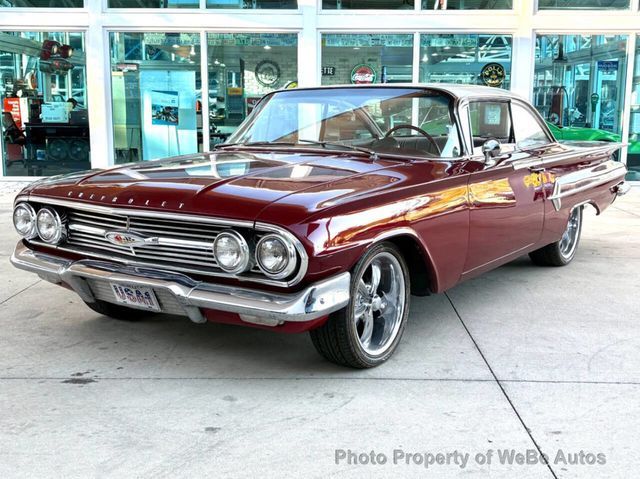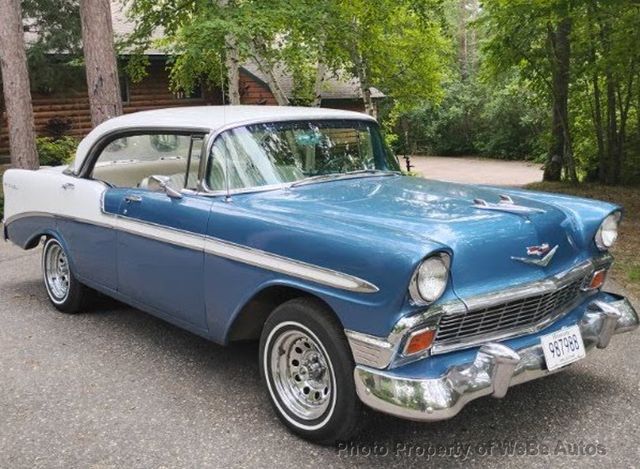
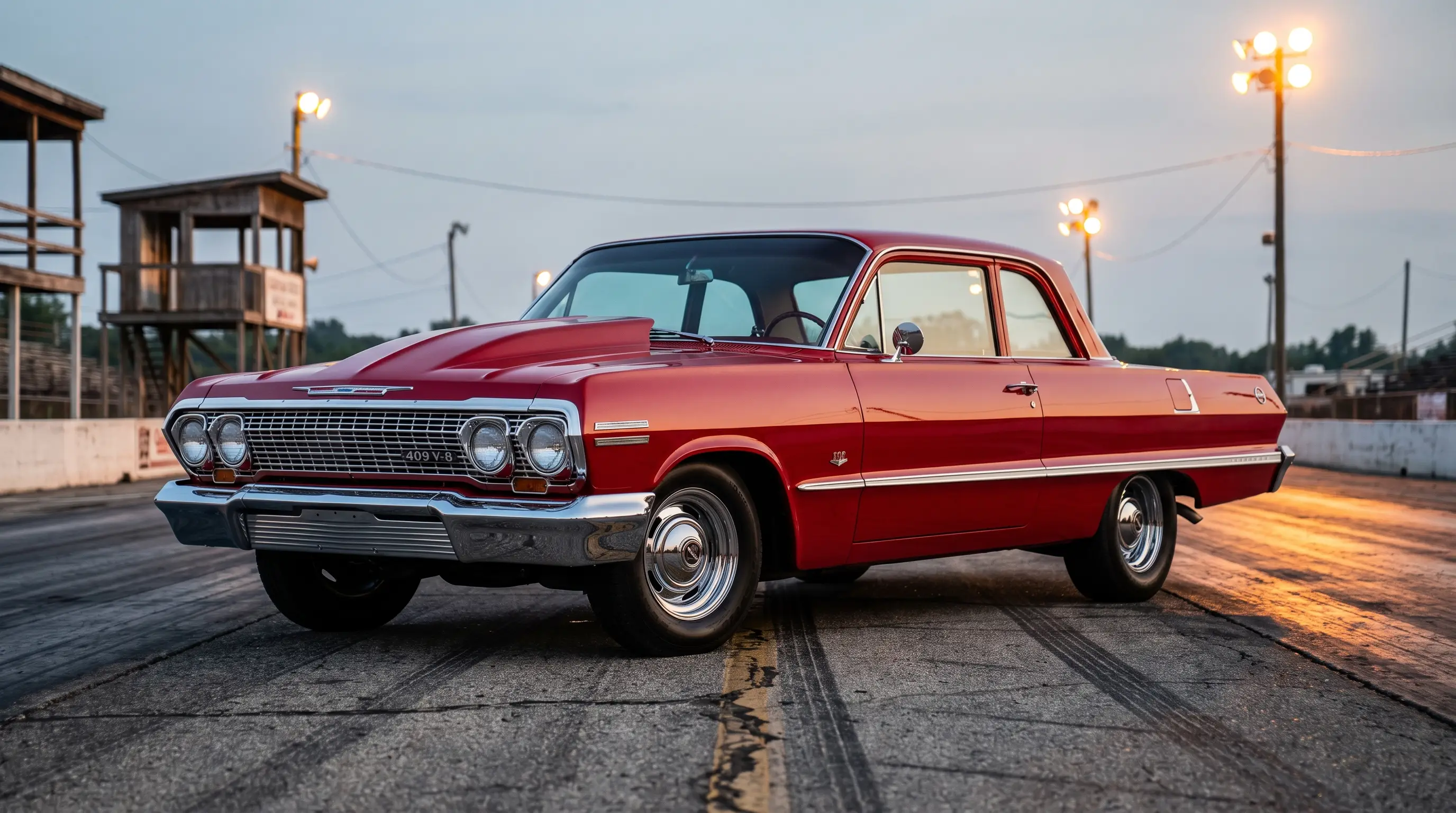
"She's real fine, my 409." One line in a Beach Boys song did more for the chevy 409 bel air than any dealership brochure Chevrolet ever printed. 409 cubic inches, up to 425 horsepower in top tune, and a cultural moment that turned an engine option into a household phrase. That is the whole story in two sentences. Here are the numbers behind it.
The horsepower figures, year by year
The 409 debuted for 1961 rated at 360 horsepower with a single four-barrel carburetor, already a serious number for a full-size Chevrolet. For 1962, the dual four-barrel version pushed that to 409 horsepower, another one-to-one cubic inch to horsepower marketing hook, echoing what the 283 fuel-injected engine had done a few years earlier. By 1963, the top-rated 409 hit 425 horsepower with dual four-barrels and higher compression. Those are the headline figures, and every one of them is backed by period magazine testing, not just brochure claims.
| Model Year | Top-Rated Horsepower |
|---|---|
| 1961 | 360 hp |
| 1962 | 409 hp |
| 1963 | 425 hp |
Built from the 348, not a clean-sheet design
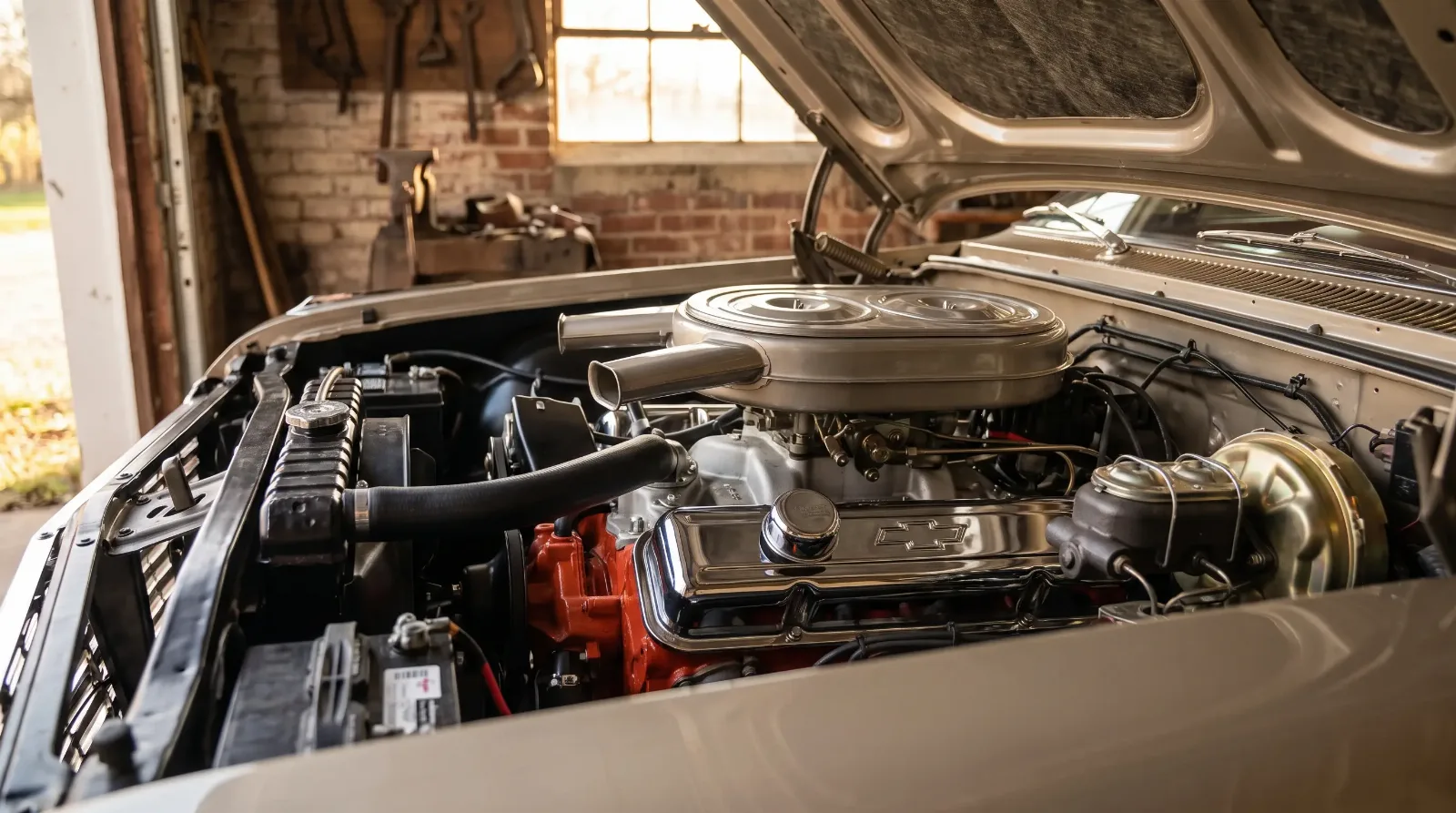
The 409 shares its architecture with the 348 that came before it, using the same W-series block with a larger bore and stroke to gain displacement. Chevrolet's engineers took a proven, torque-strong big block and pushed it further rather than starting from scratch, which is the same low-risk, high-reward approach that turned the 265 into the 283 a few years earlier on the small block side. Read our our chevy 283 engine retrospective if you want to see that small block progression laid out the same way.
The result was an engine with real low-end torque backed by genuine top-end power, a combination the 348 could not quite match at its lower displacement. That combination is exactly what drag racers wanted, and the 409 became a fixture at strips across the country within a year of its release.
Weight, handling, and what the number does not tell you
A 409-equipped Bel Air carries real weight up front, and that changes how the car handles compared to a small block equivalent. Front-end heavy, strong in a straight line, less eager to change direction quickly. That is a fair trade for the buyers who wanted this engine in the first place, since a straight-line performance car and a nimble handling car were never really the same customer in 1962. Anyone comparing a 409 car to a small block Bel Air on handling terms is comparing two different missions, not two versions of the same thing.
Fuel economy suffered accordingly, and insurance rates for high-performance big block cars climbed through the mid-1960s as underwriters caught up to what these engines could actually do. That real-world cost is part of why 409 production stayed relatively limited even at its peak popularity. It was never a mainstream option, it was a specific choice for a specific kind of buyer.
"A pop song did more for this engine's fame than any spec sheet could. Doesn't change the number. 425 horsepower in 1963 was a genuinely serious figure, song or no song."
- Dan Reeves
Values today reflect the cultural weight, not just the horsepower
A documented 409 Bel Air commands a significant premium over both the small block and the 348 versions of the same body style, and that premium reflects the engine's cultural recognition as much as its raw performance credentials. Buyers who have never opened a spec sheet in their life still know the number 409, and that broad name recognition keeps demand strong beyond just the dedicated collector community that would care about a 348 or a fuel-injected 283 on engineering merits alone.
Verification matters enormously given that premium. Casting numbers on the block, the correct dual four-barrel intake and carburetor setup for the model year, and any surviving factory documentation all separate a genuine 409 car from a lesser engine dressed up to look the part. This is one of the most commonly misrepresented engines in the classic Chevrolet market precisely because the name carries so much recognition. A seller has real financial incentive to stretch the truth here, so buyers need real diligence to match it. A price gap between a suspiciously cheap "409" and a fully documented example is usually not a bargain, it is a warning sign worth taking seriously before money changes hands.
Drag strip results built the reputation before the song did
NHRA competition through 1961 and 1962 gave the 409 a genuine track record before it ever became a lyric. Stripped-down Bel Airs and 300-series sedans running the 409 posted quarter-mile numbers that embarrassed cars costing considerably more, and that kind of result at a public strip carries weight with buyers that a magazine ad never quite matches. Chevrolet leaned into that reputation deliberately, supporting racing teams and dealer-backed cars in a way the company had not committed to as heavily with earlier engine programs.
That racing pedigree matters for how collectors evaluate the 409 today. A car with a documented competition history, even a modest local strip record, carries more weight than an otherwise identical 409 with no history at all. Provenance in this specific corner of the hobby is not just about matching numbers, it is about the story the car can actually prove, not just the one a seller tells.
What separates a real 409 from a convincing fake
Given the premium a genuine 409 commands, misrepresentation is common enough that experienced buyers treat every unverified claim with real skepticism. The block casting number is the starting point, cross-referenced against known factory records for the claimed model year. The intake manifold and carburetor setup should match the specific horsepower rating advertised, since a 360 horsepower single four-barrel car dressed up with a dual four-barrel intake is a straightforward and common deception. Compression ratio and cylinder head casting numbers round out a full verification, and any seller unwilling to let a qualified third party check these details before a sale should be treated as a red flag, not an inconvenience.
The bottom line on the 409
360 horsepower in 1961, 409 in 1962, 425 by 1963, built on a proven big block architecture that traded handling finesse for straight-line authority. That is the engineering reality behind the cultural legend, and both halves of the story are worth knowing before you shop. For the full arc of how Chevrolet's big block program evolved after the 409, a related story covers what came next as the company kept pushing displacement through the rest of the decade. When you are ready to look at actual cars, current Airs for sale now range widely in documentation quality, so treat casting numbers as non-negotiable before you pay a 409 premium for an engine that might not actually be one.