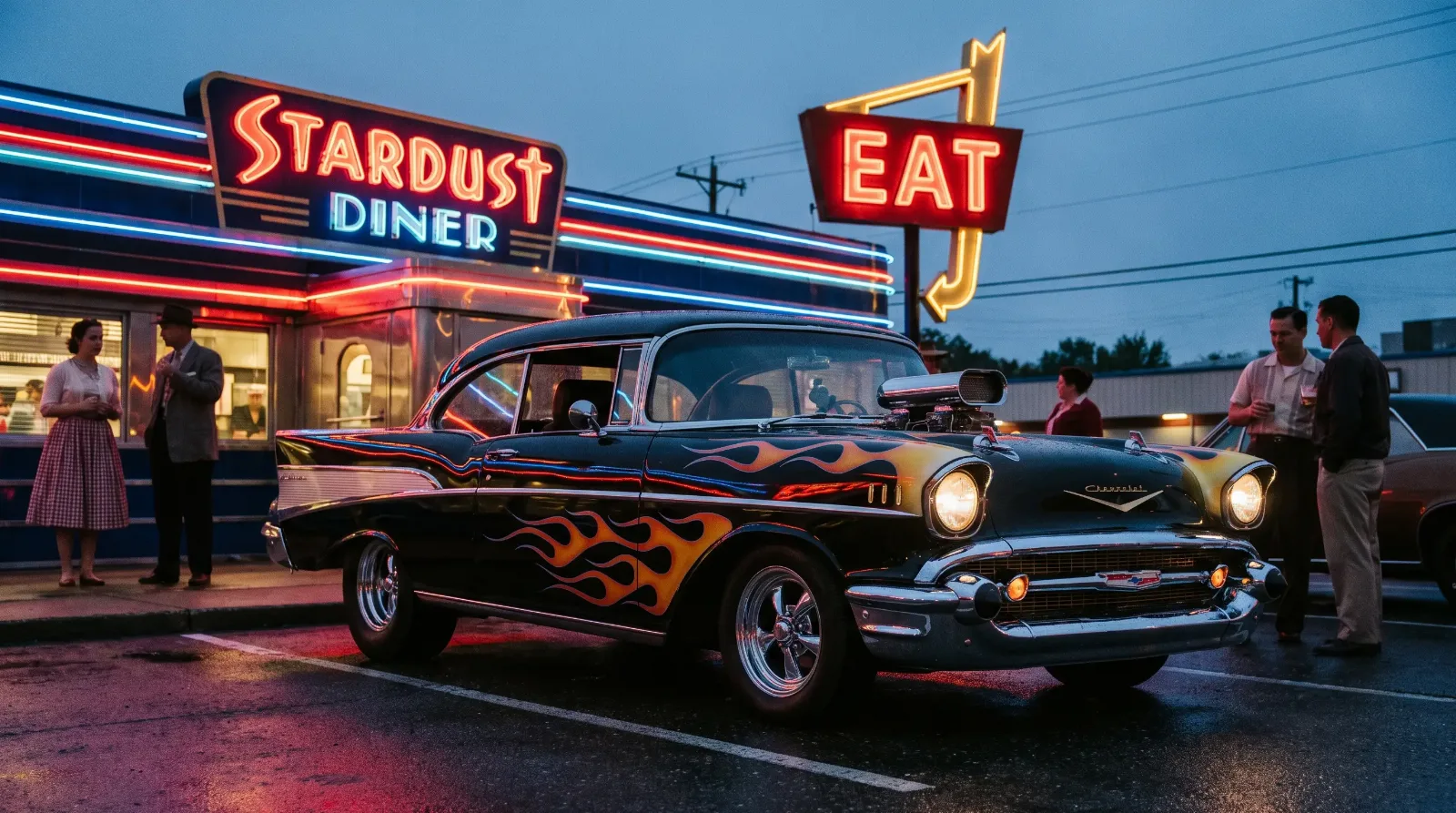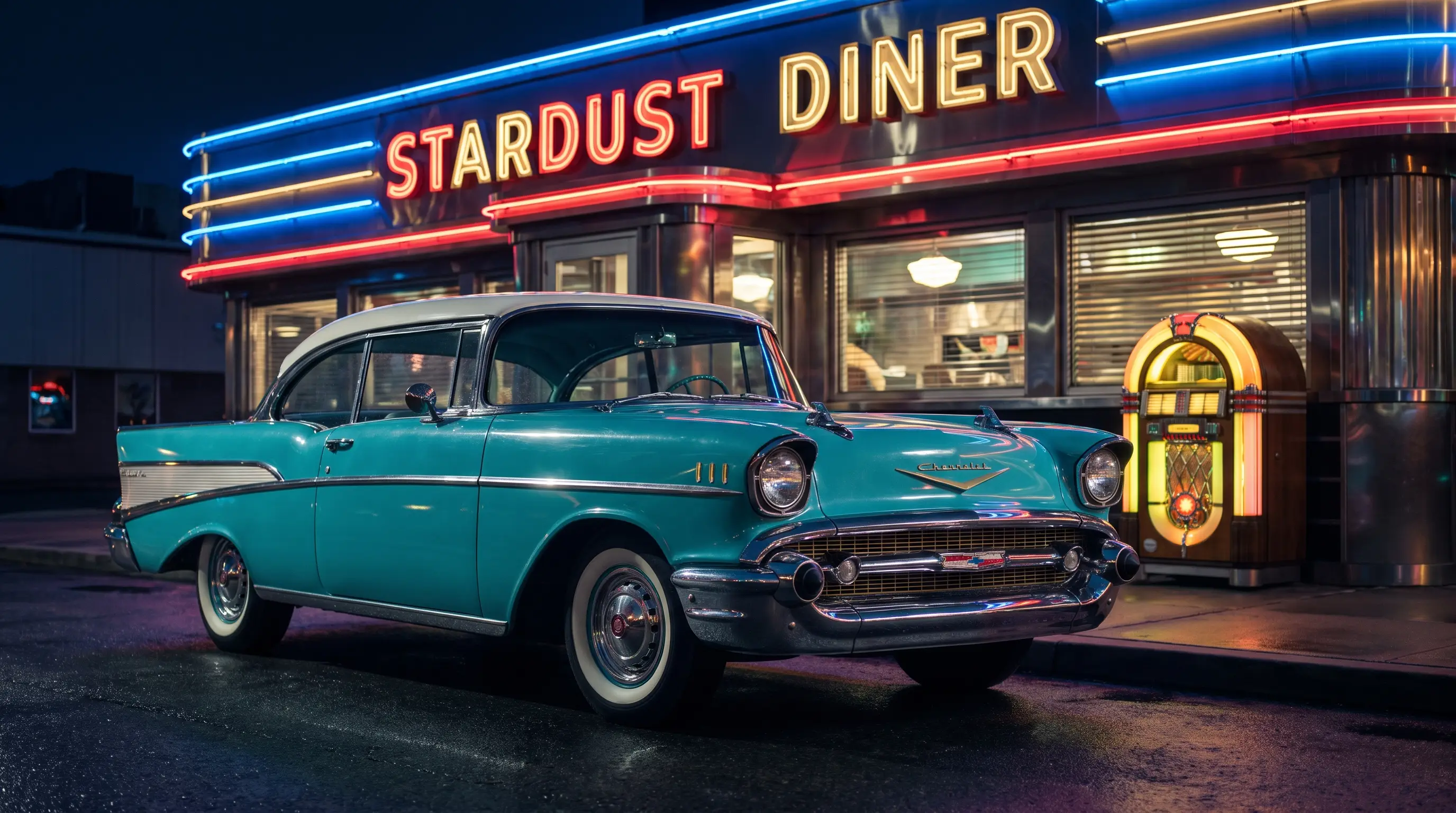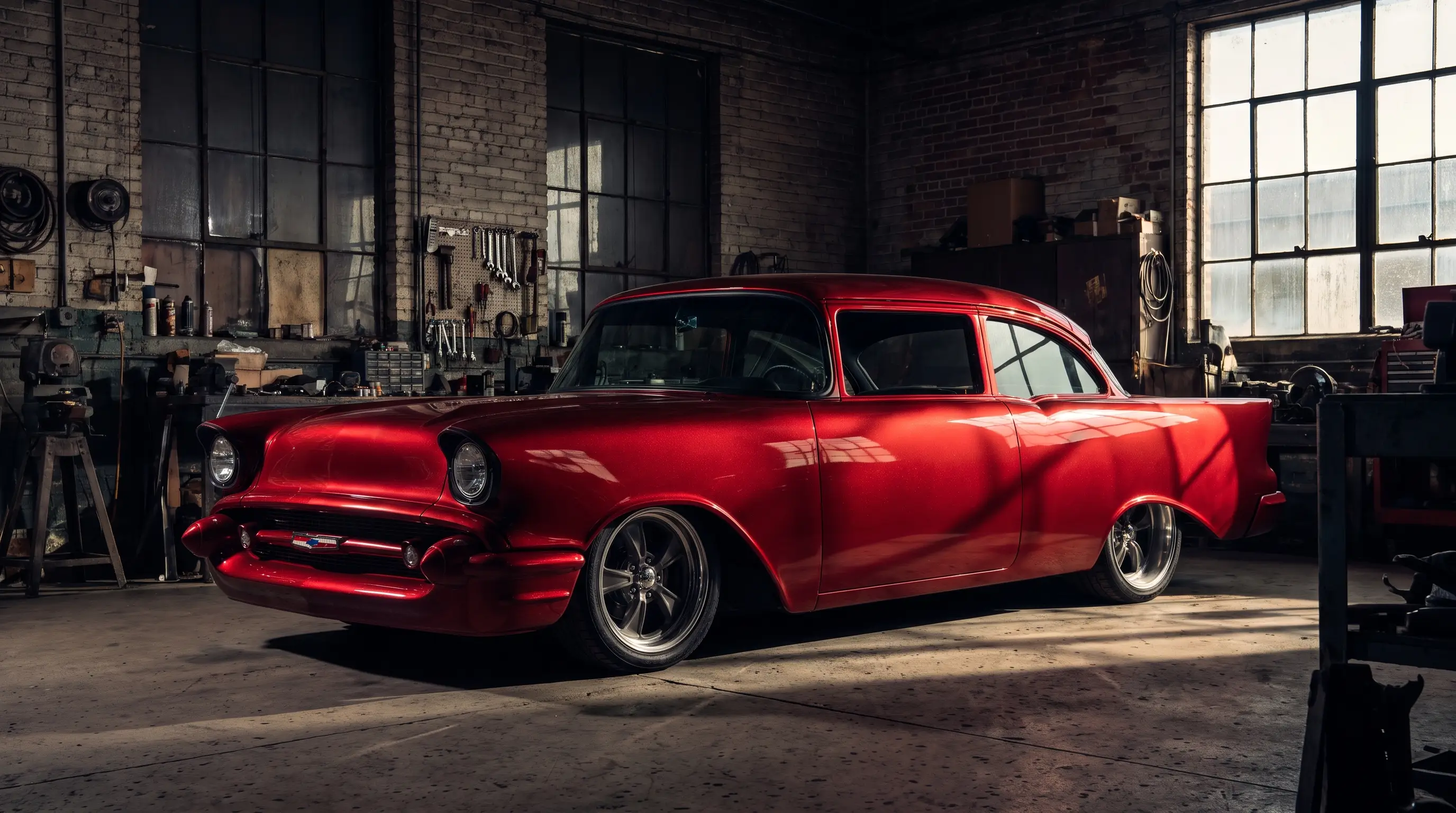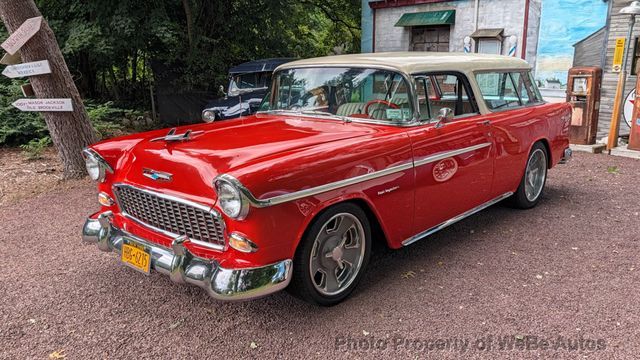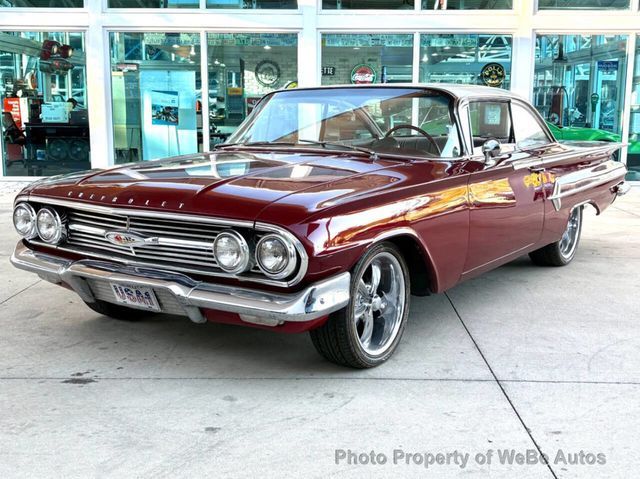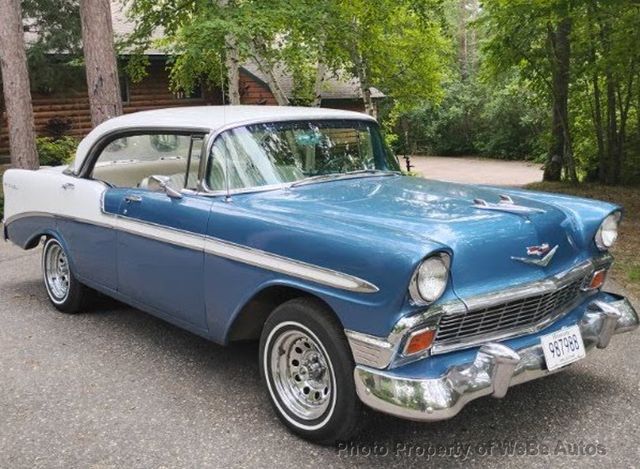
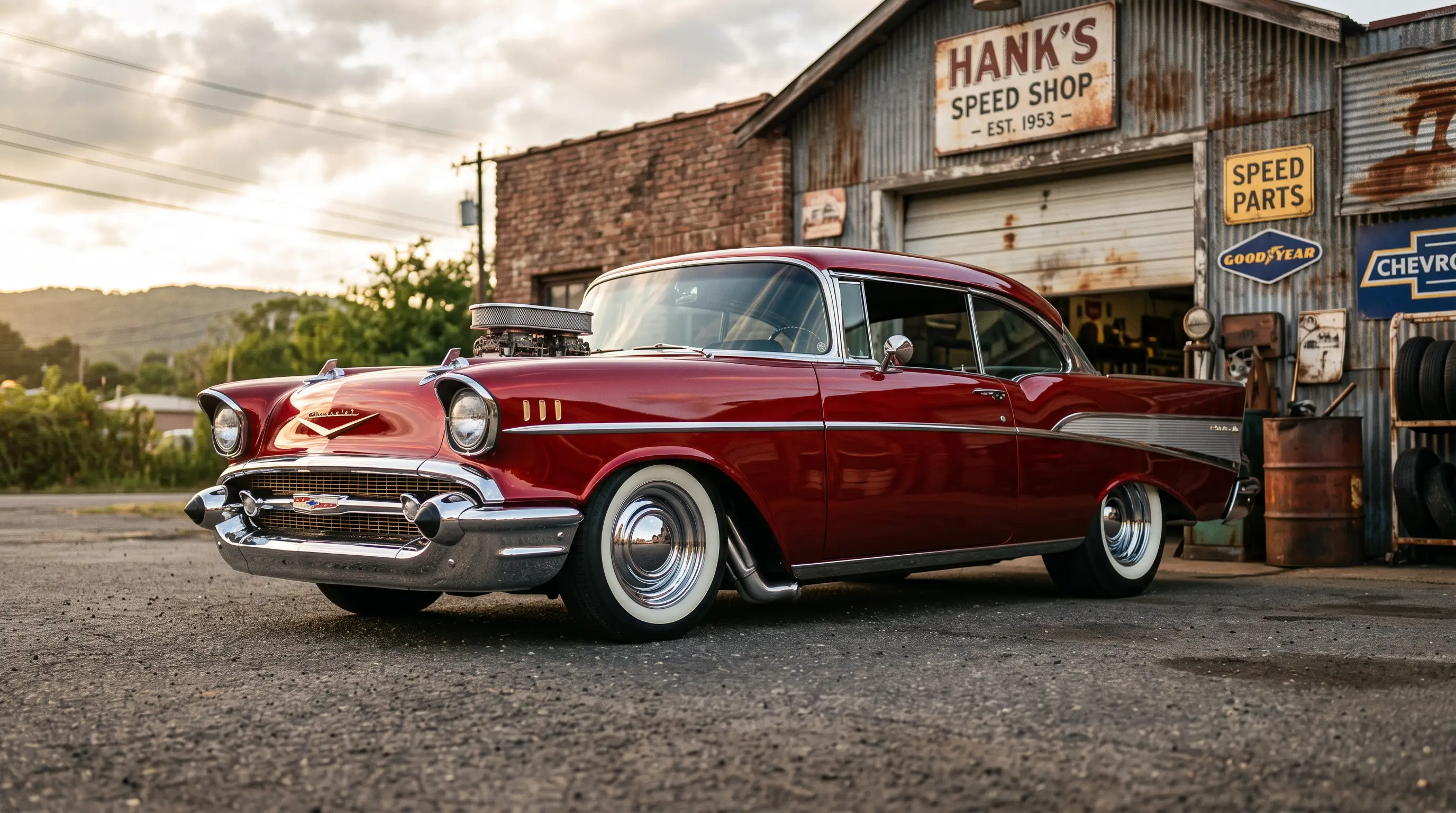
Ask ten different hot rodders to name the definitive hot rod and you'll get ten different answers, right up until somebody mentions a Tri-Five Chevrolet, and then the argument usually stops. I've watched this happen at three different club meetings over the years. Somebody brings up a Deuce coupe, somebody else argues for an early Mustang, and then a quiet guy in the back who has owned the same 1955 Bel Air since he was seventeen says one sentence and the room goes still. The tri five definitive hot rod claim is not really about which car is fastest or rarest. It is about which car built the culture that every other hot rod still borrows from.
The car that showed up at the right moment
Timing matters more in this story than most people admit. The Tri-Five Chevrolets, built from 1955 through 1957, arrived exactly when postwar America had the disposable income, the growing highway system, and a generation of young men freshly discharged from military service with mechanical training and no polite outlet for it. Other cars from other manufacturers existed in similar numbers during the same years. None of them combined light weight, a genuinely strong small block V8, and sheer production volume the way the Bel Air and its siblings did. There were simply more of these cars available, cheap, in every junkyard and driveway in the country, at the exact moment a generation of builders was looking for a canvas.
That combination, of availability and capability arriving together, is what separates a car that becomes a legend from a car that merely gets modified. Plenty of models have been hot rodded over the decades. Very few became the foundation of an entire subculture the way the Tri-Five did.
What made it the builder's first choice
The small block V8 gets most of the credit, and it deserves plenty, but the body itself did real work too. The Tri-Five's proportions, that long hood, the relatively simple structure underneath the trim, gave builders a shape that took modification well. You could channel it, chop it, drop a bigger engine under the hood, or leave it stock and just tune the motor, and in every case the car still looked purposeful rather than compromised. Not every body style from the era can say the same. Some cars fight a builder's intentions. The Tri-Five, more often than not, cooperates.
I've had guys tell me they started with a Bel Air because it was the cheapest running V8 car at the swap meet that Saturday, and ended up staying with the platform for forty years because nothing else they tried afterward felt as honest under their hands. That is not nostalgia talking. That is a real, repeated pattern across three generations of builders who could have picked something else and chose to come back to the same shape.
How the drag strip made the case permanently
Nothing settles an argument about a car's credibility faster than a stopwatch, and Tri-Five Chevrolets spent the late 1950s and 1960s proving themselves at strips across the country against cars that cost a great deal more money. Word travels fast in this hobby, and every win got repeated at the next swap meet, the next club meeting, the next backyard bull session. By the time the muscle car era arrived in full force in the mid-1960s, the Tri-Five's reputation as a serious performance platform was already locked in, built one quarter mile at a time by guys who had no factory backing and no marketing budget, just a small block, some patience, and a willingness to lose a few races before winning consistently.
Why later generations kept choosing it
Every decade since has produced its own dominant performance platform, and yet the Tri-Five never really lost its position in the hot rod world's pecking order. Part of that is supply. Enough of these cars survived, and enough parts remained available through the aftermarket, that a builder in any decade could realistically source what they needed. Part of it is pure design durability. The shape still photographs well, still draws a crowd at a show, still looks purposeful sitting on a trailer at a strip fifty years after the last one rolled off a Chevrolet assembly line.
If you're curious how this reputation actually took root in the broader culture beyond the drag strip and the swap meet, where this started covers the wider story of how the Tri-Five generation became such a fixture of American car culture in the first place, well beyond just the hot rod scene this piece focuses on.
What the argument actually settles
I don't think the definitive hot rod title gets decided by a single spec sheet or a single quarter mile time. It gets decided by whether a car built a lasting culture around itself, whether it gave three generations of amateur builders a reason to keep coming back to the same platform even after dozens of newer, theoretically better options came along. By that measure, the Tri-Five earned the title the hard way, one budget build at a time, one swap meet transaction at a time, one seventeen-year-old kid with a rusty 1955 and a borrowed set of wrenches at a time.
I've heard younger builders argue for newer platforms plenty of times, and honestly some of their arguments are good ones. Modern aftermarket support, easier fabrication, better availability of certain body styles depending on the region. None of that changes the historical fact sitting underneath the whole debate. Whatever platform a young builder picks today, they are working inside a hot rod culture whose rules, whose swap meet economy, whose entire social structure got built decades ago around cars like this one. You can choose a different foundation for your own project. You cannot choose a different history for the hobby you're standing in.
That is really the whole case in one sentence, the one the quiet guy at the club meeting always lands on. Every hot rod builder working today, whatever platform sits in their own garage, inherited a set of assumptions about what a hot rod should look like and feel like from a lineage that runs straight back through the Tri-Five era. You do not have to own one to be shaped by it. You just have to walk into any serious hot rod shop in the country and notice how many of the proportions, the attitudes, and the unwritten rules trace back to a car built between 1955 and 1957.
"You don't vote on the definitive hot rod. You watch which car keeps showing up in the same garages, generation after generation, long after it stopped making financial sense, and that's your answer."
- Wayne Coburn
If that quiet guy at the club meeting made you curious, the market still has plenty to offer. You can find a classic Air for sale and decide for yourself whether the definitive hot rod argument holds up once you're standing next to one.