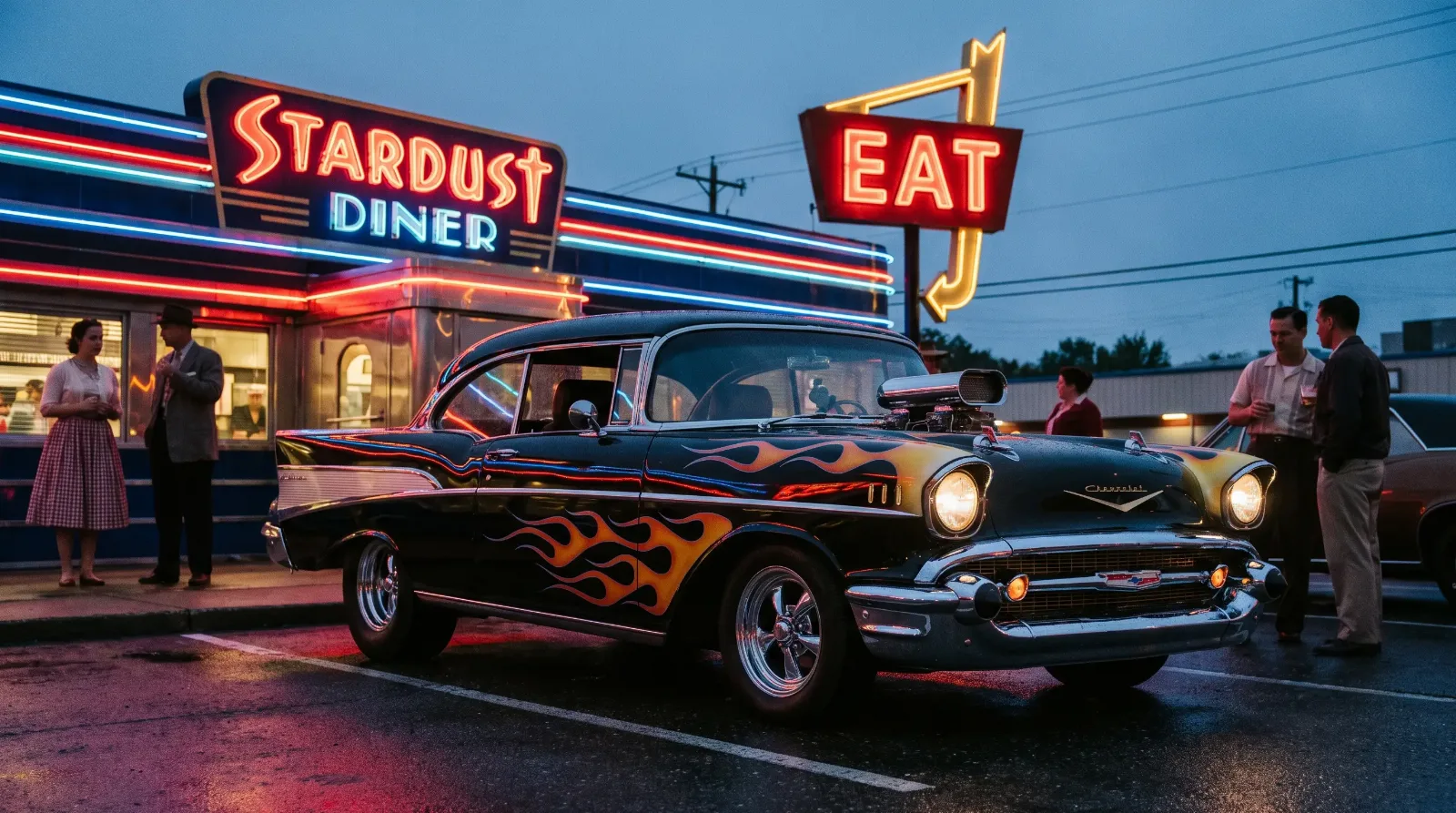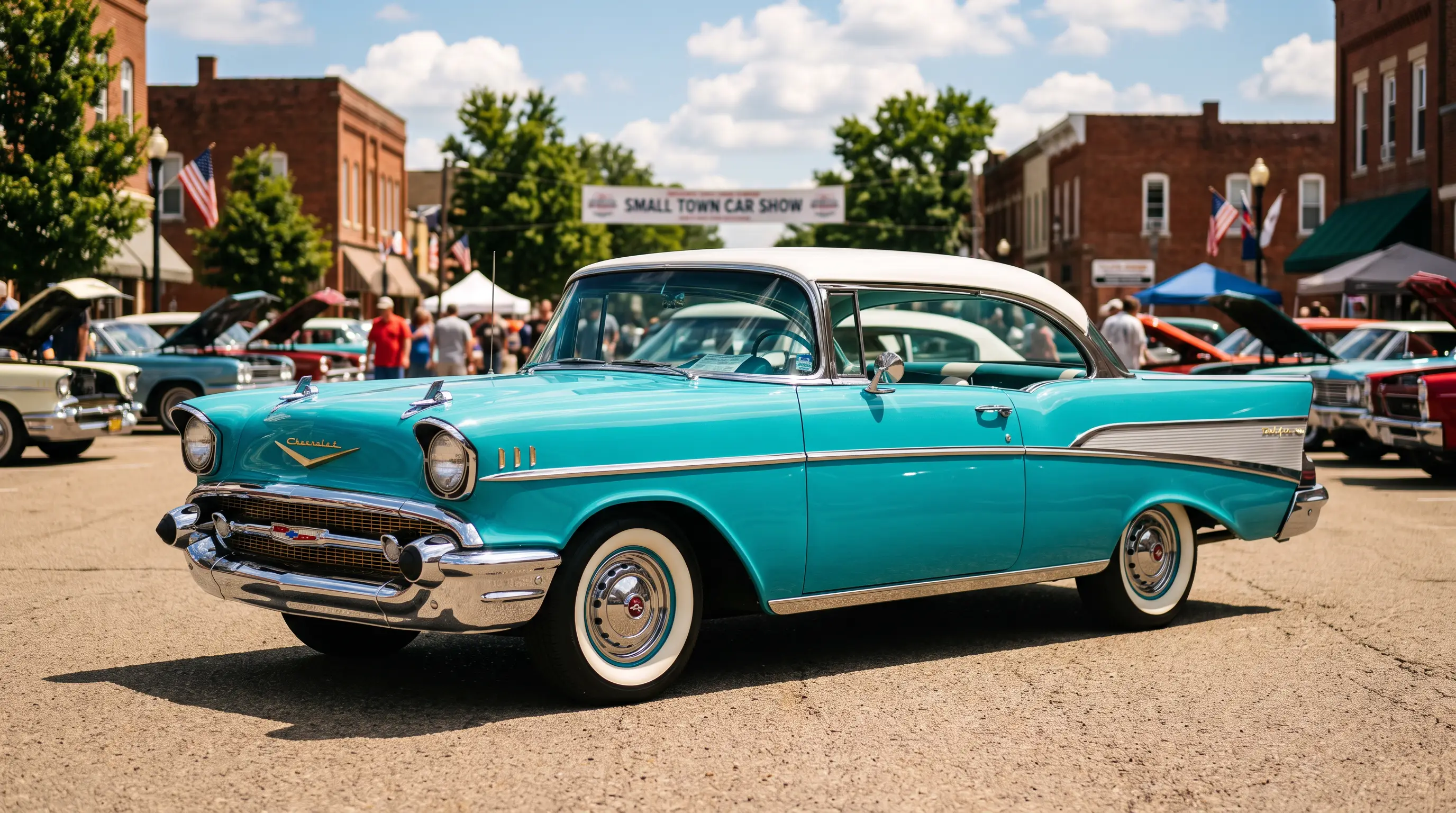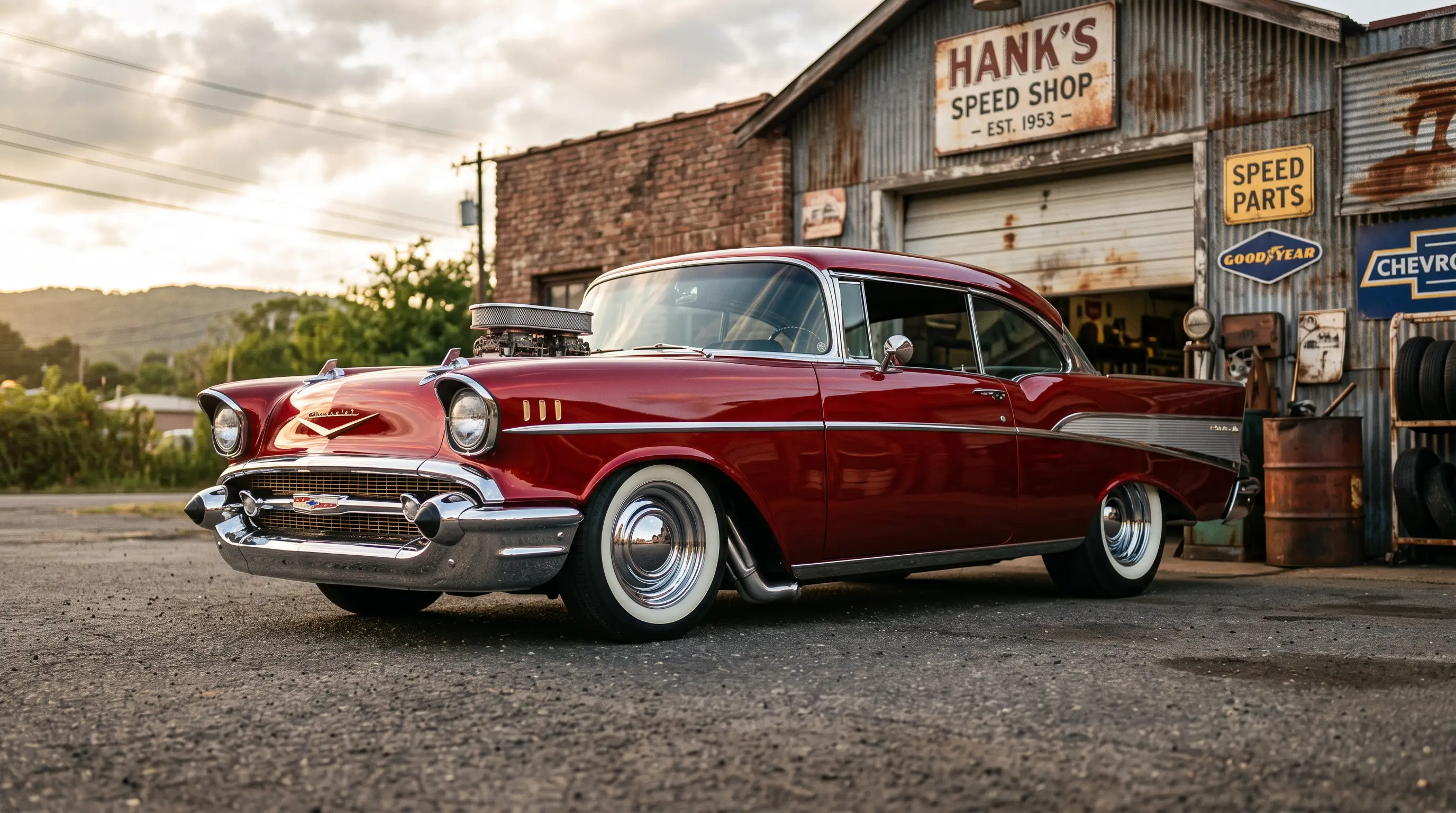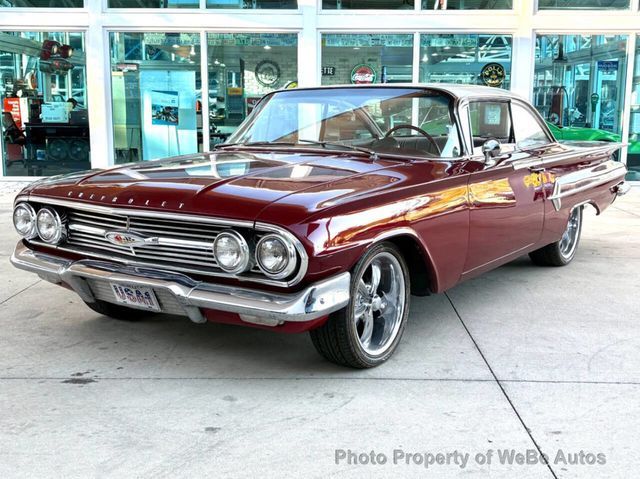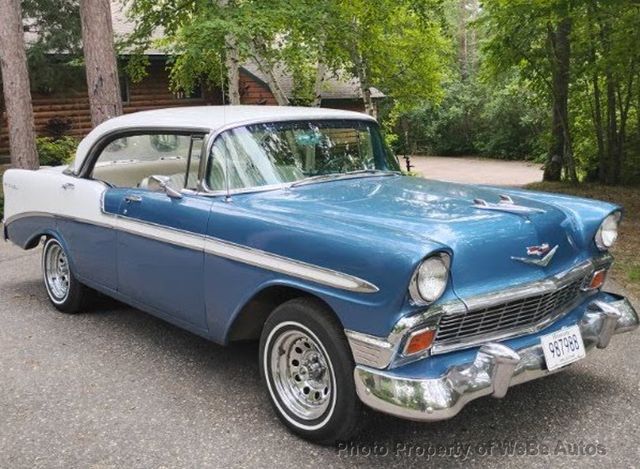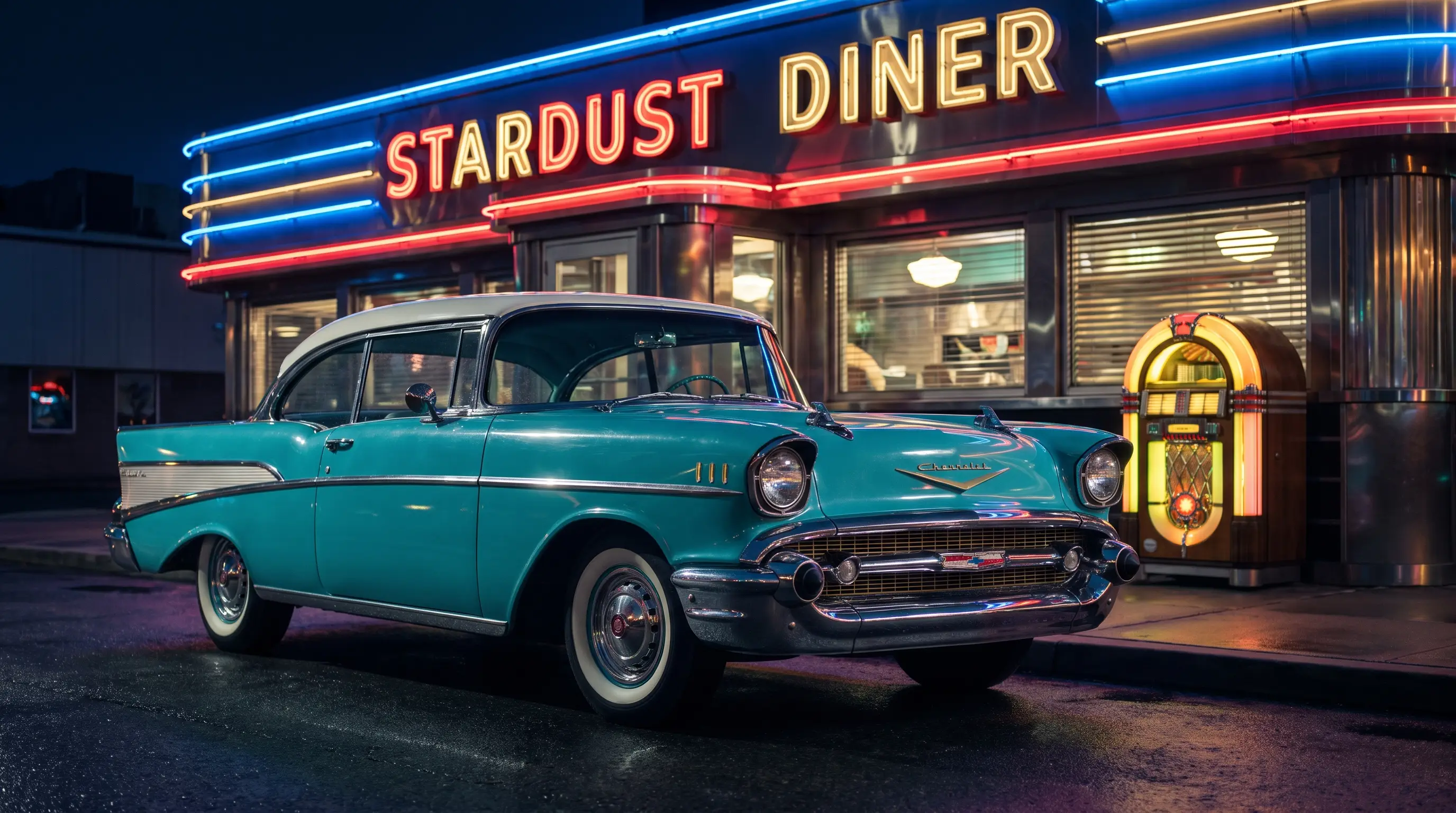
Somewhere around the third verse of a certain kind of American rock and roll song, a Chevrolet shows up. It is parked outside a drive-in, or it is idling at a stoplight, or it is the thing a young couple drives away from town in when nothing else about their life is going right. More often than any other single model, that Chevrolet is a Bel Air, and the chevy bel air in music story is really a story about how a mid-priced family car ended up as one of the most reliable images in the American songbook.
Why songwriters kept reaching for this car
Songwriters need images that a listener can picture instantly, without explanation, in the space of a single line. A Bel Air does that work efficiently because by the late 1950s it was already one of the most common cars on American roads, familiar enough that naming it required no further description. Unlike a luxury car, which signals wealth the listener may not share, or an obscure model, which requires the listener to already know something specialized, the Bel Air sat in a sweet spot. It was aspirational enough to feel like a small victory when a character in a song finally got behind the wheel of one, and ordinary enough that almost anyone listening could imagine themselves there too.
That balance mattered more to songwriters than any specific mechanical detail about the car. Few song lyrics get into engine specifications or trim levels. What they get right, again and again, is the feeling of a Bel Air as a vessel for freedom, for a first date, for leaving a small town behind, or for the particular kind of American restlessness that rock and roll spent two decades putting into words.
The sound of the car itself
It was not only the image that made the Bel Air useful to musicians. The car had a soundtrack of its own, the specific rumble of a small block V8 at idle, the particular note of a straight exhaust pulling away from a curb, and some songwriters and producers leaned into that texture directly, working real engine sounds or close imitations into recordings meant to evoke a night of cruising. That layering of image and sound is part of why certain songs from the era still feel physically located somewhere specific, on a strip, outside a diner, under a string of neon, even to listeners who never experienced anything like it themselves.
This sensory pairing, the visual shorthand plus the sound, is closely tied to the same cultural moment that made the car famous on movie screens a generation later. If you want more on the 1957 bel air american graffiti connection and how that film reinforced decades of musical nostalgia already built around this car, that piece traces the overlap in detail.
Genre by genre, decade by decade
Rock and roll of the late 1950s and early 1960s used the Bel Air most directly, often as shorthand for teenage independence and the specific freedom of finally having a car of your own to drive. Country music picked up the same imagery a little later and gave it a different emotional register, using an old Bel Air more often as a symbol of a simpler past, something a narrator remembers fondly from a childhood or a first love rather than something they are currently driving fast down a strip. Later genres, from outlaw country to certain strains of Americana and even some hip-hop production decades removed from the car's original context, have continued to reach for the Bel Air's name specifically, because by that point the model had become less a specific automobile and more a widely understood cultural symbol, portable enough to drop into almost any genre and still land with listeners.
That kind of staying power is rare for any single car model, let alone one that stopped being sold new decades before most of these later songs were written. It says something about how thoroughly the Bel Air's image separated from its function as ordinary transportation and became, instead, a piece of shared cultural vocabulary.
From showroom car to musical shorthand
None of this musical afterlife was planned by Chevrolet's marketing department in the 1950s, though the company was certainly happy to benefit from it decades later. The Bel Air earned its place in American songwriting the old-fashioned way, by being present, in large enough numbers, in the actual lives of the generation that grew up to write and perform the songs that made it famous. Understanding how the car got there in the first place means going back to where the whole story began. You can read where this started for the full account of how a mid-tier Chevrolet trim level grew into a car important enough to earn its own place in the American songbook.
Why the association still works
New songs referencing a Bel Air still appear from working musicians who were not alive when the car was in production, which tells you the image has fully outlived its original context. Nobody writing that lyric today is thinking about horsepower ratings or trim packages. They are reaching for a shape and a feeling that decades of earlier songwriters already built into the culture, borrowing equity from every song that came before. That is a remarkable second life for a car that Chevrolet, at the time, marketed mostly on the strength of practicality and value.
I've interviewed enough working musicians over the years to know this pattern is not an accident of laziness or a lack of imagination. Songwriters are careful about which specific images they choose to anchor a verse, because the wrong reference can pull a listener out of the song entirely. The Bel Air survives that scrutiny across genre after genre because it carries almost no ambiguity. Nobody hears the name and pictures a luxury car or a work truck. They picture chrome, a two-tone paint job, and a very specific kind of American evening. That precision is rare, and it is exactly why the reference keeps getting reused instead of retired.
There is also a practical, almost technical reason the name scans so well in a lyric. Two syllables, an easy rhyme with a whole family of common words, and a rhythm that fits comfortably into verse after verse without forcing a songwriter to bend a line around an awkward phrase. Plenty of car names simply do not sing well. This one does, and that small mechanical advantage, easy to overlook but real, has quietly helped keep the Bel Air in circulation across genres where a clumsier model name might have dropped out of use decades ago.
"A good song doesn't need to describe the car. It just needs to say the name, and if the listener can already see the chrome and hear the door shut, the songwriter has done the hard part for free."
- Patrick Walsh
If all this musical history has you wanting to hear that engine note in person instead of on a record, there are classic Airs on the market right now, and nothing in a song does quite the same justice as standing next to the real thing.