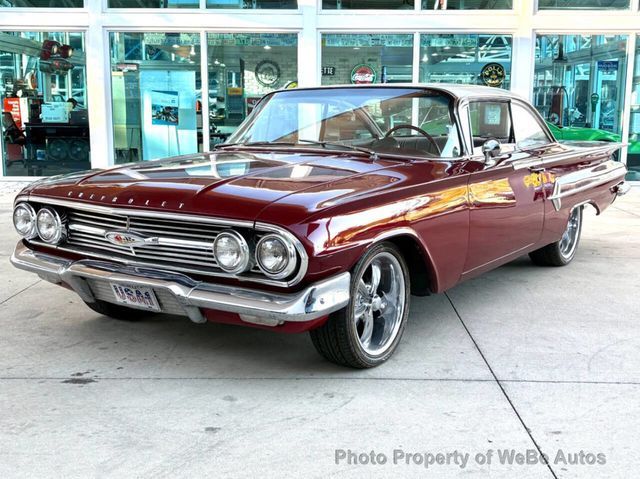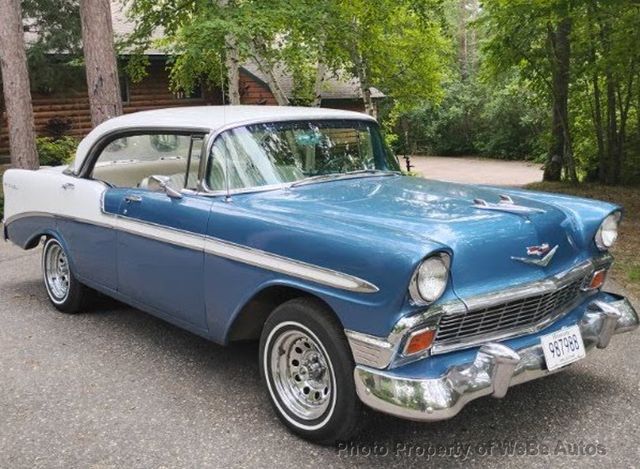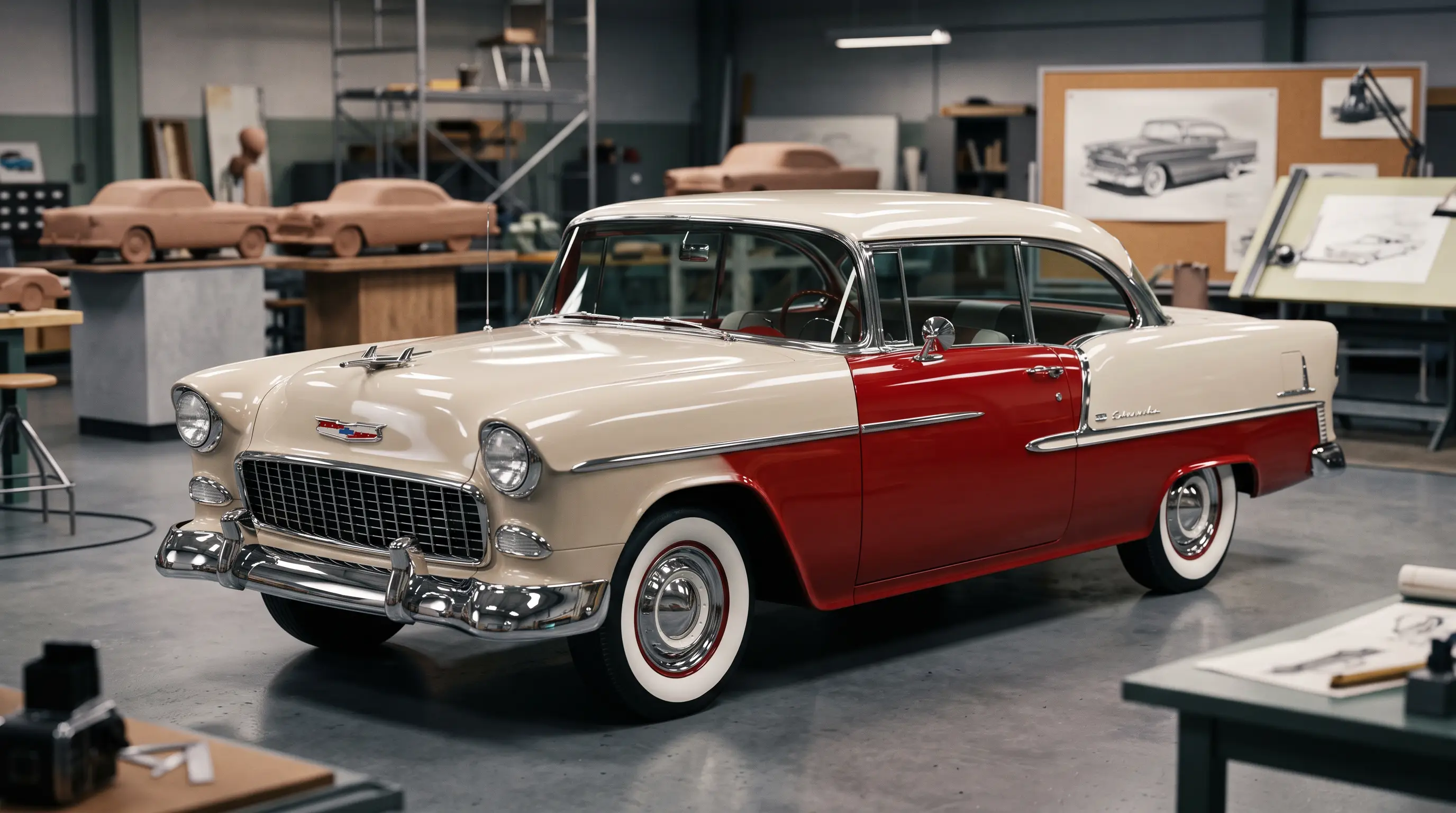
Picture a design studio in Detroit sometime in early 1954, clay dust on the floor, a row of half-finished quarter-scale models under fluorescent light, and one man walking the row slowly, arms crossed, saying almost nothing for long stretches and then everything at once. Harley Earl ran General Motors styling the way a conductor runs an orchestra that occasionally forgets who is in charge, and somewhere in that walk-through sat the earliest clay of what would become the 1955 Bel Air. Harley Earl Bel Air design is not a footnote in this car's story. It is the story, or at least the reason the car looked the way it did the moment it hit a showroom floor.
The man who invented the annual model change
Earl's influence on American car design predates the Bel Air by decades. He had already reshaped General Motors' entire approach to styling by the time the Tri-Five generation reached his desk, having pushed the company toward treating the automobile as an object of desire rather than pure transportation. He is widely credited with popularizing the annual model year refresh, a marketing and design strategy that kept buyers upgrading cars that still ran perfectly well simply because a new one looked more exciting.
That philosophy shaped everything about how the 1955 through 1957 Bel Air came together. Each of those three model years received a distinct visual identity rather than a minor trim update, a deliberate choice that turned the ordinary act of walking into a Chevrolet dealership into something closer to browsing a new fashion season. Earl's studio treated the Bel Air as a canvas that had to keep moving, keep changing, keep giving buyers a reason to trade in a perfectly good car for the newer one.
Jet age imagery, translated for a family sedan
Earl was famously obsessed with aviation and, later, rocketry, and that fascination bled directly into the Bel Air's design language. The wraparound windshield borrowed its visual logic from aircraft canopy glass. Hooded headlight treatments and sculpted fender lines echoed jet intake shapes that Earl's team studied closely, sometimes literally touring aircraft facilities for inspiration. None of this made the Bel Air an aircraft, obviously. It made the Bel Air feel like one, which was the entire point.
Translating that imagery into an affordable family car required real restraint, and Earl's studio managed a balance that many competitors struggled to match. The Bel Air read as futuristic and exciting without tipping into the kind of overwrought excess that made some contemporary designs feel gimmicky within a few years. That restraint is a large part of why the Tri-Five's styling has aged so well, while some flashier competitors from the same period now look distinctly locked to their moment.
A studio culture built on internal competition
Earl ran General Motors styling through a system of competing internal studios, each assigned to a different division, deliberately pitted against one another to produce the strongest possible design. Chevrolet's studio, working under this pressure, knew it was effectively competing against Pontiac, Oldsmobile, Buick, and Cadillac's own design teams for Earl's approval and for internal resources. That competitive structure pushed the Bel Air's designers to produce work that could stand comparison against GM's more expensive divisions, even while working within a much tighter cost target.
The result was a car that looked, in silhouette and detail, considerably more expensive than its price suggested, a phenomenon that helps explain why independent coachbuilders later found the Bel Air worth reskinning into even more luxurious imitations. The foundation Earl's team laid was strong enough to support that kind of ambition.
"Earl did not design a cheap car that looked expensive by accident. He built an entire internal competition designed to make sure it happened on purpose."
- Patrick Walsh
Why the design still gets credit decades later
Design historians revisiting the Tri-Five Bel Air consistently point back to Earl's broader philosophy of styling as spectacle, proportion, and forward-looking imagery, applied here to a car that most families could actually afford. That combination is rarer than it sounds. Plenty of designers have produced striking concept cars. Fewer have managed to push that same ambition through a mass-production budget and out the other side into a car ordinary buyers drove to work every day.
For readers who want to see how that design legacy connected directly to the car's later pop culture standing, 1957 bel air american graffiti history picks up where this story leaves off, tracing how a design built in a clay studio ended up defining an entire cinematic image of the decade. There is also a related story worth reading alongside it for the fuller picture.
The team behind the name on the door
It is worth resisting the temptation to credit any single designer, even one as influential as Earl, with every line of the Bel Air's bodywork. Earl ran the department and set the overall philosophy, but the day-to-day design work was carried out by a large team of stylists, engineers, and modelers, many of whom never received public credit for specific contributions during their careers. The Chevrolet studio's chief designer at the time and the broader team working under him translated Earl's broader jet age vision into the specific proportions, panel gaps, and trim details that made the Bel Air work as an actual, buildable automobile rather than just a compelling concept.
This distinction matters for anyone trying to understand how design decisions actually got made inside General Motors during this period. Earl's role was closer to a creative director's than a hands-on illustrator's for any single car in the lineup. He set standards, reviewed clay models, pushed studios toward bolder choices, and made final approval decisions, but the granular work of solving how a wraparound windshield actually integrated with a stamped steel body, at a cost Chevrolet could sustain across hundreds of thousands of units, fell to engineers and designers whose names rarely appear in retrospectives built around Earl's larger reputation.
Later historians researching GM's design archives have worked to restore some of that missing credit, tracing specific styling decisions back to individual studio members rather than crediting everything to Earl by default. That research remains ongoing, and plenty of specific attribution questions about the 1955 through 1957 Bel Air's detailing are still genuinely unresolved.
Earl retired from General Motors not long after the Tri-Five generation wrapped, but the design principles he institutionalized kept shaping Chevrolet's output for years afterward. The Bel Air remains one of the clearest examples of what his studio system could produce when everything, ambition, budget discipline, and internal competition, lined up correctly. If that history has you looking for one of your own, there are Airs for sale now, each one carrying a little piece of a Detroit clay studio from 1954 whether the current owner realizes it or not.