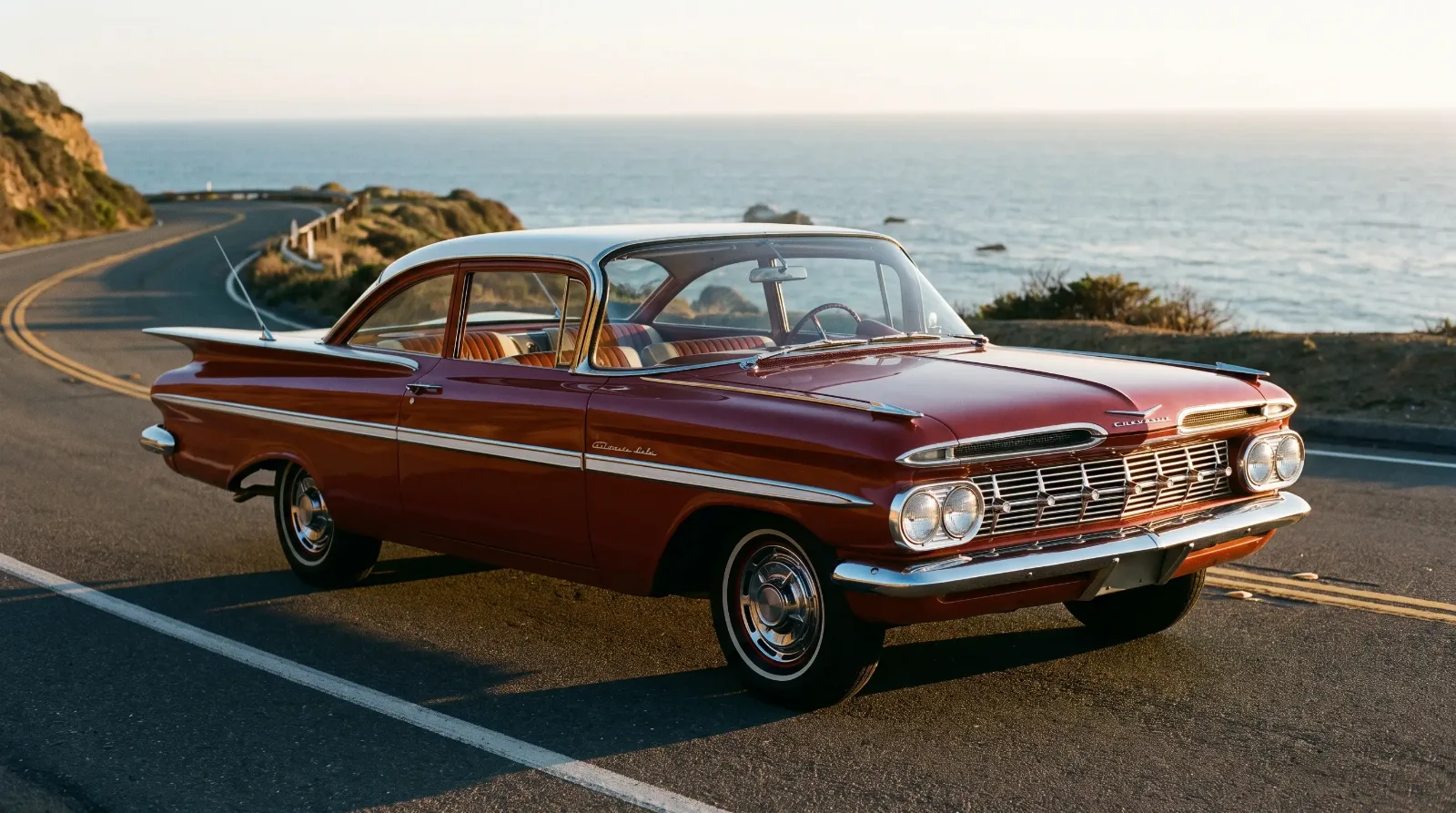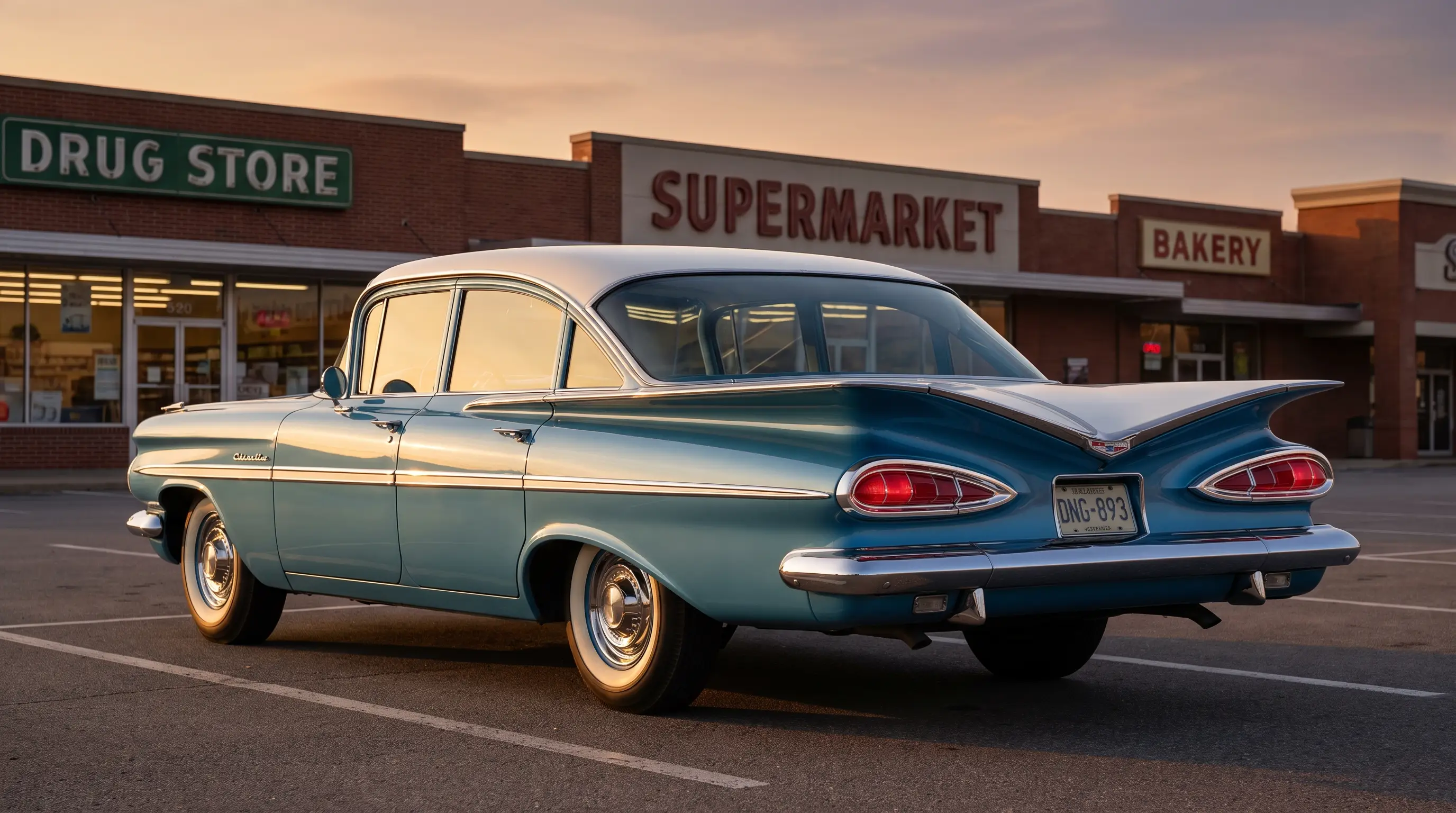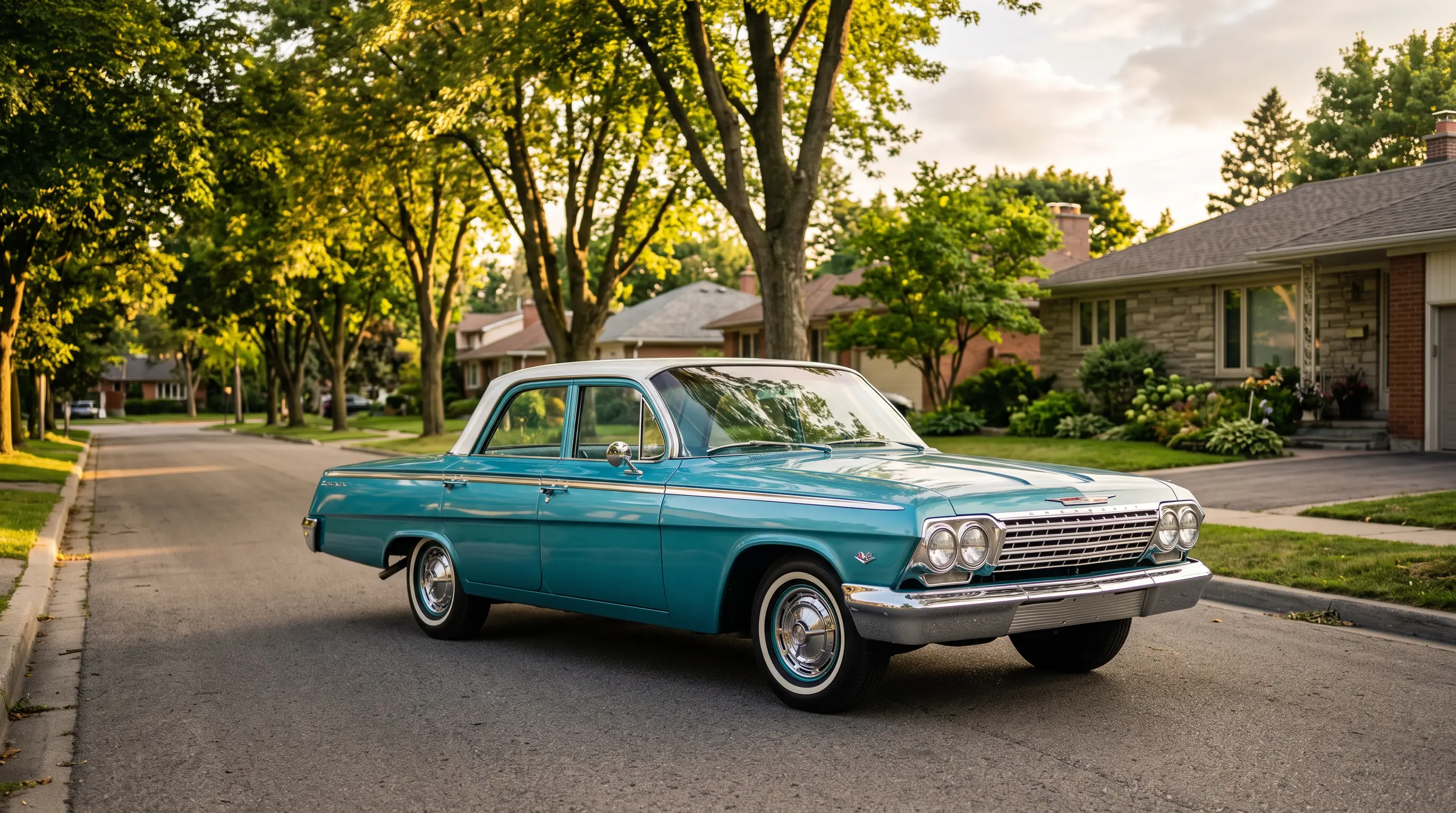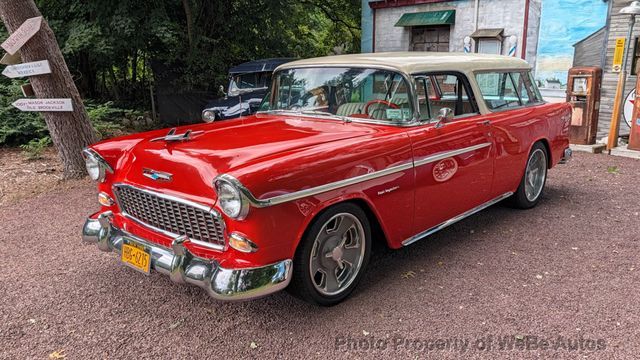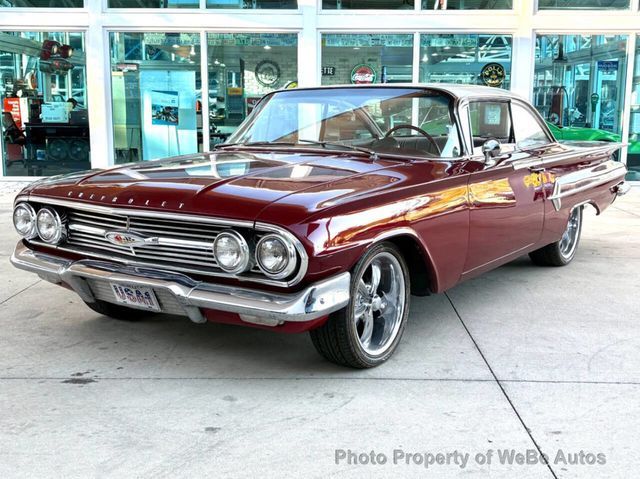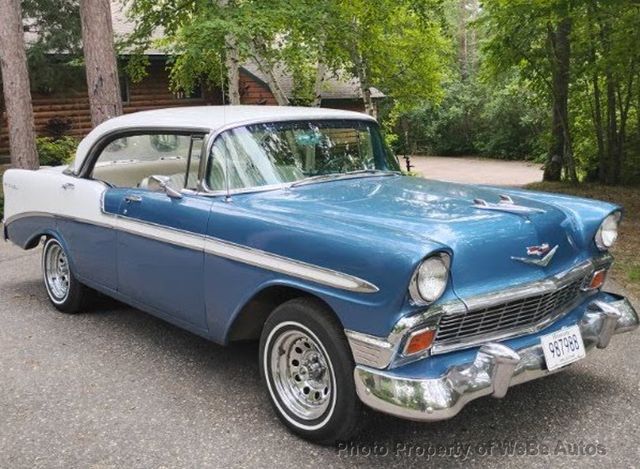
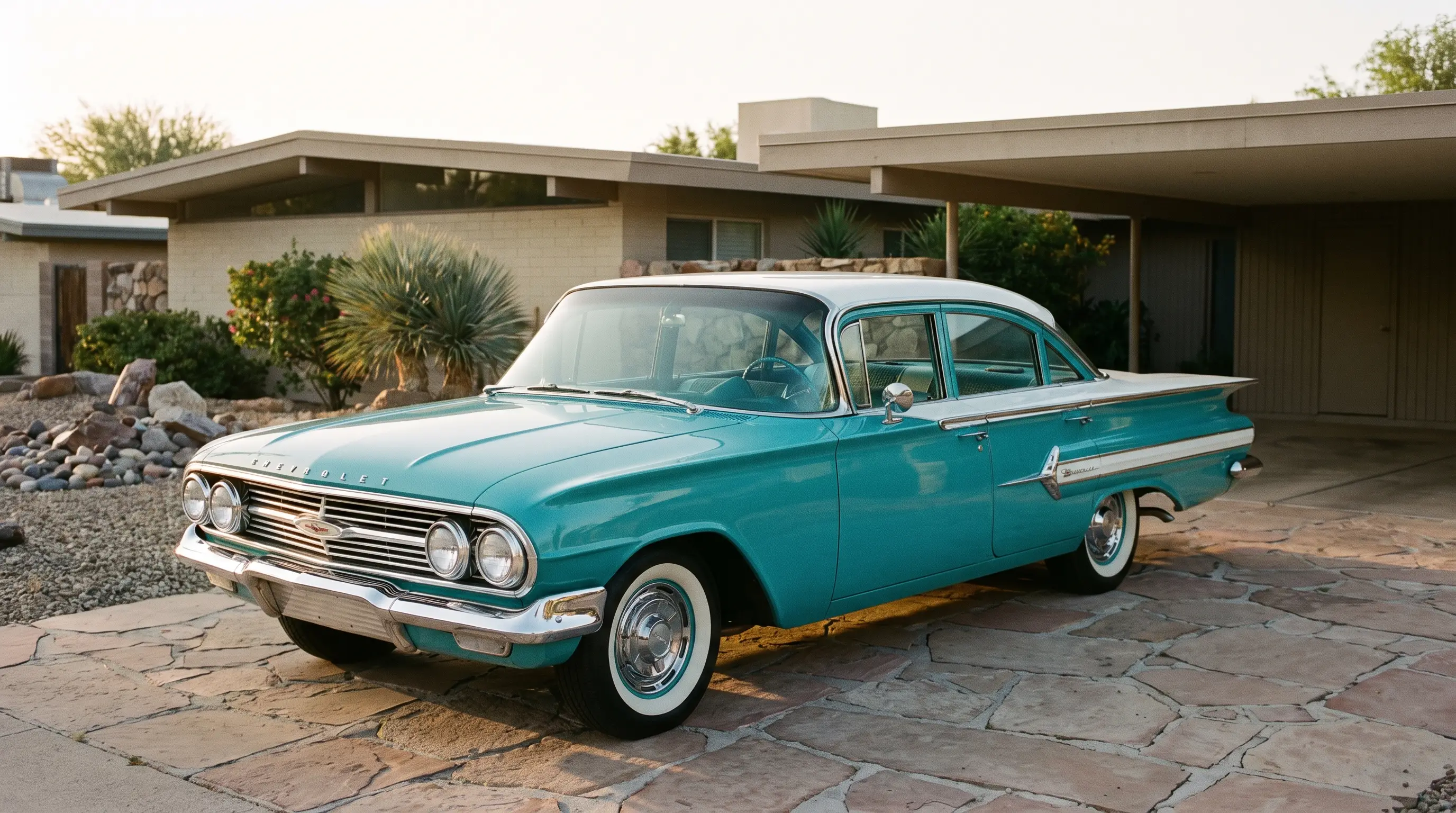
I still remember a fellow at a club swap meet years ago insisting his 1962 Bel Air was Chevrolet's top-of-the-line car that year, and getting genuinely annoyed when three of us gently corrected him at once. That mix-up happens more than you'd think, because plenty of folks still picture Bel Air as the fancy Chevrolet, the one with the chrome and the status. It was, for a while. Then it wasn't, and understanding how a bel air mid range chevrolet came to be tells you as much about the club scene today as it does about the factory decisions from sixty years back.
How the top spot slipped away
Bel Air spent the mid-1950s as Chevrolet's premium trim, the one buyers stepped up to when they wanted brightwork and a nicer interior over the plain-Jane models. That changed for 1959, when Impala graduated from a special trim package into its own full nameplate, sitting above Bel Air in the lineup for good. Once that happened, Bel Air settled into a role it would hold for the rest of its production run, a genuinely well-equipped car, but no longer Chevrolet's fanciest full-size offering. Guys who grew up with Bel Air as the aspirational Chevrolet sometimes take a minute to adjust to that fact when they start digging into the history.
It's a demotion in name only, honestly. Bel Air still sat comfortably above the base Biscayne trim through the 1960s, still offered a solid range of engine and body style choices, and still moved plenty of units for Chevrolet every single year. Mid-range isn't a knock. It's just where the car landed once Impala took the top job, and that's a distinction worth getting right before you start telling stories about your own car at a show.
What mid-range meant on the showroom floor
A buyer walking into a Chevrolet dealer in, say, 1962, could choose Biscayne if they wanted a basic, no-frills full-size car, step up to Bel Air for genuinely nicer trim and a wider options list, or go all the way to Impala for the top-shelf brightwork and available performance packages. Bel Air occupied that comfortable middle position, priced enough above Biscayne to feel like an upgrade but well below Impala's premium, which made it a popular choice for buyers who wanted a nicer car without paying for every last piece of chrome Chevrolet offered.
That middle position is actually part of why so many Bel Airs from this era survived in decent shape. They weren't bought as showpieces the way a loaded Impala convertible often was, but they also weren't stripped-down fleet cars either. A lot of them lived reasonably gentle lives as solid family transportation, which is exactly the kind of car that tends to survive decades in a garage rather than get driven into the ground.
| Trim Level | Position (1959 onward) |
|---|---|
| Impala | Top trim, full lineup |
| Bel Air | Mid-range trim |
| Biscayne | Base trim |
Why the clubs care about getting this right
Every regional Chevrolet club I've been part of has had at least one member who assumed their Bel Air was originally a top trim car, only to find out from a documentation-minded friend that the trim hierarchy shifted well before their particular model year. It's not embarrassing, it's just a gap in the story that nobody bothered to fill in before, and it's exactly the kind of thing that gets sorted out over coffee at a swap meet or during a slow afternoon at a show, one member correcting another with genuine goodwill rather than one-upmanship.
That's really how most of us learn this stuff, not from a textbook but from someone at a show pointing at your trim tag and explaining what it actually means. The community around these cars carries the documentation forward in a way that's honestly more reliable than most casual online sources, because the people doing the explaining usually have three or four of these cars in their own garage and no reason to get the details wrong.
"Somebody's always got a Bel Air they swear was top of the line. I just point them to the trim tag and let the car tell its own story. Usually settles it faster than an argument does."
- Wayne Coburn
Owning a mid-range Bel Air today
None of this history should discourage anyone from being genuinely proud of a mid-range Bel Air. If anything, understanding exactly where the car sat in period gives you a better story to tell than an inflated one would, and most club members respect an owner who knows their car's real place in the lineup over one who insists on a status the car never actually had. The mid-range Bel Airs have their own devoted following precisely because they represent a sweet spot, nicer than the plainest full-size Chevrolet but without the price premium that came with top trim.
For anyone wanting the fuller arc of how Bel Air moved through Chevrolet's lineup across the decades, our complete history traces that story from the earliest years through the mid-range period and beyond. And if you're in the market yourself, it's worth taking a look at what's out there right now. You can find a classic Air and see the range of mid-range Bel Airs currently available, from honest drivers to fully documented show cars, and get a feel for where your own budget fits into that story.
A note on the years that followed
Bel Air held that mid-range slot right through the 1960s, and for a stretch there Chevrolet even added Chevelle underneath as a smaller mid-size car, which is a different animal entirely and trips up newer club members who hear "mid-range" and assume it means "mid-size." It doesn't. Bel Air stayed a full-size car the whole time, just priced and equipped below Impala within that same full-size family. Keeping that distinction straight matters if you're chasing parts or comparing options lists, since a Bel Air and an early Chevelle share almost nothing under the skin despite both wearing a Chevrolet badge and both getting called "mid-range" in casual conversation.
Every so often somebody shows up to a meet with a Bel Air they picked up cheap because the seller didn't understand what they had, and that's usually a car that got treated as just an old family sedan for decades rather than something worth documenting. Those are some of my favorite finds to hear about, honestly, because there's nothing quite like watching an owner learn their unassuming mid-range Chevrolet actually has a genuinely interesting story once somebody takes the time to read the trim tag properly.