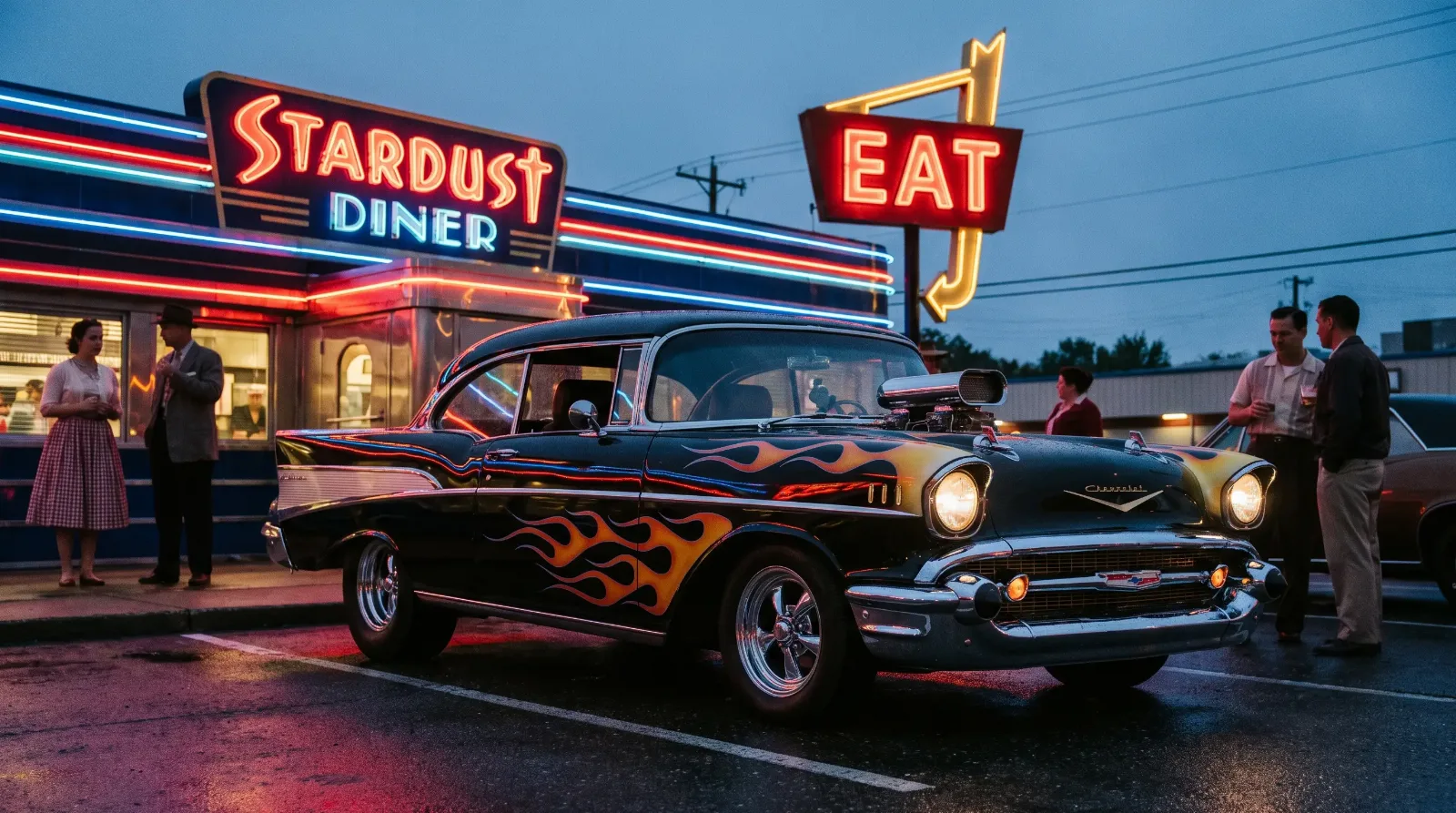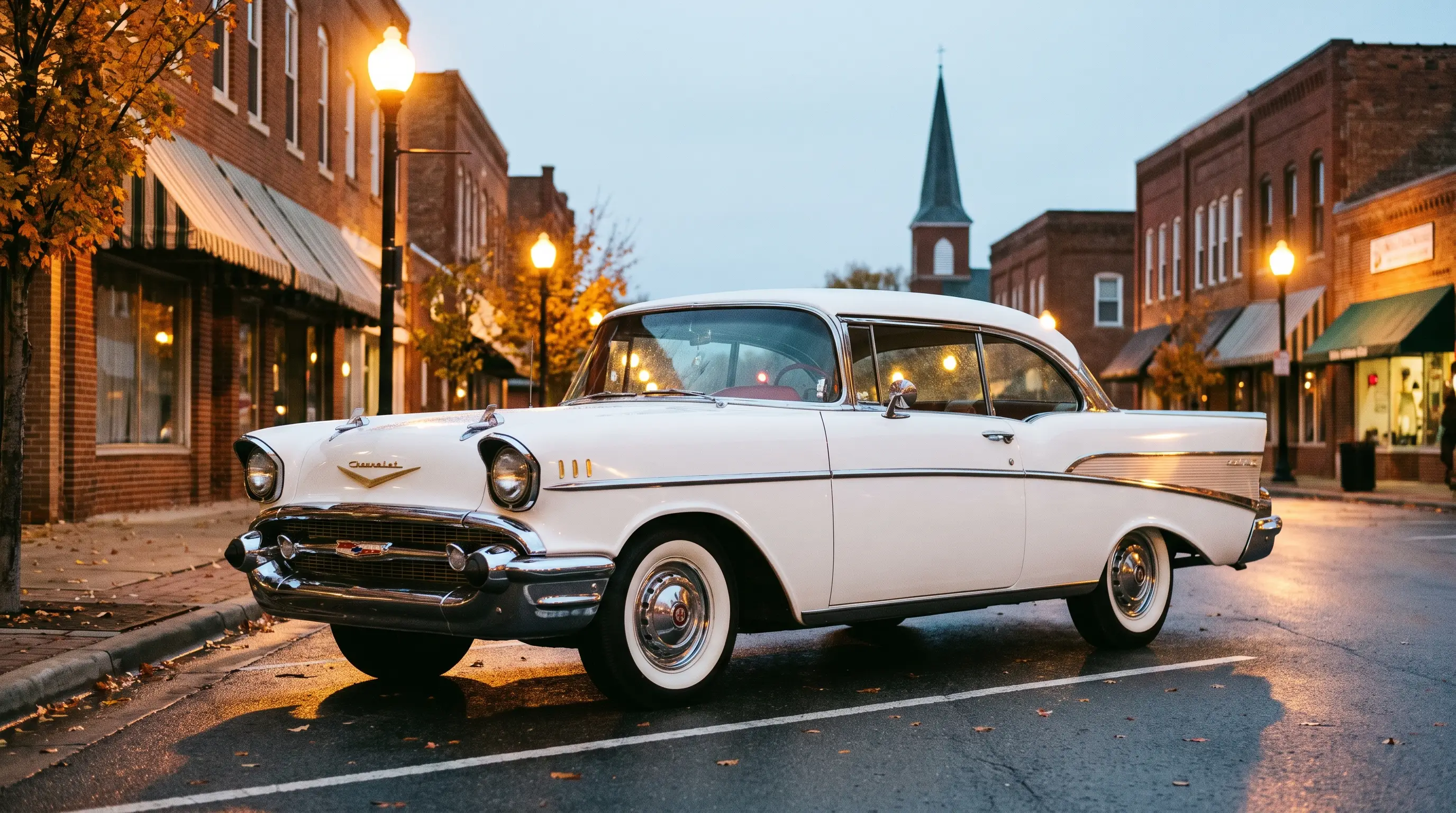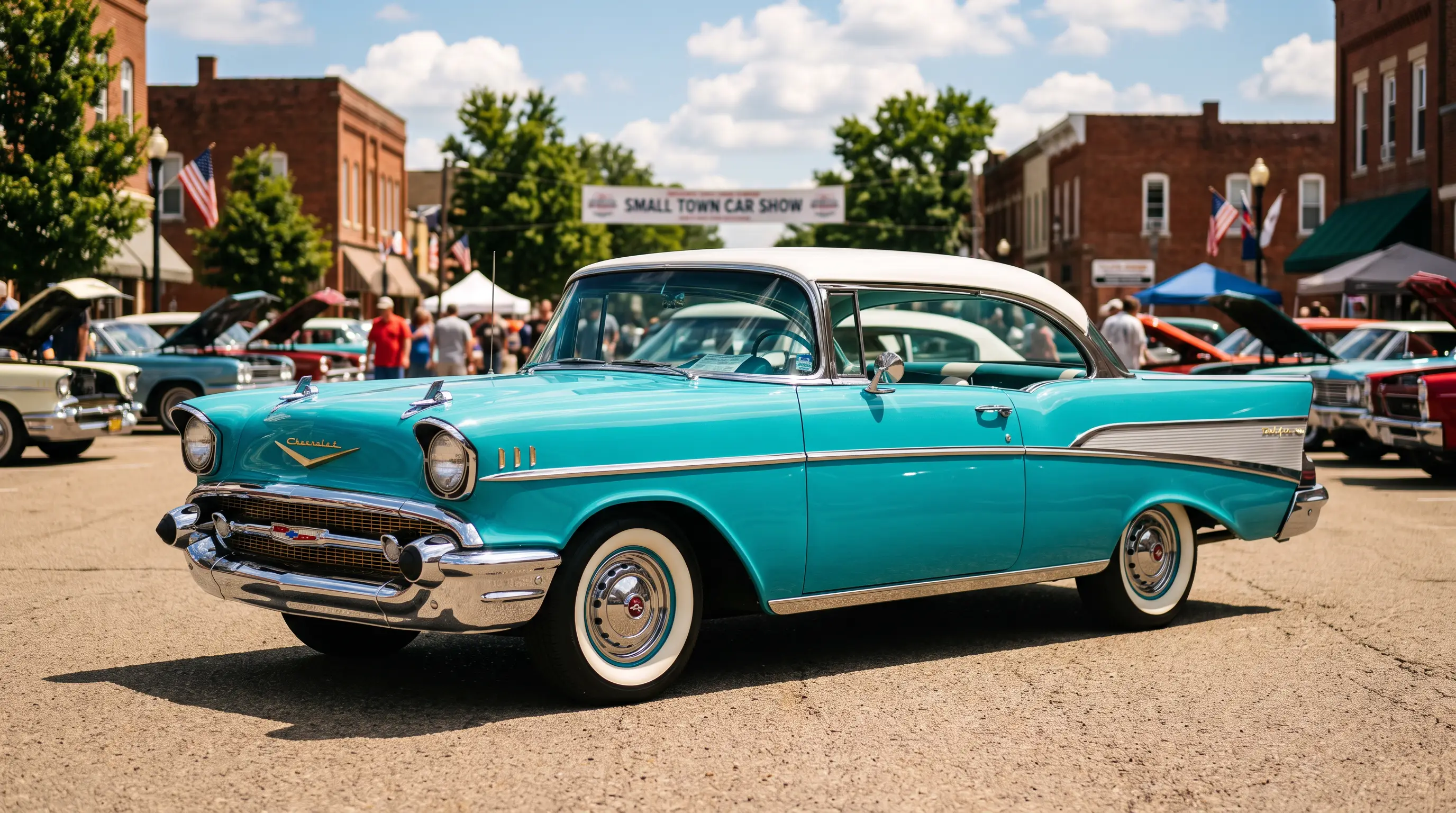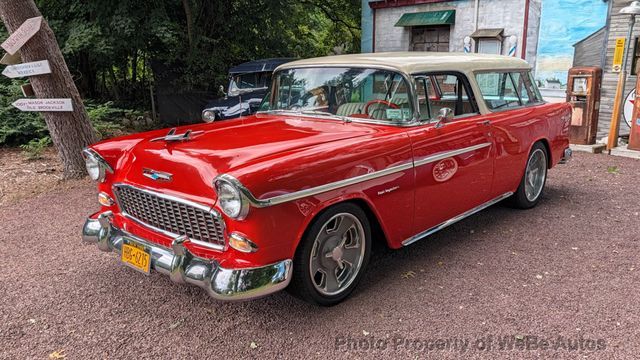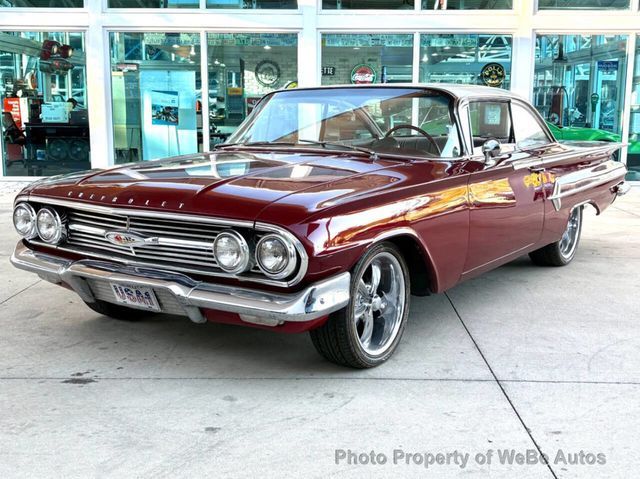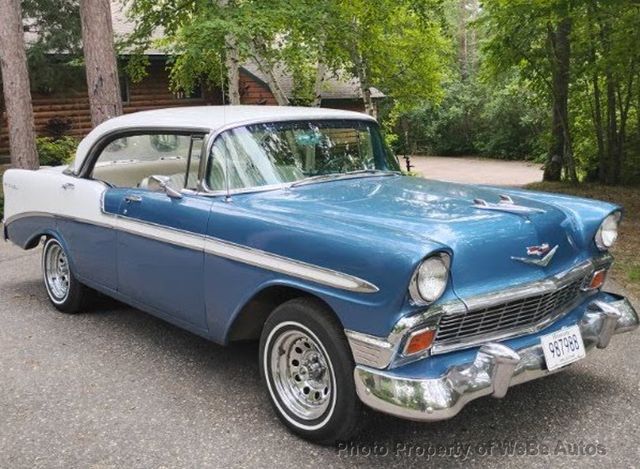
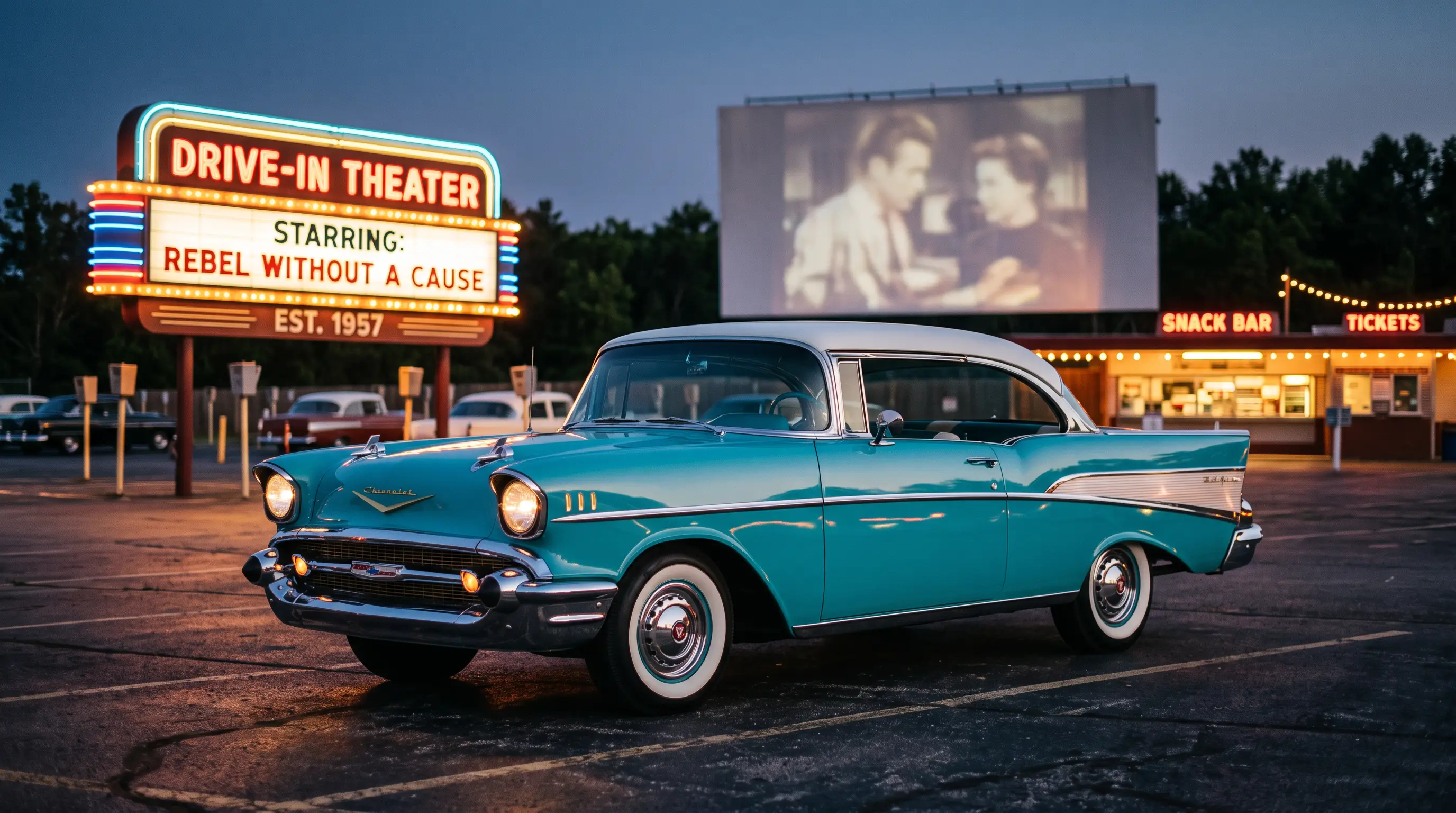
A director scouting locations for a period piece set anywhere between 1955 and the mid-1970s has a shorthand problem to solve fast: how do you tell an audience, in a single establishing shot, exactly what decade and what kind of America they are looking at? For seventy years, one answer has kept working better than almost any other. Park a Tri-Five Chevrolet Bel Air in frame, and the whole set reads instantly. That casting decision, repeated across hundreds of productions, is why the tri five chevy in movies conversation is really a conversation about how Hollywood builds believable worlds using the cars parked at the curb.
The shorthand that built itself
Nobody planned this. The Tri-Five Chevrolets, the 1955 through 1957 Bel Air and its siblings, simply survived in large enough numbers, in recognizable enough shapes, that by the time filmmakers started making movies about the era they were remembering, real examples were still sitting in driveways and junkyards across the country. Production designers did not need to build replicas from scratch the way they might for a rarer or more exotic car. They needed to find one, clean it up or rough it down depending on the scene, and put it where the camera could see it.
That practical availability turned into a stylistic signature almost by accident. Once a few high-profile productions used the Bel Air to signal "this is the late 1950s, this is small-town or suburban America, this is a specific kind of optimism or a specific kind of decline," other productions followed the same visual grammar because audiences already understood it. A parked Bel Air became a kind of punctuation mark, and directors learned to use it the way a novelist uses a well-chosen adjective.
Beyond the one famous film
Most conversations about Tri-Five Chevrolets on screen eventually land on a single well-known coming-of-age film from the 1970s, and that film absolutely deserves its place in the story. But it is only one entry in a much longer filmography. Television period dramas set in the late 1950s and early 1960s have leaned on the same cars for decades, using them as background texture in diner scenes, driveway shots, and small-town main streets. Crime dramas set in the era use the Bel Air's respectable, family-man silhouette to signal a character's normalcy right before the plot upends it. Comedies use the same car for the opposite effect, letting a beat-up example signal a character who has fallen on hard times without a single line of dialogue explaining why.
What ties these appearances together is not any single storyline. It is the car's flexibility as a visual tool. A pristine two-tone Bel Air reads as aspiration and postwar prosperity. The same body style with rust and primer spots reads as struggle, stagnation, or a character stuck in the past. Filmmakers have used both readings for decades, sometimes in the same production.
The people who supply the cars
Very few productions build a period car from scratch when a real one will do the job better and cheaper. Instead, a small, specialized world of car owners, brokers, and picture-car coordinators has grown up around supplying productions with exactly the right Tri-Five Chevrolet for a given scene. These are not always the highest-condition show cars. Sometimes a production wants exactly the opposite: an honest, well-worn driver that photographs like it has actually lived a life. Owners who rent their cars to productions often say the experience changes how they see their own vehicle, watching a crew treat something they drive to the grocery store like a piece of set dressing worth protecting with furniture blankets and careful marks on the pavement.
If you want the fuller cultural picture of how these cars earned that kind of trust from Hollywood in the first place, our complete history covers the broader arc of how the Tri-Five generation moved from ordinary family transportation to a recognizable piece of American visual language.
What repeated casting does to a car's reputation
There is a real effect, well understood in the collector world, where a car's screen presence changes how the next generation of buyers perceives it. Kids who grew up watching these cars on television in reruns, decades after the originals left dealer lots, developed an attachment to the shape and sound of a Tri-Five Chevrolet before they ever stood next to one in person. That secondhand nostalgia, inherited from a screen rather than a driveway, has kept demand alive for a car whose original owners are mostly gone from the hobby now. The movies did not just document the Bel Air's popularity. In a meaningful way, they extended it, handing the car's reputation down to people who never lived through its first decade on the road.
A car that keeps getting cast
New productions set in the 1950s and 1960s still reach for Tri-Five Chevrolets today, which says something about how thoroughly the shape has been absorbed into the visual vocabulary of American nostalgia. Other cars from the same era exist in similar numbers. Few carry the same instant recognition. A director who wants an audience to feel a specific decade without a single line of explanatory dialogue still, more often than not, reaches for the same silhouette that has been doing that job since the 1970s.
I've talked with a few picture-car coordinators over the years who all say roughly the same thing about why the Bel Air keeps winning that casting call over other period-correct options. It is not just recognizable, it is legible at a distance and in low light, which matters enormously on a night shoot where a crew has maybe twenty minutes to get the establishing shot before the light changes. The fins catch a rim light beautifully. The two-tone paint reads clearly even in black and white footage or a desaturated color grade meant to evoke an older film stock. Practical concerns like that, not just nostalgia, keep the Bel Air on call sheets decade after decade, and they explain why a shape designed in the mid-1950s still photographs better under studio lighting than plenty of cars built specifically with cameras in mind.
Sound designers have their own version of the same story. A well-recorded small block V8 idle or a specific exhaust note has become almost as recognizable to a trained ear as the body shape is to the eye, and more than one production has looped the same recorded engine sound across multiple scenes because it reliably signals the right era without a single word of dialogue. Once picture and sound work together that consistently, a car stops being a prop and starts being closer to a supporting character, one that never asks for a bigger trailer or a rewrite.
"A good picture car doesn't act. It just has to sit there and mean something the moment the shot opens, and not every car can do that on command."
- Patrick Walsh
If decades of screen time have you wanting the real thing instead of the version on a soundstage, you can find a classic Air and see for yourself why directors keep reaching for the same shape, film after film, decade after decade.