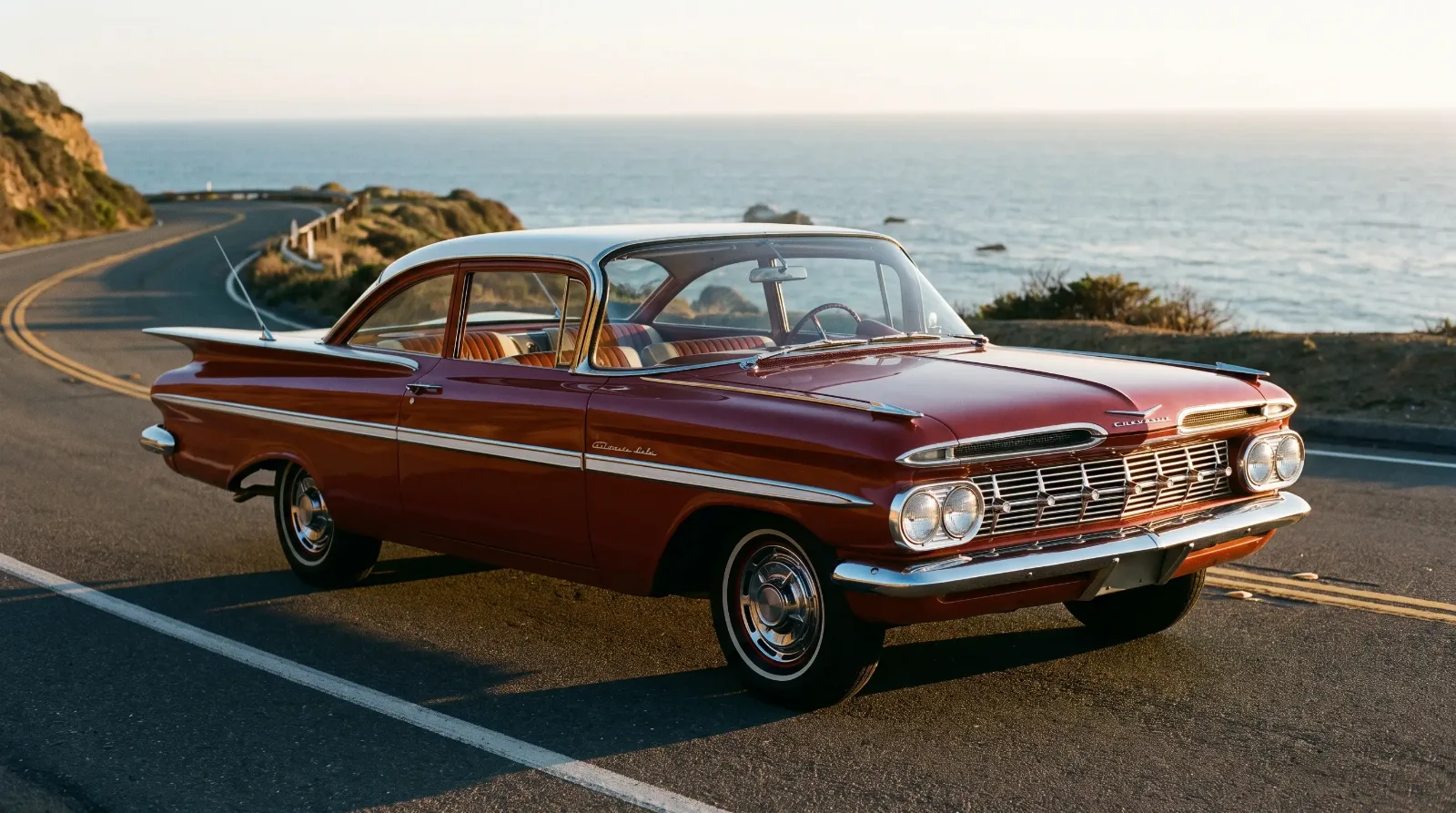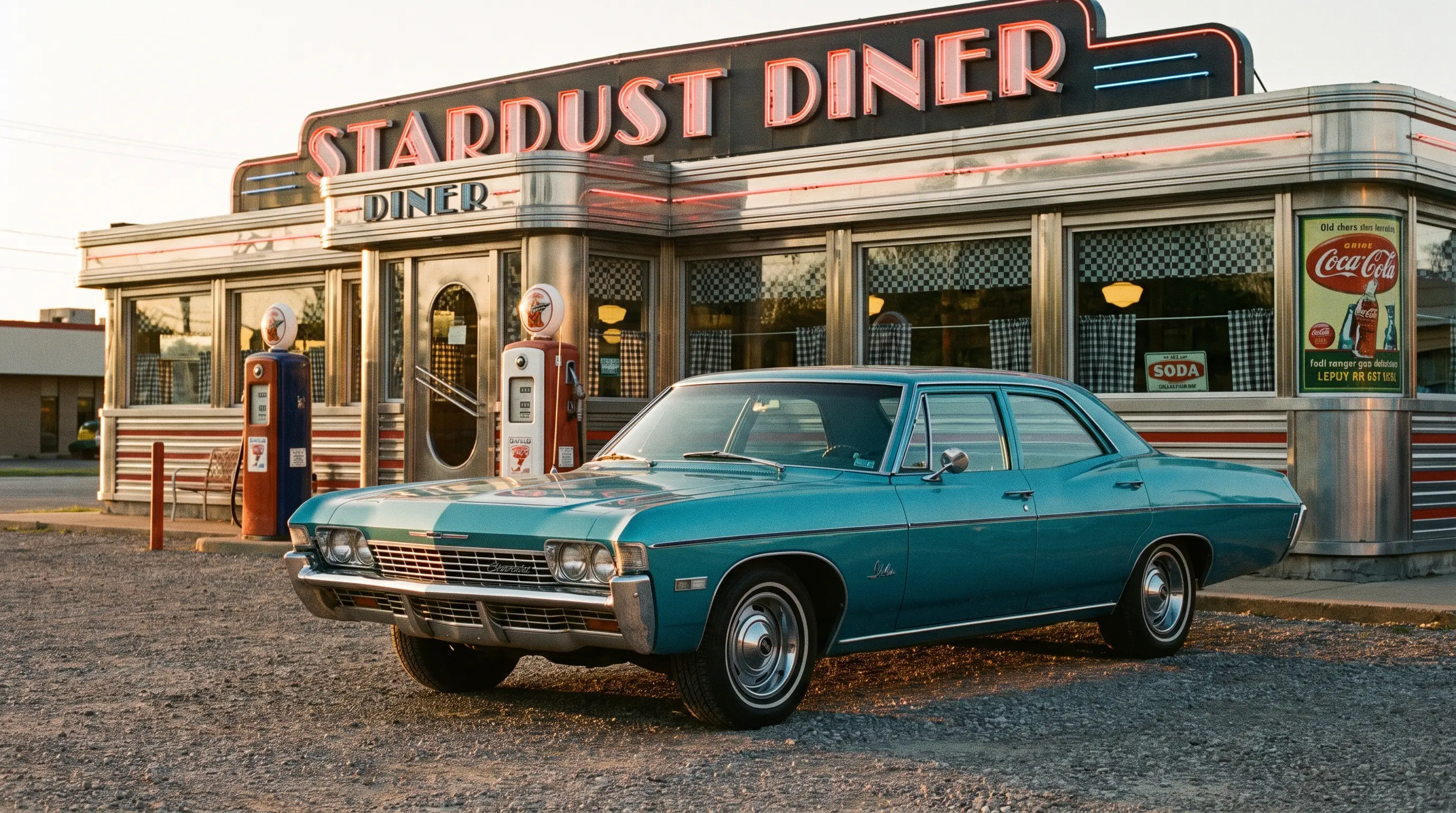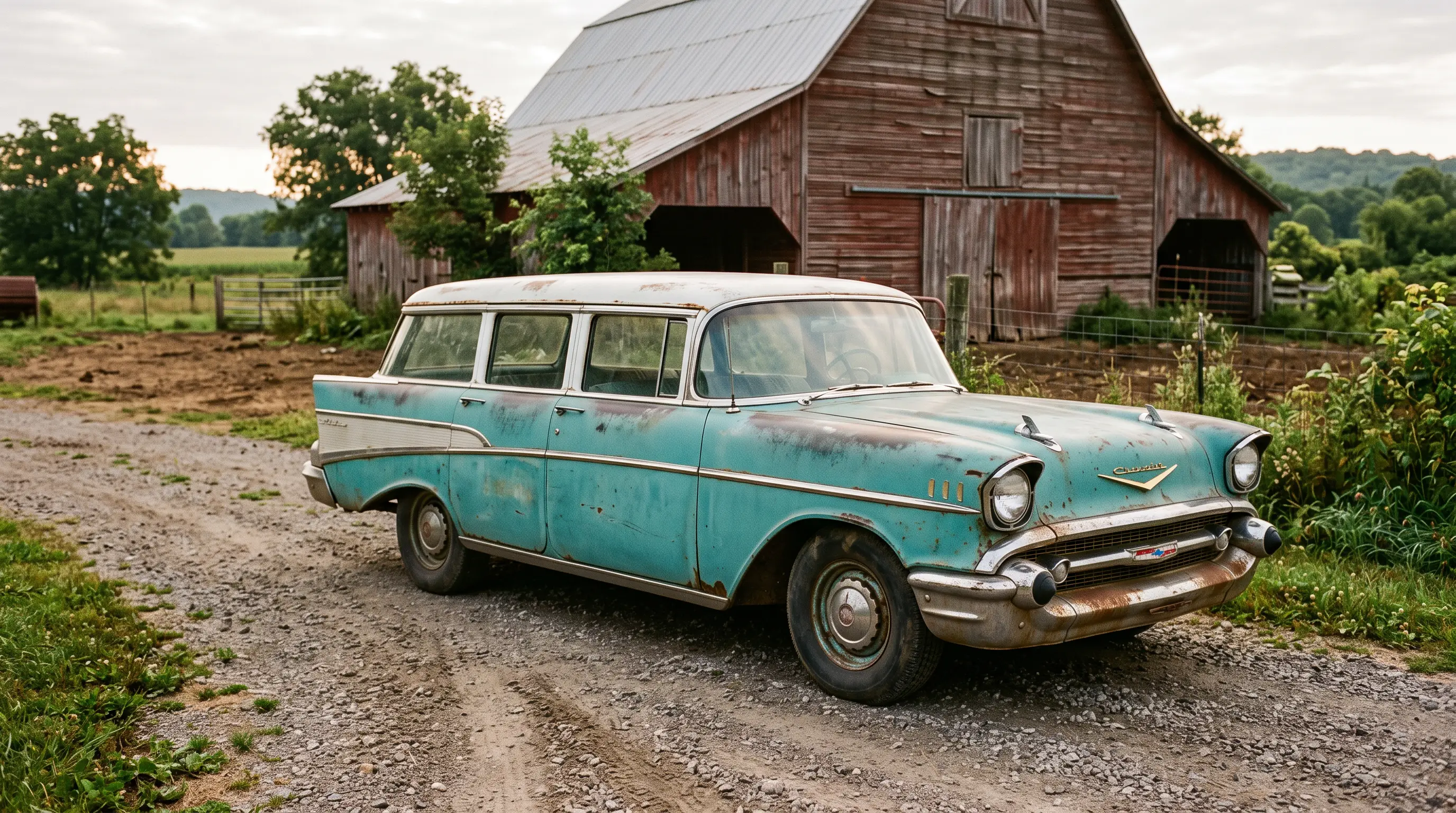
Ask a room full of club members when did bel air end and you will get three different answers, none of them wrong exactly, just measuring different things, and half the fun of a club meeting is watching those three camps argue it out over coffee. There is the year Chevrolet stopped selling the Bel Air in the United States, there is the year the name disappeared from full-size Chevrolets entirely, and there is the longer, stranger tail of the name surviving overseas long after American buyers had forgotten it existed. All three answers matter if you want the full picture.
The American exit
Chevrolet quietly dropped the Bel Air from its United States lineup after the 1975 model year. There was no farewell campaign, no special edition sendoff, nothing resembling the fanfare that accompanies a modern nameplate's retirement. The Bel Air had spent most of the previous decade sliding down Chevrolet's internal trim hierarchy, and by the time it disappeared, it had become such a minor part of the full-size lineup that its absence barely registered in contemporary coverage. I remember an old timer at a swap meet telling me he did not even notice it was gone until a friend pointed out his own Bel Air was one of the last built.
By this point the car had been squeezed from every direction. The Impala had long since taken over as Chevrolet's mainstream full-size choice, the Caprice handled the luxury end, and the Biscayne, before its own earlier discontinuation, covered the bare bones fleet market the Bel Air used to serve almost exclusively. There was simply no clear lane left for a mid trim full-size car that had spent twenty years losing ground to its own siblings.
What actually killed the name domestically
Nothing dramatic ended the Bel Air. No single bad model year, no recall, no scandal. It was a slow squeeze from shifting consumer tastes, rising fuel prices following the 1973 oil embargo, and a Chevrolet product strategy that increasingly favored fewer, more clearly differentiated full-size trims rather than the crowded four tier lineup that had defined the late 1960s. Buyers who once might have chosen a Bel Air over a stripped Biscayne or a loaded Impala increasingly gravitated toward smaller cars entirely as fuel economy became a real purchasing concern for the first time in Chevrolet's full-size history.
The full arc that led here started decades earlier, when the Bel Air launched as Chevrolet's top trim and gradually got outranked by newer, flashier siblings introduced above it. read the background on how that positioning shift began, because the 1975 discontinuation makes a lot more sense once you understand just how long the name had already been drifting toward the bottom of Chevrolet's full-size range before it finally disappeared.
The name's afterlife north of the border
This is the part that surprises even longtime club members. While American buyers moved on after 1975, Chevrolet of Canada kept the Bel Air name alive as its lowest priced full-size car for years afterward, applying it to home market cars that shared the same basic full-size Chevrolet platform sold as the Impala and Caprice in the United States. These Canadian cars often carried different trim and equipment than anything American buyers would recognize from the same era, built to local market preferences rather than any continuity with the American original. Tracking down documentation on these later Canadian cars is a genuine challenge for American club members, since most domestic archives and registries understandably focused on United States production once the name left that market. Club newsletters occasionally publish reader submitted photos of these Canadian survivors, usually accompanied by a request for anyone with more information to come forward, a small sign of how incomplete the record still is decades later.
I have talked to a handful of collectors who stumbled onto photographs of these later Canadian Bel Airs at swap meets and had no idea the name had survived north of the border for another six years. It is a reminder that a nameplate's story does not always end where the history books written for American audiences stop paying attention.
"Half our club didn't know the name kept going overseas after it died here. We spent one whole meeting just passing around photos somebody found, arguing about which export market got which body."
- Wayne Coburn
Club stories from the last model years
Every Bel Air club I have spent time with has at least one member who owns a genuine 1975, and that person always ends up fielding the same questions at every show. Was it really the last one. Did Chevrolet know it was ending the name that year. The honest answer is that dealers and buyers in 1975 had no particular sense of occasion about it, because Chevrolet gave them none. Nobody walked onto a lot that year thinking they were buying a piece of automotive history closing out. They were buying a full-size car that happened to still wear a badge that would not appear on a new American Chevrolet again.
That lack of ceremony is part of what makes tracking down documentation on these final cars genuinely difficult. Dealers did not flag them as special, buyers did not save extra paperwork thinking it would matter later, and Chevrolet's own marketing treated the model year like any other. Club members who have managed to piece together verified late production examples usually did it the hard way, chasing original window stickers, dealer invoices, and family stories rather than relying on anything Chevrolet itself preserved.
What the ending means for collectors today
Knowing exactly when did bel air end domestically helps collectors correctly date the very last American examples, which have picked up a small but genuine following simply for being the final chapter of a nameplate that ran for over two decades. A well documented 1975 Bel Air, the last model year sold in the United States, carries a modest novelty premium among collectors who specifically chase end of production examples across different Chevrolet nameplates. It is not a massive value driver, but it is a real one, and sellers who understand the story behind their car's specific model year are better positioned to tell it accurately to a buyer. Club events increasingly set aside space specifically for end of production examples across multiple nameplates, and a documented final year Bel Air fits naturally into that growing corner of the hobby.
For anyone drawn to this closing chapter of the story, whether chasing a final year American example or simply curious what a well kept survivor from any year of the run looks like today, you can find a classic Air and compare how the nameplate's long, quiet fade reads across different points in its production history.