
Automatic transmissions feel unremarkable now, a default most buyers do not even think to specify. That was not true in the early 1950s, and the chevy powerglide 1953 pairing represents one of the more significant moments in that transition, right as Chevrolet was turning Bel Air into a full series and putting Powerglide within reach of a much wider slice of American buyers.
Car Features
6 min read
Powerglide and the Early Bel Air
The chevy powerglide 1953 pairing put America's first low-price automatic transmission within reach of a much wider slice of Bel Air buyers. Here is how that combination actually worked.
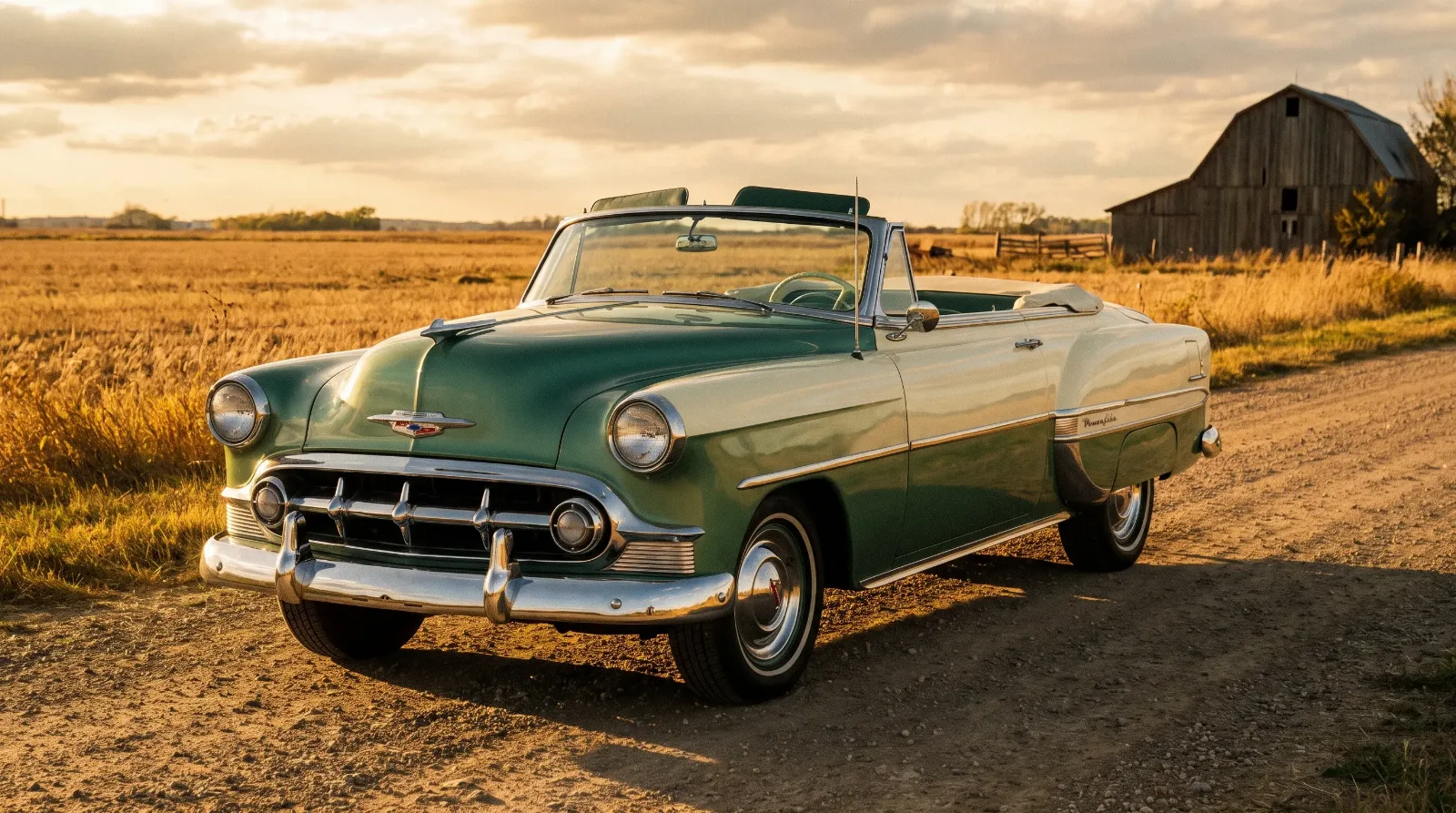
The first automatic in the low-price field
Chevrolet introduced Powerglide for the 1950 model year, and it mattered enormously that the company did it before Ford or Plymouth managed a comparable option. This was Chevrolet planting a flag in a segment that had, until then, treated automatic transmissions as a feature reserved for Cadillac, Oldsmobile, and Buick buyers who could absorb the added cost. By making Powerglide available in the low-price field, Chevrolet forced its competitors to respond or risk losing buyers who wanted the convenience.
By the time 1953 arrived, Powerglide had three years of real-world development behind it, and Chevrolet had restructured its entire lineup around the newly expanded Bel Air series, a shift documented in our 1953 chevy bel air retrospective for anyone who wants the fuller context of that year's changes.
How Powerglide actually worked
Powerglide was a two-speed automatic built around a torque converter, a simpler design than what most modern drivers expect from an automatic transmission but genuinely advanced for its era in the low-price segment. It shifted from low to high gear automatically, without driver input, and the torque converter absorbed the kind of abrupt engagement that a poorly executed clutch and manual shift could produce. For buyers who had never driven anything but a manual transmission, this was a fundamentally different experience behind the wheel, smoother and less demanding, particularly in stop and go traffic.
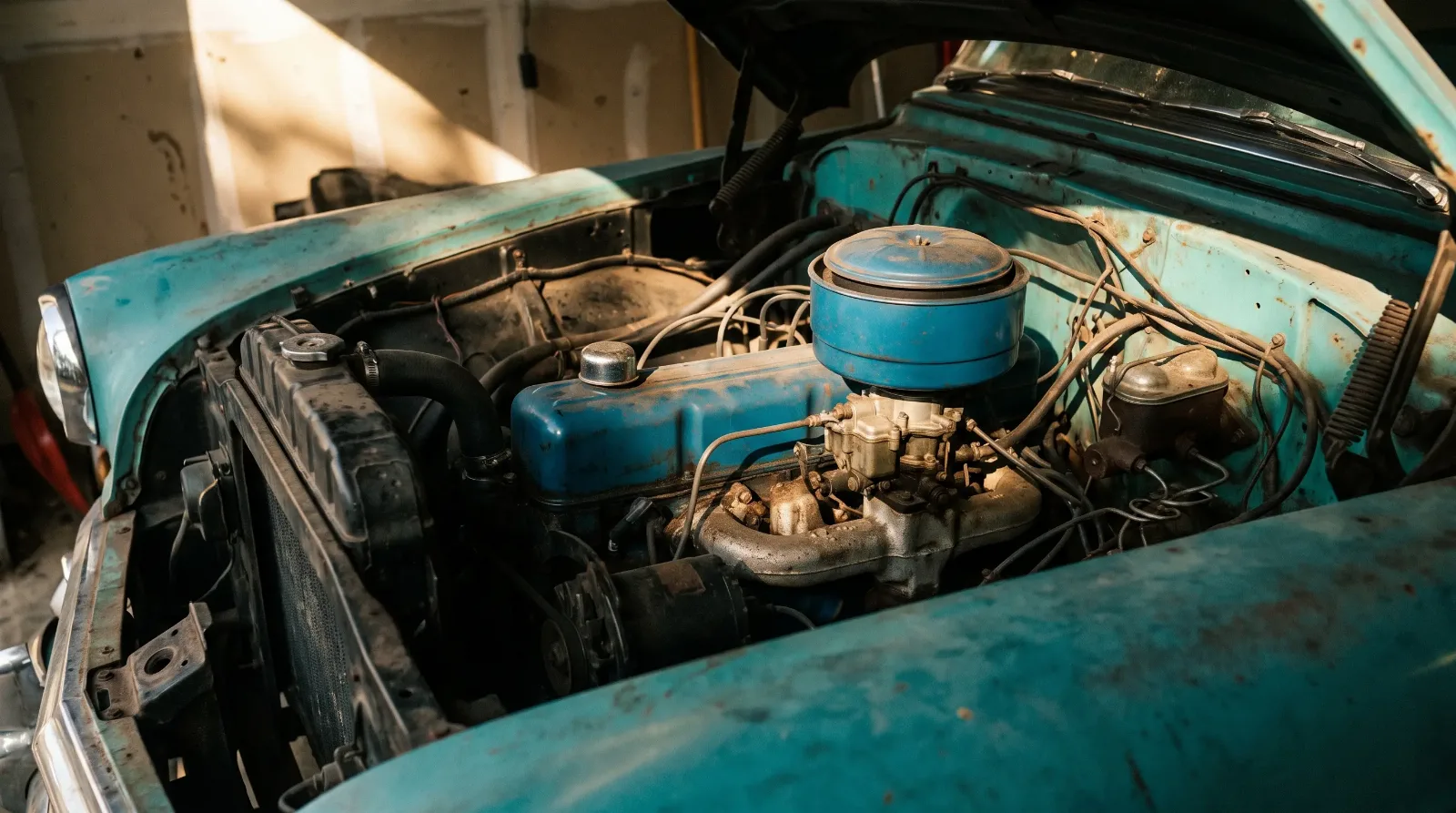
Chevrolet paired Powerglide with a specifically tuned version of its 235.5 cubic inch six, higher compression than the manual transmission calibration, to compensate for the automatic's less efficient power delivery through its limited two-speed range. That relationship between the transmission and the engine calibration built for it is a detail some buyers overlook, since the two systems were engineered together rather than as independent options that happened to be compatible.
Maintenance expectations differed too. A Powerglide required periodic fluid checks and, eventually, band adjustments that a manual transmission simply did not need, and Chevrolet's service departments had to train mechanics on a genuinely new set of procedures across the early 1950s. Independent garages away from Chevrolet's own dealer network were sometimes slower to pick up the necessary expertise, which occasionally left rural Powerglide owners driving further than they would have liked for a repair only a specialist could handle correctly.
Ford and Plymouth's slow response
Chevrolet's three-year head start with Powerglide put genuine pressure on Ford and Plymouth to develop their own automatics, and neither company matched Chevrolet's timeline. Ford introduced Ford-O-Matic later, and Plymouth trailed even further behind with its own automatic offering. That gap gave Chevrolet a meaningful marketing advantage through the early 1950s, one the company's dealers used aggressively when a customer walked in cross-shopping the three low-price brands. A buyer who specifically wanted an automatic transmission in this price range had, for a stretch of years, essentially one real option, and it wore a Chevrolet badge.
What Powerglide cost buyers, and what it bought them
Powerglide was never a free option. Chevrolet charged a real premium for it, enough that a meaningful share of Bel Air buyers in the early 1950s still chose the standard three-speed manual to keep their purchase price down. What the automatic bought a buyer was convenience, particularly appealing to urban and suburban drivers dealing with regular stop and go traffic rather than the more rural buyers who often preferred the lower cost and generally accepted reliability of a manual gearbox.
This split in buyer preference shows up clearly in how Chevrolet marketed the Bel Air series through the early 1950s, treating Powerglide as a genuine differentiator worth its own dedicated advertising rather than a minor checkbox option buried in a spec sheet.
| Spec | Powerglide (1953) |
|---|---|
| Type | Two-speed automatic, torque converter |
| Introduced | 1950 model year |
| Paired engine | 235.5 cid six, higher compression Blue Flame calibration |
| Market position | First automatic in Chevrolet's low-price field competitive class |
How Chevrolet marketed the automatic to skeptical buyers
Selling an automatic transmission to a generation raised entirely on manual gearboxes required more than a spec sheet. Chevrolet's dealer training material from the early 1950s spent real effort teaching salesmen how to demonstrate Powerglide, encouraging test drives that let a skeptical buyer feel the smoothness of the torque converter firsthand rather than trying to explain it in the abstract. Rural buyers in particular needed convincing, since many associated automatics with unnecessary complexity and higher repair costs down the road, concerns that were not entirely unfounded given how new the technology still was.
Chevrolet countered that skepticism with warranty terms and service network expansion, making sure Powerglide repairs would not strand an owner far from a dealer who understood the transmission. That infrastructure investment mattered as much as the engineering itself in convincing cautious buyers to spend the extra money, and it is a large part of why Powerglide's reputation for reliability held up well enough to keep the option selling steadily through the early 1950s rather than fading as a novelty.
Why 1953 was a turning point year for the pairing
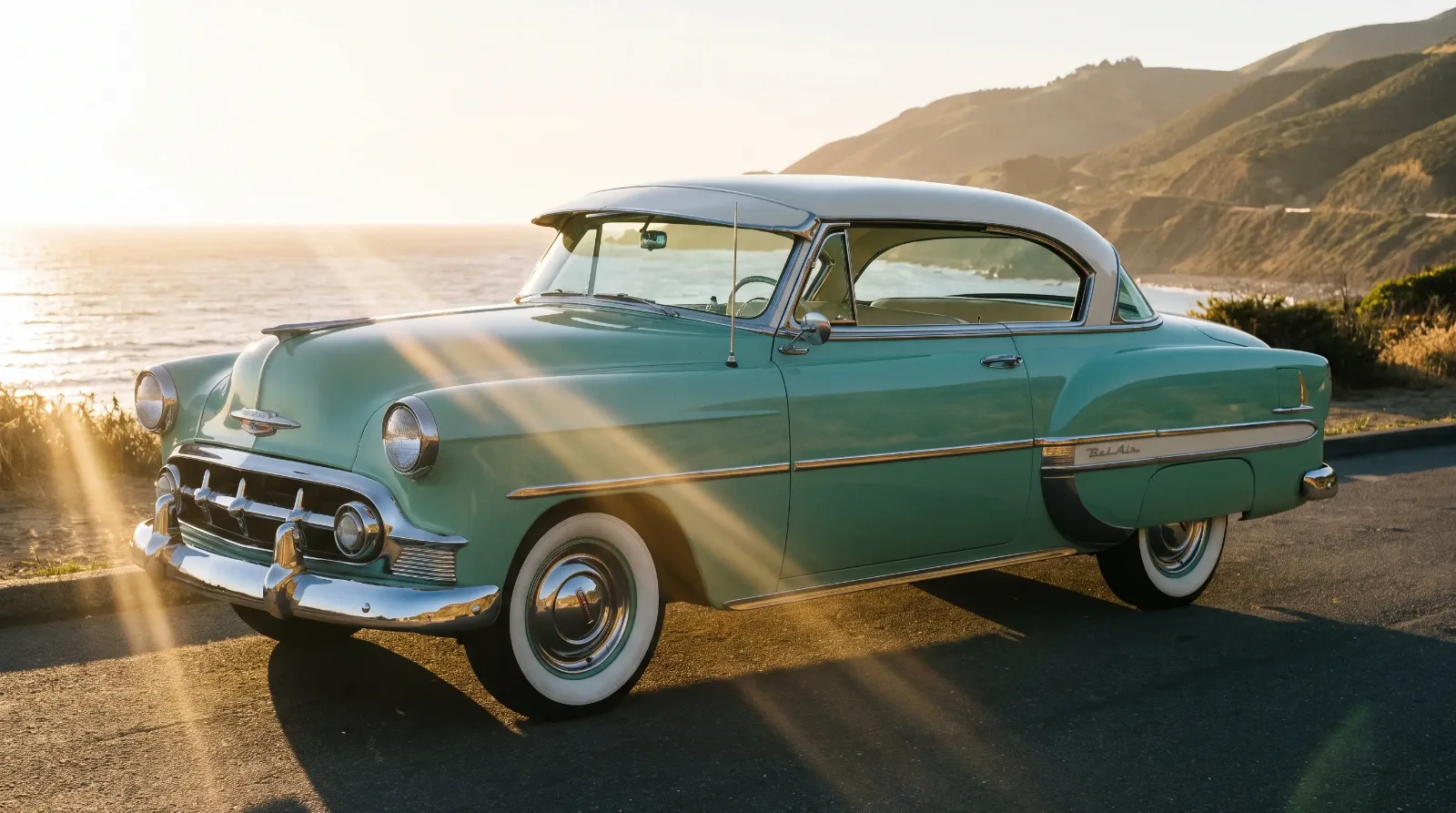
The 1953 model year matters for the Powerglide story specifically because it coincided with Chevrolet's decision to make Bel Air a top-tier series across every body style rather than a single hardtop. That expansion meant far more buyers were cross-shopping Powerglide against the manual transmission within the newly broadened Bel Air lineup, sedans, the Sport Coupe hardtop, and the convertible alike, rather than the option being tied to just one specialty body style as it effectively had been in earlier years. For a closer look at another piece of that same generation, a related story covers the body style lineup Powerglide buyers were choosing from that year.
"Powerglide gets treated as a footnote in most Chevrolet histories, but it changed what an ordinary buyer expected a family car to do. That shift did not start with the V8 in 1955. It started here, three years earlier, with a two-speed automatic most people take for granted now."
- Tom Ramirez
Original Powerglide-equipped cars from this era are still out there, and knowing the transmission history helps when evaluating a potential purchase. If you are hunting for one, there are usually Airs for sale now spanning both transmission choices from this period, giving a buyer the chance to decide firsthand whether the manual or the automatic suits the way they actually want to drive the car.
Sources and notes
Related Reading
Have a
Chevrolet Bel Air
for Sale?
Reach thousands of serious classic car collectors across the US.
Sell It Here →
Are You a Classic Car Dealer?
List your full inventory and connect with targeted classic car buyers.
Join as a Dealer →
#classic chevrolet
#blue-flame-six
#Powerglide
#Chevrolet Bel Air
#1953 Chevrolet
#automatic transmission history

About the author
Tom Ramirez
Corvette researcher and historian based in Bowling Green, Kentucky. Two decades documenting Corvette production history from original factory records.
Related Listings - Chevrolet Bel Air
Comments (1)
R
Ray Staubach
2 months ago
Numbers-matching obsession is real. I get it. But a driver-quality example at a reasonable price has its own appeal that gets overlooked.