
Once Bel Air became a full series in 1953, Chevrolet suddenly had a real lineup to build out rather than a single hardtop to sell. Understanding the 1954 bel air body styles means understanding a two-year window where Chevrolet offered its top trim across nearly every shape in the catalog, from formal sedans to the open-air convertible, each aimed at a slightly different kind of buyer within the same badge.
Car Features
7 min read
1953-54 Bel Air Body Styles
Once Bel Air became a full series, Chevrolet spread the badge across five distinct body styles. Here is how the sedans, hardtop, convertible, and wagon each fit into the lineup.
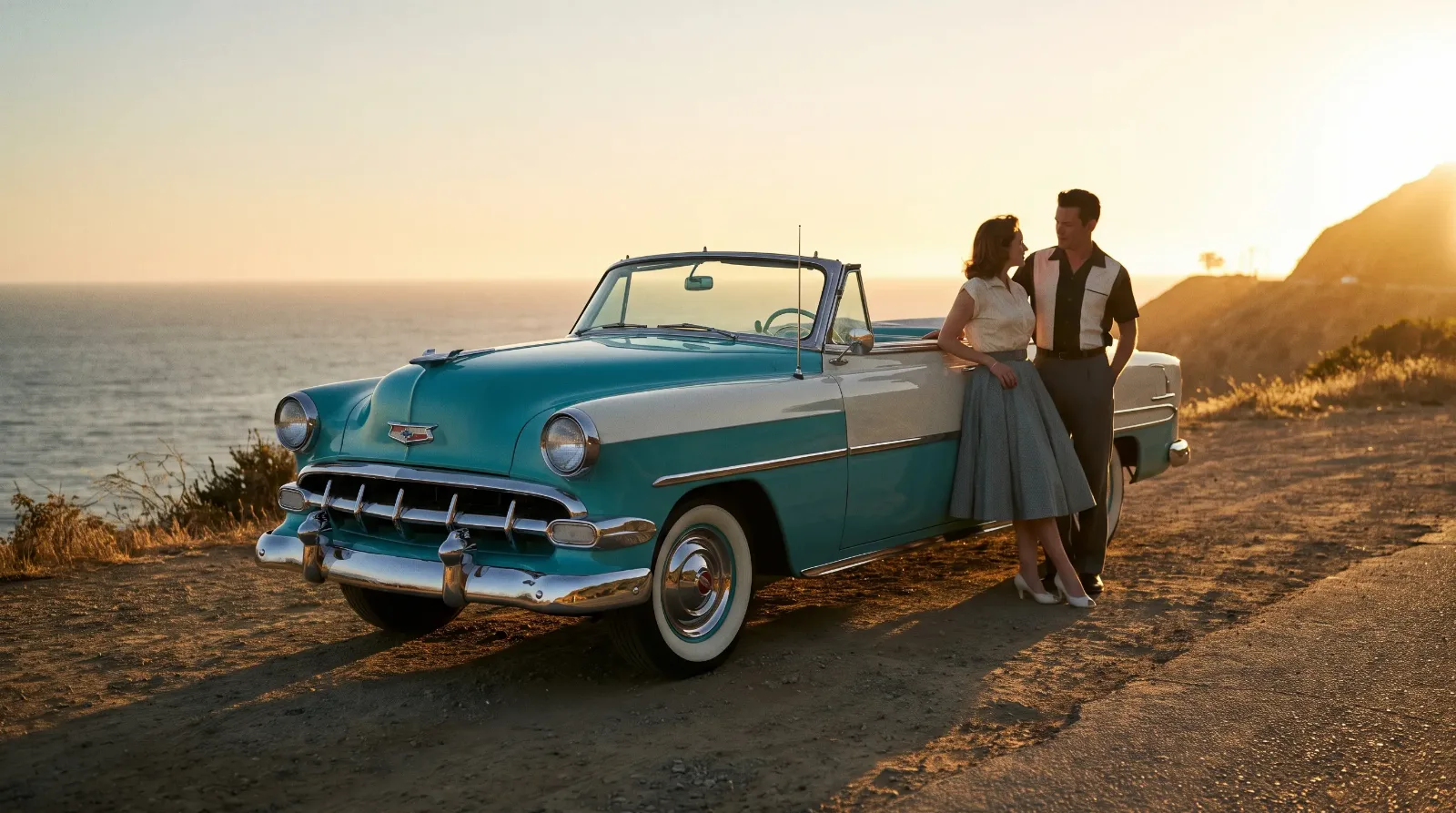
Four body styles growing to five under one trim name
For 1953, the Bel Air series covered a four-door sedan, a two-door sedan, the Sport Coupe hardtop, and a convertible. There was no Bel Air wagon that first year; the station wagon, badged Townsman, was part of the mid-level Two-Ten series in 1953. Chevrolet moved the wagon up into Bel Air trim for 1954, completing the five-body-style spread most people picture when they think of the early Bel Air lineup. That range meant a single trim name now had to satisfy a family buyer shopping a four-door sedan and a younger, image-conscious buyer eyeing the pillarless hardtop, all under one series identity. Chevrolet managed this by keeping the mechanical package identical across every body style and letting the trim level, not the shape, define what Bel Air meant.
The background on how Bel Air arrived at this full-series structure is worth reading if you have not seen it, covered in read the background for the fuller history of how the badge expanded from its original single hardtop into this broader lineup.
The four-door and two-door sedans
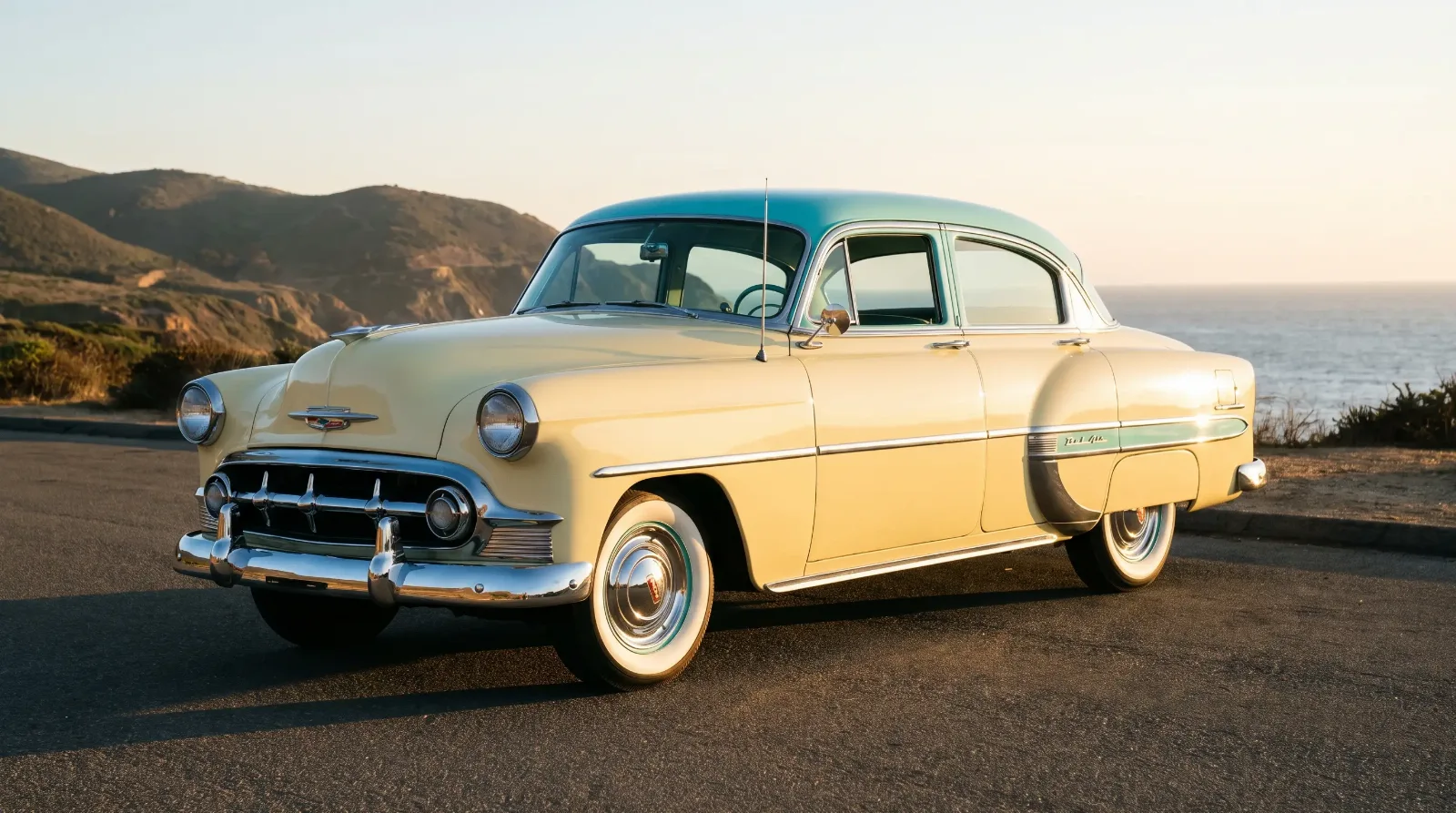
The sedans were the volume sellers within the Bel Air series, and for good reason. They offered the same richer upholstery, additional chrome trim, and upgraded dashboard treatment as the flashier body styles, but at a lower price than the hardtop or convertible and with more practical room for a family. Most Bel Air production during these two years came from sedan sales, not the more photogenic hardtop and convertible that tend to dominate collector attention today.
Chevrolet differentiated the Bel Air sedans from their Two-Ten counterparts almost entirely through trim rather than mechanical content, a pattern consistent with how the company approached its entire top-tier positioning during this period.
The Sport Coupe hardtop
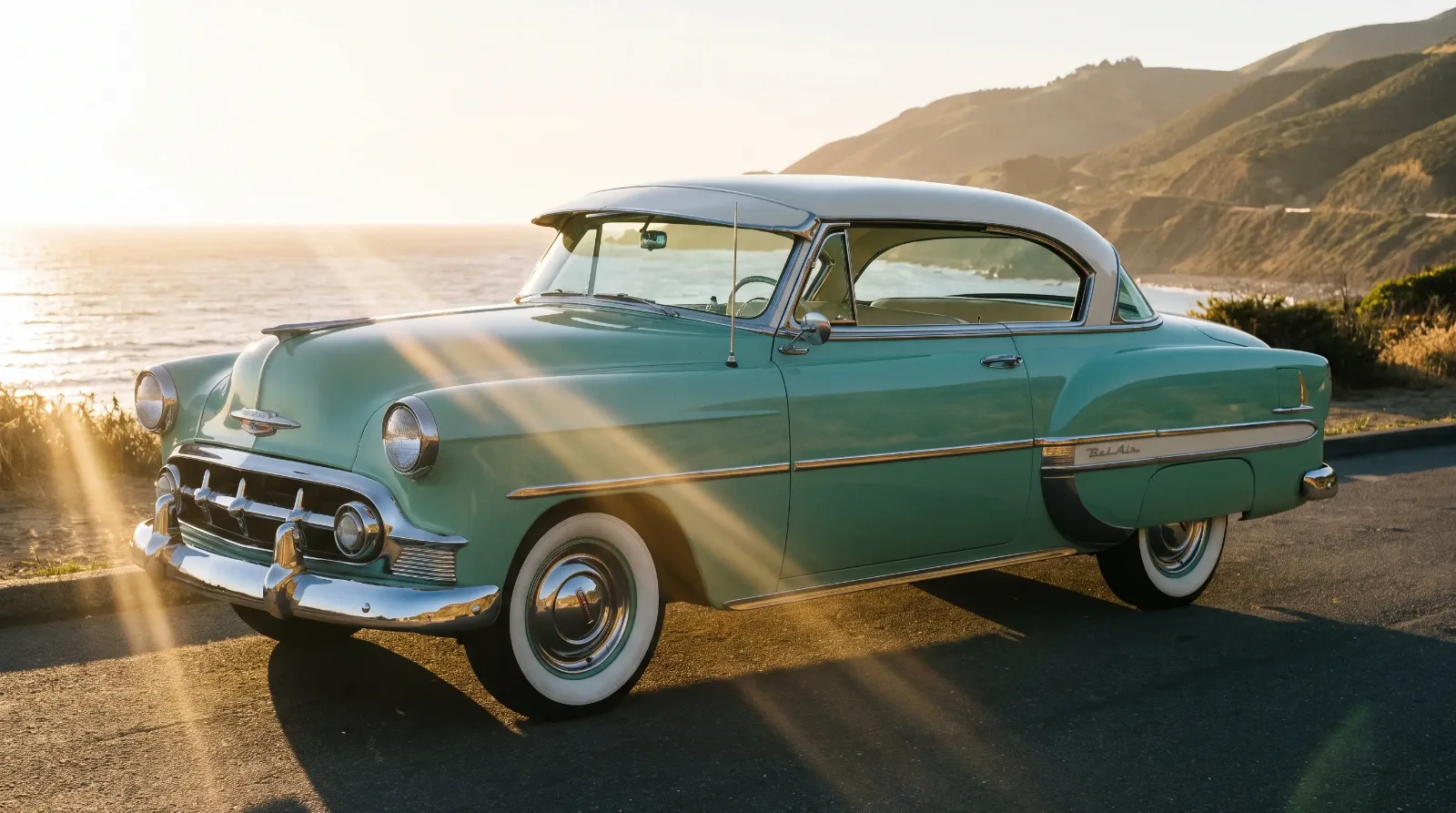
The pillarless hardtop, the body style that started the whole Bel Air name back in 1950, remained part of the lineup through 1953 and 1954, now sold within the broader Bel Air series rather than as its own singular offering. It kept the slim roof pillars and open, airy greenhouse that had made the original hardtop popular, updated with the 1953 restyle's new grille and, on this body style, the one-piece curved windshield that replaced the older split unit.
How the body styles compared on price
Price spread across the Bel Air lineup followed a predictable pattern, with the two-door sedan sitting at the low end of the series, the four-door sedan slightly above it, the Sport Coupe hardtop commanding a real premium for its distinctive roofline, and the convertible sitting at the very top of the price sheet as the most expensive body style Chevrolet offered outside of any specialty options. Once the wagon joined Bel Air trim for 1954, it fell somewhere in the middle of this spread, priced closer to the sedans than to the hardtop or convertible despite its added cargo capability, reflecting how Chevrolet generally treated wagons as practical rather than aspirational purchases during this era.
The convertible and the wagon
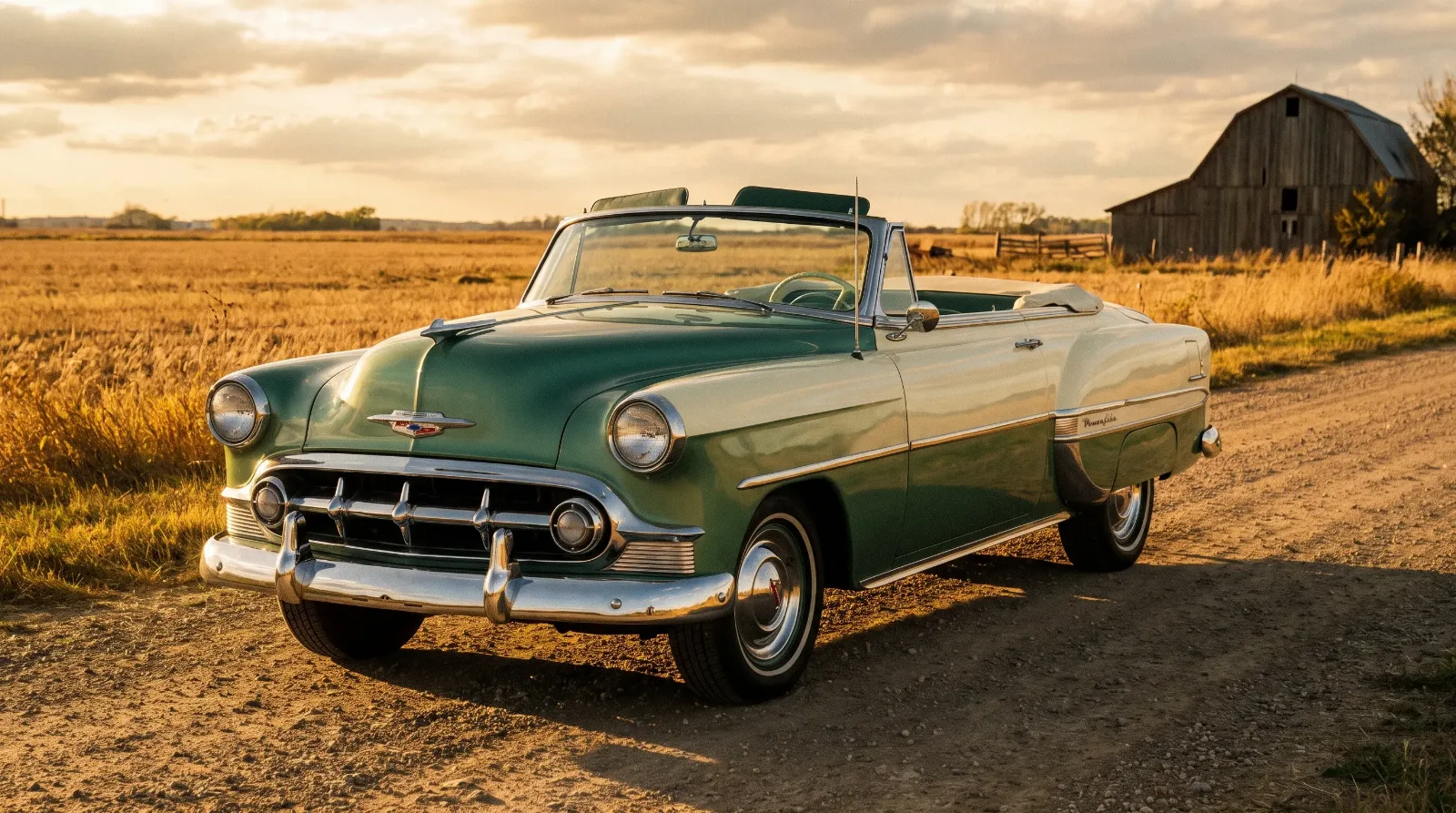
The convertible held a unique position within the 1953 and 1954 Bel Air lineup: it was the only open-top body style Chevrolet built during these years, meaning every convertible automatically carried Bel Air trim regardless of whether a buyer specifically wanted the top series. This made the convertible a de facto flagship, the body style Chevrolet's advertising leaned on most heavily to sell the aspirational side of the Bel Air name.
The station wagon, badged Townsman, joined the Bel Air series for 1954 with distinctive woodgrain-look paneling, moving up from the Two-Ten series where it had lived the previous year. It offered the same trim treatment in a more practical package aimed at growing families who still wanted the status that came with Bel Air badging. Wagon buyers in this era were a distinct group from hardtop and convertible buyers, prioritizing cargo room and seating flexibility over the sportier image the pillarless roof and open top projected.
How production volumes broke down across the lineup
Sedan production dwarfed the other body styles in raw numbers, a pattern consistent with the broader low-price field where practical family transportation always outsold the more specialized shapes. For 1953, Chevrolet built roughly 246,000 four-door sedans, 144,000 two-door sedans, 99,000 Sport Coupes, and about 24,000 convertibles in Bel Air trim. For 1954, the split ran close to 249,000 four-door sedans, 144,000 two-door sedans, 66,000 Sport Coupes, 19,000 convertibles, and about 8,000 of the newly added Bel Air Townsman wagon. The convertible and wagon were produced in far smaller quantities relative to the sedans, both because of higher prices and because open-top and wagon buyers each represented a narrower slice of the market.
The Sport Coupe hardtop fell somewhere between these extremes, popular enough to remain a fixture of the lineup but never approaching sedan volumes. The wagon variant, meanwhile, occupied its own smaller niche, competing less against the other Bel Air body styles and more against wagons from Ford and Plymouth aimed at the same growing suburban family market. Understanding these relative volumes helps explain why certain body styles are scarcer today than others, independent of how many people actually wanted to buy each shape when new.
Why the spread of body styles mattered
Offering Bel Air trim across four, then five, distinct body styles let Chevrolet capture a much broader slice of the market under one aspirational name than the original single hardtop ever could. A family cross-shopping a practical sedan and a young buyer chasing the sporty hardtop image were both, in the end, buying into the same badge, the same trim philosophy, and largely the same mechanical underpinnings. That flexibility is part of what made the Bel Air series such a durable success once Chevrolet committed to it in 1953.
| Body Style | Position in 1953-54 Lineup |
|---|---|
| Four-door sedan | Highest volume Bel Air seller |
| Two-door sedan | Practical, mid-priced Bel Air option |
| Sport Coupe hardtop | Direct descendant of the original 1950 body style |
| Convertible | Only open-top Chevrolet, automatically Bel Air trim |
| Station wagon (Townsman) | Family-focused Bel Air variant, added for 1954 (was a Two-Ten model in 1953) |
"Look at a period Chevrolet dealer lot photo from 1953 or 1954 and you will see the same Bel Air badge on five completely different silhouettes. That range is exactly what Chevrolet's product planners were after, one name doing the work of several different sales pitches at once."
- Sarah Whitfield
Today, values differ substantially across these body styles, with the convertible and Sport Coupe generally commanding the strongest collector interest while the sedans and wagon remain more accessible. Whichever shape appeals to you, you can usually find a classic Air representing one of these body styles currently available, from the practical family sedan to the flagship convertible that once defined the badge's top spot in the lineup.
Sources and notes
Related Reading
Have a
Chevrolet Bel Air
for Sale?
Reach thousands of serious classic car collectors across the US.
Sell It Here →
Are You a Classic Car Dealer?
List your full inventory and connect with targeted classic car buyers.
Join as a Dealer →

About the author
Sarah Whitfield
Third-generation classic car collector specializing in pre-war American and European coachbuilt automobiles. Researcher and concours enthusiast.
Related Listings - Chevrolet Bel Air




Comments
Be the first to comment on this article.