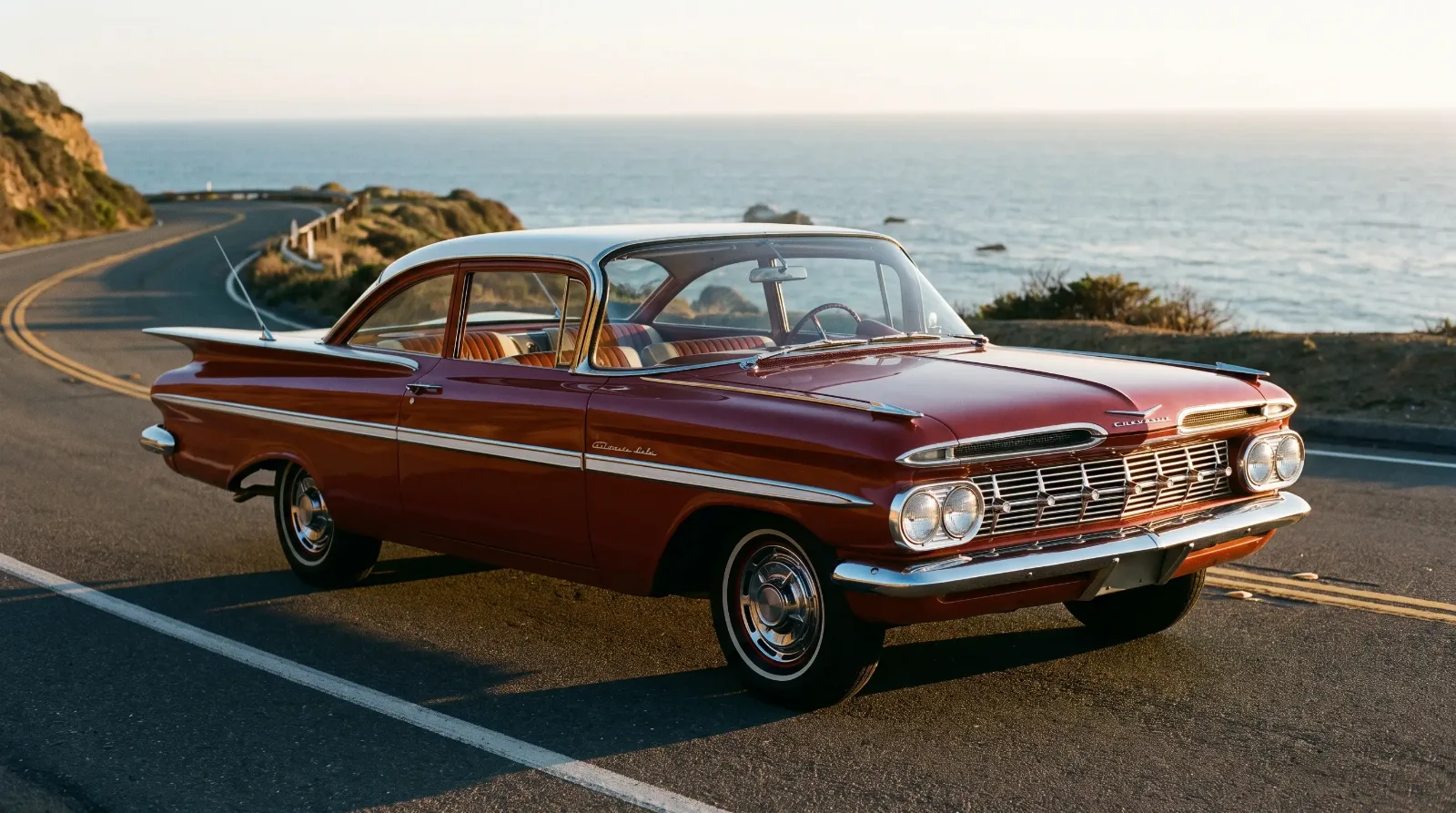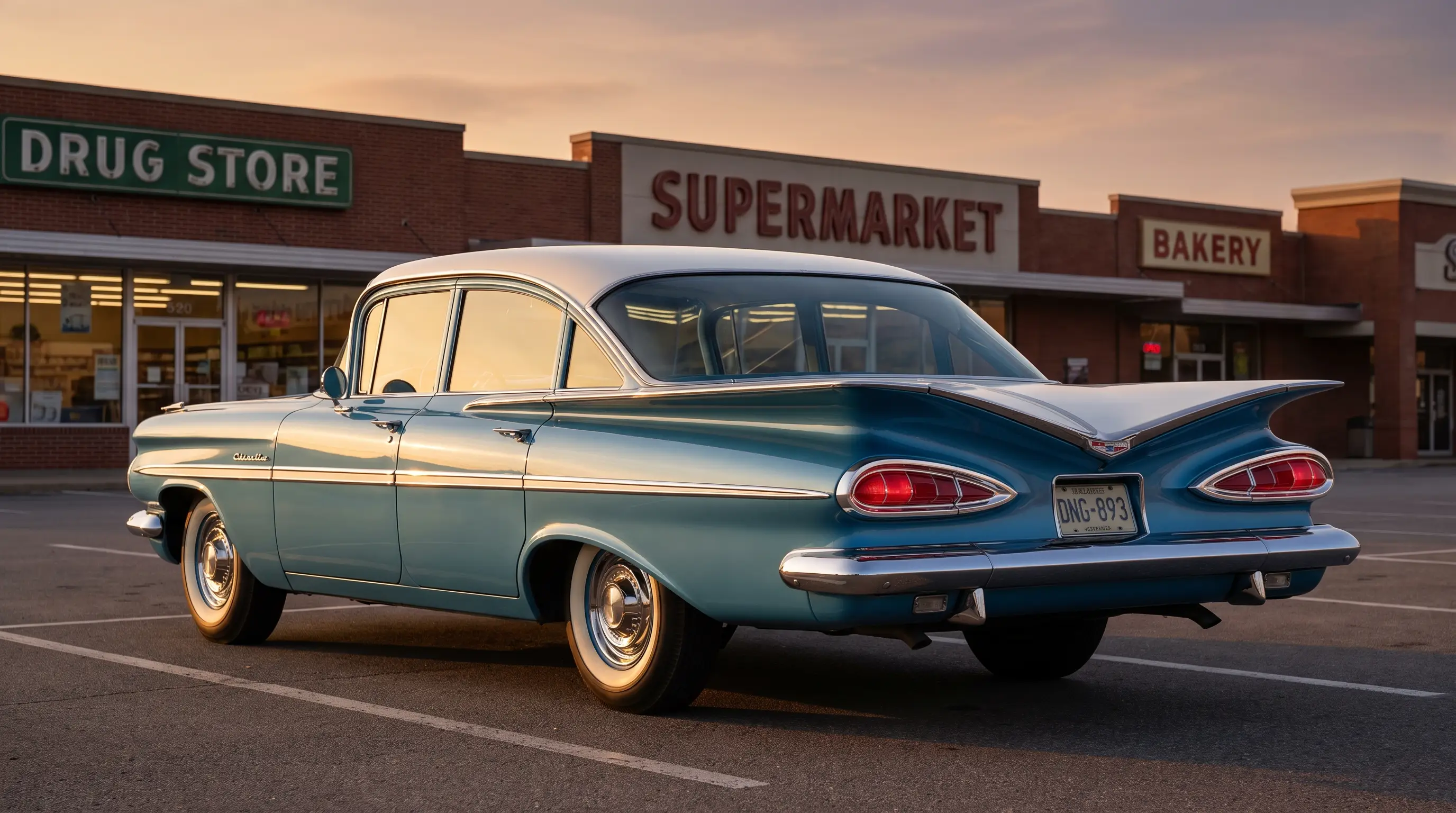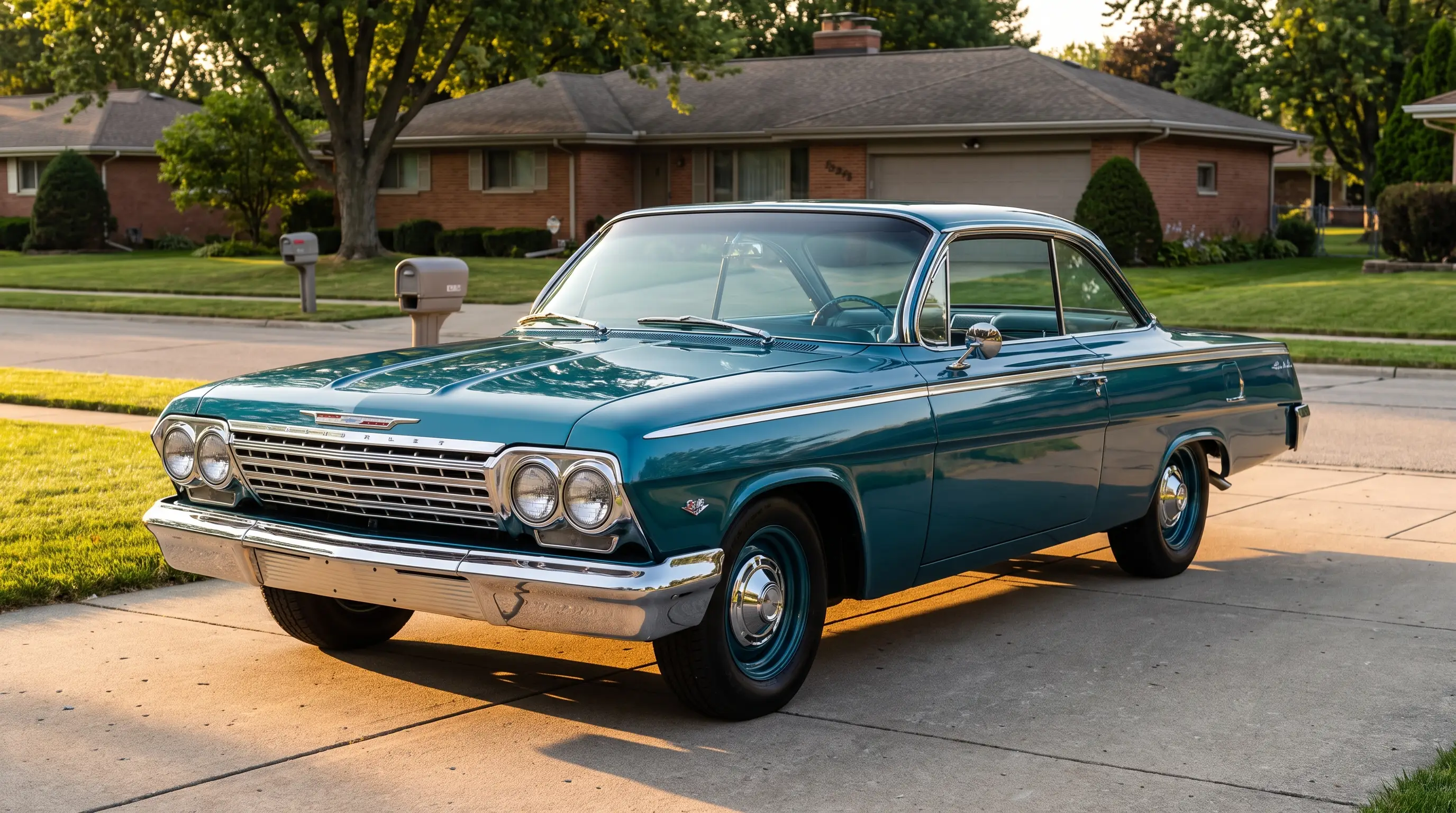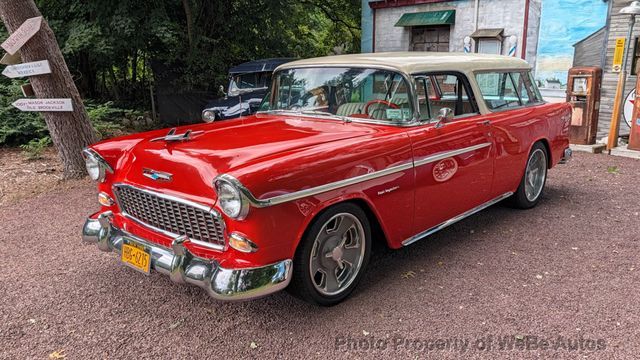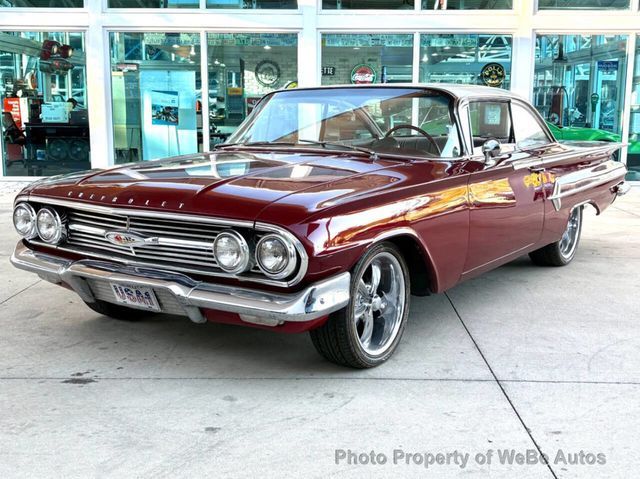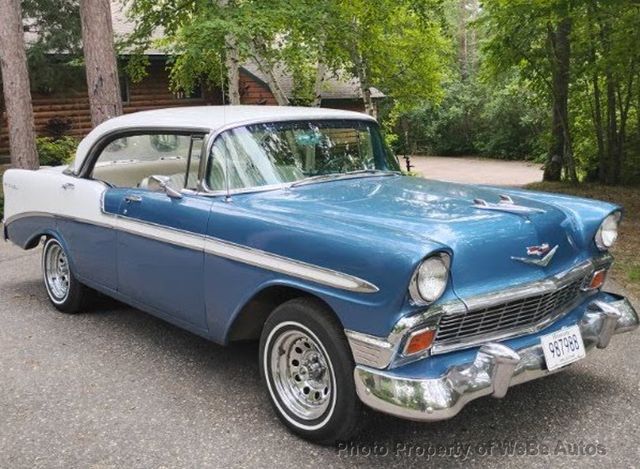
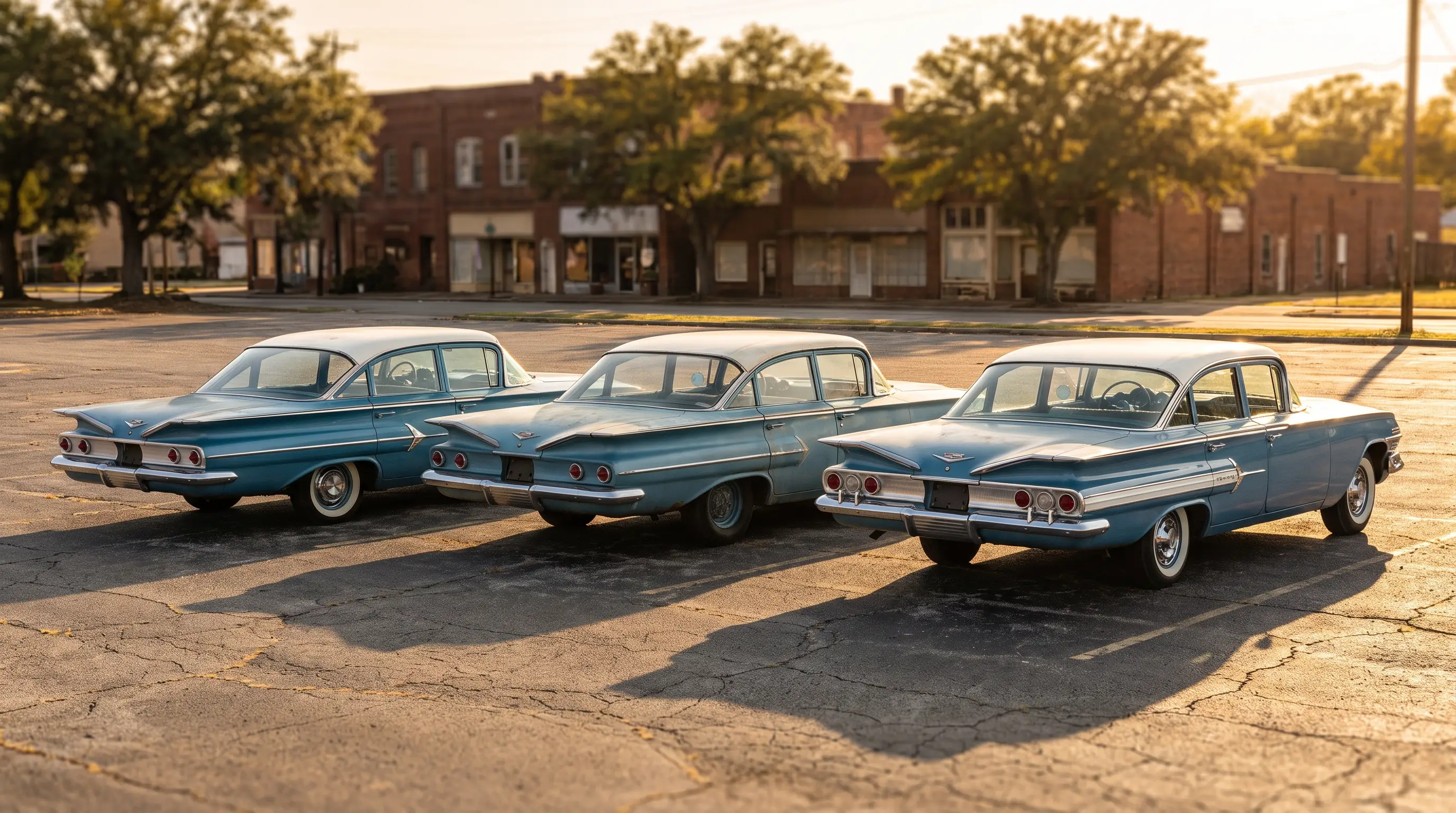
Every Tuesday night at the local cruise-in, somebody asks me the same question. They point at a two-door hardtop gleaming under the parking lot lights and want to know: is that a Bel Air, a Biscayne, or an Impala? Most of the time they guess wrong, and I do not blame them. The full-size Chevrolet lineup of the late 1950s into the 1960s was a family tree with three branches, and understanding the bel air biscayne impala pecking order tells you as much about how Chevrolet sold cars as it does about the cars themselves.
The Bel Air started as the top of the mountain
Back in 1950, Bel Air was not a trim level tacked onto a lineup. It was the name Chevrolet gave to its new pillarless hardtop, the fanciest thing in the showroom, a car built to make Buick and Oldsmobile owners look twice. Chrome trim, richer interior fabrics, and a price tag that said you had arrived. For most of that decade, if you wanted the best Chevrolet money could buy short of a Corvette, you bought a Bel Air. That is the part longtime club members love to talk about, and I tell newer guys to go read the full story if they want the whole arc from top dog to middle child.
Biscayne came in from the bottom
The Biscayne name showed up as a show car in the mid-1950s, all wrapped glass and jet-age styling, but by 1958 Chevrolet had repurposed it as the workaday full-size model. No Biscayne had the trim, the two-tone paint options, or the interior flourishes that Bel Air buyers took for granted. Biscaynes were fleet cars, taxi cars, the sedan a small business bought because it needed four doors and an engine that started every morning. Nobody bragged about a Biscayne at a car show in 1959. People bragged about what a Biscayne cost less than.
Then Impala arrived and rearranged the furniture
Impala debuted for 1958 as the top-tier Bel Air, essentially a fancier hardtop and convertible riding on the Bel Air's reputation. That lasted one year. By 1959, Impala had its own identity, its own badge, and its own claim on being the car to have. Suddenly Bel Air was not the top of the mountain anymore. It had been demoted to the middle of a three-tier ladder, with Biscayne holding down the bottom and Impala claiming the crown Bel Air used to wear alone.
This is where the pecking order gets interesting, and where a lot of casual observers get it backward. They assume Bel Air was always the humble one and Impala was always the star. It was the opposite for the better part of a decade. Bel Air had seniority. Impala was the new kid who took over the family business.
What separated the three in the showroom
By the early 1960s the differences were consistent enough that a trained eye could spot them from across a parking lot. Biscayne wore the plainest trim, rubber floor mats instead of carpet in base versions, and a shorter options list. Bel Air split the difference, offering carpet, better upholstery, and enough brightwork to look respectable without shouting about it. Impala got the full treatment, unique taillight treatments depending on the year, richer interior materials, and first access to certain performance packages before they trickled down.
Engines were shared more than people assume. A Biscayne could be ordered with the same big-block a buyer would find in an Impala, which is exactly why so many drag racers in the early 1960s bought stripped Biscaynes and Bel Airs. Less weight, same available horsepower, lower purchase price. That is a story for another day, but it explains why some of the fiercest full-size Chevrolets to ever leave a dealership wore the plainest badges.
"People assume Impala was always the flagship and Bel Air was always second string. Spend one afternoon with the actual build sheets and you learn the family tree runs the other direction. Bel Air was the establishment. Impala was the upstart that won."
- Wayne Coburn
Why club members still argue about which one to buy
I hear the same debate every swap meet season. Some buyers want the Impala because the name carries the most recognition and, frankly, the highest resale value. Others specifically hunt for a Bel Air because they like the idea of owning the car that used to be the top dog, restrained trim and all, without paying an Impala premium. And there is a smaller, sharper-eyed group that wants a Biscayne on purpose, because a clean, honest Biscayne with the right drivetrain is often the best-kept secret of the three.
None of those choices is wrong. What matters is knowing what you are actually looking at before you write a check. A seller calling a plain-trim four-door a Bel Air when the trim tags say Biscayne is either confused or hoping you will not check. Learn the trim differences, learn the badge placement by year, and you will not get fooled.
Reading the trim tags before you trust the badge
Every full-size Chevrolet from this era carries a trim tag, usually riveted to the firewall or door jamb depending on the year, and that tag tells you what the car left the factory as. Chrome and a fancy grille can be swapped between generations by a previous owner chasing a look, and I have seen Biscaynes wearing Impala trim pieces at more than one show. The tag does not lie the way a seller sometimes does. Learn to read it before you get attached to a car's story.
Body style matters too. A two-door hardtop with no center pillar reads as sportier no matter which trim it wears, and Chevrolet built hardtops across all three nameplates in certain years, which confuses buyers who assume hardtop automatically means Impala. It does not. Cross-reference the trim tag, the body style code, and the options list together, and only then trust what the seller is telling you.
Where the story stands today
Bel Air production wound down through the 1970s as Chevrolet's naming conventions shifted again, but for collectors the golden era remains that late-1950s through mid-1960s window when Biscayne, Bel Air, and Impala sat side by side on the same showroom floor, sharing sheet metal and drivetrains while wearing three very different price tags. Understanding that pecking order is half the fun of owning one of these cars. The other half is finding a good one.
Values have sorted themselves out along fairly predictable lines. Impala convertibles and big-block hardtops command the strongest money at auction, Bel Airs sit in the middle with room to grow if the trim and options are right, and clean Biscaynes remain the value play for buyers who care more about the drivetrain under the hood than the badge on the trunk lid. None of that is fixed in stone. I have watched a documented, matching-numbers Bel Air outsell a tired Impala at the same swap meet, because condition and paperwork beat badge prestige every time a serious buyer is writing the check.
If you are in the market, the search usually starts the same way mine did years ago, wandering listings and comparing trim codes until something clicks. Plenty of buyers today skip straight to browsing a classic Air for sale and working backward from there, which is not a bad shortcut if you already know your Biscaynes from your Impalas. Either way, walk in knowing the family tree, and you will make a better decision than most of the people standing next to you at that Tuesday night cruise-in.