
Picture two 1930 Model A Fordors parked side by side at a club meet. Same year, same paint, same badge on the radiator. Their owners can argue for an hour about which one is more original, and the answer is under the hood, on a small tag riveted to the firewall. One body came from Briggs, the other from Murray. The Briggs vs Murray Model A question is one of the oldest debates in the hobby, and it can be settled with a flashlight and a little patience.
Car Features
6 min read
Briggs vs Murray: Who Built Your Model A's Body?
Ford, Briggs or Murray? Which builder made each Model A body style, how to read the firewall tag, and how to tell them apart without one.
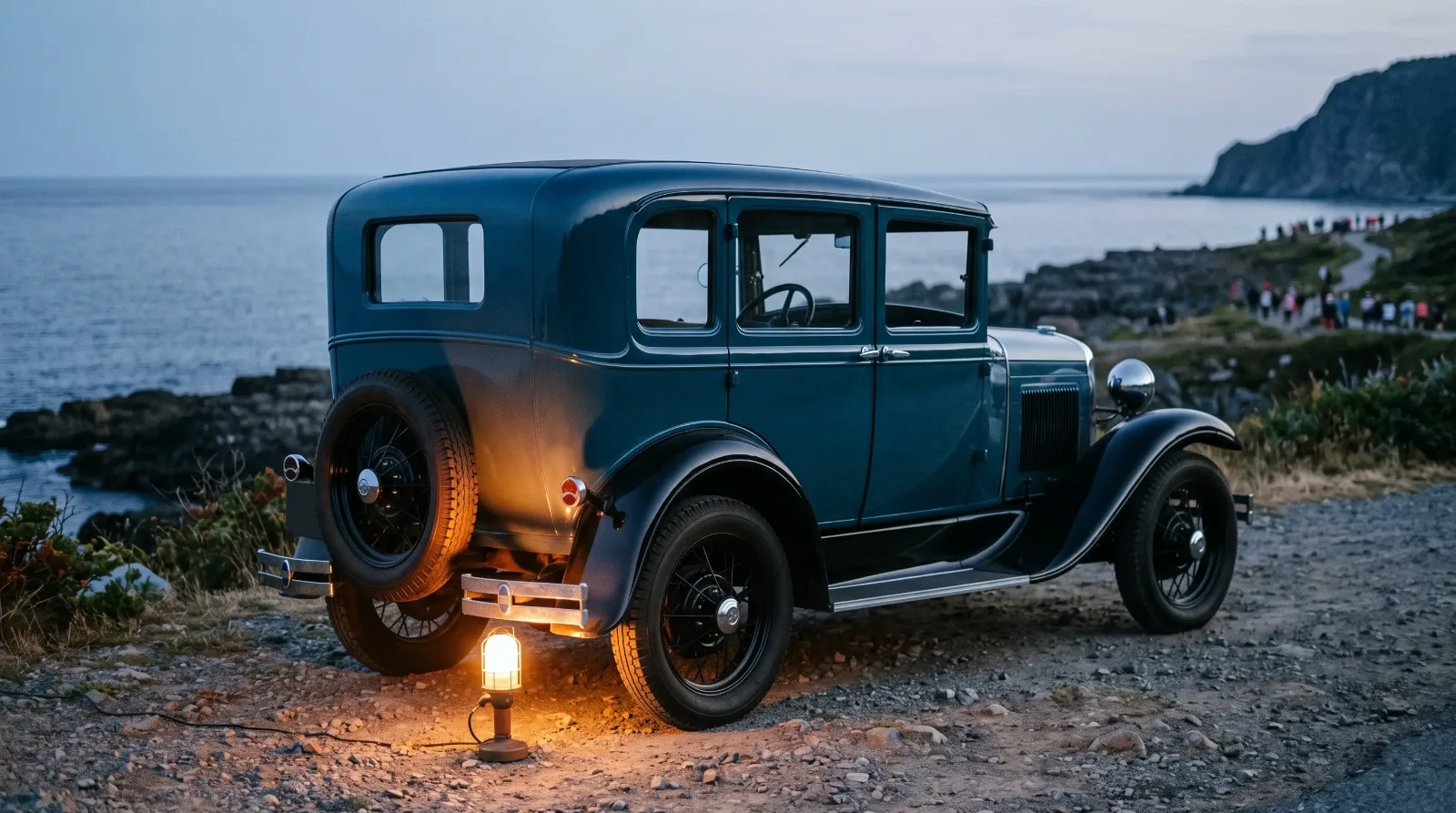
If you are new to the style numbers themselves, start with the body styles chapter. This piece answers the narrower question: who actually built the body on your car, and how you can tell.
Why Ford bought bodies from outside
Ford built plenty of Model A bodies itself, especially the high-volume coupes of 1930 and 1931. But it could not build every style in the numbers it needed, so it bought finished bodies from outside builders. Two of them did most of that work: Briggs Manufacturing and the Murray Corporation of America, both in Detroit.
Briggs worked mostly in leased space inside Ford's own Highland Park plant, the old Model T factory. Murray built at 1600 Clay Street in Detroit. Briggs was also a supplier to Packard and Chrysler, and by the 1920s it was the largest independent body builder in the country. Ford was not its only customer, but it was a very big one.
A few other names turn up. Budd supplied steel panel assemblies for the 1928 Phaeton, Roadster and Tudor. Baker-Raulang built some wood bodies, including the later 150-B station wagon. Canadian-built cars are a separate story. For a US passenger car, though, the choice is nearly always Ford, Briggs or Murray.
Briggs vs Murray Model A bodies: who built what
There is no single rule by body style, and that is what keeps the arguments going. Some styles came from one builder only. Others were split between two. Here is the broad picture from the registry records.
| Body style | Ford style numbers | Builder |
|---|---|---|
| Two-window Fordor | 60, 170 | Briggs |
| Three-window Fordor | 165-A/C and 165-B/D | Murray (A/C) and Briggs (B/D) |
| Town Sedan | 155-A/C and 155-B/D | Murray (A/C) and Briggs (B/D) |
| 1931 slant-windshield Fordors | 160-A, 160-B, 160-C | Briggs and Murray, plus some Ford-built |
| Cabriolet | 68-A, 68-B, 68-C | Briggs, all of them |
| Town Car | 140-A, 140-B | Briggs |
| DeLuxe Phaeton | 180-A | Briggs |
| Victoria | 190-A | Murray |
| Convertible Sedan | 400-A | Murray |
| Station Wagon | 150-A (150-B from June 1930) | Murray (150-B with Baker-Raulang) |
| Standard Coupe, 1930 to 1931 | 45-B | Mostly Ford; some Briggs |
The coupes are where people get caught. Briggs built most of the early coupe bodies, including the 1928 to 1929 Standard and Special Coupes in that leased space at Highland Park. But by 1930 most coupe bodies were coming from Ford itself. Briggs still built some 45-B Standard Coupe bodies, about 30,000 or more, so a Briggs coupe from 1930 is real but less common.
The 1931 slant-windshield Fordors are a special case. Ford had Briggs and Murray build them to one design, with interchangeable parts. The windows on those cars follow Murray's arched shape, whichever company built the body.
How to read the body tag
Most Briggs and Murray bodies carry a builder's tag. On 1930 and 1931 cars it is riveted or screwed to the firewall, below the patent plate. On 1928 and 1929 cars, look under the carpet on the passenger side instead: usually a brass tag nailed to the wooden floor structure in front of the seat. The catch is that the number on that tag is the builder's code, not Ford's style number. A Briggs-built Cabriolet 68-A, for example, carries a tag starting 194-. A Briggs Town Car carries 193-. A Murray Convertible Sedan carries 400A, which happens to match Ford's number, and the Murray-built station wagon carries M250-.
Briggs also used a "CL" prefix on tags from its Cleveland plant. Ford, for its part, stamped its own numbers on the floor sills. So a well-documented body can carry two separate numbering systems, and both are worth photographing.
Then the bad news. Many tags are missing. Ninety-odd years of rust, repaint and replacement firewalls took plenty of them. A missing tag does not make a body wrong. It just means you have to read the steel instead of the label.
"I have heard a dozen fellows swear their car had a Murray body because Grandpa said so. Grandpa was a fine man. The firewall nuts are a better witness."
Wayne Coburn
Telling them apart without a tag
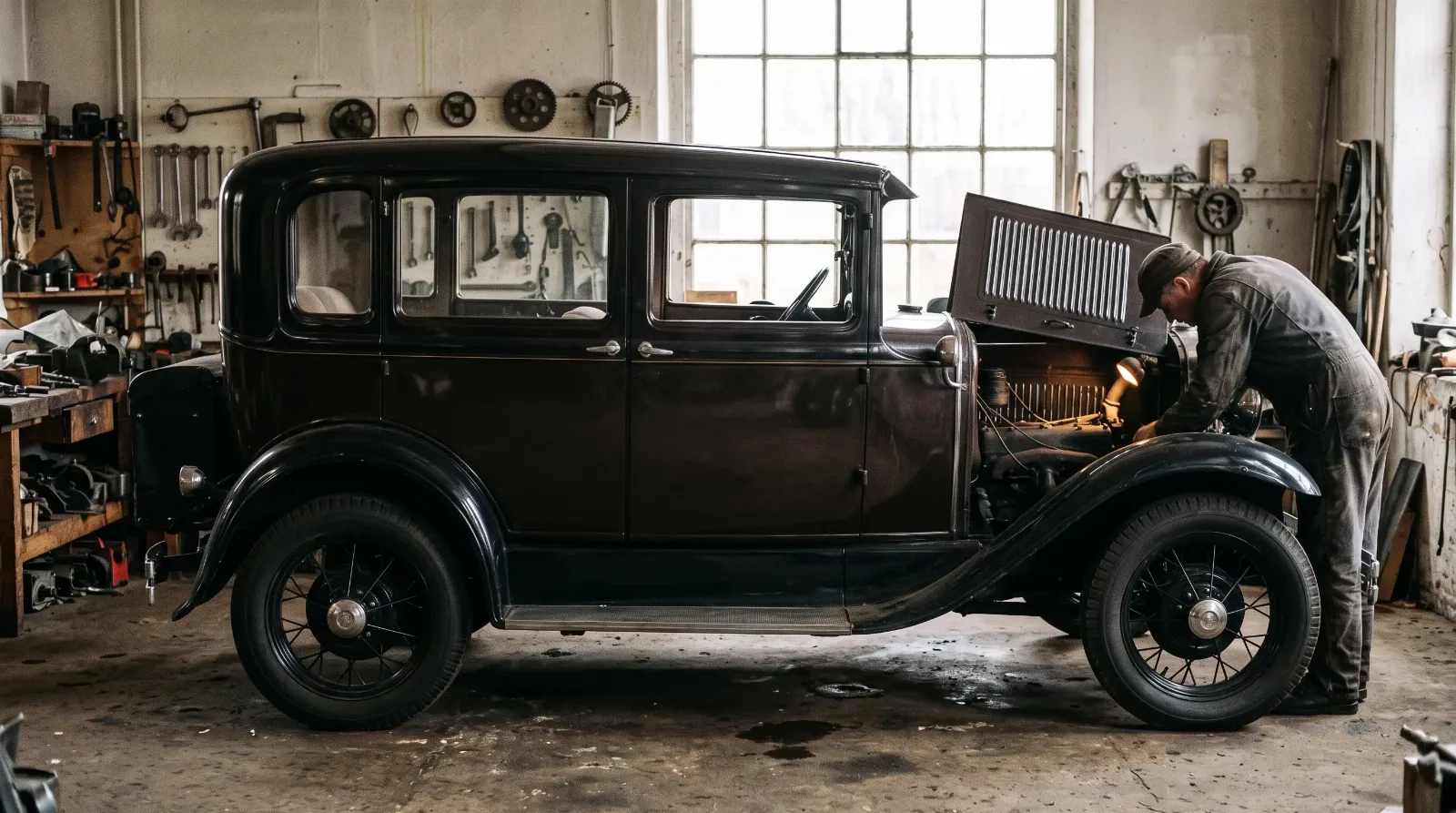
When the tag is gone, the body itself still talks. The club men who sorted this out years ago left a short list of tells, and they hold up well.
- Firewall nuts. Look where the speedometer cable clip and the generator wire loom clip bolt to the firewall. Briggs used D-nuts there, Murray used caged nuts. This is the single most reliable check on a car with its original firewall. The same split shows on the door window channel retainer, where Briggs used machined one-piece D-nuts and Murray used sheet-metal square cage nuts stamped "8-32."
- Door window shape. Murray door windows have a slight arch at the top. Ford and Briggs windows run straight across. The exception is the 1931 slant-windshield Fordor, where every builder used the arch.
- The Briggs "Bug." Briggs stamped a small bug logo on the left and right lower cowl, an inch or two above the splash apron. A Briggs Manufacturing logo can also show up on brackets and on the firewall.
- Leatherback quarters. Some Murray bodies had fabric-covered rear quarters, the "leatherback." On the Victoria, that changed to an all-steel rear after body number 28185, in February 1931.
Use two tells, not one. A replaced firewall carries the wrong nuts. A door swapped from a parts car carries the wrong window. When two or three tells agree, you can say with some confidence who built the body.
Does the builder change a Model A's value?
On most cars, not by itself. A Briggs Fordor and a Murray Fordor in the same condition sell in the same range, because buyers pay for condition, completeness and how honest the car is. Where the builder matters is originality. A restorer chasing points needs the right window shape, the right nuts and the right details for that builder, because those are exactly the parts where Briggs and Murray differ. The Model T had its own body suppliers and its own story, told in the Model T bodies.
So before you order parts, find out which company built your body. And when you do, write it down, photograph the tag or the nuts, and keep it with the car. The next owner will ask, and a folder answers better than a story.
Sources and notes
Related Reading
Have a
Ford Model A
for Sale?
Reach thousands of serious classic car collectors across the US.
Sell It Here →
Selling a classic? Here's how: compare the places to sell classic cars
Are You a Classic Car Dealer?
List your full inventory and connect with targeted classic car buyers.
Join as a Dealer →

About the author
Wayne Coburn
Longtime Corvette owner, judge and club figure who knows the cars, the records and the people behind them.
Related Listings - Ford Model A




Comments
Be the first to comment on this article.